
UK Forces Seize Russian Shadow Fleet Oil Tanker in the English Channel
In a major escalation of sanctions enforcement, British commandos boarded and detained a falsely flagged oil tanker suspected of funding Russia's war effort.
By Factlen Editorial Team
- Western Enforcement Authorities
- View the physical seizure of shadow fleet vessels as a necessary escalation to defund the Russian war machine and prevent environmental disasters.
- Maritime Law Experts
- Support the legal interpretation of UNCLOS Article 110 but warn that domestic jurisdiction over stateless vessels remains legally complex.
- Russian State Apparatus
- Argue that Western sanctions and vessel seizures are illegal acts of piracy that violate the international right of innocent passage.
What's not represented
- · Environmental NGOs warning about spill risks
- · Global South oil importers reliant on discounted crude
Why this matters
The seizure marks a shift from passive financial sanctions to active military enforcement against Russia's illicit oil trade. If this legal precedent holds, it could drastically disrupt the global energy supply chain and force a confrontation over the environmental risks of aging, uninsured tankers navigating European waters.
Key points
- British commandos boarded and seized the Russian-linked oil tanker Smyrtos in the English Channel.
- The operation marks the first time the UK has acted alone to physically detain a shadow fleet vessel.
- The Smyrtos was targeted under UNCLOS Article 110 because it was sailing under a false flag, rendering it stateless.
- The shadow fleet consists of 600 to 800 aging vessels used to bypass the G7 oil price cap.
- These uninsured vessels pose a massive environmental risk to European coastal waters.
- UK officials claim sanctions enforcement has contributed to a 24% drop in Russian oil revenues.
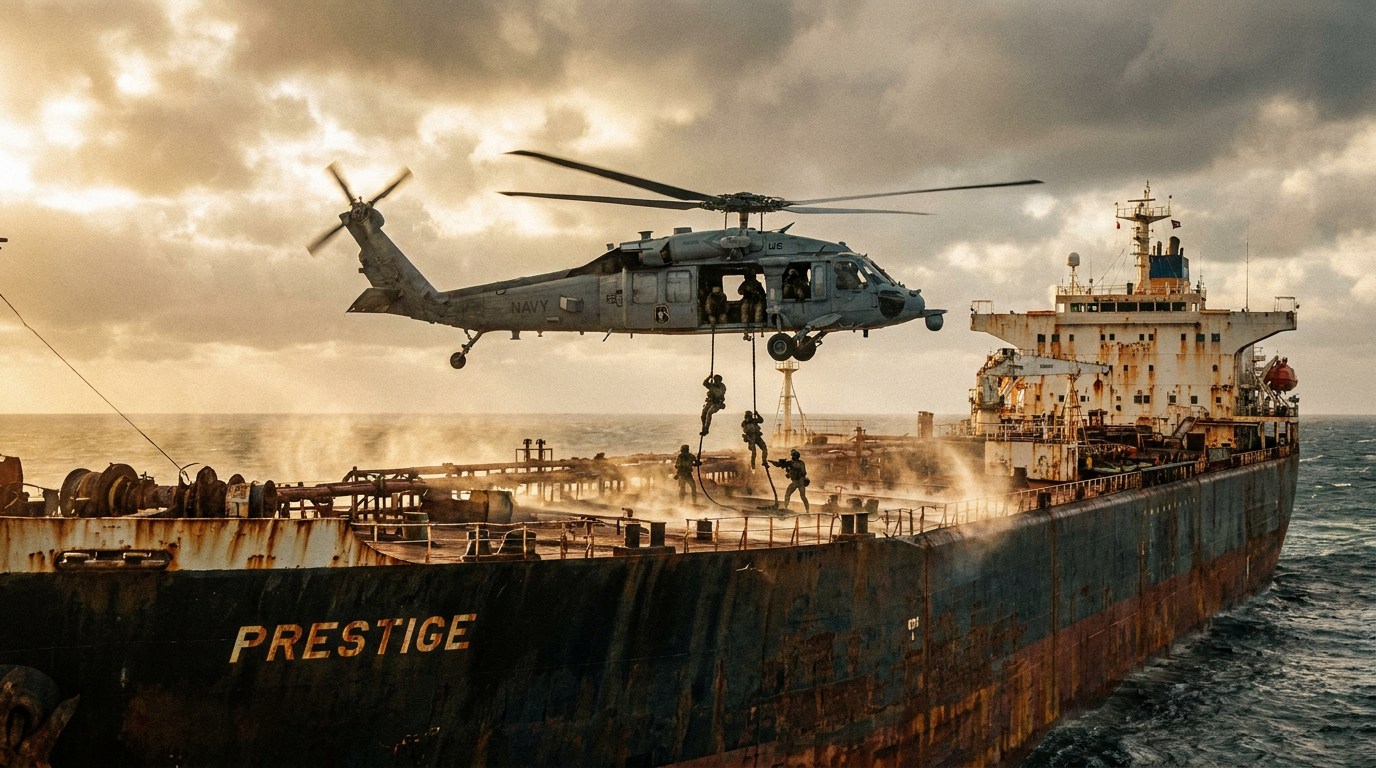
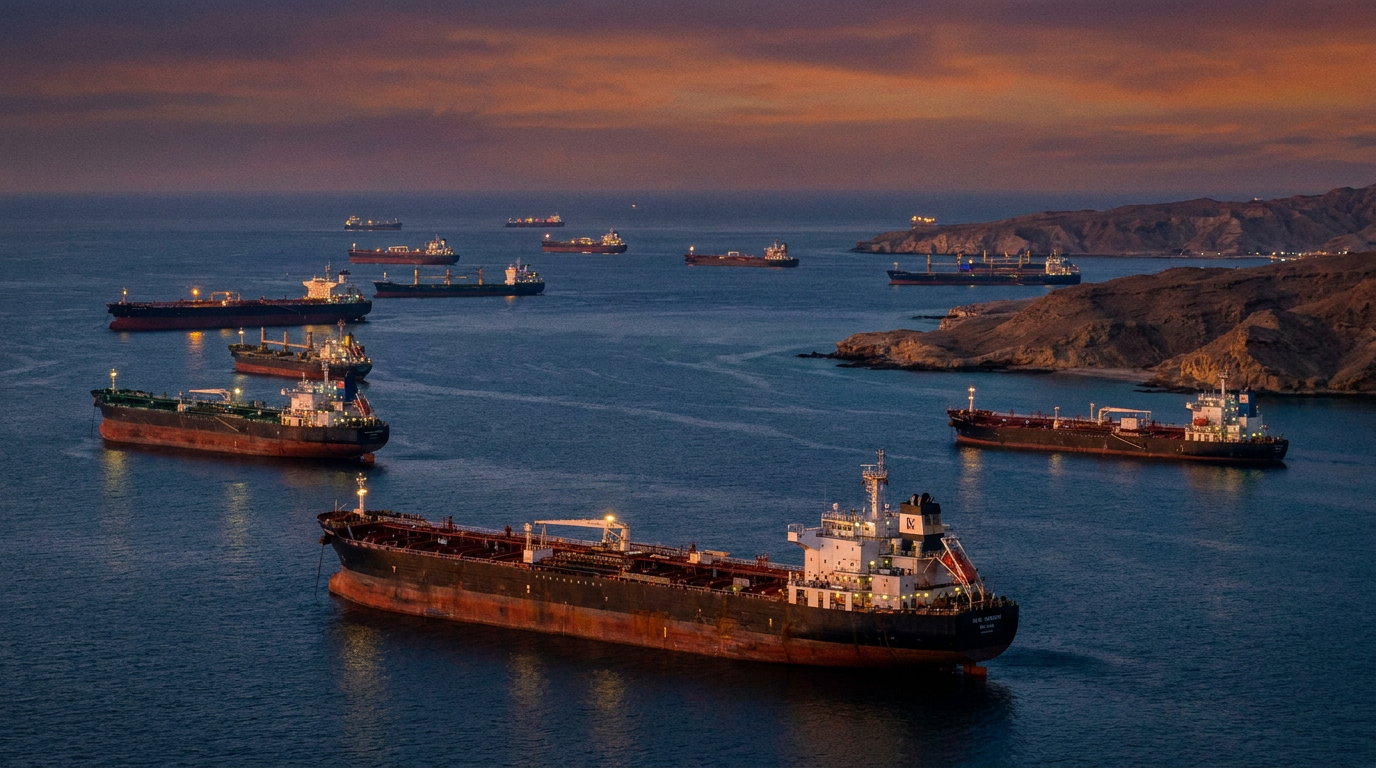
In the early hours of Sunday morning, Royal Marine Commandos descended from Chinook helicopters onto the deck of a 244-meter oil tanker navigating the English Channel. Supported by a flotilla of naval vessels and maritime patrol aircraft, the boarding party seized control of the Smyrtos, a vessel suspected of smuggling Russian crude oil.[1][4]
The six-hour interception marks a dramatic escalation in Western efforts to defund the Kremlin's war machine. While European nations have previously detained sanctions-busting ships, the Ministry of Defence confirmed this was the first time the United Kingdom has acted alone to physically seize a vessel linked to Russia's illicit maritime network.[1][5]
British Prime Minister Keir Starmer, who authorized the operation, framed the seizure as a direct strike against Moscow's economic lifeline. "This successful operation delivers yet another blow to Russia and reminds those fueling Putin's war in Ukraine that we will not let them hide," Starmer announced following the raid.[2][3]
The Smyrtos is a textbook example of the "shadow fleet"—a decentralized armada of aging commercial vessels used by Russia to bypass Western sanctions. According to maritime databases, the tanker departed from the Russian Baltic port of Ust-Luga in early June. Despite being officially sanctioned by the UK since July 2025, it continued to operate using a complex web of Chinese ownership and Indian management.[4][7]
To understand why the Smyrtos was targeted, one must understand the mechanics of the shadow fleet. When the G7 implemented a $60-per-barrel price cap on Russian crude in late 2022, Moscow responded by assembling a parallel logistics network. By relying on non-Western insurers and opaque shell companies, Russian exporters effectively decoupled a massive portion of their oil trade from European and American financial oversight.[7]
Industry analysts estimate that the global shadow fleet now comprises between 600 and 800 tankers, representing roughly 10 to 15 percent of the world's crude and product tanker capacity. In May 2026 alone, these covert vessels transported nearly half of all Russian seaborne oil exports, generating billions of dollars in revenue for the Russian state.[7]

Operating this parallel fleet requires constant subterfuge. Shadow tankers frequently disable their Automatic Identification System (AIS) transponders to vanish from public tracking screens, or "spoof" their locations to appear in one ocean while loading cargo in another. They also routinely engage in ship-to-ship transfers on the high seas to obscure the origin of their oil.[7]
Beyond the geopolitical stakes, the shadow fleet presents a ticking environmental time bomb for European coastal states. More than 70 percent of these tankers are over 15 years old, a point at which major oil companies typically retire vessels due to structural fatigue.[5][7]
Beyond the geopolitical stakes, the shadow fleet presents a ticking environmental time bomb for European coastal states.
Crucially, these aging ships operate without standard Protection and Indemnity (P&I) insurance from the International Group, which covers 90 percent of the world's ocean-going tonnage. If a shadow tanker were to run aground or collide in the congested English Channel or the Baltic Sea, the resulting oil spill would be catastrophic, and the shell companies that own the vessels would likely dissolve, leaving European taxpayers to foot the multi-billion-dollar cleanup bill.[7]
For years, Western governments hesitated to physically intercept these vessels due to the complexities of international maritime law. Under the 1994 UN Convention on the Law of the Sea (UNCLOS), ships enjoy the "right of innocent passage" through territorial waters and exclusive economic zones, making arbitrary boardings illegal.[6]
However, legal scholars and enforcement agencies have increasingly zeroed in on a critical loophole: UNCLOS Article 110. This provision grants warships the "right of visit" if there are reasonable grounds to suspect a vessel is stateless. Because shadow tankers frequently sail under false or fraudulent flags to obscure their identities, they effectively strip themselves of international legal protections.[5][6]

The Smyrtos fell directly into this legal trap. While the ship claimed to be sailing under the flag of Cameroon, international registries and UK intelligence indicated the flag was false. By operating without a legitimate national registry, the Smyrtos was classified as a stateless vessel, granting the Royal Marines the legal authority to board and detain it in international waters.[4][5]
The UK government laid the groundwork for Sunday's raid earlier this year. In March 2026, Prime Minister Starmer's administration passed domestic directives clarifying that British armed forces and the National Crime Agency (NCA) had the jurisdiction to enforce Article 110 against stateless vessels passing near British shores.[4][5]
The sheer scale of the military assets deployed for the Smyrtos operation underscores how seriously London is taking this new enforcement posture. The boarding party was supported by a Type 23 frigate, HMS Sutherland, and a mine countermeasures vessel, HMS Ledbury. Overhead, an RAF P-8 Poseidon maritime patrol aircraft coordinated with Merlin Mk4 and Wildcat helicopters to ensure the tanker could not evade capture.[4][5]

The economic impact of these crackdowns is beginning to materialize. According to the UK Ministry of Defence, British sanctions against nearly 600 shadow fleet vessels have contributed to a 24 percent year-on-year decline in Russia's oil and gas revenues in early 2026.[5]
The UK is not acting in a vacuum. The operation was conducted in close coordination with French authorities, who recently detained the shadow tanker Boracay under similar legal pretenses. Meanwhile, the European Union is reportedly preparing its 19th sanctions package, which aims to blacklist an additional 120 Russian-linked vessels and deny them access to European maritime services.[2][4]
Yet, the shadow fleet has proven highly adaptable. When Western pressure intensifies on Russian routes, many of these opaquely owned tankers simply switch to servicing Iranian or Venezuelan oil exports, utilizing the same false flags and illicit infrastructure before eventually returning to the Baltic Sea.[7]
For now, the Smyrtos has been diverted to an anchorage off the coast of Portland, Dorset. British authorities are monitoring the vessel for environmental and safety risks while the National Crime Agency conducts a thorough investigation. The long-term fate of the ship—and the millions of dollars of sanctioned crude oil sitting in its hold—remains undecided, but the seizure sends an unmistakable signal that the English Channel is no longer a safe transit route for Moscow's covert armada.[1][4][5]
How we got here
Dec 2022
The G7 implements a $60-per-barrel price cap on Russian crude oil, prompting the expansion of the shadow fleet.
July 2025
The UK officially places the oil tanker Smyrtos on its sanctions list.
March 2026
UK Prime Minister Keir Starmer authorizes domestic legal directives allowing forces to board stateless vessels.
Early June 2026
The Smyrtos departs the Russian Baltic port of Ust-Luga carrying crude oil.
June 14, 2026
British forces intercept and board the Smyrtos in the English Channel.
Viewpoints in depth
Western Enforcement Strategy
Focuses on the necessity of physical interventions to defund the Russian military and protect European waters.
For Western governments, paper sanctions have reached the limit of their effectiveness. Because the shadow fleet operates through shell companies in non-aligned jurisdictions, traditional financial penalties are easily evaded. Enforcement advocates argue that physically detaining vessels is the only way to impose real costs on the network. Furthermore, they emphasize that allowing uninsured, aging tankers to navigate the English Channel and Baltic Sea poses an unacceptable environmental risk that justifies aggressive military policing.
The Maritime Law Precedent
Examines the legal tightrope of using UNCLOS Article 110 to bypass the right of innocent passage.
Legal scholars note that the UK's strategy relies on a highly specific interpretation of international law. By proving that a vessel's flag is fraudulent, authorities can declare it 'stateless,' thereby stripping it of the right of innocent passage. However, experts warn that this approach requires airtight intelligence and robust domestic legislation to withstand challenges in international courts. If the legal justification falters, Western nations could be accused of violating the core tenets of freedom of navigation.
Russia's Economic Defense
Views the seizures as illegitimate interference with global trade and an act of economic warfare.
From the perspective of the Russian state and its proxy operators, the G7 price cap and subsequent vessel seizures are illegal mechanisms designed to monopolize global energy markets. They argue that the shadow fleet is a necessary adaptation to unjust Western sanctions. In response to boardings, operators frequently adapt by shifting their vessels to service Iranian or Venezuelan routes, demonstrating the resilience of the parallel logistics network against Western interdiction.
What we don't know
- Whether the UK will confiscate and sell the crude oil currently held aboard the Smyrtos.
- How Russia might retaliate against British shipping or infrastructure in response to the seizure.
- If other European nations will follow the UK's lead and begin conducting unilateral boarding operations.
Key terms
- Shadow Fleet
- A decentralized network of aging commercial vessels used by heavily sanctioned nations to transport oil covertly.
- UNCLOS Article 110
- A provision in the UN Convention on the Law of the Sea that allows warships to board foreign vessels suspected of being stateless or engaged in piracy.
- P&I Insurance
- Protection and Indemnity insurance, a standard maritime liability coverage that shadow fleet vessels typically lack, raising severe environmental risks.
- Flag of Convenience
- A business practice where a ship is registered in a country different from that of its owners to avoid strict regulations or financial charges.
- Automatic Identification System (AIS)
- A tracking system used on ships to broadcast their location, which shadow fleet vessels frequently disable to avoid detection.
Frequently asked
What is the shadow fleet?
The shadow fleet is a network of hundreds of aging, opaquely owned commercial vessels used to transport sanctioned oil outside Western regulatory and insurance frameworks.
Why did the UK have the legal right to board the ship?
Under UNCLOS Article 110, warships can board a vessel suspected of being stateless. Because the Smyrtos was sailing under a false flag, it lost its international legal protections.
What happens to the seized oil tanker?
The Smyrtos is currently anchored off the UK coast for investigation. Authorities have not yet announced whether the vessel or its cargo will be confiscated or sold.
Why are these ships considered an environmental threat?
Most shadow fleet tankers are over 15 years old, poorly maintained, and lack recognized P&I insurance to cover the multi-billion-dollar costs of a potential oil spill.
Sources
Source coverage
7 outlets
3 viewpoints surfaced







[1]The New York TimesWestern Enforcement Authorities
UK Forces Seize Russian Shadow Fleet Oil Tanker
Read on The New York Times →[2]Al JazeeraRussian State Apparatus
UK forces seize Russian shadow-fleet oil tanker in English Channel
Read on Al Jazeera →[3]NPRWestern Enforcement Authorities
Britain detains sanctioned oil tanker believed to be linked to Russia's shadow fleet
Read on NPR →[4]Kyiv PostRussian State Apparatus
UK Escalates Maritime Enforcement, Seizes Russian 'Shadow Fleet' Tanker
Read on Kyiv Post →[5]UK Ministry of DefenceWestern Enforcement Authorities
British forces board sanctioned shadow fleet oil tanker in the Channel
Read on UK Ministry of Defence →[6]Peace Research Institute FrankfurtMaritime Law Experts
Domestic Hurdles to Seizing Vessels without Nationality
Read on Peace Research Institute Frankfurt →[7]Centre for Research on Energy and Clean AirMaritime Law Experts
Russian 'shadow' fleet operations in May 2026
Read on Centre for Research on Energy and Clean Air →
More in news politics
See all 8 stories →Digital Provenance
How 'Digital Provenance' is Replacing Traditional Fact-Checking in the Deepfake Era
0 sources

US-Iran Relations
Anticipated US-Iran Peace Deal Complicated by Israeli Strikes on Beirut
0 sources
US-Iran Relations
US and Iran Near Peace Deal as Israeli Strikes on Beirut Threaten Ceasefire
0 sources
US-Iran Relations
Trump's US-Iran Peace Deal Nears Signing as Israel Strikes Beirut
0 sources
Every angle. Every day.
Get news politics stories with full source coverage and perspective breakdowns delivered to your inbox.