
The Great Reconnection: How Communities Are Rebuilding 'Third Places' to Cure Digital Burnout
After years of screen-mediated isolation, a cultural movement is reviving physical community hubs—from listening bars to reinvented shopping malls—to foster real-world connection.
By Factlen Editorial Team
- Mental Health Professionals
- Emphasize the psychological necessity of 'weak ties' and physical gathering spaces to combat the modern epidemic of loneliness and anxiety.
- Urban Planners
- Focus on how zoning laws, walkable infrastructure, and the built environment dictate a community's ability to organically connect.
- Cultural Innovators
- Highlight the experiential shift driven by younger demographics who are actively rejecting digital-only lives in favor of IRL activities.
- Societal Traditionalists
- View the revival of third places as a necessary return to the historical civic institutions that once anchored local democracy.
What's not represented
- · Rural community organizers facing unique geographic isolation
- · Elderly populations struggling with mobility access to new spaces
Why this matters
The spaces where we spend our time directly dictate our mental health and civic trust. Understanding how to find and cultivate these environments can significantly reduce personal loneliness and build stronger, more resilient local communities.
Key points
- A cultural movement is pushing back against digital isolation by reviving physical community gathering spaces.
- Sociologists define 'third places' as neutral grounds outside of home and work, essential for civic health.
- Gen Z is driving the trend, popularizing new formats like listening bars, run clubs, and experiential malls.
- Public health experts link the decline of these spaces to the modern epidemic of loneliness and anxiety.
- Urban planners are retrofitting cities with mixed-use zoning and pedestrian spaces to encourage serendipitous connection.
- A major challenge remains ensuring these spaces are accessible and not entirely hidden behind commercial paywalls.
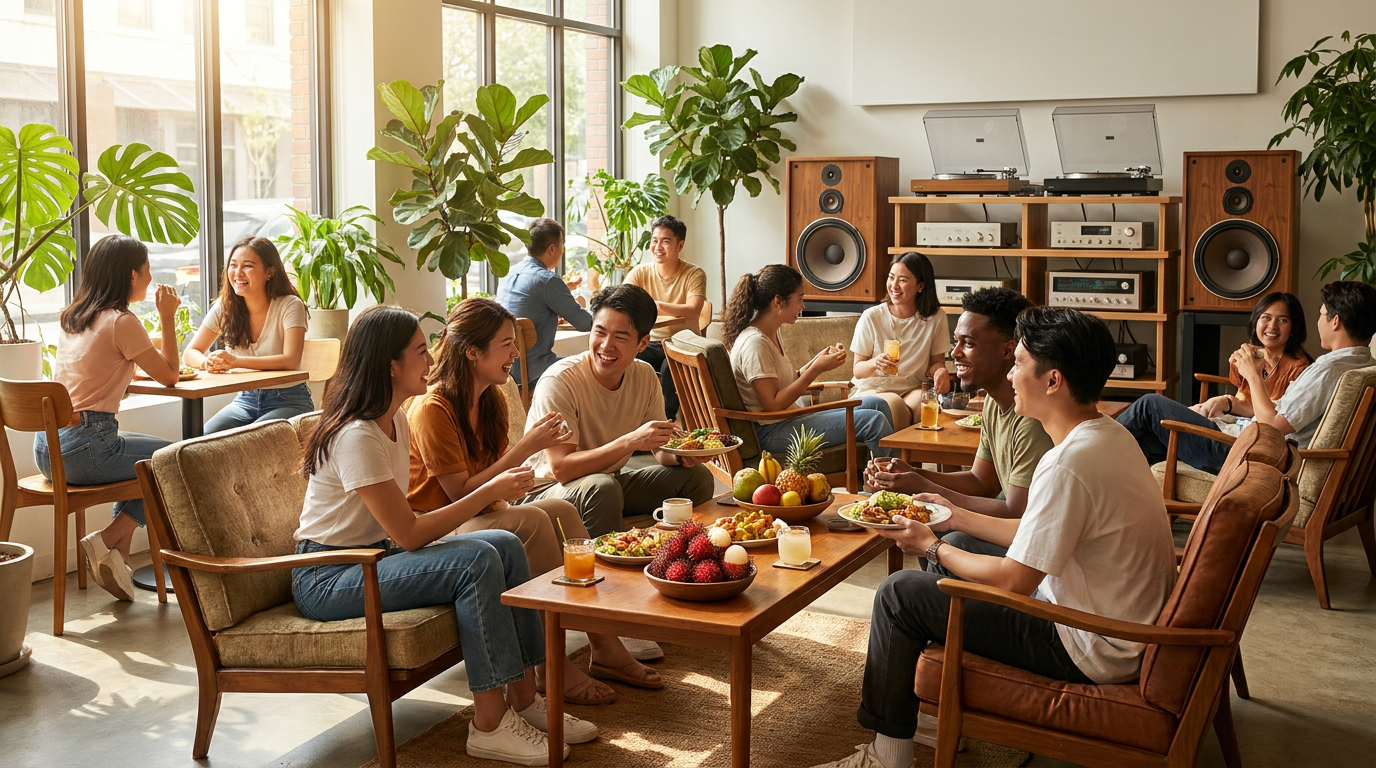
For the better part of a decade, the trajectory of modern life seemed permanently pointed toward the digital. Groceries were delivered, meetings were held on screens, and group chats served as the primary venue for friendship. But in 2026, a quiet, powerful counter-current is pulling society back into the physical world. Tired of atomized, online-only existence, a new generation is logging off and linking up in real life, prioritizing tangible community over endless content streams. This movement is fueling the widespread revival of the "third place."[1][8]
The concept of the third place is not new, though its modern application feels revolutionary. Coined by American sociologist Ray Oldenburg in his 1989 book "The Great Good Place," the framework divides human environments into three distinct realms. The first place is the home, centered on family and rest. The second place is work or school, defined by obligation and productivity. The third place is the crucial, informal anchor of community life—the neutral ground where people gather voluntarily to simply be, unwind, and connect without the pressures of their primary roles.[4][8]
Historically, these spaces took the form of diners, barbershops, church basements, and public parks. They functioned as the "living rooms" of society, acting as levelers where social status mattered less than shared presence. However, the early 2020s saw a dramatic hollowing out of these civic anchors. The 2024 American Social Capital Survey revealed a stark retreat from shared spaces, with 63 percent of Americans reporting they seldom or never visited a library in the past year, and half saying the same about public parks.[2][5]
The consequences of this spatial disappearance have been profound. Public health officials, including the U.S. Surgeon General, have repeatedly warned of a loneliness epidemic, linking long-term social isolation to spikes in anxiety, depression, and even physical ailments like heart disease. Without physical spaces to gather, communities lose the opportunity to build "weak ties"—the casual, low-stakes relationships with baristas, neighbors, and fellow regulars that sociologists say are vital for emotional support and a sense of belonging.[5][6]
Recognizing this void, young adults are now actively engineering a reversal. Gen Z, often stereotyped as a generation hopelessly glued to glowing rectangles, is proving to be one of the most community-hungry demographics in recent memory. Having come of age during an era of lockdowns and digital-first friendships, the novelty of the online world has worn thin for many. They are seeking out environments that offer authenticity, sensory richness, and genuine human interaction.[1][3]
This hunger is giving rise to entirely new formats of the third place. The traditional loud, crowded nightclub is increasingly being traded for the "listening bar"—a space dedicated to the communal, high-fidelity experience of appreciating an album from start to finish. These venues prioritize a shared, meditative vibe over frantic mingling. Similarly, run clubs have exploded in popularity, transforming what was once a solitary form of exercise into a major, recurring social event that anchors the week.[1]
This hunger is giving rise to entirely new formats of the third place.
Perhaps the most surprising venue for this cultural resurrection is the American shopping mall. Long presumed dead at the hands of e-commerce, the mall is being radically reimagined. Recent consumer data indicates that nearly three-quarters of Gen Z consumers visit a mall monthly, but a striking 82.2 percent of them go primarily to socialize rather than to shop. The sprawling corridors and food courts have quietly reverted to their original intended function: a climate-controlled town square.[3]

Lifestyle and retail brands are paying close attention to this shift. Recognizing that the purely transactional model is fading, developers are leaning into community-first design. They are retrofitting retail footprints to include lounges, interactive art installations, and event spaces that invite lingering. The message to the market has become clear: to capture the attention of the modern consumer, organizations must offer an experience and a sense of place, not just a product.[3][8]
Beyond commercial spaces, public institutions are also leaning into their role as vital community hubs. Public and university libraries are increasingly recognized not just as repositories for books, but as the ultimate free third places. At institutions like Boston University, library staff actively cultivate "the vibes," hosting pop-up services and providing a safe, 24-hour refuge where students can study, gossip, and form the casual connections that define campus life.[5]

The benefits of these spaces extend deeply into childhood and adolescent development. For youth, third places like skateparks, YMCAs, and after-school clubs provide a critical arena for social-emotional learning. Away from the direct supervision of parents and the academic pressure of teachers, children learn to navigate conflict, build self-efficacy, and interact with peers from diverse backgrounds. Research consistently links access to these environments with better emotional adjustment and higher academic confidence.[8]
Urban planners and city governments are increasingly viewing the cultivation of third places as a matter of vital public infrastructure. Cultivating a vibrant city requires moving away from the mid-century American model of suburban sprawl and car-centric design, which inherently isolates residents. Instead, planners are looking to European models—like the grand plazas of Madrid or the walkable, mixed-use neighborhoods of Paris—where public life naturally spills out into the streets.[7]
To replicate this organic social synergy, cities are experimenting with micro-interventions. This includes retrofitting zoning laws to allow cafes in residential neighborhoods, pedestrianizing streets, and installing free municipal Wi-Fi in parks to draw remote workers out of their home offices. Even small design changes, like arranging public seating to face inward rather than outward, can dramatically increase the likelihood of serendipitous conversation between strangers.[7][8]

Despite this momentum, a lingering challenge remains: the commercialization of connection. While public parks and libraries are free, many modern third places—from boutique coffee shops to specialized fitness clubs—require a financial transaction to participate. Sociologists warn that if the ability to gather is hidden behind a paywall, the civic benefits of the third place will be unevenly distributed, leaving lower-income populations further isolated.[6][8]
Addressing this requires a conscious, collective effort to protect and utilize truly public spaces. Civic advocates are urging citizens to make a "third-place resolution"—a commitment to leave the house, put down the phone, and spend an hour a week in a local diner, park, or community garden. By simply showing up and learning a neighbor's name, individuals can actively participate in the quiet revolution that is rebuilding the social fabric of the real world.[2]
How we got here
1989
Sociologist Ray Oldenburg coins the term 'third place' in his book 'The Great Good Place'.
2020-2022
The COVID-19 pandemic accelerates the closure of physical spaces, pushing socialization almost entirely online.
2023
The U.S. Surgeon General issues an advisory on the epidemic of loneliness and isolation.
2024
The American Social Capital Survey reveals historically low engagement with public spaces like parks and libraries.
2025-2026
A visible cultural shift emerges as younger demographics actively seek out IRL (in real life) community hubs.
Viewpoints in depth
Mental Health Advocates
Viewing physical community spaces as a necessary medical intervention for loneliness.
Psychologists and public health officials argue that the human brain is not wired for the atomization of the digital age. They point to the concept of 'weak ties'—the casual interactions we have with acquaintances in third places—as a vital buffer against stress and depression. From this perspective, funding community centers and public parks is not just an urban amenity, but a critical public health strategy to combat the physiological and psychological damage caused by chronic isolation.
Urban Planners
Focusing on how the built environment dictates human behavior and connection.
For city planners, the crisis of the third place is fundamentally a crisis of infrastructure. They argue that decades of car-centric suburban sprawl and strict residential zoning laws have literally engineered serendipity out of daily life. This camp advocates for structural overhauls: mixed-use zoning that allows cafes to open on residential corners, the pedestrianization of commercial streets, and the intentional design of public seating to force organic, face-to-face interaction among diverse socioeconomic groups.
Next-Gen Organizers
Reimagining the third place around shared activities rather than just shared geography.
Younger cultural innovators argue that the traditional third place—like the neighborhood pub or diner—is evolving. Rather than gathering just to sit, this demographic is building spaces around shared, low-stakes activities. The explosive growth of run clubs, specialized hobby groups, and listening bars reflects a desire for intentionality. They argue that in an era where everyone is constantly overstimulated by screens, a successful third place must offer a specific, grounding sensory experience that cannot be replicated online.
What we don't know
- Whether the commercialization of modern third places will permanently exclude lower-income individuals from these community benefits.
- How the ongoing shift toward remote work will alter the geographic distribution of third places outside of major urban centers.
- If the current Gen Z-led push for IRL connection is a permanent generational shift or a temporary post-pandemic rebound.
Key terms
- Third Place
- A sociological term for an informal public gathering space outside of home and work that fosters community connection.
- Weak Ties
- Casual, low-stakes acquaintanceships—like knowing your local barista or a neighbor—that are crucial for a feeling of societal belonging.
- Mixed-use Zoning
- Urban planning regulations that allow residential, commercial, and recreational spaces to coexist in the same neighborhood, promoting walkability.
- Social Capital
- The networks of relationships among people who live and work in a particular society, enabling that society to function effectively.
Frequently asked
What exactly is a 'third place'?
A third place is a social environment separate from the home (first place) and the workplace or school (second place). Examples include cafes, parks, libraries, and community centers where people gather informally.
Why are third places important for mental health?
They provide opportunities to build 'weak ties'—casual relationships with acquaintances that offer emotional support, reduce stress, and combat the physical and mental tolls of loneliness.
How is Gen Z changing the concept of the third place?
Younger demographics are moving away from digital-only interactions and traditional nightlife, favoring intentional, activity-based physical spaces like run clubs, listening bars, and socializing at reinvented shopping malls.
Are third places always free to access?
Not always. While parks and libraries are free public goods, many modern third places like coffee shops and gyms require a financial transaction, which can create barriers to entry for some community members.
Sources
Source coverage
8 outlets
4 viewpoints surfaced








[1]Young HollywoodCultural Innovators
The Third Place Takes Over
Read on Young Hollywood →[2]Washington MonthlyUrban Planners
We're spending less time in 'Third Spaces'—How to revive them
Read on Washington Monthly →[3]LA GuestlistCultural Innovators
The New 'Third Place': How Gen Z Is Redefining Where We Belong
Read on LA Guestlist →[4]Smithsonian MagazineSocietal Traditionalists
Origins of the term 'third place'
Read on Smithsonian Magazine →[5]Boston UniversityMental Health Professionals
Why Is Everybody Talking About 'Third Places' Right Now?
Read on Boston University →[6]Remedy PsychiatryMental Health Professionals
Understanding Third Spaces and Mental Health
Read on Remedy Psychiatry →[7]Site SelectionUrban Planners
Integrating Third Places into Urban Planning
Read on Site Selection →[8]Factlen Editorial TeamSocietal Traditionalists
Synthesis by Factlen editorial team
Read on Factlen Editorial Team →

Every angle. Every day.
Get lifestyle stories with full source coverage and perspective breakdowns delivered to your inbox.