
The End of the Drill: How Biomimetic Gels Are Learning to Regrow Tooth Enamel
A new wave of biomimetic peptide gels is moving from the laboratory to human clinical trials, offering the ability to naturally regrow tooth enamel. By mimicking the body's developmental processes, these treatments aim to reverse early cavities without the need for dental drills.
By Factlen Editorial Team
- Regenerative Science Pioneers
- Researchers focused on replacing mechanical dental repairs with biological tissue regeneration.
- Clinical Practitioners
- Dentists who balance the promise of new technology with the practical realities of patient care.
- Editorial Synthesis
- Factlen's analytical view on the timeline and impact of biomimetic dentistry.
What's not represented
- · Dental Insurance Providers
- · Traditional Dental Material Manufacturers
Why this matters
For over a century, treating cavities has meant permanently drilling away parts of your teeth. The arrival of biomimetic gels that can naturally regrow enamel promises to end the 'drill and fill' era, making dental care painless, biological, and truly restorative.
Key points
- Tooth enamel cannot naturally regenerate because the cells that create it die after teeth erupt.
- Traditional dentistry relies on drilling away decay and using synthetic fillings, while fluoride only hardens the surface.
- New biomimetic gels use peptides to create a scaffold that pulls minerals from saliva to regrow natural enamel.
- Human clinical trials for elastin-like recombinamer gels are scheduled to begin in 2026.
- These treatments aim to reverse early cavities painlessly, though they cannot replace root canals for severe decay.
For over a century, the high-pitched whine of the dental drill has been a near-universal source of clinical anxiety. Traditional dentistry has operated on a simple, subtractive premise: when a tooth decays, the damaged portion must be drilled away and replaced with synthetic materials like amalgam, composite resin, or ceramic. This 'drill and fill' era was born of biological necessity, but it is fundamentally a process of managed amputation. Now, a wave of breakthroughs in biomimetic science is poised to fundamentally alter that paradigm, moving dentistry from mechanical replacement to biological regeneration.[7]
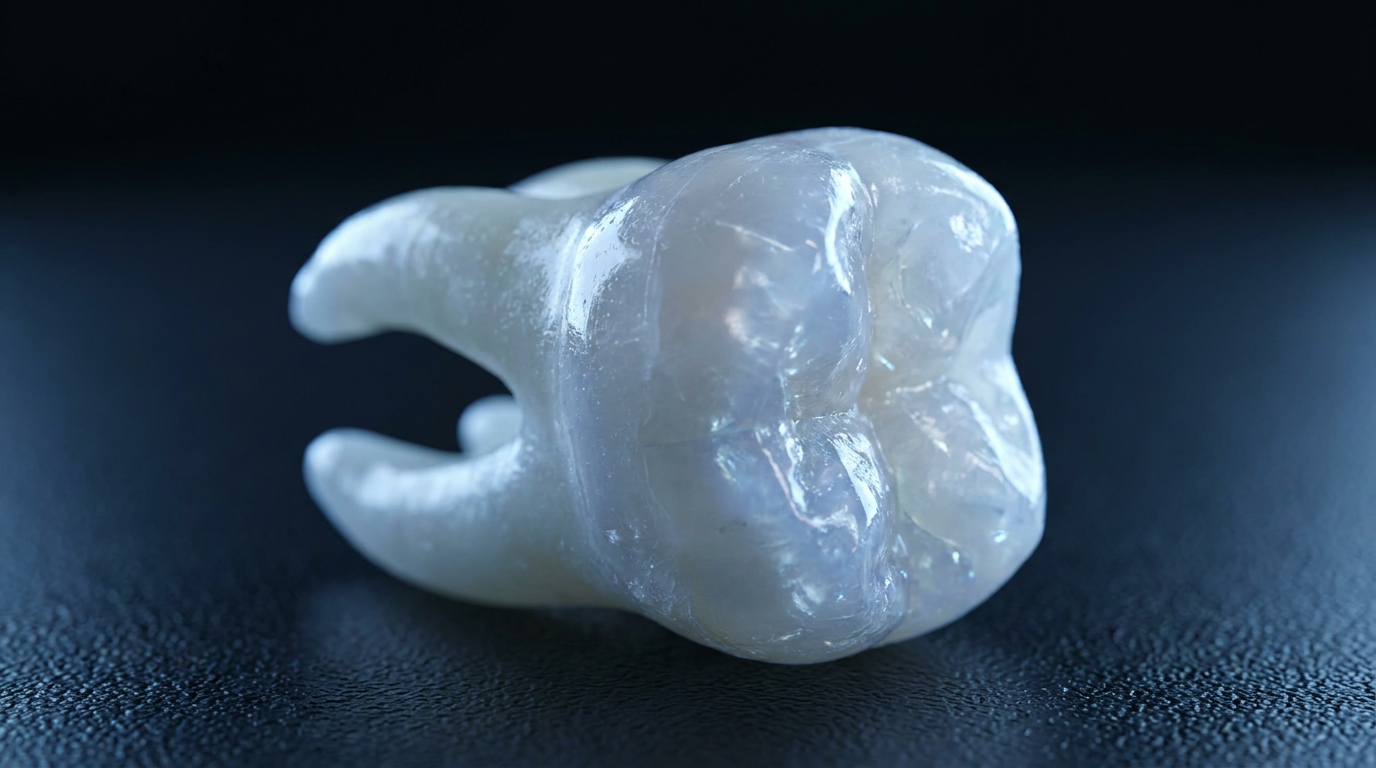
The core challenge in dental medicine lies in the unique biology of tooth enamel. Enamel is the hardest tissue in the human body, composed of roughly 96 percent carbonated hydroxyapatite crystals. However, unlike bone or skin, mature enamel contains no living cells. The specialized cells that form enamel during childhood development, known as ameloblasts, are lost once the tooth erupts through the gum line. Consequently, when enamel is dissolved by the acidic byproducts of oral bacteria, the body has no natural mechanism to regrow the lost structural tissue.[1][4]
For decades, the frontline defense against this decay has been fluoride. Fluoride is highly effective at protecting teeth because it integrates with existing enamel to form fluorapatite, a compound that is more resistant to acid attacks than natural enamel. Yet, while fluoride excels at hardening the outer surface and slowing mineral loss, it has distinct limitations. It cannot rebuild the deep, complex crystalline architecture of a tooth once significant demineralization has occurred. It is a protective shield, not a regenerative engine.[6]
Enter biomimetic dentistry, a rapidly advancing field that seeks to mimic the body's natural developmental processes to repair tissue. Rather than relying on inert synthetic fillers, researchers have spent the last decade engineering materials that can trick the mouth into rebuilding its own enamel. The most promising of these innovations are peptide-based gels and biomimetic liquids designed to restart the exact biological sequence that formed our teeth in infancy.[2][4]

The mechanism behind these regenerative gels is a marvel of molecular engineering. When applied to a damaged tooth, the gel seeps into the microscopic cracks and early cavities—often referred to as white-spot lesions. The gel contains short chains of amino acids, or peptides, which self-assemble into a three-dimensional microscopic scaffold. This matrix mimics the protein framework that ameloblasts use to build teeth before birth.[1][2]
Once the scaffold is in place, it acts as a molecular magnet. It actively draws calcium and phosphate ions out of the patient's own saliva and funnels them into the demineralized zones. Because the peptide matrix is designed to mimic natural dental proteins, it forces these minerals to crystallize in the exact same alignment as the surrounding healthy enamel. This process, known as epitaxial growth, ensures that the new tissue bonds seamlessly with the old, creating a unified, durable structure rather than a superficial patch.[2][4][6]
Once the scaffold is in place, it acts as a molecular magnet.
The leap from laboratory theory to clinical reality is happening at an unprecedented pace. A leading breakthrough comes from researchers at the University of Nottingham, who developed a fluoride-free gel utilizing elastin-like recombinamers. Under electron microscopy, teeth treated with this gel transformed from chaotic, pitted surfaces into highly organized, layered crystal structures indistinguishable from natural enamel. The university has since spun off a commercial entity, Mintech-Bio, to bring the technology to market, with human clinical trials scheduled to begin in 2026.[2]
Simultaneously, international teams are pushing the boundaries of how quickly this regeneration can occur. Scientists at Zhejiang University in China recently unveiled a biomimetic liquid utilizing calcium phosphate ion clusters. In laboratory settings, these nano-clusters successfully fused with existing enamel and crystallized to form a new, seamless protective layer within just 48 hours. These protein-based matrices have demonstrated the ability to repair enamel defects up to 500 micrometers deep, reaching far beyond the superficial capabilities of traditional remineralization therapies.[4][5]

While clinical-grade regenerative gels navigate the rigorous regulatory approval process, the underlying science of biomimetic repair is already reaching consumers through advanced daily care products. The bridge between the drill and the regenerative gel is hydroxyapatite (HAp) toothpaste. Originally developed by NASA in the 1970s to help astronauts combat mineral loss in zero-gravity environments, synthetic hydroxyapatite has become a cornerstone of modern preventive dentistry.[3]
Unlike fluoride, which alters the chemical composition of the tooth surface, nano-hydroxyapatite toothpastes supply the exact minerals that make up the tooth itself. When brushed onto the teeth, these microscopic particles fill in tiny fissures and bind directly to the enamel, replacing minerals lost to daily dietary acids. While over-the-counter HAp toothpastes cannot regrow lost tooth structure in the way clinical peptide gels aim to, they represent a crucial shift toward biologically compatible oral care.[3][7]
Despite the immense promise of enamel regeneration, dental experts caution that it is not a panacea for all oral health woes. Biomimetic gels require an existing enamel framework to build upon. They are designed to reverse early-to-moderate decay, seal microscopic vulnerabilities, and treat severe sensitivity by closing exposed dentinal tubules. They cannot, however, resurrect a tooth that has suffered massive structural collapse, nor can they replace the need for root canals when decay has penetrated the living pulp of the tooth.[4][6][7]
The timeline for widespread adoption hinges on the upcoming wave of human trials. If the 2026 clinical evaluations confirm the safety, efficacy, and long-term durability seen in animal and in-vitro models, the first regenerative gels could receive regulatory approval by the late 2020s. Initially, these treatments will likely debut in premium dental clinics as a specialized service for reversing early cavities without the need for local anesthesia or drilling.[2][7]

As manufacturing scales and formulations are optimized for routine use, biomimetic repair is expected to become a standard preventive tool, applied as simply as today's fluoride varnishes. This transition will fundamentally alter the economics and experience of dental care, shifting the profession's focus from surgical intervention to proactive, biological maintenance.[4][7]

For generations, patients have been told that enamel loss is a permanent, irreversible decline. The advent of peptide-based regeneration rewrites that biological rulebook. By harnessing the body's own building blocks and providing the molecular scaffolding needed to guide them, science is on the verge of giving human teeth the unprecedented ability to heal themselves.[1]
How we got here
1970s
NASA develops synthetic hydroxyapatite to help astronauts combat mineral loss in zero-gravity environments.
2025
Researchers at the University of Nottingham and Zhejiang University publish breakthroughs in peptide gels and biomimetic liquids.
2026
First major human clinical trials for elastin-like recombinamer enamel regeneration gels are scheduled to begin.
Late 2020s
Projected initial rollout of regenerative gel treatments in commercial dental clinics.
Viewpoints in depth
Regenerative Science Pioneers
Researchers focused on replacing mechanical dental repairs with biological tissue regeneration.
This camp views the traditional 'drill and fill' model as an outdated necessity that will soon be obsolete for early-stage decay. By engineering peptide scaffolds and calcium phosphate clusters, these scientists argue that dentistry can finally move into the realm of true tissue engineering. Their primary focus is on perfecting the molecular matrices that allow for epitaxial growth, ensuring that new minerals bond seamlessly with existing enamel rather than just coating the surface.
Clinical Practitioners
Dentists who balance the promise of new technology with the practical realities of patient care.
While highly optimistic about biomimetic gels, clinical dentists emphasize that these innovations are not a cure-all. They point out that regenerative therapies require a foundation of existing enamel to work and cannot save teeth with deep structural cavities or infected pulp. This group advocates for integrating peptide gels and nano-hydroxyapatite as powerful new tools in a broader preventive strategy, rather than replacements for fundamental oral hygiene and necessary restorative surgeries.
Editorial Synthesis
Factlen's analytical view on the timeline and impact of biomimetic dentistry.
The transition from subtractive to regenerative dentistry represents one of the most significant medical shifts of the decade. However, the gap between laboratory success and widespread clinical availability remains substantial. The upcoming 2026 human trials will be the ultimate proving ground for whether these peptide gels can withstand the complex, dynamic environment of the human mouth over years of chewing and acid exposure. If successful, the initial rollout will likely be tiered, starting as a premium service before economies of scale make it a standard preventive treatment.
What we don't know
- How well the newly generated enamel will hold up to decades of aggressive chewing and acidic diets compared to natural enamel.
- The exact cost of the treatment when it first hits the market, and whether dental insurance will cover it as a preventive measure.
- How many applications of the gel will be required to achieve full remineralization in a clinical setting.
Key terms
- Ameloblasts
- The specialized cells that form tooth enamel during childhood development, which disappear once the tooth erupts.
- Biomimetic
- Materials or processes designed to mimic biological systems and natural human tissue development.
- Epitaxial growth
- A process where new mineral crystals grow in the exact same alignment and structure as the existing natural tissue.
- Hydroxyapatite
- A naturally occurring calcium phosphate mineral that makes up 96 percent of human tooth enamel.
Frequently asked
Can this gel fix a large cavity or replace a filling?
No. Biomimetic gels require an existing enamel framework to build upon. They are designed to reverse early-to-moderate decay, not to replace massive structural loss or root canals.
Is enamel regeneration the same as fluoride treatment?
No. Fluoride hardens the existing outer surface of the tooth by forming fluorapatite. Regenerative gels actually guide the growth of new hydroxyapatite crystals deep inside the damaged enamel.
When will enamel regeneration gels be available at my dentist?
Human clinical trials are scheduled to begin in 2026. If successful, these treatments are expected to reach premium dental clinics by the late 2020s.
Sources
Source coverage
7 outlets
3 viewpoints surfaced







[1]National Institutes of HealthRegenerative Science Pioneers
Advancements in enamel regeneration and remineralization
Read on National Institutes of Health →[2]Futura SciencesRegenerative Science Pioneers
Clinical trials for a gel that regrows tooth enamel are scheduled to begin in 2026
Read on Futura Sciences →[3]WebMDClinical Practitioners
What Is Hydroxyapatite Toothpaste?
Read on WebMD →[4]Complete SmilesClinical Practitioners
The Future of Biomimetic Enamel Repair
Read on Complete Smiles →[5]DentinovaRegenerative Science Pioneers
China's Miraculous Biomimetic Enamel Regeneration Liquid
Read on Dentinova →[6]Gold Coast DentalClinical Practitioners
Enamel Regeneration Gels vs Fluoride
Read on Gold Coast Dental →[7]Factlen Editorial TeamEditorial Synthesis
Synthesis by Factlen editorial team
Read on Factlen Editorial Team →
Every angle. Every day.
Get health stories with full source coverage and perspective breakdowns delivered to your inbox.