
The End of the 10-Year Wait: How New Blood and Saliva Tests are Revolutionizing Endometriosis Diagnosis
A new wave of highly accurate, non-invasive "liquid biopsies" is replacing surgical diagnosis for endometriosis, promising to end the decade-long delays that have historically plagued women's healthcare.
By Factlen Editorial Team
- Diagnostic Innovators
- Focus on leveraging AI, multi-omics, and microRNAs to achieve clinical-grade accuracy without surgery.
- Clinical Practitioners
- Emphasize the ability to intervene earlier, preserve fertility, and avoid putting patients through unnecessary invasive procedures.
- Patient Advocates
- Highlight the historical underfunding of women's health and celebrate the validation that comes with rapid, accessible diagnosis after years of dismissed pain.
What's not represented
- · Primary care physicians who are often the first point of contact for patients experiencing pelvic pain.
- · Health insurance actuaries evaluating the cost-benefit of reimbursing novel multi-omic tests.
Why this matters
For generations, women with endometriosis have endured years of dismissed pain because diagnosis required invasive surgery. These new non-invasive tests mean millions of women can now receive rapid validation, early medical intervention, and a better chance at preserving their fertility.
Key points
- Endometriosis affects 1 in 10 women, but historically required invasive surgery to diagnose, causing a 7-10 year delay.
- New 'liquid biopsies' using blood and saliva can detect the disease with over 94% accuracy.
- The tests analyze microRNAs and proteins using artificial intelligence to identify the disease's molecular signature.
- Early diagnosis allows doctors to intervene medically, preserving fertility and preventing severe organ damage.
- Major tests like HerResolve and Ziwig Endotest are rolling out globally, with FDA submissions expected in late 2026.
For decades, women suffering from endometriosis have been trapped in a grueling waiting game. The condition, which occurs when tissue similar to the uterine lining grows outside the uterus, affects roughly one in ten women of reproductive age. Yet, the average time from the onset of symptoms to a formal diagnosis stretches between seven and ten agonizing years.[2][4]
This delay is not merely a bureaucratic failure; it is a technological one. Historically, the only definitive way to diagnose endometriosis has been through diagnostic laparoscopy—an invasive surgical procedure requiring general anesthesia. Because surgery carries inherent risks and costs, it is often treated as a last resort, leaving patients to cycle through years of dismissed pain, misdiagnoses, and ineffective treatments.[1][2]
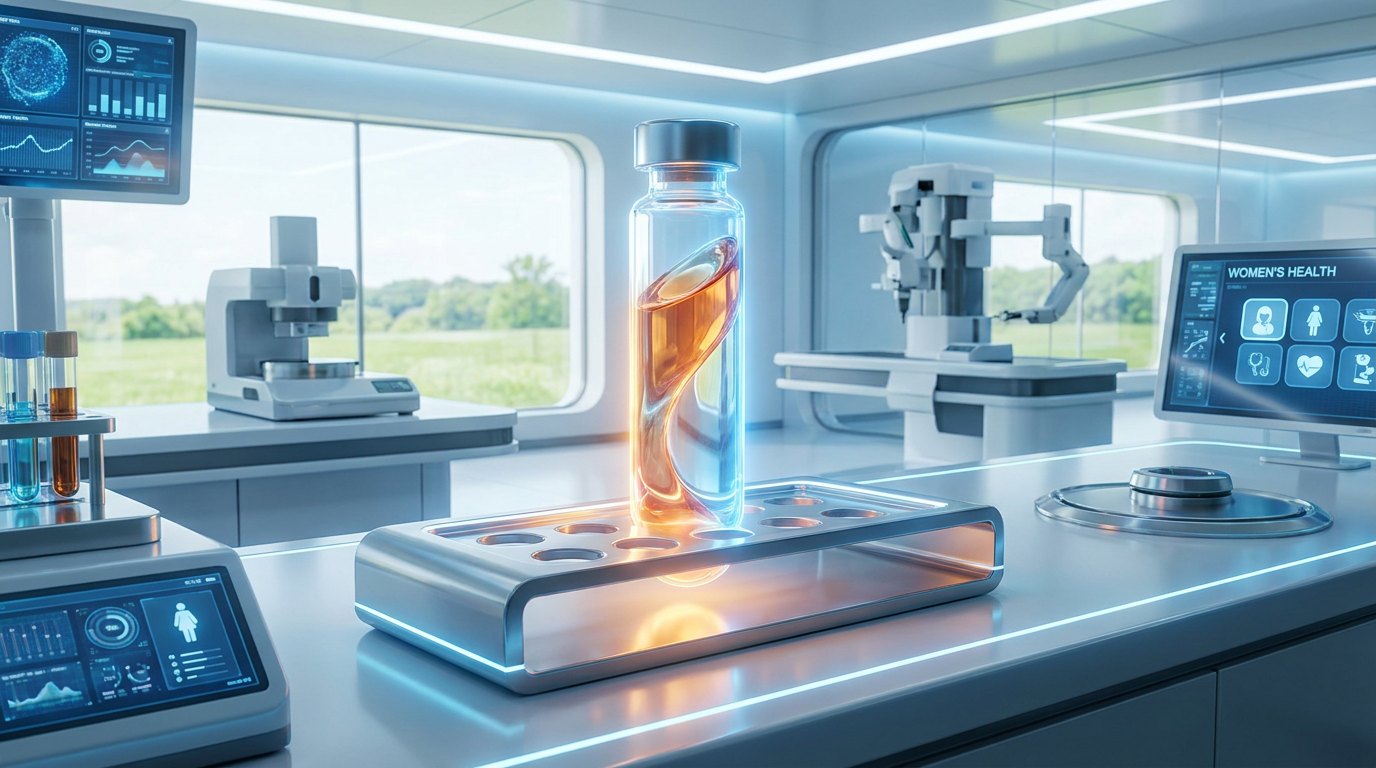
But in 2025 and 2026, the landscape of women’s health has experienced a seismic shift. A new generation of non-invasive "liquid biopsies"—tests that use blood or saliva to detect the disease at a molecular level—is rapidly moving from the laboratory to the clinic. By identifying specific genetic and protein signatures, these tools are rendering the surgical diagnostic requirement obsolete.[2][3]

The science driving this breakthrough centers on microRNAs (miRNAs). These are tiny, non-coding RNA molecules that regulate gene expression and reflect the real-time pathophysiological state of the body. Crucially, miRNAs are highly stable and leak into bodily fluids, making them ideal biomarkers for conditions that were previously hidden deep within the pelvic cavity.[2]
Leading the charge in saliva-based diagnostics is the French medical technology company Ziwig. Their flagship product, the Endotest, analyzes a specific signature of 109 microRNAs extracted from a simple saliva sample. The raw genetic data is then processed through an artificial intelligence model trained to recognize the complex patterns unique to endometriosis.[1][2]
The clinical results have been staggering. In multicenter validation studies, the saliva test demonstrated an overall accuracy of 96.6%, with a sensitivity of 97.3% and a specificity of 94.1%. This performance not only matches the accuracy of surgical laparoscopy but actually exceeds the diagnostic capabilities of conventional imaging for early-stage disease, where lesions are too small to be seen on an ultrasound.[1][2]
While Ziwig tackles saliva, other innovators are unlocking the secrets held in blood. Boston-based HerAnova Lifesciences recently launched HerResolve, a multi-omic blood test. Rather than looking at a single metric, HerResolve combines proteomics, genomics, and hormonal data—analyzing three microRNAs, three protein biomarkers, and a steroid hormone, alongside the patient’s age and body mass index.[1][4]

While Ziwig tackles saliva, other innovators are unlocking the secrets held in blood.
This multi-pronged approach has yielded clinical-grade accuracy of over 94%. Currently, HerResolve is being utilized by reproductive endocrinologists and OB-GYNs at select in vitro fertilization centers across the United States. The company is aggressively expanding its real-world data collection, with plans to submit the test for full clearance from the U.S. Food and Drug Administration in the third quarter of 2026.[1][3][4]
Meanwhile, other regions are seeing similar breakthroughs. In Canada, the ENDOSURE test is rolling out as a rapid diagnostic tool that bypasses traditional lab work entirely, boasting 99 percent accuracy in detecting all stages of the disease in under an hour. These global advancements signal a unified move away from the operating room and toward the clinic.[6]
The impact of these tests extends far beyond simply putting a name to a patient's pain. Endometriosis is a leading cause of infertility, and the traditional diagnostic delay often means the disease is only caught after severe scarring has already compromised the reproductive organs. Early, non-invasive detection allows doctors to intervene medically before irreversible damage occurs, preserving a woman's fertility and expanding her family-planning options.[2][4]
The shift is already altering clinical guidelines. Recognizing the barriers created by surgical requirements, the American College of Obstetricians and Gynecologists recently updated its guidance to strongly advise empiric treatment based on clinical symptoms alone. The arrival of highly accurate blood and saliva tests provides doctors with the objective data they need to confidently prescribe targeted therapies without waiting for a surgical mandate.[1]

The momentum behind these diagnostics is part of a broader, hard-fought awakening in women's healthcare funding. Historically, women's health has been severely undercapitalized; a January 2026 World Economic Forum report noted that the sector receives just 6% of private healthcare capital. However, intense advocacy—highlighted by events like the Women's Health Capitol Hill Day—is pushing lawmakers and investors to close the glaring gaps in research and innovation.[5][7]
The rollout of these tests is not without hurdles. While the science is sound, securing widespread insurance reimbursement remains a critical next step. Companies must generate extensive real-world evidence proving that these tests not only improve patient quality of life but also offer cost-effectiveness by eliminating the need for expensive diagnostic surgeries.[1]
Looking ahead, the potential for these liquid biopsies goes beyond simple binary diagnosis. As the databases of genetic and proteomic information grow, researchers plan to use machine learning to stratify the disease. In the near future, a blood or saliva test may not just tell a patient she has endometriosis, but exactly what stage it is, how it will impact her fertility, and which specific medications will be most effective for her unique biological profile.[4]

For the millions of women who have been told their debilitating pain is normal, or who have spent a decade searching for answers, the arrival of clinical-grade liquid biopsies is a profound validation. The era of the ten-year wait is drawing to a close, replaced by a new standard of care where a definitive answer is just a swab or a blood draw away.[2][4]
How we got here
Pre-2024
Laparoscopic surgery remains the sole gold standard for definitive endometriosis diagnosis.
February 2024
ACOG updates guidelines to strongly advise empiric treatment based on clinical symptoms, signaling a shift away from surgery.
2025
Ziwig publishes validation studies showing its saliva test achieves over 96% accuracy using AI and microRNAs.
Early 2026
HerAnova launches the HerResolve blood test in select US fertility centers.
Q3 2026
Anticipated FDA submission for major non-invasive endometriosis diagnostics to expand national access.
Viewpoints in depth
Diagnostic Innovators
Focus on leveraging AI, multi-omics, and microRNAs to achieve clinical-grade accuracy without surgery.
Biotech companies argue that the reliance on surgical diagnosis is an outdated paradigm that harms patients. By leveraging multi-omic approaches—combining proteomics, genomics, and hormonal data—innovators believe they can provide a more comprehensive picture of a patient's health than a surgeon's camera. They point to clinical trials showing accuracy rates above 94% as proof that molecular signatures are reliable enough to serve as the new gold standard, and they are heavily investing in machine learning to eventually stratify the disease by stage and severity without ever making an incision.
Clinical Practitioners
Emphasize the ability to intervene earlier, preserve fertility, and avoid putting patients through unnecessary invasive procedures.
For OB-GYNs and reproductive endocrinologists, the arrival of liquid biopsies solves a major clinical bottleneck. Doctors have long been frustrated by the need to subject patients to the risks and costs of general anesthesia simply to confirm what their symptoms already suggest. Practitioners highlight that early, non-invasive detection is crucial for preserving fertility, as it allows them to initiate targeted medical therapies before endometrial lesions cause irreversible scarring to the reproductive organs.
Patient Advocates
Highlight the historical underfunding of women's health and celebrate the validation that comes with rapid, accessible diagnosis after years of dismissed pain.
Women's health advocates view the new diagnostics as a long-overdue victory against systemic medical gaslighting. For decades, patients with endometriosis have reported having their severe pain dismissed as 'normal cramps,' leading to an average diagnostic delay of up to ten years. Advocates argue that this delay is a direct result of the historical underfunding of women's health research. They celebrate the new tests not just as medical tools, but as instruments of validation that finally provide objective proof of a patient's lived experience.
What we don't know
- How quickly major insurance providers will agree to reimburse the costs of these new molecular tests.
- Whether the tests will be adopted universally by primary care physicians, or remain siloed within specialized fertility clinics.
- If future iterations of the tests will be able to pinpoint the exact anatomical location of endometrial lesions without any imaging.
Key terms
- Endometriosis
- A condition where tissue similar to the lining of the uterus grows outside the uterus, causing severe pain and potential infertility.
- Laparoscopy
- A surgical procedure involving a small incision and a camera, historically the only definitive way to diagnose endometriosis.
- MicroRNA (miRNA)
- Small, non-coding RNA molecules that regulate gene expression and can serve as stable biomarkers in saliva and blood.
- Liquid Biopsy
- A non-invasive test that detects disease markers in bodily fluids like blood or saliva, replacing the need for surgical tissue sampling.
- Multi-omics
- A biological analysis approach that combines data from multiple sources, such as proteins, genetics, and hormones, to achieve higher diagnostic accuracy.
Frequently asked
Can I get a saliva or blood test for endometriosis today?
Yes, depending on your location. The Ziwig Endotest is available in several European countries, and HerResolve is rolling out in select US fertility clinics, with broader FDA clearance expected soon.
Will these tests completely replace surgery?
While surgery will still be necessary to remove endometrial lesions, these non-invasive tests are poised to replace surgery as the primary method of initial diagnosis.
Are these tests covered by insurance?
Coverage is currently limited as the tests are new, but companies are gathering real-world data to secure reimbursement from major payers in the near future.
How accurate are these new diagnostics?
Clinical trials show that both the leading blood and saliva tests have an accuracy rate exceeding 94%, which rivals or surpasses traditional surgical diagnosis for early-stage disease.
Sources
Source coverage
7 outlets
3 viewpoints surfaced







[1]Pharmaceutical TechnologyDiagnostic Innovators
Endometriosis diagnostics: the race to replace laparoscopy
Read on Pharmaceutical Technology →[2]Endometriosis.netClinical Practitioners
A rapidly evolving diagnostic landscape
Read on Endometriosis.net →[3]Diagnostics World NewsDiagnostic Innovators
Endometriosis Developments: Newly Launched Tests and Treatment Updates
Read on Diagnostics World News →[4]R&D WorldDiagnostic Innovators
HerAnova Commercializes Blood Test for Endometriosis Detection
Read on R&D World →[5]Fierce HealthcarePatient Advocates
Women's health advocates gather on Capitol Hill to push for funding
Read on Fierce Healthcare →[6]Femtech WorldDiagnostic Innovators
30-minute non-invasive test to revolutionise endometriosis detection
Read on Femtech World →[7]OsteoboostPatient Advocates
Women's health remains underfunded relative to the scale of need
Read on Osteoboost →

Every angle. Every day.
Get health stories with full source coverage and perspective breakdowns delivered to your inbox.