
The Clinical Evidence for Personalized mRNA Cancer Vaccines
Five-year trial data confirms that a custom-built mRNA vaccine, when paired with immunotherapy, halves the risk of melanoma recurrence, validating a new precision approach to oncology.
By Factlen Editorial Team
- Clinical Oncologists
- Prioritize durable patient survival and establishing new standards of care for high-risk cancers.
- Translational Researchers
- Focus on the biological mechanisms of T-cell activation and neoantigen targeting.
- Industry & Economists
- Evaluate the scalability, manufacturing logistics, and market viability of personalized therapies.
What's not represented
- · Patient advocacy groups
- · Regulatory agencies (FDA/EMA)
Why this matters
For decades, cancer vaccines failed because tumors vary wildly between patients. By proving that custom-printing a vaccine based on a patient's unique tumor DNA can durably prevent recurrence, this research opens the door to highly personalized, curative treatments for multiple cancer types.
Key points
- Five-year data from the KEYNOTE-942 trial shows a personalized mRNA vaccine plus immunotherapy cuts melanoma recurrence risk by 49%.
- The combination therapy reduced the risk of distant metastasis by 59% compared to immunotherapy alone.
- Overall survival at the five-year mark was 92.2% for the combination group versus 71.3% for the control group.
- The vaccine is custom-built for each patient by sequencing their tumor and encoding up to 34 unique neoantigens into mRNA.
- Phase 3 trials are currently underway to confirm these findings in melanoma, lung cancer, and other tumor types.
For decades, the concept of a "cancer vaccine" was a graveyard of clinical trials. Unlike preventive vaccines that target stable, predictable viruses like polio or measles, therapeutic cancer vaccines struggled because every patient's tumor is genetically unique. A one-size-fits-all approach simply could not account for the vast mutational diversity of human cancers, leading to decades of disappointing results and abandoned research programs. However, the advent of rapid genomic sequencing and mRNA technology has fundamentally altered the landscape, allowing researchers to custom-print therapies tailored to a single individual.[8]
That paradigm is now shifting from theoretical promise to undeniable clinical reality. At the 2026 American Society of Clinical Oncology (ASCO) Annual Meeting in Chicago, researchers presented highly anticipated five-year follow-up data from a landmark phase 2b trial. The results fundamentally validate the personalized mRNA approach, demonstrating that a custom-built vaccine can provide durable, long-lasting protection against one of the most aggressive forms of skin cancer. For the oncology community, this data represents a watershed moment, proving that the immune system can be permanently trained to hunt down specific tumor mutations long after the initial treatment has concluded.[1][5]
The trial, officially known as KEYNOTE-942, evaluated an experimental mRNA vaccine called intismeran autogene (formerly designated as mRNA-4157 or V940). Developed jointly by pharmaceutical giants Moderna and Merck, the therapy represents the bleeding edge of individualized neoantigen therapy. Rather than relying on generic tumor markers, the vaccine is engineered from the ground up using the exact genetic blueprint of the patient's own cancer, marking a significant departure from traditional off-the-shelf oncology drugs. This bespoke approach aims to trigger a highly specific immune response that minimizes collateral damage to healthy tissue while maximizing the destruction of malignant cells.[6][7]
The study enrolled 157 patients diagnosed with stage IIIB to IV cutaneous melanoma who had already undergone complete surgical removal of their tumors. Because these high-risk patients face a severe likelihood of the cancer returning—often spreading silently to vital organs—they require what is known as "adjuvant" therapy. Adjuvant treatments are administered after surgery to seek out and destroy microscopic residual disease that surgeons cannot see, effectively acting as an insurance policy against future recurrence. In the case of advanced melanoma, standard adjuvant therapy has historically relied on broad-spectrum immunotherapies that boost the immune system but lack specific targeting.[5][6]

To test the efficacy of the new approach, patients in the KEYNOTE-942 trial were randomized into two distinct groups. The control group received the current standard-of-care: the blockbuster immunotherapy drug pembrolizumab, marketed as Keytruda, administered alone. The experimental group received the same regimen of pembrolizumab, but it was combined with the custom-built intismeran autogene mRNA vaccine. Researchers then tracked both groups over a period of 60 months to determine which cohort experienced higher rates of cancer recurrence or mortality.[1][4]
The five-year efficacy data, which was simultaneously published in the prestigious Journal of Clinical Oncology, showed profound and durable benefits for the combination approach. The data revealed that the mRNA vaccine, when paired with immunotherapy, reduced the risk of cancer recurrence or death by a staggering 49% compared to pembrolizumab alone. This finding is particularly significant because it proves that the initial benefits observed at the two-year and three-year marks did not wane over time, but rather sustained their protective effect.[2][5]
Even more critically, the vaccine combination demonstrated a remarkable ability to prevent the cancer from migrating. The data showed a 59% reduction in the risk of distant metastasis—meaning the cancer was far less likely to spread to other organs such as the lungs, liver, or brain. Because distant metastasis is the primary cause of mortality in melanoma patients, preventing this spread is considered the ultimate goal of any adjuvant therapy, making the 59% reduction a monumental clinical achievement.[2][4]
Overall survival rates at the five-year mark heavily favored the bespoke combination approach. Patients receiving the mRNA vaccine plus immunotherapy demonstrated an exceptional 92.2% overall survival rate. In stark contrast, the control group receiving only the standard immunotherapy posted a 71.3% survival rate. For oncologists accustomed to incremental single-digit improvements in survival data, a 20-percentage-point gap at five years represents a paradigm-shifting leap forward in the management of high-risk skin cancer. These numbers suggest that the addition of a personalized vaccine transforms a highly lethal diagnosis into a manageable, and potentially curable, condition for the vast majority of patients.[1][4]
To understand why this specific vaccine succeeded where generations of older models failed requires looking closely at its bespoke manufacturing process. Intismeran autogene is not pulled from a pharmacy shelf; it is engineered from scratch for every single patient. This individualized manufacturing pipeline acknowledges a fundamental truth of oncology: no two tumors are exactly alike. By treating the patient's specific genetic mutations as the primary drug target, researchers have finally bypassed the limitations of generic cancer vaccines.[1][8]
To understand why this specific vaccine succeeded where generations of older models failed requires looking closely at its bespoke manufacturing process.
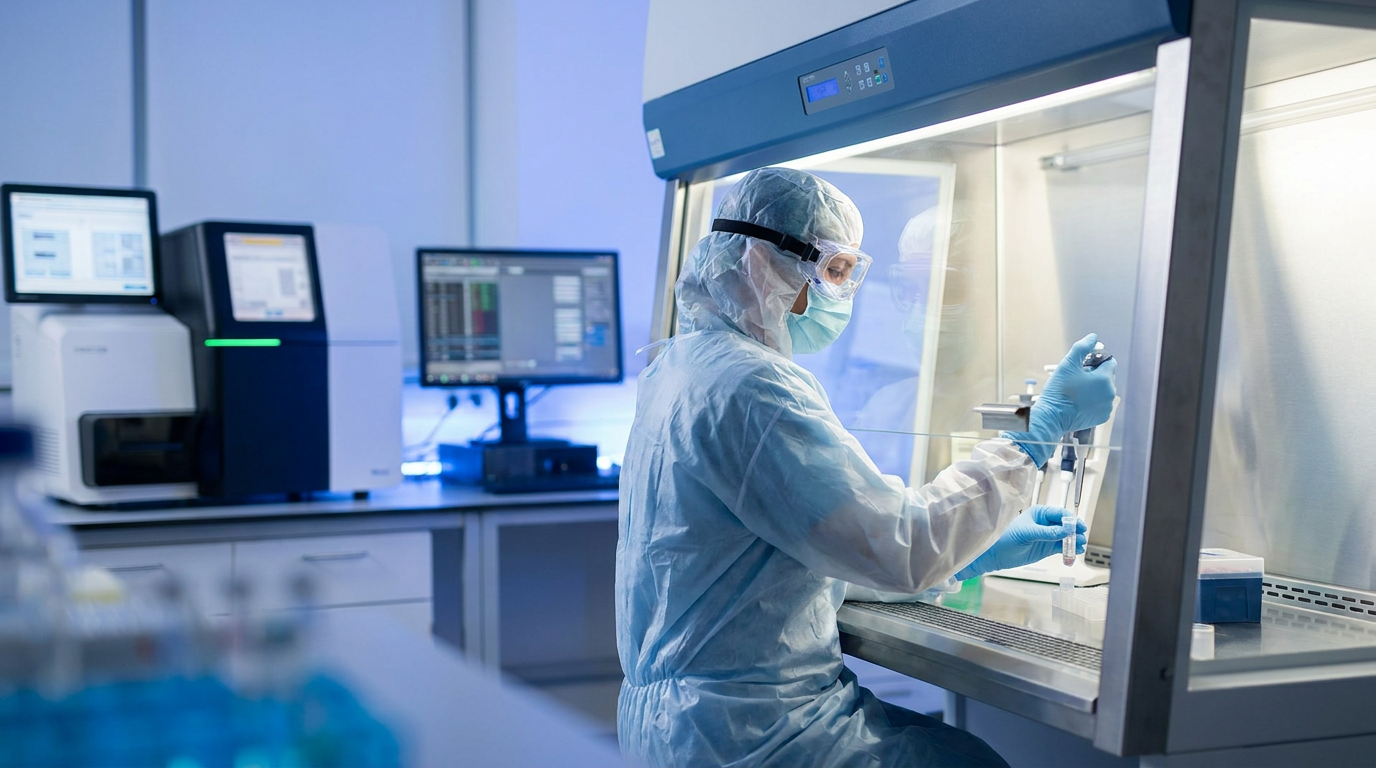
The manufacturing process begins immediately after surgery, utilizing a biopsy of the patient's resected tumor alongside a sample of their healthy blood. Researchers sequence the DNA and RNA of both samples to identify "neoantigens"—mutated proteins that are present exclusively on the surface of the cancer cells and entirely absent from healthy tissue. Because these neoantigens are foreign to the body, they serve as the perfect biological targets, allowing the immune system to distinguish between friend and foe with pinpoint accuracy.[2][8]
Once the sequencing is complete, proprietary algorithms analyze the data to select up to 34 of the most highly immunogenic neoantigens—the mutations most likely to trigger a massive immune response. The genetic instructions for these specific proteins are then encoded into a single strand of messenger RNA. This mRNA is subsequently packaged within a microscopic lipid nanoparticle, utilizing the exact same delivery mechanism that was successfully popularized and scaled during the global rollout of COVID-19 vaccines. This lipid envelope protects the fragile mRNA from degrading in the bloodstream and ensures it safely enters the patient's cells.[2][5]

Once injected into the patient's muscle, the mRNA instructs the body's own cellular machinery to manufacture these 34 tumor-specific proteins. This process effectively provides the immune system with a highly detailed, custom-printed "wanted poster" of the exact mutations driving the patient's cancer. The immune system recognizes these newly minted proteins as a threat, activating a massive cellular defense that is now perfectly primed to hunt down any rogue melanoma cells sharing that specific genetic signature. Because the mRNA degrades quickly after delivering its instructions, there is no risk of the vaccine altering the patient's own DNA.[1][8]
Translational data presented alongside the clinical results at ASCO revealed the biological mechanics behind the vaccine's success. Blood analyses showed that the vaccine successfully generated novel T-cell clones specifically tailored to the patient's neoantigens. Crucially, these specialized immune cells did not just spike and fade; they expanded and persisted in the bloodstream for years. This persistent cellular memory provides durable immune surveillance, ensuring that if dormant cancer cells attempt to grow years later, the immune system is ready to eradicate them.[2][5]
However, the mRNA vaccine does not work in isolation. Tumors are notoriously resilient and often deploy chemical cloaking mechanisms that shut down attacking T-cells before they can inflict damage. If the immune system is a high-performance engine, the tumor actively applies the brakes. This is precisely why the vaccine must be paired with an immunotherapy drug like pembrolizumab to achieve maximum clinical efficacy. Without the immunotherapy component, even the most perfectly targeted T-cells might find themselves neutralized by the tumor's localized defense mechanisms before they can complete their mission.[3][8]
Pembrolizumab is a PD-1 inhibitor, a specialized class of checkpoint inhibitor that blocks the tumor's ability to suppress the immune response. By binding to the PD-1 receptor on T-cells, the drug prevents the cancer from transmitting its "off" signal. In essence, the immunotherapy takes the brakes off the immune system, while the custom-built mRNA vaccine provides the steering wheel. Together, they create a highly targeted, unstoppable immune assault against the residual disease. This synergistic relationship explains why the combination therapy so drastically outperforms the use of pembrolizumab as a standalone treatment.[3][7]
Despite the potent immune activation, the safety profile of the combination therapy has remained highly manageable over the entire five-year observation period. The majority of treatment-related adverse events were classified as grade 1 or 2, consisting primarily of fatigue, chills, and localized pain at the injection site. Importantly, researchers noted no new safety signals or severe autoimmune reactions compared to earlier analyses, confirming that the addition of the mRNA vaccine does not significantly increase the toxicity of standard immunotherapy.[5][6]

The resounding success in melanoma is now serving as a strategic beachhead for a much broader oncology pipeline. Recognizing the platform's potential, Moderna and Merck have already fully enrolled a massive Phase 3 trial for melanoma, known as INTerpath-001, designed to confirm these phase 2b findings in a global population. If successful, this trial will likely serve as the basis for full regulatory approval from the FDA and other international health agencies, officially cementing personalized mRNA vaccines as a new pillar of standard oncological care.[3][7]
Beyond skin cancer, the companies are aggressively expanding the technology to tackle other aggressive malignancies. There are currently eight late-stage and mid-stage clinical trials underway across multiple tumor types. These include dedicated studies for non-small cell lung cancer, renal cell carcinoma, and bladder cancer. Researchers are optimistic that because the mRNA platform is entirely agnostic to the type of cancer—relying only on the presence of sequenceable mutations—it could theoretically be adapted to treat almost any solid tumor.[4][7]
Despite the overwhelming clinical triumphs, significant logistical and economic hurdles remain before this technology can reach the masses. Manufacturing a bespoke vaccine for every single patient currently takes several weeks and incurs substantial laboratory costs. Health economists are raising valid questions about how public and private insurance systems will scale and fund a completely individualized manufacturing pipeline, especially as the therapy expands to more common cancers with millions of newly diagnosed patients each year. Streamlining the supply chain and reducing turnaround times will be just as critical as the clinical science in determining the ultimate impact of these therapies.[3][8]
Nevertheless, the five-year data from KEYNOTE-942 represents an undeniable watershed moment in medical research. It provides the longest-term, most robust evidence to date that personalized mRNA neoantigen therapy can fundamentally alter the trajectory of high-risk cancers. By proving that the immune system can be permanently educated to hunt down patient-specific mutations, this research moves the entire field of oncology closer to its ultimate goal: delivering durable, long-term cures without the devastating side effects of traditional chemotherapy. For the thousands of patients facing a high-risk melanoma diagnosis, the future of precision medicine has finally arrived.[2][7]
How we got here
2019
The KEYNOTE-942 phase 2b clinical trial begins enrolling patients with high-risk resected melanoma.
2023
Initial two-year data shows a 44% reduction in recurrence risk, earning the therapy FDA Breakthrough Designation.
Jan 2024
Three-year follow-up data is published in The Lancet, confirming sustained efficacy.
Jan 2026
Moderna and Merck announce top-line five-year data showing a 49% reduction in recurrence risk.
Jun 2026
Full five-year results are presented at the ASCO Annual Meeting and published in the Journal of Clinical Oncology.
Viewpoints in depth
Clinical Oncologists
Focusing on the durability of the survival benefits and the shift in standard of care.
For practicing oncologists, the five-year data represents a critical threshold. Early immunotherapy trials often showed initial promise that faded as tumors mutated and developed resistance. The fact that the mRNA combination maintained its 49% reduction in recurrence risk at the 60-month mark suggests that the immune system is achieving durable, long-term surveillance. Many clinicians view this as the evidence needed to transition adjuvant care from standard checkpoint inhibitors to a personalized immune-priming strategy.
Immunotherapy Researchers
Focusing on the mechanism of neoantigen targeting and T-cell cloning.
Translational researchers emphasize the biological proof-of-concept achieved in this trial. By successfully encoding up to 34 neoantigens into a single lipid nanoparticle, the vaccine proved it could reliably induce the body to generate novel T-cell clones. Researchers are particularly encouraged by data showing that these specific T-cells expanded and persisted in the bloodstream for years, validating the hypothesis that mRNA can effectively 'teach' the immune system to recognize highly specific, patient-unique tumor mutations.
Health Economists
Focusing on the logistical and financial hurdles of bespoke manufacturing.
While celebrating the clinical outcomes, health economists and payers are raising alarms about scalability. Unlike off-the-shelf drugs, intismeran autogene requires a complex, multi-week manufacturing process for every single patient, involving tumor sequencing, algorithmic selection, and custom mRNA synthesis. Economists warn that integrating this bespoke manufacturing pipeline into standard healthcare systems will require unprecedented logistical coordination and could carry a price tag that strains global oncology budgets.
What we don't know
- Whether the vaccine will be equally effective against 'cold' tumors that typically evade the immune system, such as pancreatic or colorectal cancer.
- The final cost of the therapy and how public and private health insurance systems will cover a completely bespoke, custom-manufactured treatment.
- How the complex, multi-week manufacturing process will scale globally to meet the demand of hundreds of thousands of cancer patients.
Key terms
- Neoantigen
- A newly formed protein that appears on the surface of cancer cells due to tumor-specific DNA mutations, making it a prime target for the immune system.
- Adjuvant therapy
- Additional cancer treatment given after primary surgery to lower the risk that the cancer will return.
- PD-1 inhibitor
- A type of immunotherapy drug that blocks a specific protein on T-cells, preventing cancer cells from hiding and allowing the immune system to attack.
- Distant metastasis
- The spread of cancer cells from the original tumor site to distant organs or tissues in the body.
- Lipid nanoparticle
- A microscopic fat bubble used to safely deliver fragile mRNA molecules into the body's cells.
Frequently asked
How is this different from the COVID-19 mRNA vaccines?
While both use mRNA and lipid nanoparticles, COVID-19 vaccines are preventive and target a single, stable virus protein. This cancer vaccine is therapeutic and custom-built for each patient using up to 34 unique mutations found only in their specific tumor.
Is this treatment available to the public right now?
Not yet. The therapy is currently in Phase 3 clinical trials. While it has received FDA Breakthrough Therapy Designation, it requires final regulatory approval before it becomes widely available.
Does this vaccine prevent cancer from starting?
No. It is a therapeutic vaccine designed to be given after a patient has already developed cancer and had it surgically removed, aiming to train the immune system to destroy any remaining microscopic cancer cells and prevent recurrence.
Sources
Source coverage
8 outlets
3 viewpoints surfaced








[1]Medical News TodayClinical Oncologists
Combination therapy sustains 49% melanoma reduction after 5 years
Read on Medical News Today →[2]Managed Healthcare ExecutiveTranslational Researchers
Five years later, personalized mRNA vaccine cuts melanoma recurrence risk by half
Read on Managed Healthcare Executive →[3]Clinical Trials ArenaIndustry & Economists
mRNA cancer vaccines edge closer to market
Read on Clinical Trials Arena →[4]Becker's OncologyIndustry & Economists
Personalized mRNA cancer vaccine combined with immunotherapy cut melanoma recurrence risk
Read on Becker's Oncology →[5]Journal of Clinical OncologyClinical Oncologists
Intismeran Autogene Plus Pembrolizumab Versus Pembrolizumab Alone in High-Risk Resected Melanoma: 5-Year Update of the Randomized Phase 2b KEYNOTE-942 Study
Read on Journal of Clinical Oncology →[6]ClinicalTrials.govTranslational Researchers
Study of Pembrolizumab (MK-3475) Plus mRNA-4157 Versus Pembrolizumab in Participants With High-risk Melanoma (KEYNOTE-942)
Read on ClinicalTrials.gov →[7]MerckIndustry & Economists
Moderna and Merck Announce 5-Year Data for Intismeran Autogene in Combination With KEYTRUDA
Read on Merck →[8]Factlen Editorial Team
Synthesis by Factlen editorial team
Read on Factlen Editorial Team →

More in health
See all 9 stories →Food Matrix
The Food Matrix: Why the Physical Structure of Your Meal Matters as Much as Its Nutrients
0 sources

Longevity Science
The Myokine Paradigm: Why Medical Science Now Considers Muscle an Endocrine Organ
0 sources

Adaptogens
The Science of Adaptogens: How Herbs Like Ashwagandha Affect the Body's Stress Response
0 sources

Metabolic Health
The OTC CGM Boom: What Healthy People Are Learning From Tracking Their Blood Sugar
0 sources

Every angle. Every day.
Get health stories with full source coverage and perspective breakdowns delivered to your inbox.