
The Brain's Nightly Wash Cycle: How Deep Sleep Clears Neurotoxic Waste
Recent discoveries in neuroscience reveal that slow-wave sleep triggers a mechanical fluid wash in the brain, clearing out the toxic proteins linked to Alzheimer's disease. Researchers are now testing ways to optimize this 'glymphatic' plumbing system to prevent cognitive decline.
By Factlen Editorial Team
- Clinical Neurologists
- View glymphatic clearance as a critical missing link in Alzheimer's prevention and sleep medicine.
- Neuroscience Researchers
- Focus on the mechanical fluid dynamics and the precise biological triggers of the glymphatic system.
- Longevity & Lifestyle Advocates
- Focus on actionable, behavioral protocols to maximize deep sleep and brain clearance.
What's not represented
- · Pharmaceutical developers working on drugs to artificially stimulate glymphatic flow
- · Patients currently experiencing early-stage cognitive decline
Why this matters
Understanding the glymphatic system transforms sleep from a passive period of rest into an active, mechanical cleaning process. Optimizing deep sleep may be one of the most accessible and effective tools available for preventing Alzheimer's and long-term cognitive decline.
Key points
- The brain lacks a traditional lymphatic system and instead relies on the 'glymphatic' system to clear metabolic waste.
- This clearance network is highly state-dependent, activating almost exclusively during deep, slow-wave sleep.
- During deep sleep, the brain's interstitial space expands by 60%, allowing cerebrospinal fluid to wash away toxic amyloid-beta proteins.
- Disrupted sleep creates a vicious cycle where amyloid buildup further impairs the brain's ability to generate restorative slow waves.
- Researchers are exploring actionable interventions, such as lateral sleep positioning and acoustic stimulation, to optimize brain clearance.
For decades, a fundamental biological mystery puzzled neuroscientists: how does the brain, an organ that consumes massive amounts of energy and produces corresponding amounts of metabolic waste, clean itself without a traditional lymphatic system? The rest of the human body relies on a complex network of lymphatic vessels to flush out cellular debris. The brain, however, is isolated behind the blood-brain barrier, seemingly lacking this essential plumbing.[5]
The answer arrived in the form of a hidden, state-dependent network known as the glymphatic system. First identified by Dr. Maiken Nedergaard and her team, this brain-wide perivascular network acts as a highly specialized waste clearance pathway. It utilizes the brain's structural glial cells to manage the flow of cerebrospinal fluid (CSF), effectively washing the neural tissue of toxic byproducts.[1][4]
But the most profound discovery regarding the glymphatic system is not just its existence—it is its trigger. The brain's wash cycle is not continuously active. Instead, it is almost entirely dependent on sleep. Research indicates that glymphatic clearance essentially shuts down during wakefulness and ramps up dramatically when we lose consciousness.[4]
Specifically, the system requires the deepest stage of rest: non-rapid eye movement (NREM) stage 3, commonly known as slow-wave sleep. During this phase, the brain generates slow, high-amplitude electrical oscillations. These slow waves are the mechanical engine that drives the brain's nightly detox.[1]

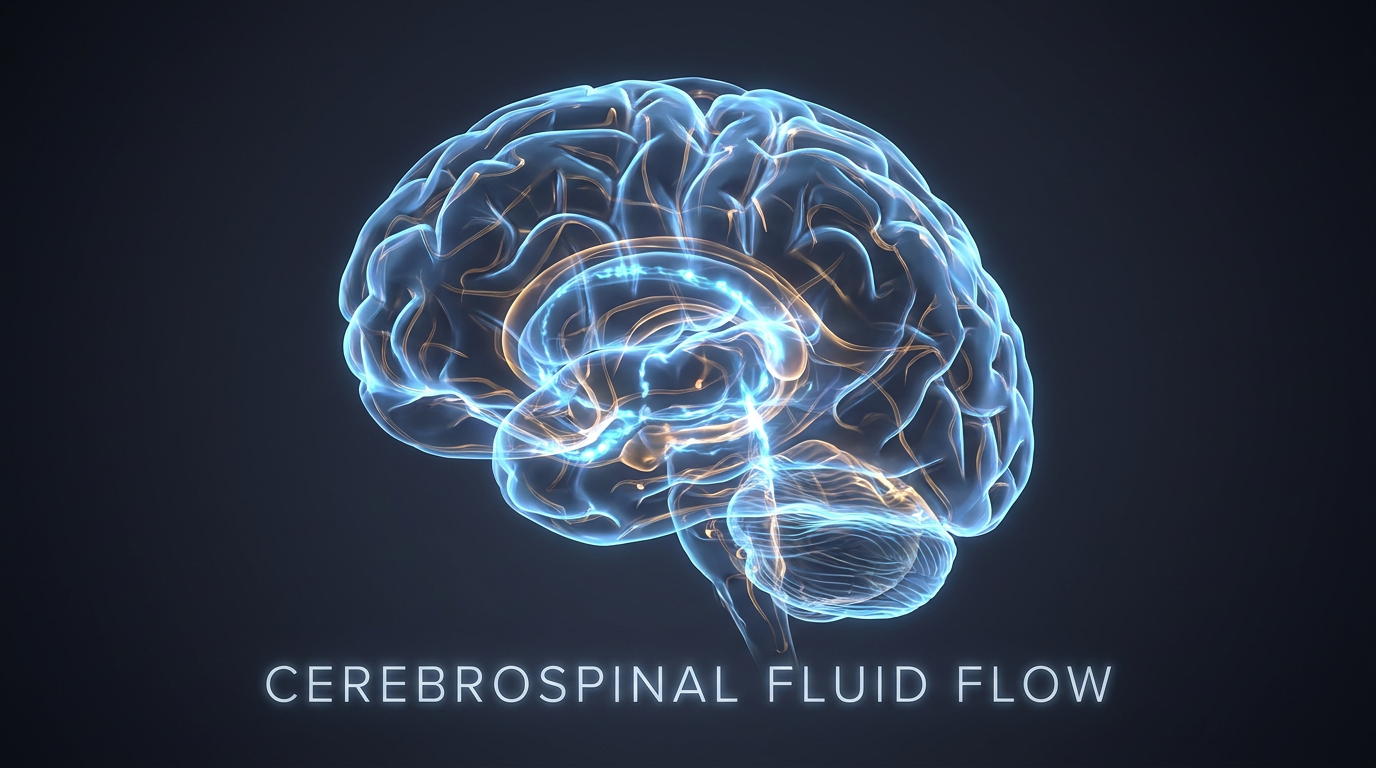
Advanced functional MRI (fMRI) imaging has finally allowed scientists to visualize this process in living humans. As the slow electrical waves sweep across the sleeping brain, they trigger a corresponding drop in blood volume. This sudden reduction in blood creates a pressure vacuum inside the rigid skull.[1]
To fill that vacuum, a massive pulse of clear cerebrospinal fluid rushes into the brain. The imaging reveals a mesmerizing, rhythmic cycle: a wave of blood exits, followed immediately by a wave of CSF surging into the brain's interstitial spaces. This fluid exchange physically washes over the neurons, carrying away metabolic waste.[1]
To facilitate this deep clean, the brain undergoes a remarkable physical transformation. During slow-wave sleep, the interstitial space between brain cells actually expands by up to 60 percent. This expansion drastically reduces tissue resistance, allowing the cerebrospinal fluid to flow freely and resulting in an 80 to 90 percent increase in overall glymphatic clearance compared to the waking state.[1][4]
The primary targets of this nightly wash cycle are specific neurotoxic proteins, most notably amyloid-beta and tau. During waking hours, normal neural activity generates these proteins as metabolic exhaust. If left to accumulate, they can clump together to form the plaques and tangles that are the biological hallmarks of Alzheimer's disease.[4]
This mechanism provides a clear, mechanical link between poor sleep and long-term cognitive decline. When slow-wave sleep is disrupted, the glymphatic system cannot perform its wash cycle, leading to an immediate buildup of amyloid-beta.[1]
This mechanism provides a clear, mechanical link between poor sleep and long-term cognitive decline.
Tragically, this creates a vicious positive feedback loop. As amyloid-beta accumulates in the brain, it directly impairs the brain's ability to generate the very slow-wave electrical activity needed to clear it. The worse the sleep, the more the toxins build up; the more the toxins build up, the worse the sleep becomes.[4]

The clinical implications of this cycle are profound. A 2026 review in Critical Care Science examined patients recovering from intensive care unit (ICU) stays, where sleep is notoriously fragmented. The researchers proposed that the severe sleep disruption and subsequent glymphatic failure in the ICU directly contribute to the persistent deficits in memory and executive function often seen in survivors.[2]
The review also highlighted a critical distinction between natural sleep and chemically induced unconsciousness. Many common sedatives and sleep aids create a state of "pseudo-sleep." While the patient is unconscious, the brain does not produce the coordinated neuromodulatory and neurovascular conditions of natural slow-wave sleep, meaning the glymphatic wash cycle fails to activate.[2]
Recognizing the glymphatic system as a mechanical process has sparked a new frontier in preventative neurology: targeting sleep physiology to actively enhance brain clearance. Researchers at Radboud University Medical Center are currently evaluating several non-pharmacological interventions designed to boost this system.[3]
One of the most accessible interventions involves sleep posture. Both animal models and emerging human data suggest that the lateral position—sleeping on one's side—is the most anatomically efficient posture for glymphatic transport. The alignment of the neck and brainstem in the lateral position appears to optimize the flow of cerebrospinal fluid into and out of the skull.[3]
Scientists are also experimenting with acoustic stimulation to artificially deepen sleep. By playing specific frequencies of sound (such as pink noise) in precise synchronization with the brain's natural electrical rhythms, researchers can amplify slow-wave delta activity. Early trials suggest this can increase the volume of CSF pumped through the brain during the night.[3]

Furthermore, lifestyle factors that consolidate and strengthen sleep architecture—such as rigorous cardiovascular exercise and strict adherence to circadian light-dark cycles—are now viewed not just as general wellness advice, but as targeted therapies for maintaining glymphatic plumbing.[3]
While the mechanical evidence for the glymphatic system is robust, transparent uncertainty remains regarding long-term clinical outcomes. Because Alzheimer's disease develops over decades, science does not yet have the longitudinal human trials required to definitively prove that optimizing glymphatic flow in middle age will prevent dementia in old age.[5]
Additionally, researchers are still working to understand how the aging process naturally degrades aquaporin-4 water channels, the microscopic valves that control this fluid flow. It remains unclear if behavioral interventions can overcome structural degradation in an already aging brain.[1]
Nevertheless, the discovery of the glymphatic system represents a paradigm shift in neuroscience. It transforms our understanding of sleep from a passive period of rest and memory consolidation into a vital, active biological maintenance cycle.[5]
By viewing sleep as a mechanical wash cycle, the medical community has gained a tangible, measurable target for neuroprotection. Protecting and optimizing our slow-wave sleep may prove to be the most powerful tool we have for preserving cognitive function and defending the brain against the ravages of time.[5]
How we got here
2012
Dr. Maiken Nedergaard's lab first identifies and names the 'glymphatic system' in mice.
2013
Researchers demonstrate that the brain's interstitial space expands by 60% during sleep to facilitate waste clearance.
2019
Human MRI studies capture the first visual evidence of cerebrospinal fluid washing into the brain in rhythmic pulses during non-REM sleep.
2024-2026
Clinical reviews establish strong links between disrupted slow-wave sleep, impaired glymphatic clearance, and long-term cognitive decline.
Viewpoints in depth
Neuroscience Researchers
Focus on the mechanical fluid dynamics and the precise biological triggers of the glymphatic system.
For neuroscientists, the glymphatic system represents a paradigm shift in understanding brain fluid dynamics. They emphasize the mechanical elegance of the process: how neural slow waves trigger hemodynamic changes that literally pull cerebrospinal fluid into the brain parenchyma. Their primary focus remains on mapping the exact role of aquaporin-4 water channels and understanding how aging naturally degrades this plumbing system, independent of lifestyle factors.
Clinical Neurologists
View glymphatic clearance as a critical missing link in Alzheimer's prevention and sleep medicine.
Clinicians are rapidly integrating glymphatic research into patient care, particularly for neurodegenerative diseases. They point to the vicious cycle where amyloid buildup degrades sleep quality, which in turn prevents further amyloid clearance. For neurologists, this elevates sleep apnea treatment and insomnia management from quality-of-life interventions to urgent, disease-modifying preventative care for dementia.
Longevity & Lifestyle Advocates
Focus on actionable, behavioral protocols to maximize deep sleep and brain clearance.
The longevity community has embraced glymphatic research as a biological target that can be optimized today. They advocate for behavioral interventions—such as lateral sleep positioning, temperature regulation, and acoustic stimulation—to maximize the time spent in N3 slow-wave sleep. This group is particularly critical of alcohol and certain sleep medications, noting that chemically induced unconsciousness often fails to trigger the brain's mechanical wash cycle.
What we don't know
- Whether artificially enhancing slow-wave sleep through technology can definitively prevent the onset of Alzheimer's disease in humans.
- The exact degree to which sleep position (lateral vs. supine) impacts long-term cognitive outcomes in human populations.
- How to safely repair or upregulate aquaporin-4 channels in aging brains where the glymphatic plumbing has already degraded.
Key terms
- Glymphatic System
- A brain-wide perivascular network that clears metabolic waste by exchanging cerebrospinal fluid with interstitial fluid.
- Slow-Wave Sleep (N3)
- The deepest stage of non-REM sleep, characterized by slow, high-amplitude electrical brain waves.
- Amyloid-beta
- A metabolic waste protein that, when not properly cleared, can clump together to form the plaques associated with Alzheimer's disease.
- Cerebrospinal Fluid (CSF)
- The clear fluid that surrounds the brain and spinal cord, acting as a cushion and a medium for the glymphatic wash cycle.
- Aquaporin-4 (AQP4)
- Water channel proteins located on the structural cells of the brain that act as the physical valves for the glymphatic plumbing system.
Frequently asked
What is the glymphatic system?
It is the brain's unique waste clearance network, utilizing cerebrospinal fluid to flush out toxic proteins and metabolic byproducts.
When does glymphatic clearance happen?
The system is highly state-dependent, with 80 to 90 percent of the clearance occurring during deep, slow-wave sleep (N3 stage).
Does sleep position matter for brain health?
Emerging evidence suggests that sleeping on your side (lateral position) may be the most anatomically efficient posture for glymphatic fluid flow.
Can sleeping pills help clear brain waste?
Often, no. Many sedatives induce unconsciousness but suppress the natural slow electrical waves required to trigger the glymphatic wash cycle.
Sources
Source coverage
5 outlets
3 viewpoints surfaced





[1]University of Rochester Medical CenterNeuroscience Researchers
Slow Waves of CSF During Sleep Clear Toxins Linked to Neurodegenerative Conditions
Read on University of Rochester Medical Center →[2]Critical Care ScienceClinical Neurologists
Sleep fragmentation, impaired glymphatic clearance, and long-term cognitive impairment after critical illness
Read on Critical Care Science →[3]Radboud University Medical CenterLongevity & Lifestyle Advocates
Targeting Sleep Physiology to Modulate Glymphatic Brain Clearance
Read on Radboud University Medical Center →[4]American Nurse JournalClinical Neurologists
Sleep and the glymphatic system
Read on American Nurse Journal →[5]Factlen Editorial TeamLongevity & Lifestyle Advocates
Synthesis by Factlen editorial team
Read on Factlen Editorial Team →


Every angle. Every day.
Get science stories with full source coverage and perspective breakdowns delivered to your inbox.