
The 2026 Guide to Homebuying: New Construction vs. Existing Homes
With the historical price gap vanishing, homebuyers in 2026 face a complex trade-off between the warranties of new construction and the prime locations of existing properties.
By Factlen Editorial Team
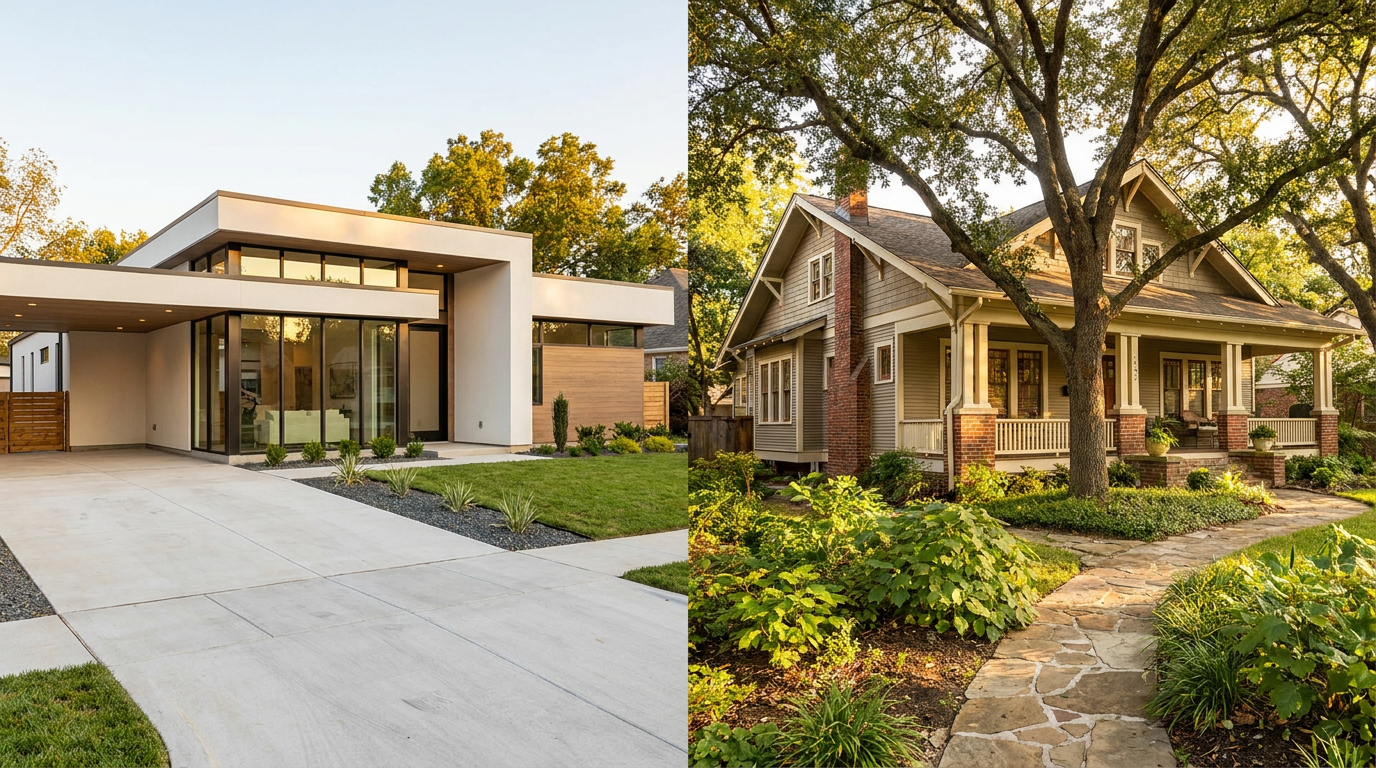
- New Build Advocates
- Buyers and builders prioritizing modern standards, energy efficiency, and financial predictability.
- Resale Market Supporters
- Homebuyers and urbanists who value established communities, architectural character, and proximity to city centers.
- Real Estate Economists
- Industry analysts tracking the structural shifts in housing inventory and pricing parity.
What's not represented
- · Environmental Advocates concerned about the ecological impact of suburban sprawl from new developments.
- · Low-Income Buyers entirely priced out of both the new and existing single-family markets.
Why this matters
For decades, buyers assumed new builds were a luxury out of reach. With existing home prices now matching or exceeding new construction in many markets, understanding the hidden costs of both options is essential to making a sound, empowering financial decision.
Key points
- The median price of an existing home slightly exceeded the median price of a new build in early 2026.
- Builders are aggressively offering mortgage rate buydowns and closing cost credits to attract buyers.
- New construction offers warranties and energy efficiency but is overwhelmingly located in suburban areas.
- Existing homes provide immediate move-in and established neighborhoods but often require significant maintenance reserves.
- The price per square foot between new and existing homes has reached near-parity at roughly $216 to $217.
The traditional rule of thumb in real estate—that brand-new construction always carries a hefty premium over older properties—has officially fractured. In the first quarter of 2026, the median price for a new single-family home sat at $403,200, which was actually slightly lower than the $404,600 median for an existing home. This historic inversion, which has seen existing home prices exceed new builds in several recent quarters, forces today's buyers to weigh their options differently. Instead of simply looking at the sticker price, purchasers must now evaluate the total cost of ownership over the lifespan of the property.[1][8]
The core of this modern trade-off analysis centers on upfront financial incentives versus long-term location value. Builders, facing affordability headwinds and a need to move inventory, are aggressively offering concessions. The argument for new construction hinges heavily on these financial levers, such as permanent mortgage rate buydowns and closing cost credits, which can dramatically lower a buyer's monthly payment in a market where the average 30-year fixed rate hovers near 6.4 percent. Sellers of existing homes rarely have the capital to offer comparable financing packages.[3][4][7]
The case for new construction is firmly anchored in predictability and modern efficiency. Advocates point out that brand-new homes come equipped with builder warranties, modern open floor plans, and current energy standards. Because everything from the HVAC system to the roof is untouched, buyers can accurately predict their monthly homeownership costs without fearing catastrophic surprise expenses. This provides a vital financial safety net during the crucial first years of ownership when cash reserves are typically at their lowest.[5]

The evidence supporting the new-build path is clear in the maintenance column. Buyers of new construction rarely need to allocate immediate funds for renovations or hidden defects. Furthermore, these homes are built to the latest safety and insulation codes, resulting in significantly lower utility bills compared to their older counterparts. For a buyer stretching their budget to qualify for a mortgage, this operational efficiency can be the difference between comfortable homeownership and financial distress.[5][8]
However, the arguments against new construction are equally grounded in concrete data, primarily concerning geography and hidden developmental costs. According to recent market analyses, nearly 80 percent of new builds are located in suburban or exurban ZIP codes, compared to just over 55 percent of existing homes. Buyers seeking urban walkability will find new construction both scarce and significantly more expensive. Furthermore, regulatory costs, including zoning and permit fees, now add an estimated $131,734 to the price of a typical new home—a burden that is ultimately baked into the final purchase price.[2][4][6]
However, the arguments against new construction are equally grounded in concrete data, primarily concerning geography and hidden developmental costs.
Conversely, the case for existing homes champions prime location, architectural character, and immediate gratification. Proponents argue that older homes are situated in established neighborhoods with mature landscaping, robust community infrastructure, and closer proximity to city centers. These properties offer a unique charm and historical detail that modern, production-style tract housing often lacks, appealing to buyers who want a home with a distinct personality rather than a cookie-cutter layout.[5]
The evidence for the resale route is highly compelling for those on a tight timeline. Buying an existing property allows for a move-in within one to two months, completely bypassing the seven to twelve months of potential weather delays, labor shortages, and supply chain disruptions associated with building from scratch. For families relocating for work or trying to settle before a new school year begins, this immediate occupancy is often a non-negotiable requirement that automatically rules out new construction.[5][8]

The primary argument against existing homes involves the hidden financial risks of deferred maintenance and outdated technology. While an older home might boast beautiful mature oak trees, it often lacks the energy efficiency of a 2026 build, leading to drafty winters and higher utility bills. More critically, buyers of pre-owned homes must often set aside substantial cash reserves for immediate repairs, and in highly desirable neighborhoods, they may still face competitive bidding wars that drive the final purchase price well above the initial listing.[5]
When evaluating the trade-offs on a price-per-square-foot basis, the market has reached a fascinating equilibrium. After an unusual period where existing homes were actually more expensive per square foot, the metrics have normalized in 2026. Early in the year, new homes commanded roughly $217 per square foot, barely edging out existing homes at $216. This near-parity means buyers are no longer choosing based on raw spatial value, but rather on which set of compromises best fits their lifestyle and financial reserves.[2][4]
These trade-offs also shift dramatically depending on the region, requiring buyers to analyze their specific local market. In the Northeast, new construction maintains a massive premium, with new homes averaging over $784,000 compared to $482,000 for existing homes, driven by strict zoning and high land costs. In contrast, markets in the South and Midwest see a much narrower gap—or even a reversal—making new builds highly competitive and accessible to a broader pool of first-time buyers.[1][7][8]

Ultimately, navigating this landscape requires clear parameters. New construction fits well when a buyer has flexible move-in timelines, prioritizes energy efficiency, wants to avoid weekend repair projects, and can capitalize on builder-sponsored mortgage rate buydowns. It is the optimal path for those who value a predictable, warranty-backed cost of living over the next five to ten years and do not mind a longer suburban commute or waiting for neighborhood amenities to fully develop.[5][8]
On the other hand, existing homes fit well when a buyer needs to relocate quickly, desires the walkability and character of an established urban or inner-suburban neighborhood, and possesses the cash reserves to handle unexpected repairs. This route does not fit well when a buyer is stretching their budget to the absolute limit just to cover the down payment, leaving no financial cushion for the inevitable maintenance that an older property will demand.[5][8]
How we got here
Summer 2022
Mortgage rates begin their rapid ascent, cooling the broader housing market and shifting builder strategies.
Q2 2024
The traditional pricing relationship begins to invert, with existing home prices occasionally exceeding new home prices.
2025
Builders lean heavily into rate buydowns and concessions to move inventory amidst affordability challenges.
Q1 2026
The median price of an existing home officially surpasses the median price of a new home in a historic market shift.
Viewpoints in depth
New Build Advocates
Buyers and builders prioritizing modern standards, energy efficiency, and financial predictability.
This camp argues that the true cost of a home extends far beyond the closing table. By leveraging builder incentives like permanent mortgage rate buydowns, buyers can secure a lower monthly payment despite a potentially higher sticker price. They emphasize that the peace of mind provided by a one-year builder warranty and brand-new HVAC, plumbing, and roofing systems protects buyers from the catastrophic surprise expenses that frequently plague purchasers of older properties.
Resale Market Supporters
Homebuyers and urbanists who value established communities, architectural character, and proximity to city centers.
Supporters of the existing home market contend that location remains the paramount rule of real estate. They point out that new developments are overwhelmingly pushed to the suburban fringe, forcing buyers into longer commutes and car-dependent lifestyles. Furthermore, they argue that older homes often feature superior craftsmanship and mature landscaping that take decades to replicate, making the immediate need for minor repairs a worthwhile trade-off for a prime location and immediate move-in readiness.
Real Estate Economists
Industry analysts tracking the structural shifts in housing inventory and pricing parity.
Economists view the current landscape as a historic anomaly driven by the "lock-in effect" of pandemic-era mortgage rates. Because existing homeowners are reluctant to sell and lose their low rates, the resulting inventory shortage has artificially inflated resale prices. Analysts note that builders have capitalized on this by aggressively managing their prices and offering concessions, effectively closing the historical premium gap and making new construction a strictly mathematical play for buyers navigating a 6.4 percent interest rate environment.
What we don't know
- Whether the price inversion between new and existing homes will become a permanent feature of the real estate market.
- How long builders can sustain aggressive mortgage rate buydowns if overall interest rates remain elevated.
- The long-term impact of rising regulatory costs on the viability of entry-level new construction.
Key terms
- Rate Buydown
- A financing technique where a builder or seller pays an upfront fee to lower the buyer's mortgage interest rate for the first few years or the life of the loan.
- Price Per Square Foot
- A metric used to compare the value of different properties by dividing the total home price by its livable square footage.
- Builder Warranty
- A guarantee provided by a construction company covering materials and workmanship for a specific period, typically one year for general defects and up to ten years for structural issues.
- Lock-in Effect
- A market dynamic where current homeowners refuse to sell because they do not want to give up the exceptionally low mortgage rates they secured in previous years.
- Regulatory Costs
- The combined expenses of government permits, zoning compliance, inspections, and hook-up fees required to build a new home.
Frequently asked
Is new construction always more expensive than an existing home?
Not anymore. In early 2026, the median price of a new home actually dipped slightly below the median price of an existing home nationally, though new builds still carry a premium in certain regions like the Northeast.
Can I negotiate the price of a new construction home?
While builders are often reluctant to drop the base purchase price to protect the neighborhood's comparable sales, they frequently offer substantial negotiations through closing cost credits, free upgrades, or mortgage rate buydowns.
How long does it take to buy a new build versus an existing home?
Purchasing an existing home typically allows for move-in within 30 to 60 days. Building a custom or semi-custom new home can take anywhere from seven to twelve months, subject to weather and supply chain delays.
Are older homes built better than new ones?
This is a common debate. Older homes often feature mature timber and unique architectural details, but new homes are built to much stricter modern safety, fire, and energy-efficiency codes, resulting in significantly lower utility bills.
Sources
Source coverage
8 outlets
3 viewpoints surfaced








[1]Eye On HousingReal Estate Economists
New Home vs. Existing Home Prices in Q1 2026
Read on Eye On Housing →[2]Realtor.comResale Market Supporters
New-Construction Insights: Urban New Builds Are Scarce and Expensive
Read on Realtor.com →[3]ForbesReal Estate Economists
Housing Market Predictions For 2026: When Will Home Prices Drop?
Read on Forbes →[4]HousingWireReal Estate Economists
Builders discount more but keep prices flat while resale values slip
Read on HousingWire →[5]ZillowNew Build Advocates
New Construction vs Existing Homes: The Pros and Cons of Both
Read on Zillow →[6]National Association of Home BuildersNew Build Advocates
New home construction regulatory costs hit $132K per home, NAHB finds
Read on National Association of Home Builders →[7]Texas Real Estate Research CenterResale Market Supporters
Texas Housing Insight | May 2026
Read on Texas Real Estate Research Center →[8]AmeriSaveNew Build Advocates
Building vs. Buying a House in 2026: 7 Essential Cost Comparisons
Read on AmeriSave →
Every angle. Every day.
Get real estate stories with full source coverage and perspective breakdowns delivered to your inbox.