
The 2026 Guide to Buying a Used EV: Navigating Battery Health, Depreciation, and the Post-Tax-Credit Market
With a flood of off-lease electric vehicles driving prices down by up to 50%, the used EV market offers unprecedented value in 2026. However, buyers must shift their focus from traditional mileage to battery health and charging history to secure a reliable deal.
By Factlen Editorial Team
- Pragmatic Deal-Hunters
- Focus on leveraging steep depreciation and third-party diagnostic data to negotiate the best possible price on off-lease vehicles.
- EV Adopters & Advocates
- Emphasize the long-term operational savings and environmental benefits of transitioning to electric vehicles, regardless of minor battery degradation.
- Traditional Auto Industry
- Navigate the challenges of selling off-lease EV inventory while adapting to new consumer demands for battery transparency over traditional mileage metrics.
What's not represented
- · Independent EV Mechanics
- · First-Time EV Buyers in Rural Areas
Why this matters
Electric vehicles are reaching mass-market affordability through steep depreciation, making 2026 a prime window for buyers to switch from gas. Understanding how to evaluate battery degradation and navigate the loss of federal tax credits can save consumers thousands of dollars in upfront costs and long-term maintenance.
Key points
- A massive influx of off-lease electric vehicles has driven used EV prices down by 40% to 50% in 2026.
- The federal used EV tax credit of up to $4,000 expired in late 2025, shifting the financial math for buyers.
- Mileage is less important for EVs than battery State of Health (SoH), which should ideally be above 84%.
- Frequent DC fast charging accelerates battery degradation, making a vehicle's charging history a crucial negotiation tool.
- Buyers are increasingly using third-party diagnostic tools to bypass dealerships that cannot provide accurate battery health reports.
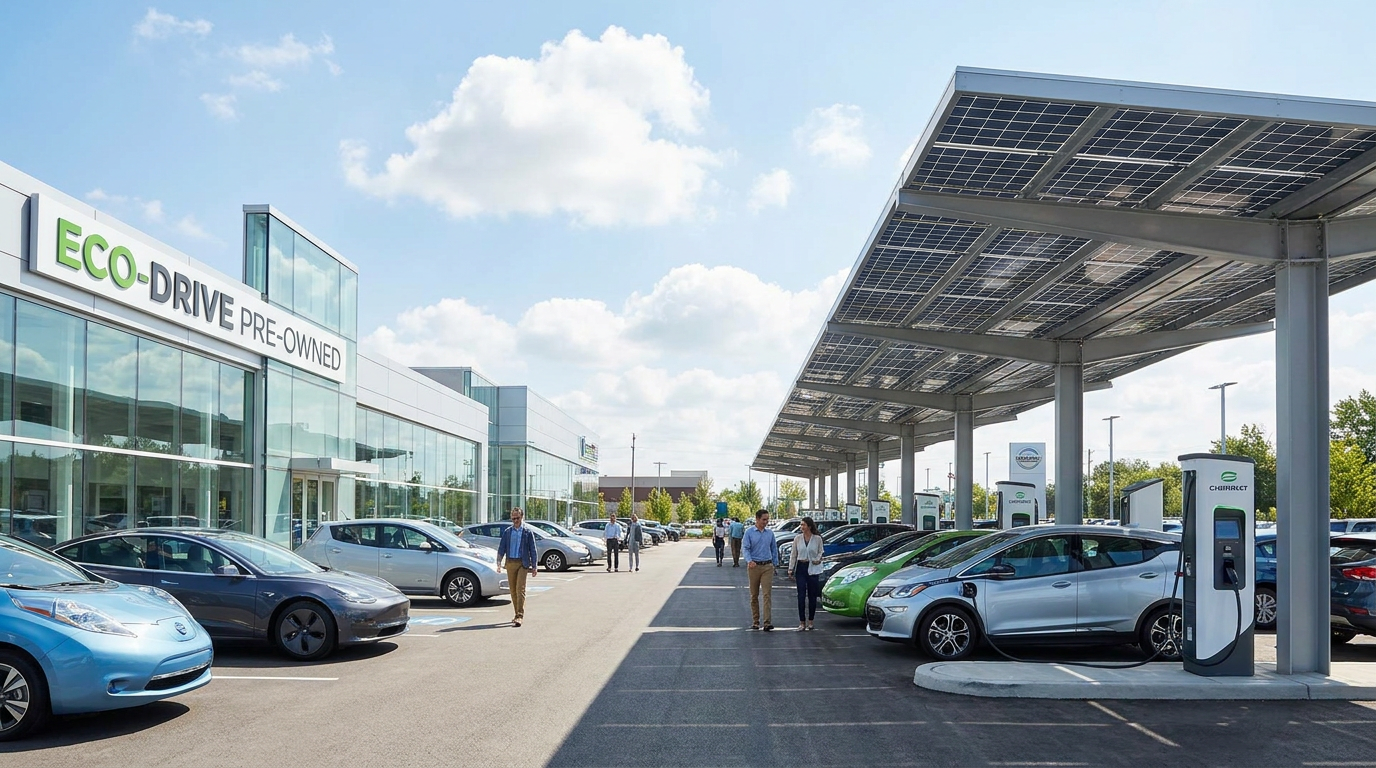
The 2026 used electric vehicle market is currently undergoing a massive transformation, creating an unprecedented buyer's market. A massive wave of lease returns from early EV adopters has flooded dealership lots across the country, resulting in a significant oversupply of two- to three-year-old electric vehicles. This influx of inventory has rapidly shifted the balance of power from sellers to buyers, making it one of the best times in automotive history to transition away from internal combustion engines. For years, the high upfront cost of electric vehicles kept them out of reach for the average consumer, but the sheer volume of off-lease cars returning to the market has fundamentally rewritten the rules of automotive retail.[3]
This oversupply has triggered steep and rapid depreciation across the sector, with many popular EV models now selling for 40% to 50% below their original sticker prices. For budget-conscious shoppers, this presents an extraordinary opportunity to acquire modern, high-tech transportation without paying the steep premium associated with a brand-new vehicle. The dramatic drop in residual values means that buyers can often find premium electric SUVs and long-range sedans for the price of a standard gas-powered economy car. This price parity is finally allowing electric vehicles to reach true mass-market affordability, appealing to pragmatic deal-hunters rather than just environmental advocates.[3][5]
However, the financial calculus for purchasing a used EV has shifted significantly in 2026. The federal EV tax credit—which previously offered up to $4,000 for qualifying used electric vehicles—officially expired in late 2025 following legislative changes in Washington. The original presence of these federal credits had artificially lowered the effective starting price for used EVs, and their sudden removal initially created widespread pricing uncertainty across the secondary market. Buyers who had factored that $4,000 discount into their budgets have had to adjust their expectations and look for savings elsewhere in the transaction.[3][5][6]
Despite the loss of the federal subsidy, the sheer drop in residual values keeps used EVs highly competitive on a total-cost-of-ownership basis. Savvy buyers are increasingly relying on a patchwork of state rebates, local air district programs, and utility incentives to offset the difference. Furthermore, the operational savings of driving an EV—charging at home on off-peak electricity rates rather than paying for gasoline—continue to make the long-term math highly favorable. When combined with the lack of routine engine maintenance, a heavily depreciated used EV often pencils out as a smarter financial choice than a comparable gas vehicle.[5][6]

Successfully shopping for a used EV, however, requires a fundamental shift in consumer mindset. In the traditional combustion-engine market, the odometer is the ultimate arbiter of a vehicle's remaining lifespan and value. Buyers have been conditioned for decades to walk away from cars approaching the 100,000-mile mark. For electric vehicles, mileage is a distinctly secondary concern. Because the drivetrain architecture is entirely different, the traditional wear-and-tear metrics simply do not apply in the same way, forcing buyers to learn an entirely new set of evaluation criteria.[6][8]
Because electric vehicles lack internal combustion engines, timing belts, exhaust systems, and multi-gear transmissions, they have drastically fewer moving mechanical parts to wear out or break down. An EV with 100,000 miles on the odometer but a pristine, well-maintained battery pack can easily outlast a gas-powered equivalent. Industry data shows that modern EV drivetrains can routinely last between 150,000 and 300,000 miles. Consequently, a high-mileage EV is often a highly viable and deeply discounted option, provided the underlying chemical architecture of the battery remains sound.[2][6][8]
The single most critical and expensive component of any used electric vehicle is the high-voltage battery pack. While battery degradation is a natural and unavoidable chemical process, modern liquid-cooled packs have proven to be far more resilient than early industry skeptics predicted. Unlike the air-cooled batteries found in the earliest generation of EVs, which suffered severe capacity loss in extreme climates, today's thermal management systems actively protect the cells from heat damage during operation and charging. This technological leap means that catastrophic battery failure is exceedingly rare, and buyers should focus instead on the gradual, expected loss of total driving range over time.[4][5][8]
The single most critical and expensive component of any used electric vehicle is the high-voltage battery pack.
On average, modern EV batteries lose approximately 2% of their total storage capacity per year. To accurately quantify this degradation, buyers must look beyond the dashboard's estimated range and focus on the State of Health (SoH) metric. The SoH is a percentage that compares the battery's current maximum capacity to its original factory baseline. For example, an EV that originally offered 300 miles of range with a 95% SoH will now deliver a maximum of 285 miles. Understanding this metric is the absolute foundation of making a smart used EV purchase.[1][4][6]

When evaluating a three-year-old electric vehicle, shoppers should ideally look for an SoH reading above 90%, which indicates excellent battery preservation. Anything above 84% is generally considered average and remains perfectly serviceable for the vast majority of daily commuting needs. If an older vehicle exhibits an SoH below 70%, or shows wild inconsistencies in its estimated range between charging cycles, it may require a costly module replacement. In such cases, buyers must carefully review the manufacturer's battery warranty, which typically covers the pack for eight years or 100,000 miles.[4][7][8]
Unfortunately, obtaining an accurate SoH reading can still be a deeply frustrating experience at many traditional auto lots. A significant number of dealerships remain unequipped, untrained, or simply unwilling to run proper high-voltage diagnostics for prospective buyers. In some instances, sales staff confuse the main high-voltage traction battery with the standard 12-volt accessory system, handing buyers a meaningless printout that simply says the battery is 'good.' This lack of transparency forces consumers to take matters into their own hands to verify the vehicle's true condition.[7][8]
To bypass dealership ignorance, savvy buyers are increasingly turning to independent verification methods. Third-party diagnostic apps, consumer-grade OBD2 scanners, and specialized data services like Recurrent or Voltest allow shoppers to independently verify battery health before signing a contract. By plugging a scanner directly into the vehicle's diagnostic port, buyers can pull the raw SoH data straight from the car's computer, ensuring they are paying a fair price based on the actual chemical degradation rather than the dealer's assurances.[3][4]
Beyond the battery's current capacity, its historical charging profile tells a crucial story about its future longevity. Frequent reliance on DC fast charging—often referred to as Level 3 charging—generates excess heat that can accelerate chemical degradation over time. While fast charging is essential for road trips, a vehicle that was exclusively fast-charged by a previous owner who lacked home charging infrastructure will likely show premature aging compared to a car that was gently charged overnight.[3][4]
If a vehicle's diagnostic report reveals that more than 50% of its lifetime charging sessions occurred at high-speed DC fast chargers, buyers should use that data as direct leverage to negotiate a lower purchase price. Conversely, a car that was primarily plugged into a Level 2 home charger will typically feature a much healthier pack. Asking the seller or dealer for the vehicle's charging history report is rapidly becoming as standard as asking for a traditional accident history report.[2][4]

Buyers must also conduct a thorough physical inspection of EV-specific hardware. The charging port should be examined with a flashlight to ensure there is no melted plastic, soot, or bent pins, which can indicate dangerous overheating events. Additionally, the 12-volt accessory battery must be checked; if it is an older lead-acid unit that is more than three years old, it should be replaced immediately. A dying 12-volt battery is the leading cause of an EV unexpectedly failing to start, leaving the driver stranded despite having a full high-voltage pack.[4]
Finally, the test drive for a used EV must be significantly longer and more comprehensive than the standard block-around-the-dealership route. Buyers should test the vehicle at sustained highway speeds to monitor how quickly the range estimate drops under load. It is also critical to verify the functionality of the cabin heater—a broken resistance heater can result in a $1,200 repair bill—and ensure the tires carry the proper 'EV' or 'XL' weight rating to handle the vehicle's heavy battery. Taking these deliberate steps ensures that the steep discounts of the 2026 market translate into genuine long-term value.[2][4]
How we got here
2010s
Early EV adopters face steep depreciation and uncertainty over long-term battery degradation.
2022–2023
Supply chain shortages drive used EV prices to record highs, sometimes exceeding the cost of new models.
2024
A surge of lease returns begins flooding the market, initiating a massive price correction.
Sept 2025
The federal used EV tax credit expires, altering the financial math for secondhand buyers.
2026
Used EVs reach mass-market affordability, with three-year-old models selling at 40% to 50% discounts.
Viewpoints in depth
EV Adopters & Advocates
Focusing on the long-term operational savings and environmental benefits of transitioning to electric vehicles.
Advocates argue that the current market conditions present a once-in-a-generation opportunity to decarbonize personal transport. They emphasize that even with minor battery degradation and the loss of federal tax credits, the total cost of ownership for a used EV remains vastly superior to internal combustion vehicles. By eliminating oil changes, transmission fluid, and the volatility of gasoline prices, these buyers view a depreciated EV as a long-term financial and environmental win, regardless of whether the battery has lost a few miles of its original range.
Pragmatic Deal-Hunters
Leveraging steep depreciation and third-party diagnostic data to negotiate the best possible price.
For this camp, the appeal of a used EV is purely financial. They view the expiration of the $4,000 federal tax credit as a hurdle to be overcome through aggressive negotiation and data-driven shopping. By utilizing OBD2 scanners and third-party battery reports, these buyers actively seek out vehicles with high DC fast-charging ratios or slightly elevated mileage to drive the purchase price down even further. Their goal is to maximize the 40% to 50% depreciation curve, treating the vehicle as a high-tech appliance purchased at a steep discount.
Traditional Auto Dealerships
Navigating the challenges of selling off-lease EV inventory while adapting to new consumer demands.
Traditional auto dealers are facing a difficult transition period. They are currently inundated with off-lease electric vehicles that are depreciating rapidly on their lots, yet many lack the specialized training and diagnostic equipment required to sell them effectively. Dealerships are struggling to adapt their sales models from traditional mileage-based pricing to battery-health-based pricing. As consumers become more educated and demand transparent State of Health (SoH) reports, dealerships are being forced to either invest in new diagnostic tools or risk losing sales to specialized EV retailers and private sellers.
What we don't know
- How the secondary market for EV batteries will scale as millions of first-generation packs reach the end of their automotive lifespan.
- Whether future software updates from manufacturers will artificially limit the charging speeds of older used models to preserve battery life.
- How the complete removal of federal used EV tax credits will impact long-term adoption rates among lower-income drivers.
Key terms
- State of Health (SoH)
- A percentage metric that compares an EV battery's current maximum capacity to its original capacity when new.
- DC Fast Charging (Level 3)
- High-speed public charging that can refill an EV battery quickly but may accelerate chemical degradation if used excessively.
- Level 2 Charging
- Standard 240-volt charging typically installed in homes, which charges the battery slowly overnight and preserves long-term health.
- Heat Pump
- An efficient climate control system in modern EVs that warms the cabin without draining the battery as quickly as traditional resistance heaters.
- OBD2 Scanner
- A diagnostic tool that plugs into a vehicle's onboard computer port to read detailed data, including hidden battery health metrics.
Frequently asked
Do used EVs still qualify for a federal tax credit in 2026?
No. The federal used EV tax credit, which previously offered up to $4,000, expired in late 2025. However, state and local utility incentives may still be available.
What is a good State of Health (SoH) for a used EV?
A State of Health above 90% is considered excellent for a used EV, while anything above 84% is generally average and perfectly fine for daily driving.
Does high mileage matter as much on an electric car?
No. Because EVs have far fewer moving parts than gas cars, battery age and charging history are much more important indicators of longevity than the odometer reading.
How does fast charging affect a used EV's battery?
Frequent use of DC fast chargers generates excess heat, which can accelerate battery degradation. A car charged primarily at home on a Level 2 charger will typically have a healthier battery.
Sources
Source coverage
8 outlets
3 viewpoints surfaced








[1]RechargedPragmatic Deal-Hunters
How to Check EV Battery Health Before Buying a Used EV
Read on Recharged →[2]EleportEV Adopters & Advocates
Buying A Used Electric Car For The First Time: What To Check For
Read on Eleport →[3]CarSoupPragmatic Deal-Hunters
Used Electric Car Buying Guide 2026
Read on CarSoup →[4]Elevate Motor Co.Pragmatic Deal-Hunters
Used EV Buying Guide: 20-Point Inspection Checklist
Read on Elevate Motor Co. →[5]Mercury InsuranceTraditional Auto Industry
Tips to Know Before Buying a Used EV Car
Read on Mercury Insurance →[6]Canary MediaEV Adopters & Advocates
It's a great time to buy a used EV. Here's how to get the right one.
Read on Canary Media →[7]EdmundsTraditional Auto Industry
How to Buy a Used Electric Car
Read on Edmunds →[8]Top GearTraditional Auto Industry
Your quick guide on how to buy a used electric car
Read on Top Gear →

Every angle. Every day.
Get shopping stories with full source coverage and perspective breakdowns delivered to your inbox.