
SpaceX Completes Historic $75 Billion IPO, Igniting Space Economy Boom
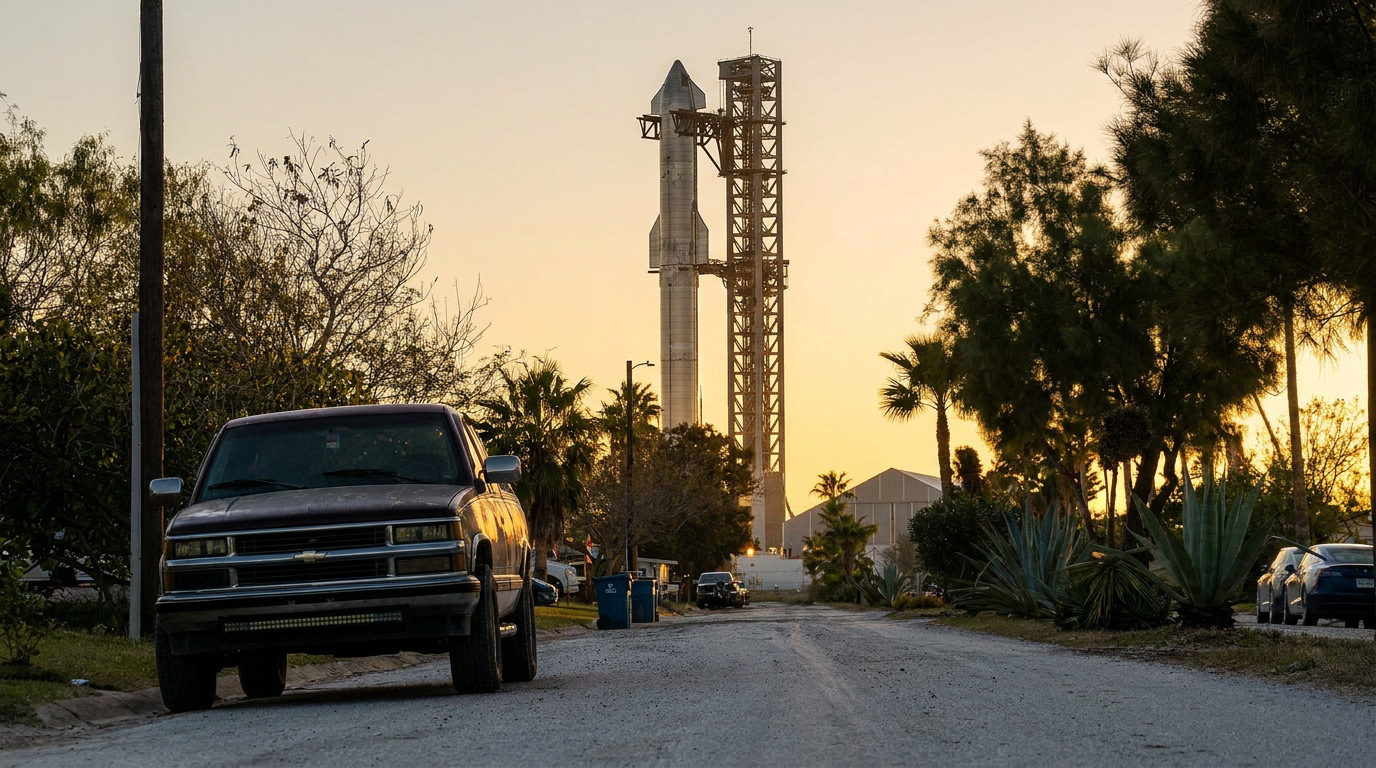
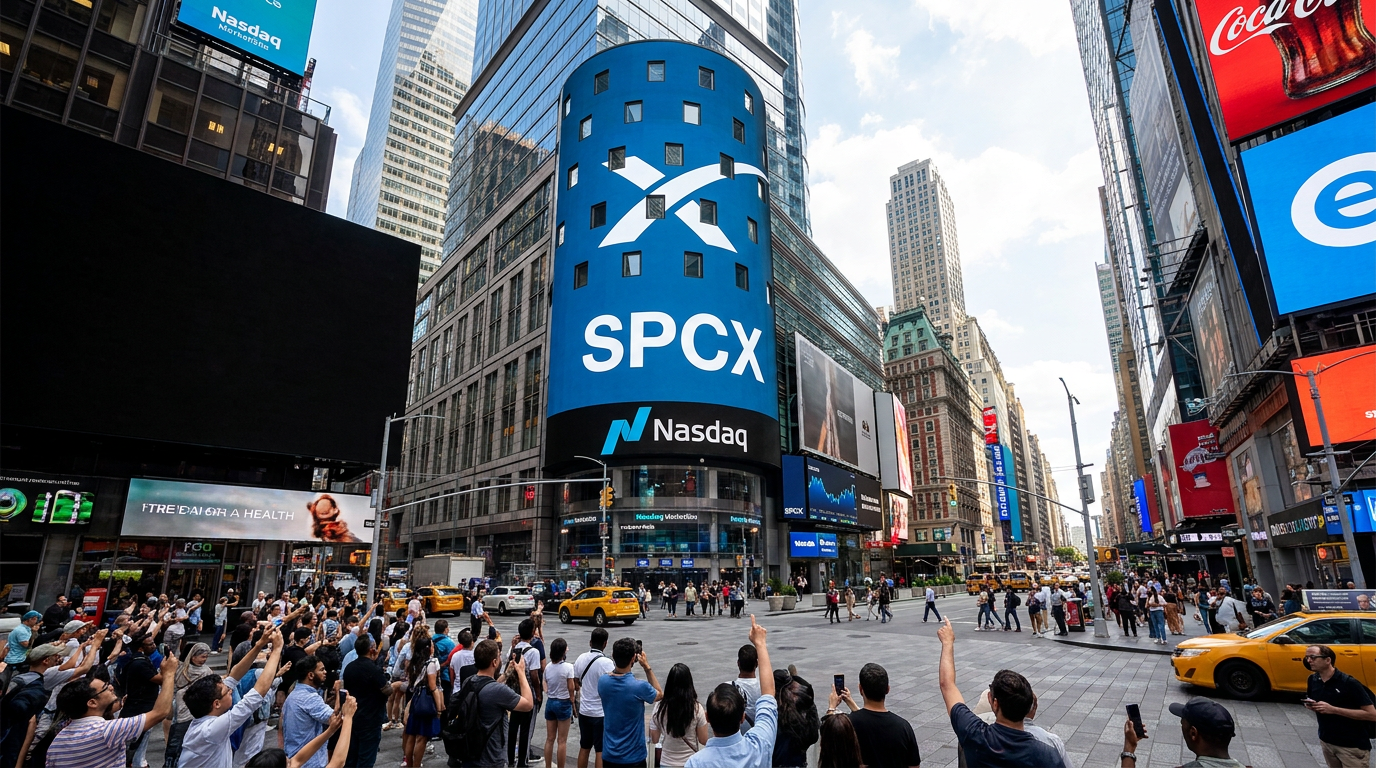
SpaceX has officially gone public in the largest stock-market debut in history, raising $75 billion and propelling the commercial space industry into a new era of mainstream investment.
By Factlen Editorial Team
- Market Optimists
- Investors focused on the long-term profitability and infrastructure dominance of the orbital economy.
- Space Industry Advocates
- Aerospace professionals who see the IPO as a catalyst for sector-wide growth and innovation.
- Historical Analysts
- Commentators comparing the wealth generation to past industrial revolutions and infrastructure monopolies.
What's not represented
- · Environmental advocacy groups monitoring the ecological impact of increased launch cadences.
- · International space agencies competing with US commercial dominance in orbital logistics.
Why this matters
The record-shattering public offering not only validates the commercial viability of space exploration but also opens the door for everyday investors to participate in the burgeoning orbital economy, fundamentally shifting how aerospace innovation is funded.
Key points
- SpaceX raised $75 billion in the largest initial public offering in stock market history.
- The company's stock surged 19% on its first day, reaching a $2.2 trillion market capitalization.
- The massive valuation officially made founder Elon Musk the world's first trillionaire.
- The IPO validates the commercial space sector, proving its viability for mainstream investment.
- Fresh capital will likely accelerate the Starship program and expand the Starlink satellite network.
SpaceX has officially entered the public markets, shattering every historical precedent with a record-breaking $75 billion initial public offering. The aerospace giant's debut on June 12, 2026, marks the largest stock-market launch in global financial history, fundamentally transforming the landscape of commercial space exploration. Investors eagerly anticipated the listing for years, but the sheer magnitude of the capital raised exceeded even the most optimistic Wall Street projections. The event signals a definitive shift in how mega-cap technology and aerospace ventures are funded, moving the epicenter of space innovation from private venture capital directly into the public equities market.[1][6]
The market's reception was nothing short of euphoric, with SpaceX shares surging 19% by the close of their first day of trading. This massive first-day pop propelled the company's total market capitalization to an unprecedented $2.2 trillion, instantly cementing its status as one of the most valuable public entities on the planet. The valuation reflects not just the company's current dominance in launch services, but immense forward-looking expectations for its satellite internet constellation and deep-space ambitions. Trading volumes broke records across major brokerages as both retail and institutional investors scrambled to secure a stake in the orbital economy.[1][6]
Beyond the corporate milestones, the IPO triggered a historic personal wealth event, officially elevating founder Elon Musk to the status of the world's first trillionaire. Musk's massive equity stake in the newly public company pushed his net worth past the thirteen-figure threshold, a financial milestone that has captivated global media and financial historians alike. The unprecedented accumulation of wealth underscores the outsized economic impact of the commercial space sector and the premium the market places on visionary, high-risk technological enterprises that successfully achieve scale.[1][4][5]

Financial historians and market analysts were quick to contextualize Musk's ascension, drawing direct parallels to the Gilded Age. The milestone immediately evoked comparisons to John D. Rockefeller, the oil baron who became America's first billionaire in 1916. Just as Rockefeller's wealth was built on the foundational energy infrastructure of the 20th century, Musk's trillion-dollar valuation is anchored in the foundational infrastructure of the 21st century: global satellite communications and interplanetary logistics. The historical symmetry highlights how generational wealth is consistently tied to the monopolization of new, transformative frontiers.[4]
The timing of the IPO represents a significant strategic pivot for SpaceX. For years, the prevailing narrative was that the company would only go public once regular human flights to Mars were underway. However, the explosive growth of the artificial intelligence sector and the massive, capital-intensive demands of scaling the Starlink satellite network accelerated the timeline. The AI boom has driven an insatiable demand for global, high-bandwidth connectivity, positioning Starlink as a critical infrastructure layer and generating the massive cash flows necessary to justify a multi-trillion-dollar public valuation.[7]
The timing of the IPO represents a significant strategic pivot for SpaceX.
Industry leaders view the successful listing as a watershed moment that validates the entire commercial space sector. The Space Foundation noted that the IPO marks a significant milestone for a maturing industry, demonstrating viable and highly lucrative pathways to profitability. For decades, space exploration was viewed as a capital sink reliant on government subsidies. SpaceX's public debut proves that communications, launch services, and navigation technologies can operate as highly efficient, profit-generating commercial enterprises capable of anchoring major investment portfolios.[2][8]

The ripple effects of the $75 billion capital injection are expected to be felt across the broader aerospace supply chain. With a massive war chest, SpaceX is positioned to accelerate the development of its next-generation Starship vehicle, expand its lunar base contracts with NASA, and aggressively scale its global broadband infrastructure. This acceleration will likely drive increased demand for specialized manufacturing, advanced materials, and secondary launch services, effectively lifting the entire ecosystem of smaller space-tech startups and legacy aerospace contractors.[2][6]
Despite the staggering valuation, prominent Wall Street voices remain bullish on the stock's long-term trajectory. Analysts suggest that it is not too late for investors to buy into the company, provided they view it as a long-term bet on the industrialization of space rather than a short-term momentum trade. The inherent volatility of rocket launches and the unpredictable nature of aerospace engineering mean the stock will likely experience significant turbulence, but the underlying monopoly on heavy-lift launch capabilities provides a robust floor for long-term growth.[3]
Retail investors, who were largely locked out of SpaceX's lucrative private funding rounds over the past two decades, have been a major driving force behind the stock's initial surge. The democratization of access to the company's equity has sparked a wave of market optimism, with retail trading platforms reporting record account sign-ups and trading volumes. This retail enthusiasm reflects a broader cultural fascination with space exploration and a strong desire among everyday investors to directly participate in humanity's expansion beyond Earth orbit.[1][6]

As the dust settles on Wall Street's most historic week, the focus now shifts from the spectacle of the IPO to the rigorous demands of public market execution. SpaceX must now balance its visionary, high-risk engineering culture with the quarterly earnings expectations and regulatory scrutiny that come with being a publicly traded mega-cap. How the company navigates this transition will not only determine its own financial future but will set the precedent for the next generation of deep-tech companies looking to bridge the gap between science fiction and public market reality.[2][7]
How we got here
2002
Elon Musk founds Space Exploration Technologies Corp. (SpaceX) with the goal of reducing space transportation costs.
2008
The Falcon 1 becomes the first privately developed liquid-fueled launch vehicle to reach orbit.
2020
SpaceX successfully launches its first crewed mission to the International Space Station.
2024
The Starship vehicle achieves full orbital success, proving the viability of super heavy-lift reusable rockets.
June 12, 2026
SpaceX completes a historic $75 billion IPO, reaching a $2.2 trillion valuation on its first day of trading.
Viewpoints in depth
Wall Street Bulls
Investors focused on the long-term profitability of the orbital economy.
Financial analysts and institutional investors view SpaceX not just as a rocket company, but as a foundational infrastructure play for the 21st century. By monopolizing heavy-lift launch capabilities and building the Starlink global broadband network, the company has created a massive, recurring revenue moat. Bulls argue that while the $2.2 trillion valuation is unprecedented for a newly public entity, it accurately reflects the company's unique position as the sole gateway to the commercialization of space.
Space Industry Advocates
Aerospace professionals who see the IPO as a catalyst for sector-wide growth.
For decades, the aerospace sector has relied heavily on government contracts and slow-moving legacy defense contractors. Industry advocates celebrate the SpaceX IPO as definitive proof that commercial spaceflight can operate as a highly lucrative, standalone business. They anticipate that the $75 billion raised will not only accelerate the Starship program but will also create a massive trickle-down effect, funding a new ecosystem of smaller startups focused on orbital manufacturing, satellite servicing, and deep-space logistics.
Historical Contextualizers
Analysts comparing the wealth generation to past industrial revolutions.
Economic historians point out that Elon Musk's ascension to trillionaire status mirrors the wealth concentration seen during the Gilded Age. Just as John D. Rockefeller capitalized on the transition to a petroleum-based economy, Musk has positioned himself at the chokepoint of the next great economic transition: the industrialization of space. These analysts emphasize that such massive wealth accumulation is historically typical when a single entity successfully pioneers and monopolizes a completely new frontier of human infrastructure.
What we don't know
- How the inherent volatility of rocket launches will impact the stock's long-term stability.
- Whether legacy aerospace competitors will consolidate in response to SpaceX's massive capital advantage.
- How the company will balance its high-risk engineering culture with quarterly public market expectations.
Key terms
- Initial Public Offering (IPO)
- The process of offering shares of a private corporation to the public in a new stock issuance.
- Market Capitalization
- The total dollar market value of a company's outstanding shares of stock, calculated by multiplying the stock price by total shares.
- Starlink
- A satellite internet constellation operated by SpaceX providing high-speed broadband coverage globally.
- Starship
- SpaceX's fully reusable, super heavy-lift launch vehicle designed for missions to the Moon and Mars.
Frequently asked
How much did SpaceX raise in its IPO?
SpaceX raised $75 billion, making it the largest initial public offering in global financial history.
What is SpaceX's total market value?
After a 19% surge on its first day of trading, the company's market capitalization reached $2.2 trillion.
Why did SpaceX decide to go public now?
The company accelerated its IPO timeline to capitalize on the AI boom and fund the massive expansion of its Starlink satellite network.
Who was the first billionaire?
John D. Rockefeller became the world's first billionaire in 1916, a milestone frequently compared to Elon Musk becoming the first trillionaire.
Sources
Source coverage
8 outlets
3 viewpoints surfaced





[1]BloombergMarket Optimists
Inside SpaceX and Elon Musk’s $75 billion IPO
Read on Bloomberg →SpaceX IPO Sparks Surge in Space Industry Investment and Market Optimism
Read on Bloomberg →[3]CNBCMarket Optimists
Jim Cramer says it's not too late to buy SpaceX — under one condition
Read on CNBC →[4]The New York TimesHistorical Analysts
Musk Is the World’s First Trillionaire. Who Was the First Billionaire?
Read on The New York Times →[5]ForbesMarket Optimists
How Elon Musk Just Became The World's First Trillionaire
Read on Forbes →What to Know About SpaceX’s Record-Breaking IPO
Read on Bloomberg →Why Musk Raced to Take SpaceX Public in the World’s Biggest IPO
Read on Bloomberg →[8]Space FoundationSpace Industry Advocates
The Maturing Space Economy: Investment and Growth
Read on Space Foundation →
Every angle. Every day.
Get business stories with full source coverage and perspective breakdowns delivered to your inbox.