
Solid-State EV Batteries Are Entering Production in 2026: What Car Buyers Need to Know
After years of laboratory development, solid-state batteries are finally hitting assembly lines in 2026, promising 600-mile ranges and 10-minute charging times. Here is how the technology works and when it will reach mass-market affordability.
By Factlen Editorial Team
- Automakers & Innovators
- Focuses on the massive leaps in range, safety, and charging speed to drive consumer excitement.
- Industry Analysts
- Cautions that manufacturing hurdles will keep early models prohibitively expensive until 2030.
- Regulatory Bodies
- Prioritizes strict standardization to ensure transitional technologies aren't deceptively marketed.
What's not represented
- · Lithium-Ion Manufacturers
- · Raw Material Suppliers
Why this matters
Solid-state batteries represent the biggest technological leap in automotive history since the internal combustion engine. For car shoppers, understanding this timeline is crucial for deciding whether to buy an EV today or wait for the next generation of range and safety.
Key points
- Solid-state batteries replace flammable liquid electrolytes with solid materials, drastically reducing fire risks.
- Energy density is expected to double, allowing for 600-mile driving ranges without increasing vehicle weight.
- Automakers like Dongfeng and Toyota are targeting 2026 to 2028 for their first consumer-ready solid-state vehicles.
- Early models will be expensive luxury vehicles, with mass-market affordability projected for 2030.
- China is releasing the world's first official standard in July 2026 to regulate 'semi-solid' marketing claims.
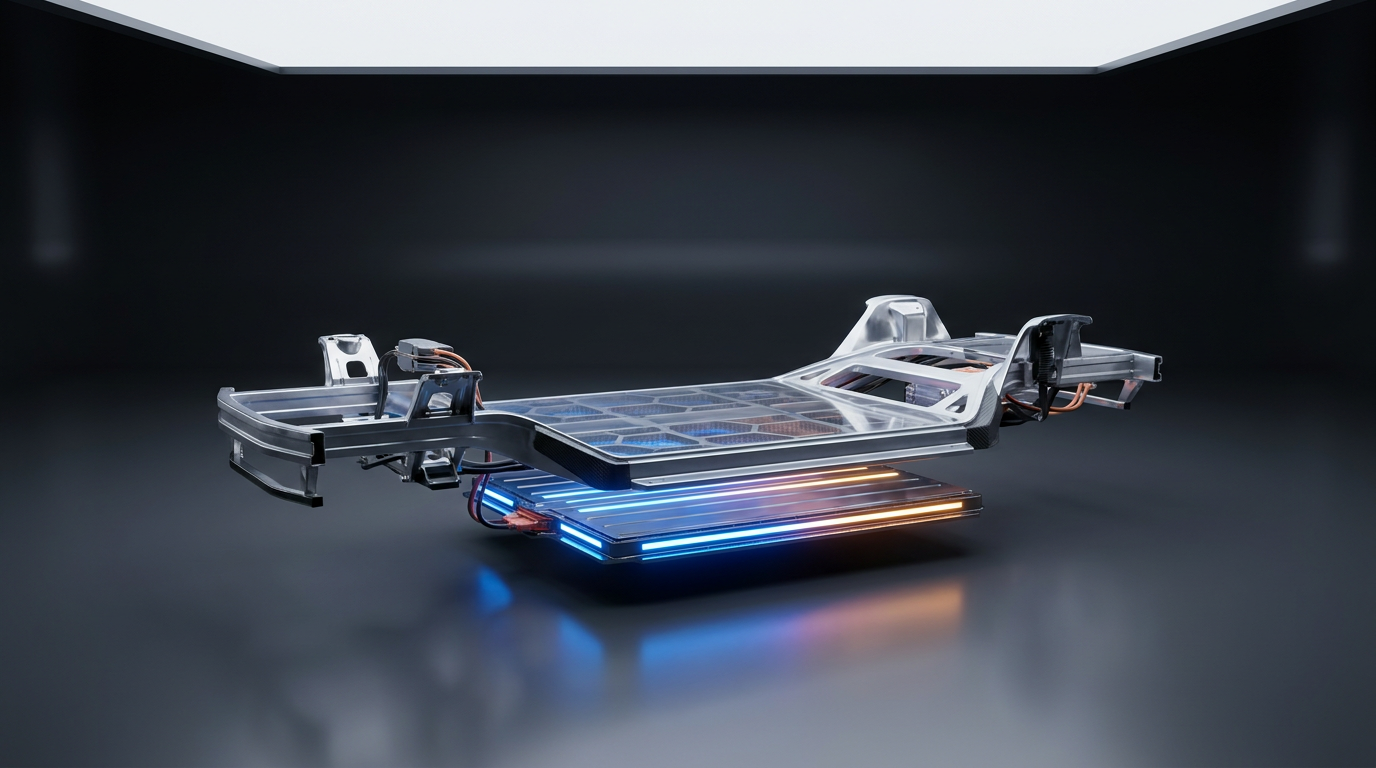
For over a decade, the solid-state battery has been the electric vehicle industry's holy grail—a technology perpetually "five years away." But in 2026, that timeline is finally collapsing. After years of laboratory breakthroughs and pilot programs, solid-state and semi-solid batteries are officially moving onto assembly lines, promising to fundamentally rewrite the rules of automotive design and convenience.[3][4]
To understand why this shift is monumental, it helps to look at the limitations of the current standard. Today's EVs rely heavily on lithium-ion batteries, which use a liquid electrolyte to shuttle ions between the cathode and the anode. While this technology has improved dramatically over the last decade, the liquid is inherently flammable and adds significant weight and volume to the vehicle, creating a natural ceiling for how far a car can travel.[3]
A solid-state battery replaces that liquid "juice" with a solid material—typically a polymer, oxide, or sulfide. This simple substitution fundamentally changes the physics of the battery cell. Without a liquid electrolyte, the risk of thermal runaway drops precipitously; comparative tests show that thermal events in solid-state systems do not begin until around 247 degrees Celsius, compared to just 90 degrees for conventional lithium-ion cells.[3]

But for car shoppers, the most immediate draw is energy density—how much power a battery can hold relative to its physical weight. Today's best lithium-ion cells max out around 200 to 260 watt-hours per kilogram (Wh/kg). Solid-state batteries currently entering production are targeting a massive leap to between 400 and 500 Wh/kg.[2][3]
In practical terms, this means automakers can either build a battery of the same physical size that delivers 50 to 80 percent more range, or they can build a much smaller, lighter battery that matches today's ranges. Chinese automaker Dongfeng recently announced that its upcoming solid-state vehicles, slated for mass production in late 2026, will achieve a driving range of 1,000 kilometers (roughly 620 miles) on a single charge.[2][5]
Charging speeds are also poised for a paradigm shift. Because solid electrolytes are less prone to degradation under high heat and rapid energy transfer, these new batteries can accept power much faster. Manufacturers are targeting charging times of under ten minutes to reach an 80 percent state of charge, effectively mirroring the time it takes to fill a traditional gas tank.[1][3]
Because solid electrolytes are less prone to degradation under high heat and rapid energy transfer, these new batteries can accept power much faster.
The transition, however, is not happening overnight. Rather than a sudden leap from liquid to solid, the industry is currently navigating a "semi-solid" era. Companies like NIO have already deployed 150-kilowatt-hour semi-solid battery packs in their vehicles, offering a massive range boost while still utilizing a small amount of liquid electrolyte to bridge the manufacturing gap.[1][2]

As the technology proliferates, regulatory bodies are stepping in to prevent marketing confusion. In July 2026, China's National Automotive Standardization Technical Committee is scheduled to release the world's first official solid-state EV battery standard. This framework will strictly categorize batteries as liquid, hybrid, semi-solid, or all-solid-state, requiring true solid-state cells to have a liquid weight-loss rate of no more than 0.5 percent.[4]
The global race to commercialize this technology has accelerated timelines across the board. While Dongfeng is pushing for late 2026, automotive giant Toyota—which holds thousands of patents in sulfide-based electrolytes—has officially targeted 2027 to 2028 for its first consumer-ready solid-state vehicle. Nissan is following closely with a 2028 target to double the energy density of its current fleet.[1][5]
Behind the scenes, the shift to solid electrolytes is enabling another crucial innovation: the lithium-metal anode. Traditional batteries use graphite anodes, which are stable but bulky. Solid-state designs allow manufacturers to replace graphite with pure lithium metal, which can hold roughly ten times the energy capacity, unlocking the true potential of the 500 Wh/kg threshold.[2]

Despite the rapid progress, industry analysts caution that early solid-state vehicles will not be cheap. The manufacturing processes for solid electrolytes require entirely new assembly lines and pristine, moisture-free environments. As a result, the first wave of true solid-state EVs in 2026 and 2027 will almost certainly be high-end luxury sedans and premium supercars.[2]
For the average car shopper, mass-market affordability is still a few years away. Experts project that economies of scale will not fully kick in until the 2030 model year, at which point solid-state technology will begin trickling down to standard family SUVs and commuter hatchbacks.[2][3]

In the meantime, the arrival of solid-state technology is expected to exert downward pressure on the prices of traditional lithium-ion EVs. As early adopters migrate to the new standard, automakers will likely discount their liquid-based models, creating a buyer's market for shoppers who do not need 600 miles of range or five-minute charging.[6]
Ultimately, 2026 marks the moment the electric vehicle industry crosses the Rubicon. The internal combustion engine spent a century refining its efficiency; the EV battery is about to undergo its most significant evolutionary leap in just a few years, fundamentally rewriting the rules of automotive design, safety, and convenience.[1][3]
How we got here
2024
Semi-solid batteries, like NIO's 150 kWh pack, begin entering the commercial market.
July 2026
China is scheduled to release the world's first official standard defining solid-state EV batteries.
Late 2026
Automakers like Dongfeng plan to begin mass-producing their first solid-state vehicles.
2027–2028
Toyota and Nissan target the release of their first consumer-ready solid-state EVs.
2030
Industry consensus for when solid-state batteries will reach mass-market affordability and scale.
Viewpoints in depth
Automakers & Innovators
Focuses on the massive leaps in range, safety, and charging speed to drive consumer excitement.
For vehicle manufacturers, solid-state technology is the ultimate competitive differentiator. Brands like Toyota, Nissan, and Dongfeng are aggressively marketing the 1,000-kilometer range and 10-minute charging times as the definitive end to consumer 'range anxiety.' By highlighting the safety benefits of a non-flammable architecture, automakers hope to win over holdouts who have been skeptical of traditional lithium-ion battery fires. Their messaging frames 2026 as the dawn of a new era, positioning early adopters as pioneers of the ultimate automotive technology.
Industry Analysts
Cautions that manufacturing hurdles will keep early models prohibitively expensive until 2030.
While acknowledging the scientific breakthroughs, supply chain analysts and battery economists urge a more measured outlook. They point out that manufacturing solid electrolytes requires entirely new, hyper-sterile assembly environments that are incredibly expensive to build. Consequently, analysts argue that the 2026–2028 rollout will be restricted to low-volume, high-margin luxury vehicles. They advise everyday car shoppers not to delay their EV purchases today, as true mass-market parity for solid-state technology is unlikely to arrive before the end of the decade.
Regulatory Bodies
Prioritizes strict standardization to ensure transitional technologies aren't deceptively marketed.
As the race to commercialize heats up, regulators are stepping in to police the terminology. With many companies utilizing 'semi-solid' batteries—which still contain a small percentage of liquid—agencies like China's National Automotive Standardization Technical Committee are drawing hard lines. Their upcoming standards aim to protect consumers from misleading marketing by legally defining what constitutes a true all-solid-state battery. For regulators, the priority is ensuring that the safety and performance claims associated with the technology are actually met by the products hitting the road.
What we don't know
- Exactly how much of a price premium early solid-state EVs will carry over their lithium-ion counterparts.
- Whether the global supply chain for pure lithium-metal anodes can scale fast enough to meet 2030 mass-market targets.
- How well these first-generation solid-state cells will resist long-term degradation after a decade of real-world fast charging.
Key terms
- Electrolyte
- The medium inside a battery that allows electrical charge (ions) to flow between the cathode and the anode.
- Energy Density
- The amount of energy a battery can store relative to its weight, usually measured in watt-hours per kilogram (Wh/kg).
- Thermal Runaway
- A dangerous chain reaction where a battery cell overheats and catches fire, a risk significantly reduced by solid-state technology.
- Anode
- The negative electrode of a battery; solid-state tech allows this to be made of pure lithium metal instead of bulky graphite.
Frequently asked
What is a solid-state battery?
It is an EV battery that replaces the flammable liquid electrolyte found in traditional lithium-ion cells with a solid material, like a polymer or sulfide.
When can I actually buy a solid-state EV?
Early, high-end models will hit the market between 2026 and 2028, but affordable mass-market options likely won't arrive until 2030.
Will solid-state batteries charge faster?
Yes. Because they resist heat better, automakers expect them to safely accept a full charge in under 10 minutes.
What is a semi-solid battery?
A transitional technology that uses mostly solid materials but retains a small amount of liquid electrolyte to ease the manufacturing process.
Sources
Source coverage
6 outlets
3 viewpoints surfaced






[1]The Battery ShowIndustry Analysts
The Roadmap to All-Solid-State: 2026–2028
Read on The Battery Show →[2]Bonnen BatteriesIndustry Analysts
Solid-State Batteries: 2026-2030 Timeline
Read on Bonnen Batteries →[3]TO7 MotorAutomakers & Innovators
Solid-state battery technology is entering real-world production in 2026
Read on TO7 Motor →[4]ElectrekRegulatory Bodies
China will release a standard for solid-state EV batteries later this year
Read on Electrek →[5]CarsGuideAutomakers & Innovators
Game-changing solid-state batteries are back on the agenda
Read on CarsGuide →[6]InsideEVsIndustry Analysts
Used EV Battery Health and the Solid-State Horizon
Read on InsideEVs →
Every angle. Every day.
Get shopping stories with full source coverage and perspective breakdowns delivered to your inbox.