
Revolutionary 'Immune Reset' Therapy Puts Severe Lupus into Drug-Free Remission
A groundbreaking UK trial using genetically modified CAR-T cells has successfully rebooted the immune systems of severe lupus patients, offering the first concrete evidence of a potential cure.
By Factlen Editorial Team
- Clinical Researchers
- Focus on the biological mechanism and the potential to permanently reboot a malfunctioning immune system.
- Patient Advocates
- Emphasize the life-changing impact of drug-free remission and escaping decades of chronic pain.
- Health Economists
- Weigh the high upfront cost of personalized cellular therapy against the long-term savings of eliminating chronic care.
What's not represented
- · Insurance Providers
- · Rheumatologists outside major research centers
Why this matters
For decades, severe autoimmune diseases have meant a lifetime of chronic pain, organ damage, and heavy immunosuppressive drugs. This breakthrough provides the first concrete evidence that a single-dose 'immune reset' could offer a permanent, drug-free cure for millions of patients.
Key points
- Five out of six severe lupus patients achieved drug-free remission in a groundbreaking UK trial using CAR-T cell therapy.
- The treatment involves genetically modifying a patient's own T-cells to hunt down and destroy the rogue B-cells causing the autoimmune attack.
- Once the problematic B-cells are cleared, the body regenerates healthy B-cells, effectively rebooting the immune system.
- Researchers believe this single-dose 'immune reset' could eventually cure other autoimmune disorders like multiple sclerosis and rheumatoid arthritis.
- While early results are highly promising, the therapy's high upfront cost and complex manufacturing pose challenges for widespread access.
An experimental treatment that effectively reboots a malfunctioning immune system has put severe lupus into drug-free remission in early UK trials, marking a watershed moment in the treatment of autoimmune diseases. The therapy, which genetically modifies a patient's own cells to hunt down the root cause of the illness, has yielded results so profound that researchers are cautiously using the word "cure."[1][2]
Systemic lupus erythematosus (SLE) is a chronic, debilitating condition where the body's immune system mistakenly attacks healthy tissues. Affecting millions globally—the vast majority of whom are young women—the disease causes widespread inflammation, joint pain, debilitating fatigue, and severe damage to major organs like the kidneys and heart. Until now, the only recourse has been a lifetime of blunt-force immunosuppressive medications that carry heavy side effects and leave patients vulnerable to infections.[3][6]
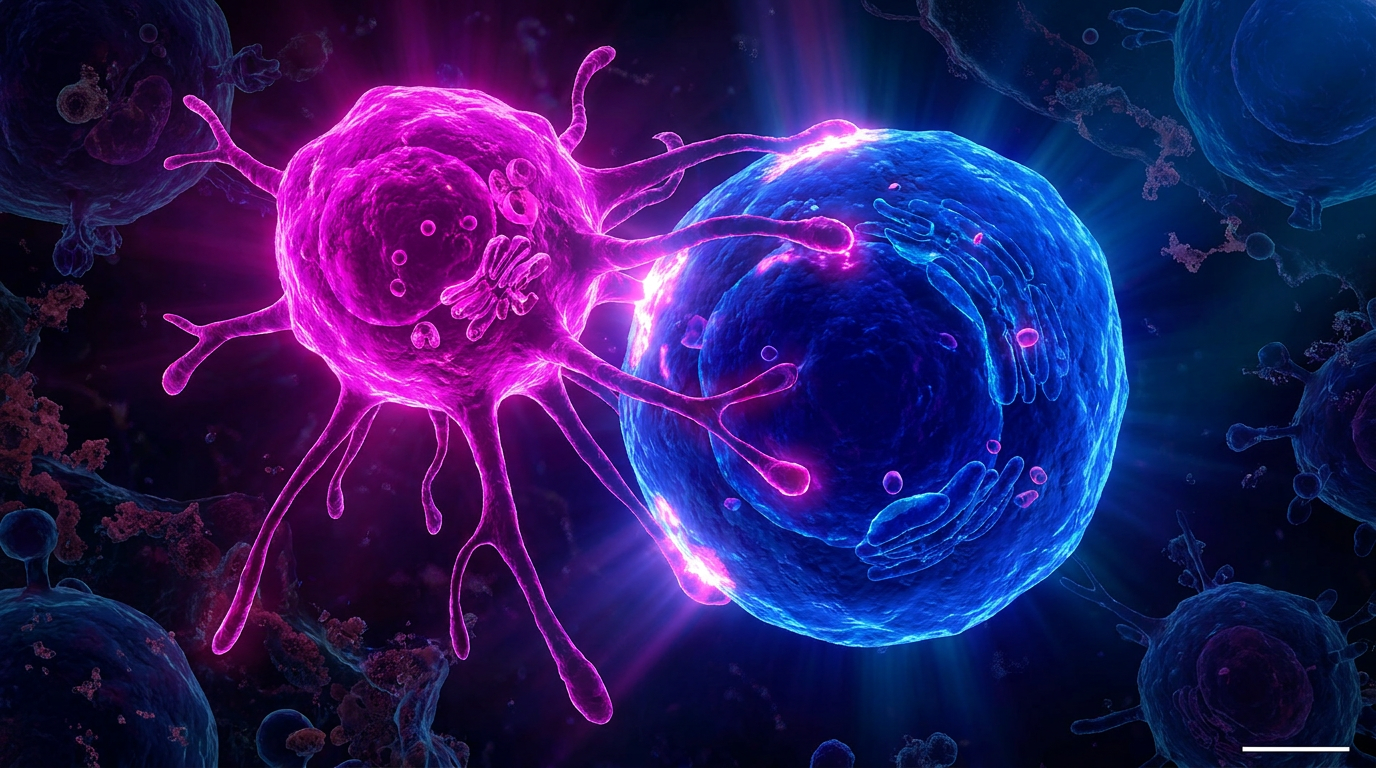
The breakthrough relies on Chimeric Antigen Receptor (CAR) T-cell therapy, a complex cellular engineering technique previously reserved as a last-line defense for severe blood cancers. The process begins by extracting a patient's T-cells—the "hunter-killers" of the immune system. In a laboratory, these cells are genetically reprogrammed to recognize and attack CD19, a protein found on the surface of B-cells. In lupus patients, it is these rogue B-cells that produce the autoantibodies responsible for attacking the body's own organs.[1][5]

Once the engineered CAR-T cells are infused back into the patient's bloodstream, they act as a targeted smart-bomb, systematically destroying the problematic B-cell population. The biological magic, however, happens in the aftermath. Months after the rogue cells are cleared out, the patient's bone marrow begins to generate brand new, healthy B-cells. The immune system is effectively rebuilt from scratch, free of the autoimmune flaw that caused the disease.[2][3]
The clinical evidence stems from a Phase 1 NHS trial spearheaded by University College London Hospitals (UCLH) and University College London (UCL). The study recruited nine patients with severe, treatment-resistant lupus. Most of the participants suffered from lupus nephritis, a dangerous complication that severely impairs kidney function and often leads to dialysis.[2][3]
The clinical evidence stems from a Phase 1 NHS trial spearheaded by University College London Hospitals (UCLH) and University College London (UCL).
The trial tested different dosages of the CAR-T therapy, known as Obe-cel. Six patients received a lower dose, while three received a higher dose. The results for the low-dose cohort have been extraordinary: after an average follow-up period of 11 months, five of the six patients achieved complete remission. Their disease markers plummeted, and their previously damaged kidney function either stabilized or significantly improved.[2][5]

The human impact of these statistics is staggering. Katie Tinkler, a 52-year-old participant, had suffered from severe lupus for 30 years, forcing her to give up her career as a fitness instructor due to agonizing joint pain and fatigue. Following the CAR-T infusion, she is now entirely off all lupus medication. She reports having "never been this good" in three decades, and has recently returned to skiing and dancing—activities that were previously impossible.[1][2]
While the UCLH trial focused exclusively on lupus, the implications stretch far beyond a single disease. Because the underlying mechanism—rogue B-cells attacking healthy tissue—is shared across multiple conditions, immunologists believe this "immune reset" could eventually be deployed against a wide spectrum of severe autoimmune disorders, including multiple sclerosis, rheumatoid arthritis, and scleroderma.[1][6]
The momentum is already building globally. In the United States, institutions like the Norton Cancer Institute are launching parallel trials, such as the RESOLUTION study, which aims to test allogeneic CAR-T therapy. Unlike the UCLH trial, which uses the patient's own cells, allogeneic therapy uses T-cells from healthy donors to create an "off-the-shelf" product. If successful, this could drastically reduce the time and complexity required to deliver the treatment.[4]
Despite the overwhelming clinical optimism, significant hurdles remain before CAR-T becomes a standard autoimmune treatment. The therapy is notoriously expensive—often costing hundreds of thousands of dollars per patient for cancer applications—and requires highly specialized biomanufacturing facilities. Scaling this bespoke, individualized treatment to meet the needs of millions of autoimmune patients will require a massive logistical and financial overhaul of current healthcare infrastructure.[6]

There are also safety profiles to monitor. CAR-T therapy can trigger severe, sometimes life-threatening immune reactions, such as cytokine release syndrome, in the days following the infusion. Furthermore, because the follow-up period is currently measured in months rather than decades, researchers cannot yet guarantee that the rogue autoimmune B-cells will not eventually return as the patient ages.[3][6]
Nevertheless, the paradigm has shifted. For the first time, doctors are looking at patients with severe, chronic autoimmune diseases and discussing the realistic prospect of a one-and-done cure. As larger Phase 2 trials prepare to launch, the medical community is watching closely, hopeful that the era of lifelong immunosuppression may soon give way to the era of the immune reset.[1][6]
How we got here
Pre-2024
CAR-T cell therapy is primarily used as a revolutionary, last-line treatment for specific blood cancers.
2024-2025
Researchers begin small-scale trials repurposing CAR-T therapy to target the rogue B-cells responsible for severe autoimmune diseases.
June 2026
UCLH and UCL publish groundbreaking Phase 1 trial results showing drug-free remission in severe lupus patients.
Viewpoints in depth
Clinical Researchers
Focus on the biological mechanism and the potential to permanently reboot a malfunctioning immune system.
Immunologists and trial investigators view these results as a fundamental paradigm shift. By proving that depleting CD19-positive B-cells can effectively reboot a malfunctioning immune system without causing permanent immunodeficiency, researchers have validated a new biological target. Their primary focus now is expanding clinical trials to confirm safety at higher doses and testing the mechanism against other B-cell mediated diseases like multiple sclerosis.
Patient Community
Emphasize the life-changing impact of drug-free remission and escaping decades of chronic pain.
For patient advocacy groups and those living with severe autoimmune conditions, the trial represents an escape from a grim status quo. Current standard-of-care involves lifelong reliance on steroids and immunosuppressants, which often cause severe weight gain, bone density loss, and vulnerability to infections. The prospect of a one-time, curative procedure that restores normal physical function—allowing patients to return to work and active lifestyles—is viewed as nothing short of miraculous.
Health Economists
Weigh the high upfront cost of personalized cellular therapy against the long-term savings of eliminating chronic care.
Healthcare policy analysts are grappling with the financial implications of scaling CAR-T therapy. The treatment is bespoke, requiring a patient's cells to be harvested, shipped to a specialized lab, engineered, and returned—a process that currently costs hundreds of thousands of dollars per patient. However, economists argue that if the therapy provides a permanent cure, the massive upfront investment could ultimately save healthcare systems money by eliminating decades of expensive biological drugs, hospitalizations, and dialysis treatments.
What we don't know
- Whether the rogue autoimmune B-cells will eventually return years or decades after the initial 'reset.'
- How healthcare systems will manage the high upfront costs and complex manufacturing logistics of personalized CAR-T therapy for a broader patient population.
- The long-term efficacy and safety profile of the higher-dose cohort, which has only been tracked for three months so far.
Key terms
- CAR-T Cell Therapy
- Chimeric antigen receptor T-cell therapy; a treatment that genetically engineers a patient's immune cells to fight disease.
- Systemic Lupus Erythematosus (SLE)
- The most common type of lupus, an autoimmune disease where the immune system attacks its own tissues, causing widespread inflammation.
- B-cells
- A type of white blood cell that produces antibodies; in lupus, rogue B-cells mistakenly attack the body's own organs.
- Remission
- A period during which the symptoms of a disease decrease or disappear entirely.
Frequently asked
What is CAR-T cell therapy?
A treatment that extracts a patient's own immune T-cells, genetically modifies them in a lab to attack specific disease-causing cells, and reinfuses them into the body.
Does this cure lupus permanently?
Early trial results show complete remission and a 'reset' of the immune system, but longer-term studies over several years are needed to confirm if the cure is permanent.
Will this work for other autoimmune diseases?
Researchers are highly optimistic that the same mechanism could treat multiple sclerosis, rheumatoid arthritis, and scleroderma, as they share similar underlying B-cell dysfunctions.
Sources
Source coverage
6 outlets
3 viewpoints surfaced






[1]BBC NewsPatient Advocates
'I've never been this good' – revolutionary immune reset puts lupus in remission
Read on BBC News →[2]The GuardianPatient Advocates
Doctors say therapy that genetically modifies person's T-cells could offer cure for chronic autoimmune disease
Read on The Guardian →[3]University College London Hospitals (UCLH)Clinical Researchers
CAR T-cell therapy transforms life of patient with severe lupus
Read on University College London Hospitals (UCLH) →[4]Norton Cancer InstituteClinical Researchers
RESOLUTION clinical trial at Norton Cancer Institute explores allogeneic CAR T-cell therapy for treatment-resistant lupus
Read on Norton Cancer Institute →[5]Autolus TherapeuticsClinical Researchers
Obe-cel Phase 1 Clinical Trial in Severe Systemic Lupus Erythematosus
Read on Autolus Therapeutics →[6]Factlen Editorial TeamHealth Economists
Synthesis by Factlen editorial team
Read on Factlen Editorial Team →

Every angle. Every day.
Get health stories with full source coverage and perspective breakdowns delivered to your inbox.