
ICE Investigators Bypass States to Obtain Local Voter Files in Escalating Election Probe
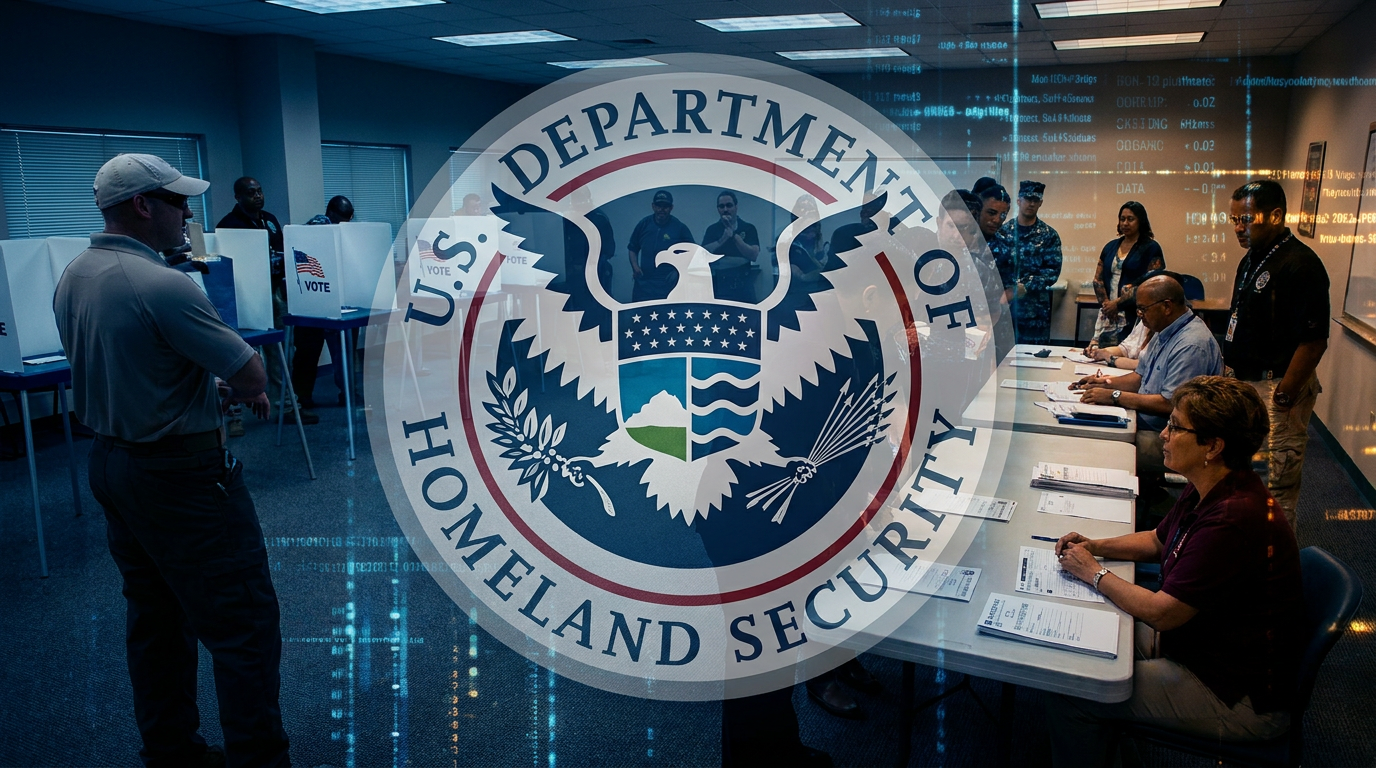
Immigration and Customs Enforcement (ICE) agents have begun securing individual voter records directly from county clerks, marking a significant escalation in the federal government's effort to cross-reference local election rolls with immigration databases.
By Factlen Editorial Team
- Federal Enforcement Advocates
- Argue that cross-referencing voter rolls with DHS databases is a necessary, common-sense measure to ensure only citizens vote and to protect election integrity.
- Voting Rights Organizations
- Warn that sharing sensitive voter data with ICE will lead to the wrongful purging of eligible voters, intimidate naturalized citizens, and suppress turnout.
- State & Local Administrators
- Caught in the middle, facing pressure from federal agencies to comply with data requests while navigating state privacy laws and the logistical burden of federal probes.
What's not represented
- · Naturalized citizens whose data is being reviewed
- · County clerks forced to comply with federal requests
Why this matters
By bypassing resistant state governments and going directly to local counties, the federal government is establishing a new pipeline for election data. This unprecedented sharing of local voter rolls with immigration enforcement agencies raises profound questions about federal overreach, voter privacy, and the potential intimidation of naturalized citizens ahead of the 2026 midterms.
Key points
- ICE investigators have successfully obtained individual voter files directly from county clerks in Texas and North Carolina.
- The move bypasses state governments that have refused to hand over statewide voter rolls to the DOJ.
- Federal authorities are running the local data through the SAVE immigration database to flag potential noncitizens.
- DHS recently announced it had flagged 24,000 potential noncitizens on U.S. voter rolls.
- Voting rights groups warn the data sharing will lead to errors, wrongful voter purges, and the intimidation of naturalized citizens.
- The federal government's legal authority to collect this data is currently being challenged in dozens of state lawsuits.
Immigration and Customs Enforcement (ICE) investigators have successfully obtained individual voter files directly from local election officials in at least two jurisdictions—Webb County, Texas, and Forsyth County, North Carolina. The coordinated dragnet, revealed through internal emails and records requests, marks a major operational shift in how the federal government is pursuing allegations of noncitizen voting.[1][4]
This localized approach represents a tactical pivot for the administration. After facing fierce resistance and protracted lawsuits from several state governments that refused to hand over their statewide voter rolls to the Department of Justice (DOJ), federal authorities are now bypassing state capitals entirely. By appealing directly to municipal and county clerks, investigators are finding new avenues to secure the sensitive data.[1][6]
Once obtained, these local voter histories are funneled to Homeland Security Investigations (HSI), a specialized branch within ICE. The primary objective is to cross-reference the names, addresses, and personal identifiers against federal immigration databases to identify potential noncitizens who may be unlawfully registered to cast a ballot.[2][4]
This operation is part of a sweeping, multi-agency mobilization initiated by a March 2025 executive order. That directive explicitly ordered federal bodies to actively block noncitizens from accessing voter rolls, translating years of partisan rhetoric regarding election integrity into concrete, coordinated law enforcement action across the Departments of Justice and Homeland Security.[4]

At the center of this technological effort is the Systematic Alien Verification for Entitlements (SAVE) program. Originally designed to help government agencies verify immigration status for benefits like Medicaid, SAVE is now being heavily repurposed as an election security tool. The Department of Homeland Security (DHS) is actively pushing local jurisdictions to run their localized voter lists through this federal system.[4][5]
Federal officials maintain that these actions are legally sound and vital for democratic integrity. A DOJ spokesperson recently defended the data collection, stating that the department is devoting significant resources to ensure that voter rolls are maintained accurately and that "American elections are decided solely by American citizens."[2]
The administration points to recent data to justify the expanding dragnet. In April 2026, DHS announced it had flagged more than 24,000 names on U.S. voter rolls as potential noncitizens after running state and local lists through its national databases. Those names were subsequently forwarded to HSI for formal review.[3]
The administration points to recent data to justify the expanding dragnet.
To underscore the stakes, federal authorities recently celebrated the conviction of a Mexican national who had been serving as the mayor of a small town in Kansas. The individual, who was not a U.S. citizen, had repeatedly voted in local elections and falsified his citizenship status on official registration forms, resulting in a high-profile prosecution.[3]
Despite these high-profile cases, independent research suggests that noncitizen voting remains exceedingly rare. A comprehensive historical review conducted by the conservative Heritage Foundation documented just 100 proven cases of noncitizen voting nationwide between 1982 and 2025, raising questions about the proportionality of the federal response.[4]

Voting rights advocates and legal experts have raised profound alarms about the privacy implications of this data-sharing arrangement. Voter files often contain highly sensitive personal identifiers, including partial Social Security numbers, exact dates of birth, and driver's license numbers, which are now flowing directly into immigration enforcement channels.[5][6]
Organizations monitoring the situation argue that funneling this data to ICE will inevitably lead to systemic errors. They warn that naturalized citizens and eligible voters of color could be wrongly flagged by mismatched databases, subsequently purged from the rolls, or subjected to unwarranted and intimidating immigration investigations.[5][6]
"When voter rolls are cross-checked against immigration databases that are not designed to determine voting eligibility, errors are inevitable," noted Chioma Chukwu, Executive Director of American Oversight. The watchdog group has filed lawsuits seeking transparency on exactly how the DOJ and ICE are storing and utilizing the collected data.[5]
The federal government's statutory authority to collect this data is currently being fiercely litigated in dozens of states. The DOJ has cited the Civil Rights Act of 1960 and the National Voter Registration Act to justify its demands, arguing these statutes permit broad federal inspection of local election records.[2][6]
Critics point out that these civil rights-era laws were historically utilized to expand voter access and prevent discriminatory practices, not to authorize the bulk collection of personal data for deportation purposes. Several federal courts have already dismissed DOJ lawsuits against states, finding the asserted federal authority to be weak or misapplied.[6]

The response from state governments has been highly polarized. While states like Nebraska and Illinois are actively fighting the DOJ in court to protect their residents' data, others have cooperated fully. Texas, for instance, voluntarily turned over its entire statewide database—covering roughly 18 million voters—without requiring a court order or subpoena.[6]
As the 2026 midterm elections approach, the success of this county-by-county strategy could fundamentally alter the landscape of election administration. If ICE continues to successfully secure data at the local level, it effectively neutralizes the legal resistance of state-level officials who have refused to comply.[1][4]
The ultimate uncertainty lies in how ICE will utilize the newly acquired county data on Election Day itself. With DHS leadership directing ICE lawyers to pursue maximum lawful deportation penalties for noncitizen voting violations, local election officials and civil rights groups are bracing for the possibility of federal law enforcement actions near polling locations this November.[4]
How we got here
March 2025
An executive order is signed directing federal bodies to block noncitizens from accessing voter rolls.
Late 2025
The DOJ begins suing multiple states to compel the release of unredacted voter rolls.
March 2026
Reports emerge that the DOJ and DHS are finalizing an agreement to share collected voter data with ICE.
April 2026
DHS announces it has flagged 24,000 potential noncitizens on U.S. voter rolls using the SAVE database.
May 2026
ICE successfully secures individual voter files directly from Webb County, Texas, following a similar acquisition in North Carolina.
June 2026
Internal emails leak, revealing the operational extent of ICE's county-level data requests.
Viewpoints in depth
Federal Enforcement Advocates
Argue that cross-referencing voter rolls with DHS databases is a necessary, common-sense measure to ensure only citizens vote and to protect election integrity.
Proponents of the multi-agency effort argue that the federal government has a fundamental duty to ensure that American elections are decided exclusively by American citizens. They point to the 24,000 names recently flagged by the SAVE database as evidence that state-level voter roll maintenance is insufficient and requires federal intervention. From this perspective, utilizing ICE and Homeland Security Investigations is simply a matter of applying the right law enforcement tools to a persistent vulnerability in the democratic process. They view the resistance from certain states not as a defense of privacy, but as an obstruction of lawful federal oversight, necessitating the tactical shift to county-level data collection.
Voting Rights Organizations
Warn that sharing sensitive voter data with ICE will lead to the wrongful purging of eligible voters, intimidate naturalized citizens, and suppress turnout.
Civil rights and voting advocacy groups view the data-sharing arrangement as a dangerous weaponization of federal power. They argue that databases like SAVE were never designed to determine voting eligibility and are prone to errors, particularly regarding naturalized citizens who may have registered to vote after their immigration status was last updated in the system. These organizations warn that the mere presence of ICE in the election administration process will have a profound chilling effect, intimidating eligible voters of color and naturalized citizens from participating in the democratic process. They further contend that the DOJ is misapplying civil rights-era laws to conduct a bulk data collection program that violates voter privacy.
State & Local Administrators
Caught in the middle, facing pressure from federal agencies to comply with data requests while navigating state privacy laws and the logistical burden of federal probes.
For the municipal and county clerks actually running elections, the federal dragnet presents a logistical and legal nightmare. Local administrators are increasingly caught between aggressive federal data requests and strict state-level privacy laws that govern how voter information can be shared. While some states have voluntarily handed over their databases, administrators in resistant states are now finding federal agents bypassing their capitals and arriving directly at their county offices. This places immense pressure on under-resourced local officials who must decide whether to comply with federal investigators or risk becoming the target of DOJ litigation themselves.
What we don't know
- It remains unclear exactly how many county clerks nationwide have already complied with ICE data requests.
- We do not know how ICE plans to utilize the flagged voter data on Election Day, or if agents will be deployed near polling locations.
- The courts have yet to definitively rule on whether the DOJ's use of the Civil Rights Act to collect bulk voter data for immigration enforcement is lawful.
Key terms
- Homeland Security Investigations (HSI)
- The principal investigative arm of the Department of Homeland Security, responsible for investigating transnational crime and threats, which is now reviewing voter data.
- SAVE Database
- The Systematic Alien Verification for Entitlements program, a federal database originally used to verify immigration status for government benefits, now being used to check voter rolls.
- National Voter Registration Act (NVRA)
- A 1993 law designed to make it easier for Americans to register to vote, which the DOJ is currently citing as legal justification to access state election records.
Frequently asked
Why is ICE asking for local voter records?
ICE and the DOJ are cross-referencing local voter rolls with federal immigration databases to identify and potentially prosecute noncitizens who are unlawfully registered to vote.
Is it legal for the federal government to take local voter files?
The DOJ argues it has authority under civil rights and voting laws to inspect election records, but multiple states and civil rights groups are currently challenging this interpretation in federal court.
How common is noncitizen voting in the United States?
Independent research indicates it is exceedingly rare. A comprehensive study by the conservative Heritage Foundation found only 100 documented cases between 1982 and 2025.
Sources
Source coverage
6 outlets
3 viewpoints surfaced






[1]AxiosState & Local Administrators
Exclusive: ICE obtains local voter files in two counties
Read on Axios →[2]CBS NewsState & Local Administrators
Justice Department and DHS close to finalizing agreement to share voter data
Read on CBS News →[3]The Washington TimesFederal Enforcement Advocates
Homeland Security flags 24,000 potential noncitizens on voter rolls
Read on The Washington Times →[4]MEAWWState & Local Administrators
Internal Homeland Security documents expose ICE investigators securing individual voter files
Read on MEAWW →[5]American OversightVoting Rights Organizations
Lawsuit Seeks Transparency About DOJ and ICE Voter Data Collection
Read on American Oversight →[6]Common CauseVoting Rights Organizations
New Lawsuits Signal Escalating Fight Over Federal Voter Database
Read on Common Cause →

More in news politics
See all 5 stories →Middle East Diplomacy
US and Iran Near Interim Agreement to Halt Hostilities: What the Deal Contains
0 sources

Union Contracts
House Passes Sweeping Labor Bill Mandating Strict Timelines for First Union Contracts
0 sources
US-Iran Deal
US and Iran on the Brink of Historic Interim Peace Agreement to End War
0 sources

Every angle. Every day.
Get news politics stories with full source coverage and perspective breakdowns delivered to your inbox.