
How to Run AI Locally: The Rise of On-Device Models and What It Means for Privacy
Running powerful AI models directly on your laptop or smartphone is no longer just for developers. Tools like Ollama and LM Studio are making offline, private AI accessible to everyone.
By Factlen Editorial Team
- Open-Source Developers
- Values the freedom to tinker, modify, and build without vendor lock-in or API costs.
- Privacy & Enterprise IT
- Argues that sensitive corporate and personal data should never be sent to third-party cloud servers.
- Hardware Ecosystem
- Views on-device AI as the key driver for the next major upgrade cycle of PCs and smartphones.
- Independent Analysts
- Maintains that while local AI is empowering, the future will be a hybrid edge-plus-cloud model.
What's not represented
- · Environmental Analysts
- · Non-Technical Consumers
Why this matters
By running AI models directly on your own hardware, you eliminate subscription costs, ensure your sensitive data never leaves your device, and gain the ability to use powerful AI tools entirely offline.
Key points
- Local AI allows users to run large language models directly on their own devices without an internet connection.
- Processing data locally ensures complete privacy, as sensitive information is never sent to third-party cloud servers.
- Tools like Ollama and LM Studio have simplified the setup process, making local AI accessible to non-technical users.
- Modern devices equipped with Neural Processing Units (NPUs) can run these models efficiently without draining battery life.
For the past few years, interacting with artificial intelligence has meant renting a sliver of a supercomputer. When a user types a prompt into a popular chatbot, that text is beamed to a massive, energy-hungry data center hundreds of miles away, processed, and beamed back. This cloud-first architecture enabled the AI boom, but it came with inherent compromises: users surrendered their data, relied on constant internet connectivity, and paid monthly subscriptions. Now, a quiet revolution is bringing that computational power home.[7]
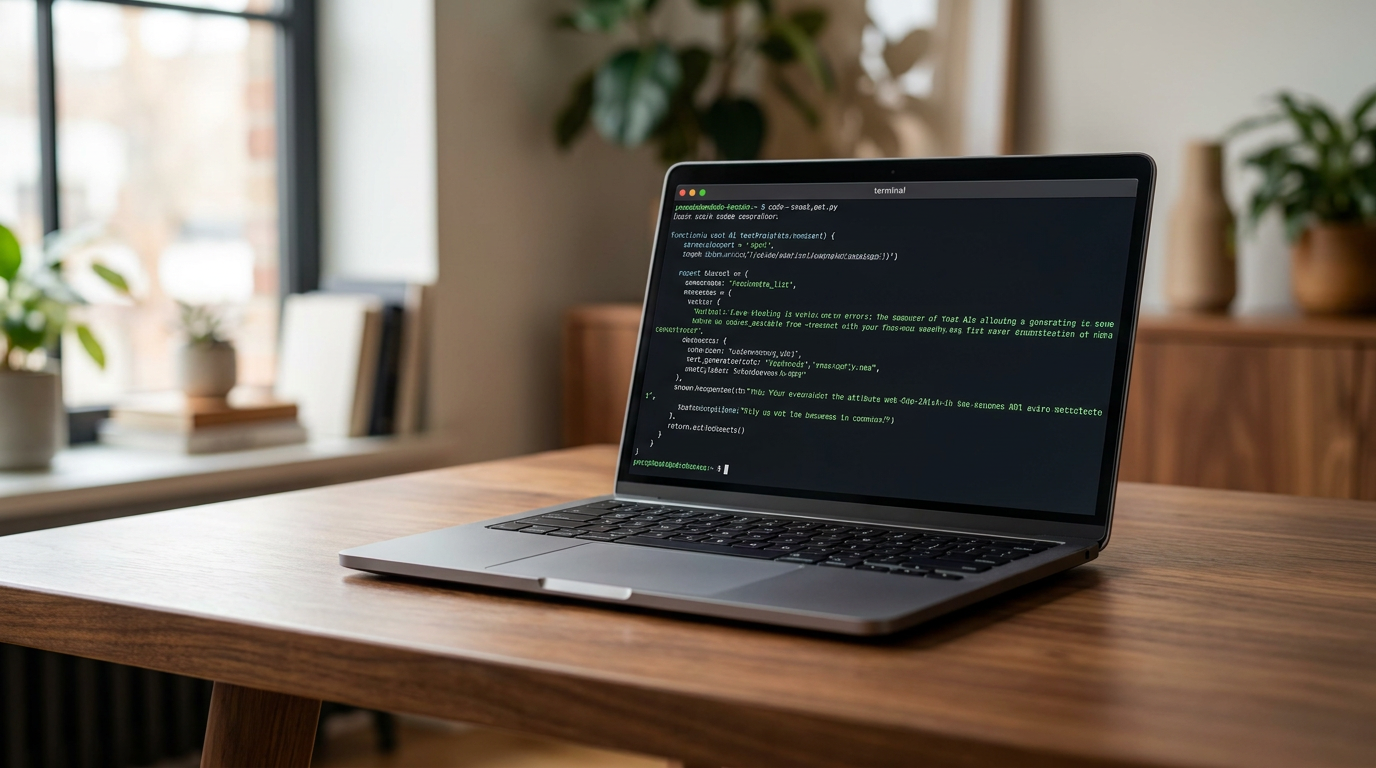
The industry is undergoing a massive architectural shift toward "local AI" or "on-device AI." Instead of relying on remote servers, users are downloading the actual neural networks—the "brains" of the AI—directly onto their laptops, smartphones, and enterprise workstations. By running the inference process locally, the device handles the heavy lifting of generating text, analyzing documents, and writing code without ever pinging the outside world.[1][4]
The primary catalyst for this migration is privacy. In a cloud-based paradigm, every piece of code, financial spreadsheet, or personal journal entry fed into an AI is transmitted to a third party. For enterprises bound by strict compliance frameworks like HIPAA or GDPR, and for individuals protective of their digital footprint, this is a non-starter. Local AI processes data entirely on the user's hardware, ensuring that sensitive information never leaves the machine.[1][6]

Beyond security, local inference radically alters the economics of artificial intelligence. Cloud providers charge for access, either through flat monthly subscriptions or metered API fees that scale with usage. Running an open-weight model locally incurs zero ongoing software costs. Users can generate unlimited text, process thousands of documents, and experiment endlessly without watching a meter tick upward.[2][5]
This decentralization also untethers AI from the internet. Cloud models are rendered useless during network outages, on airplanes, or in secure, air-gapped facilities. Local models operate offline by default. Whether a user is drafting a report in a remote cabin or an engineer is querying documentation in a secure lab, the AI remains fully functional, delivering instant responses without network latency.[4][5]
This shift is made possible by a fundamental change in how computers are built. Modern devices are increasingly shipping with Neural Processing Units (NPUs)—specialized silicon designed specifically to handle the complex mathematical matrix operations required by machine learning. Unlike traditional CPUs, which handle general tasks, or GPUs, which render graphics, NPUs are purpose-built for AI workloads.[3][6]
The inclusion of NPUs in modern "AI PCs" solves the power problem that previously plagued local inference. Brute-forcing a large language model on a standard processor drains laptop batteries rapidly and causes thermal throttling. NPUs execute these tasks with remarkable efficiency, allowing features like real-time translation and document summarization to run smoothly in the background without killing the device's battery life.[3]
The inclusion of NPUs in modern "AI PCs" solves the power problem that previously plagued local inference.
However, hardware is only half the equation; the software itself had to shrink. State-of-the-art AI models are massive, often requiring hundreds of gigabytes of memory. To fit these behemoths onto consumer laptops, developers utilize a technique called quantization. This process compresses the model's mathematical weights, drastically reducing its memory footprint while preserving the vast majority of its reasoning capabilities.[4]

For developers and technical users, a tool called Ollama has emerged as the standard for managing these compressed models. Operating much like Docker does for traditional software, Ollama allows users to download and run complex AI models with a single command-line instruction. It runs quietly as a background service, allowing developers to plug local intelligence directly into their coding environments and custom applications.[2][5]
For everyday users who prefer not to use a command terminal, LM Studio has democratized access to local AI. The software provides a clean, graphical interface that resembles popular cloud chatbots. Users can browse a built-in directory of open-weight models, download them with a click, and start chatting immediately. It automatically detects the user's hardware and recommends the appropriate level of quantization to ensure smooth performance.[2][5]
The ecosystem extends beyond just Ollama and LM Studio. Tools like GPT4All focus heavily on offline-first, privacy-centric document analysis, while projects like llama.cpp provide the highly optimized underlying architecture that makes running these models on standard processors possible. Together, these tools have lowered the barrier to entry from requiring a computer science degree to simply downloading an app.[2]

The fuel for this ecosystem comes from the open-source and open-weight community. Tech giants and independent labs—including Meta with its Llama series, Mistral AI, and Microsoft with its compact Phi models—have released highly capable models to the public. These models have been trained on trillions of tokens and, despite their smaller size, often rival the performance of early cloud-based behemoths for everyday tasks.[1]
Despite the rapid progress, local AI is not without its limitations. Users are fundamentally constrained by the physical hardware on their desks. A laptop with 8GB of RAM simply cannot load the massive, trillion-parameter models that power the most advanced cloud services. For highly complex reasoning, advanced mathematics, or massive data processing, the cloud remains unmatched.[4]
Because of these physical constraints, the future of computing is likely a hybrid approach. In an edge-plus-cloud architecture, devices will use local, on-device models for immediate, privacy-sensitive tasks like drafting emails, organizing files, and summarizing local documents. When a user requests a highly complex task, the system will seamlessly route the query to a larger cloud model, offering the best of both worlds.[4]

Ultimately, the rise of tools like Ollama and LM Studio represents a democratization of artificial intelligence. By moving inference from distant server farms to the laptops sitting on our desks, the technology industry is shifting control back to the user. It ensures that the most transformative software of this generation can be owned, scrutinized, and operated privately, rather than merely rented from a handful of tech giants.[7]
How we got here
2023
Early open-source models leak, sparking grassroots efforts to run them on consumer hardware.
Late 2023
Tools like Ollama and LM Studio launch, dramatically simplifying the setup process for local AI.
2024
Tech giants introduce 'AI PCs' equipped with dedicated Neural Processing Units (NPUs) to handle local workloads.
2025
Open-weight models reach parity with early cloud-based systems, making local inference viable for complex tasks.
2026
On-device AI becomes a standard enterprise requirement for handling sensitive data and offline workflows.
Viewpoints in depth
Privacy & Enterprise IT
Focuses on data sovereignty and compliance, arguing that sending proprietary data to cloud APIs is an unacceptable risk.
For enterprise IT departments and privacy advocates, the cloud AI boom presented a massive security vulnerability. Feeding proprietary source code, patient records, or financial projections into a third-party API means losing control over that data. This camp views local AI not just as a convenience, but as a mandatory compliance measure. By ensuring that the inference happens entirely on the local machine, organizations can leverage the productivity benefits of AI without violating HIPAA, GDPR, or internal security protocols.
Open-Source Developers
Values the democratization of AI and freedom from vendor lock-in.
The open-source community views local AI as a necessary counterweight to the monopolistic tendencies of massive cloud providers. For developers, tools like Ollama provide the freedom to tinker, modify, and build custom applications without paying metered API tolls or worrying that a provider might suddenly deprecate a model. This camp prioritizes open-weight releases and community-driven optimization techniques, arguing that the most powerful software of our generation must remain accessible to anyone with a computer.
Hardware Ecosystem
Views on-device AI as the ultimate catalyst for device upgrades and new silicon architecture.
For chipmakers and PC manufacturers, the shift toward local AI represents the biggest hardware upgrade cycle in a decade. This camp emphasizes the physical limitations of traditional processors, arguing that dedicated Neural Processing Units (NPUs) are essential for the future of computing. By moving the processing burden away from the cloud and onto the device, manufacturers can sell a new generation of 'AI PCs' that promise faster performance, better battery life, and enhanced security.
Independent Analysts
Observes the broader market shift, noting that the future will likely be a hybrid model.
While acknowledging the massive strides in local inference, independent analysts caution against viewing it as a complete replacement for cloud AI. This perspective highlights the physical constraints of consumer hardware, noting that a laptop will never match the raw computational power of a server farm. Instead, analysts predict a hybrid 'edge-plus-cloud' future, where devices handle everyday, privacy-sensitive tasks locally, but seamlessly route highly complex reasoning requests to larger cloud models.
What we don't know
- How quickly hardware manufacturers can scale NPU performance to handle increasingly massive open-weight models.
- Whether future regulatory frameworks will treat locally run, uncensored AI models differently than tightly controlled cloud services.
Key terms
- Local Inference
- The process of running an AI model directly on a user's hardware rather than on a remote cloud server.
- NPU (Neural Processing Unit)
- A specialized computer chip designed specifically to handle the complex math required by artificial intelligence efficiently.
- Quantization
- A compression technique that reduces the memory footprint of an AI model so it can run on consumer hardware, with minimal loss in quality.
- Open-Weight Model
- An AI model where the underlying architecture and trained parameters are made publicly available for anyone to download and use.
- llama.cpp
- A highly optimized software library that allows large language models to run efficiently on standard computer processors.
Frequently asked
Do I need an internet connection to use local AI?
No. Once the model and the software are downloaded to your device, the AI runs entirely offline without needing to connect to external servers.
Can my current laptop run these models?
Most modern laptops with at least 8GB of RAM can run smaller compressed models, though devices with dedicated NPUs or powerful GPUs perform significantly better.
Are local models as smart as cloud chatbots?
While they cannot match the sheer scale of the largest cloud models, modern open-weight models are highly capable for everyday writing, coding, and reasoning tasks.
Is it free to use Ollama and LM Studio?
Yes, both the software tools and the open-weight models they run are generally free to download and use without subscription fees.
Sources
Source coverage
7 outlets
4 viewpoints surfaced







[1]MediumOpen-Source Developers
A practical comparison between Local Inference and Cloud Inference
Read on Medium →[2]InventiveHQOpen-Source Developers
Ollama, LM Studio, llama.cpp, vLLM, Jan, GPT4All — every local LLM tool compared
Read on InventiveHQ →[3]MicrosoftHardware Ecosystem
AI PCs are powered by a turbocharged neural processing unit
Read on Microsoft →[4]CouchbasePrivacy & Enterprise IT
On-Device AI: Benefits, Use Cases, and Challenges
Read on Couchbase →[5]AcademindOpen-Source Developers
Local LLMs via Ollama & LM Studio - The Practical Guide
Read on Academind →[6]SamsungPrivacy & Enterprise IT
Why On-device AI will become essential for work in 2026
Read on Samsung →[7]Factlen Editorial TeamIndependent Analysts
Synthesis by Factlen editorial team
Read on Factlen Editorial Team →
More in ai
See all 7 stories →Local AI
The Rise of Local AI: How to Run Powerful LLMs on Your Own Laptop
0 sources
Open Source AI
Open-Source AI Reaches Frontier Parity as MiniMax M3 and Local Agents Break the Cloud Monopoly
0 sources
Materials Science
How AI is Compressing Decades of Battery Research into Days
0 sources

AI in Medicine
UK Launches World's First AI Regulatory Sandbox to Transform Medicines Safety and Drug Development
0 sources

Every angle. Every day.
Get ai stories with full source coverage and perspective breakdowns delivered to your inbox.