
How the Matter Standard and Local Control Finally Fixed the Smart Home
After years of fragmented ecosystems and cloud outages, the smart home is finally delivering on its promise in 2026. The maturation of the Matter standard and a massive industry shift toward local processing have made connected homes faster, private, and universally compatible.
By Factlen Editorial Team
- Mainstream Consumers
- Value plug-and-play simplicity, voice control, and cross-platform compatibility.
- Privacy Advocates
- Prioritize local execution and data sovereignty over big-tech convenience.
- Hardware Manufacturers
- Seek unified standards to reduce development costs and reach broader markets.
What's not represented
- · Internet Service Providers
- · Legacy Z-Wave/Zigbee device owners
Why this matters
For years, investing in smart home tech meant risking vendor lock-in and relying on unstable cloud servers. The new universal standards mean consumers can finally buy devices with confidence, knowing they will work across any platform, respond instantly, and keep their data private.
Key points
- The Matter 1.5 standard has expanded to support cameras, video doorbells, and energy management systems.
- The industry is shifting away from cloud processing toward local execution for faster, more reliable automations.
- Thread 1.4 has harmonized mesh networks, allowing border routers from different brands to share a single network.
- Adaptive automation is increasingly being used to manage dynamic energy tariffs and lower household utility bills.
- Multi-Admin capabilities allow devices to be controlled by Apple, Google, and Amazon ecosystems simultaneously.
For the better part of a decade, the "smart home" was a misnomer. Early adopters were promised a seamless, automated utopia, but were instead handed a fragmented nightmare of competing walled gardens. Buying a smart plug meant checking if it worked with Apple HomeKit, Google Assistant, or Amazon Alexa. Turning on a light often required a command to travel from your living room to a server in Virginia and back, resulting in a frustrating two-second delay. And if your internet went down, your house effectively broke.[7]
But in 2026, the underlying architecture of the connected home has undergone a quiet, foundational revolution. Driven by the maturation of the universal Matter standard and a massive industry pivot toward "local control," the smart home is finally transitioning from a hobbyist's tinkering project into reliable, invisible infrastructure. The era of vendor lock-in and cloud dependency is ending.[5][7]
The catalyst for this shift is Matter, an open-source, IP-based connectivity standard developed by the Connectivity Standards Alliance (CSA)—a consortium that includes former rivals Apple, Google, Amazon, and Samsung. Matter acts as a universal translator. If a device has the Matter logo, it can communicate natively with any major smart home platform. You no longer have to buy specific hardware for specific ecosystems; a Matter-certified light bulb from TP-Link or Eve will work identically on an iPhone or an Android device.[1][3]
While Matter launched with basic support for lights and plugs in 2022, the standard has rapidly expanded its vocabulary. The recent Matter 1.5 specification, finalized in late 2025, crossed a major threshold by adding support for high-bandwidth devices like security cameras and video doorbells, complete with live streaming and two-way audio. It also standardized controls for motorized blinds, awnings, and gates, allowing them to sync perfectly with lighting and climate routines without requiring proprietary bridges.[1][3]

Crucially, Matter operates over your existing Wi-Fi, Ethernet, or a low-power mesh network called Thread. Thread is designed specifically for battery-powered sensors and locks, sipping energy while extending the network's reach with every plugged-in device you add. With the rollout of Thread 1.4, the industry solved a major headache: network fragmentation. Previously, different brands' hubs might create competing, parallel mesh networks. Now, border routers share credentials, weaving a single, robust safety net across the entire home.[2][3]
But interoperability is only half the equation. The most significant upgrade to the 2026 smart home is the aggressive shift toward local control. For years, manufacturers relied on their own cloud servers to process automations. If you opened a door, the sensor told a cloud server, which then told the cloud server of your lightbulb manufacturer, which then turned on the light. This reliance on the cloud introduced latency, privacy risks, and the constant threat of server outages.[5]
The most significant upgrade to the 2026 smart home is the aggressive shift toward local control.
Today, the industry is pulling that processing power back inside the house. Platforms like Home Assistant—an open-source juggernaut that prioritizes privacy—have exploded in popularity by offering entirely local execution. Hardware like the Home Assistant Green or the Aqara M3 hub process routines directly on the device. When you trigger a motion sensor, the command travels locally over your own network. The result is instant execution and a system that continues to function perfectly even if your fiber connection is severed.[4][6]

This local-first approach fundamentally changes the privacy calculus of the smart home. By keeping data within the walls of the house, users no longer have to broadcast their daily routines, occupancy habits, and sleep schedules to third-party data brokers. Apple's Home app has also leaned heavily into local execution, utilizing HomePod minis and Apple TVs as local hubs to ensure that voice commands and automations don't needlessly bounce to external servers.[4][5]
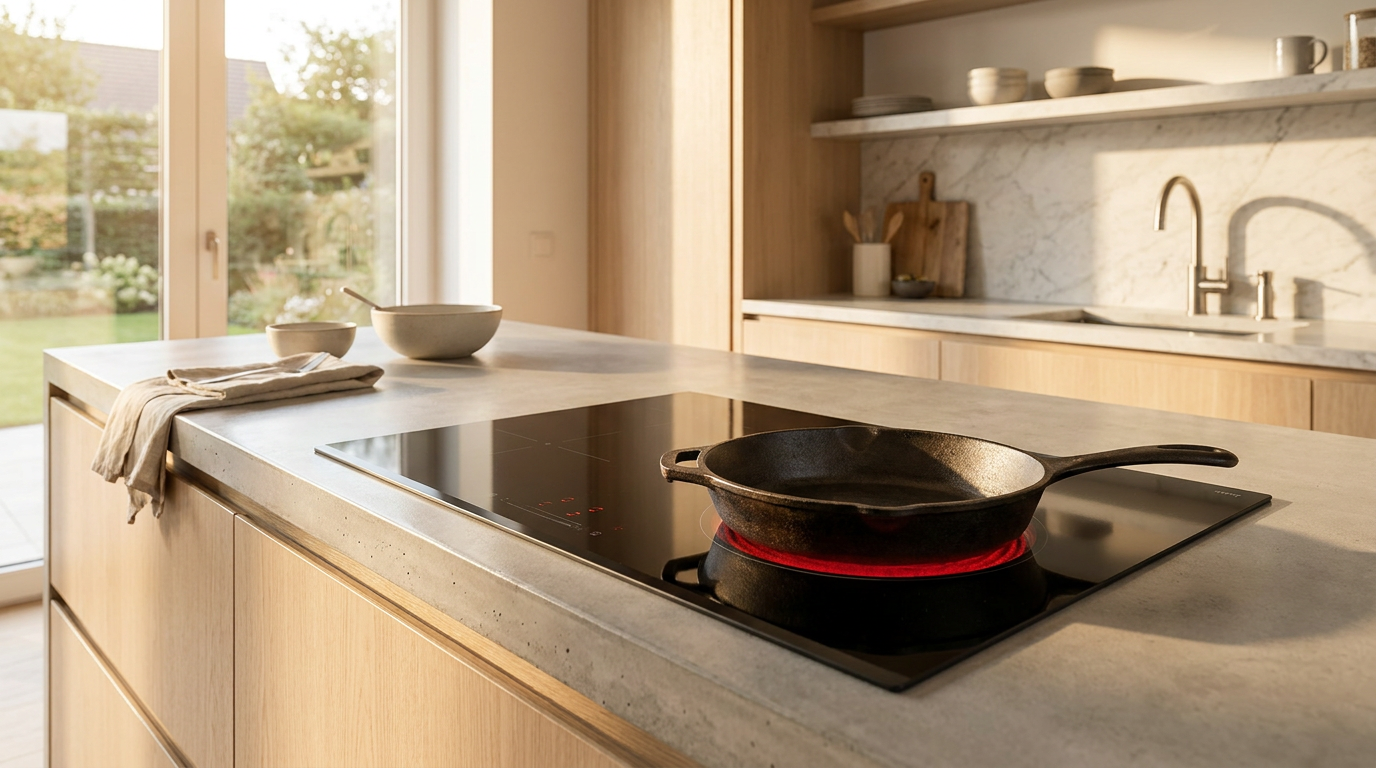
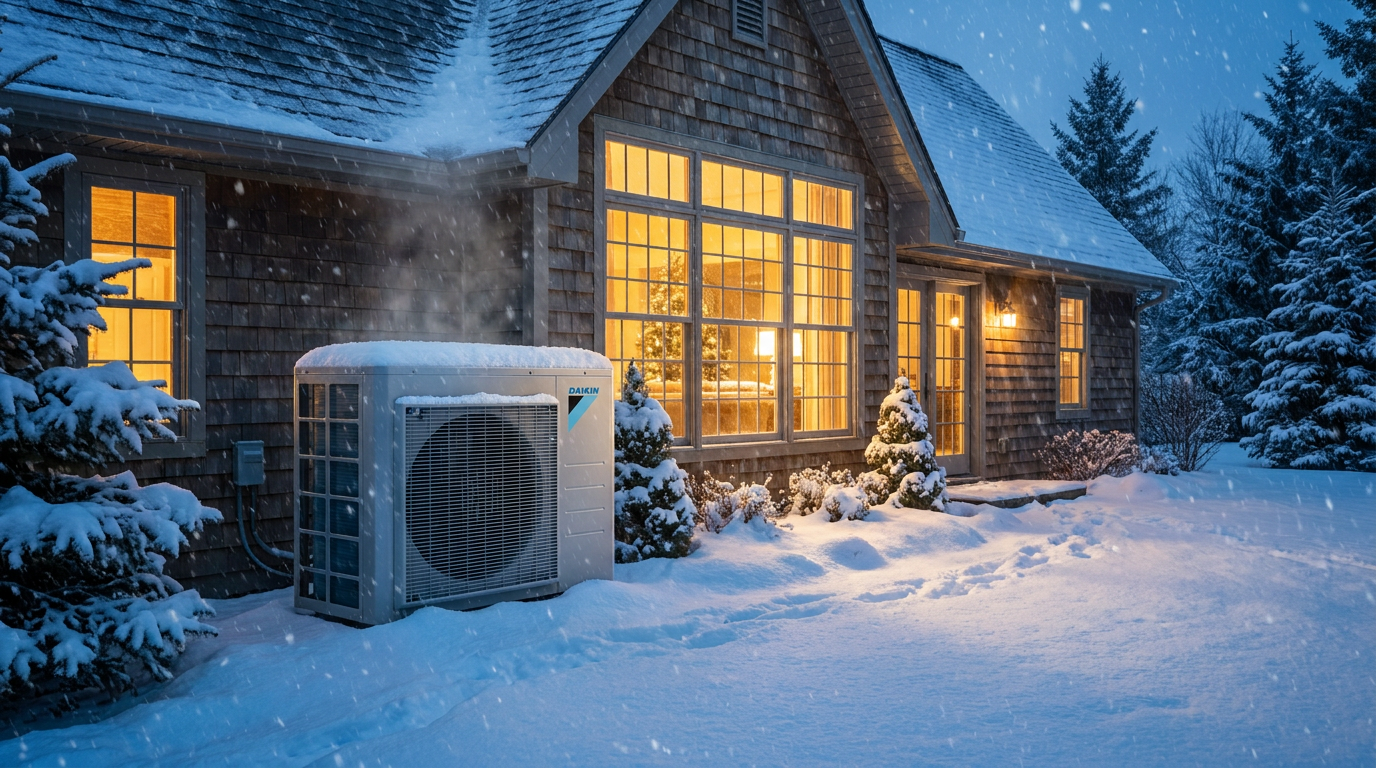
Beyond convenience and privacy, the 2026 smart home has found its killer app: energy management. As utility costs rise and power grids face unprecedented strain, homeowners are utilizing adaptive automation to lower their bills. Matter 1.3 and 1.4 introduced native support for electric vehicle (EV) chargers, solar inverters, battery storage systems, and heat pumps.[1][3]
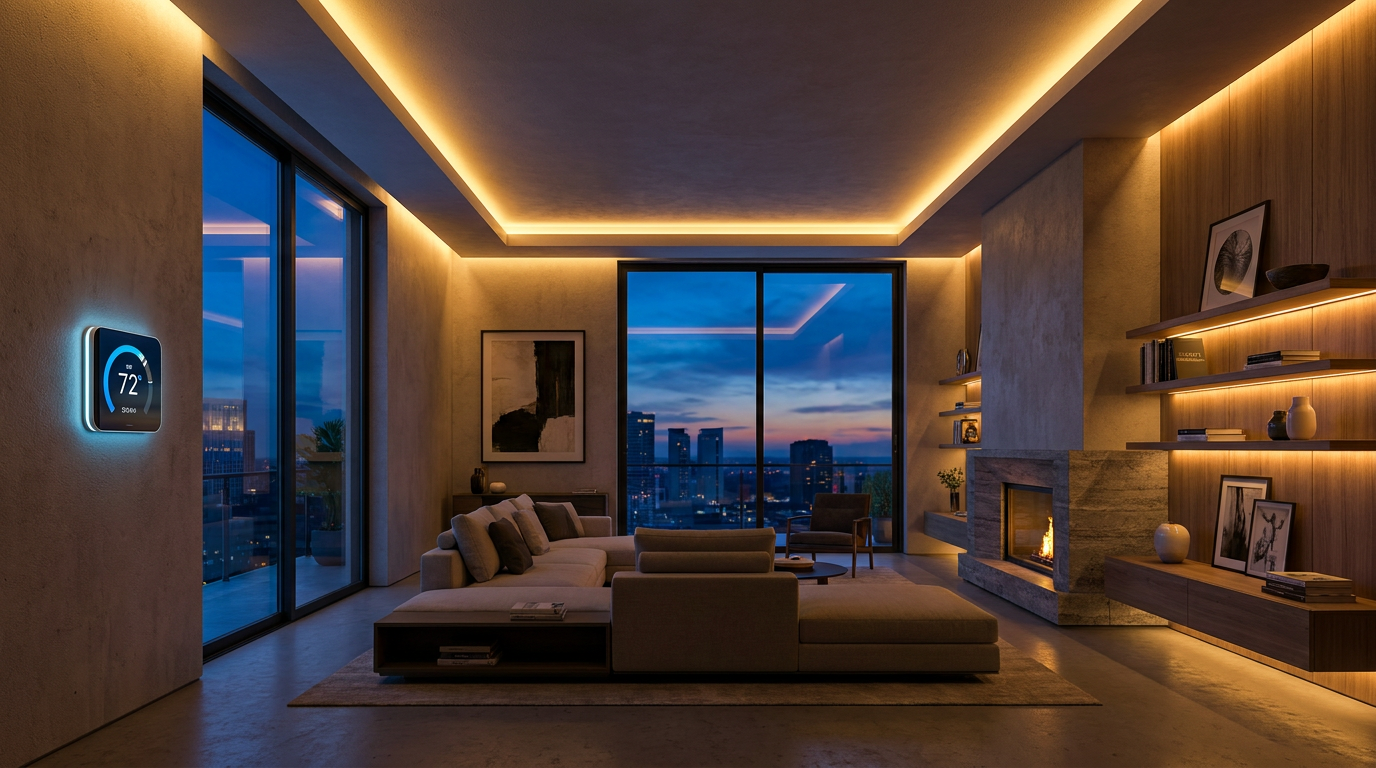
Instead of relying on static schedules, modern systems can dynamically adjust to real-world conditions. A smart home can now read dynamic energy tariffs, waiting to charge an EV or run the dishwasher until electricity is cheapest and the grid is utilizing renewable sources. Smart thermostats, integrated with occupancy sensors and motorized blinds, can reduce heating and cooling costs by up to 30%, automatically lowering shades to block the summer sun or opening them to harvest winter warmth.[1][7]

We are also seeing the rise of "Multi-Admin" capabilities, which allow a single device to be controlled by multiple platforms simultaneously. In a mixed-device household, one partner can adjust the thermostat via Siri on their Apple Watch, while the other can view the same thermostat's data on a Google Nest Hub. The device maintains secure, encrypted connections to both ecosystems concurrently, ending the era of the "single-platform household."[3]
Despite these massive leaps, the transition is not entirely without friction. While new devices are universally adopting Matter, millions of legacy smart home products currently installed in homes will never receive the firmware updates required to speak the new language. Users with older Zigbee or Z-Wave devices must rely on bridging hubs—like the Samsung SmartThings v3 or Hubitat—to translate their older hardware into the Matter ecosystem.[6]
Furthermore, while the Matter specification supports complex device types, the major platforms are sometimes slow to update their own user interfaces to expose these new features. A Matter 1.5 camera might be certified, but it requires the platform apps to fully support the new video streaming protocols before users can view the feed natively.[2][3]
Ultimately, the smart home of 2026 is defined by its invisibility. The goal is no longer to pull out a smartphone to turn on a light—an action that is objectively slower than flipping a switch. The goal is a home that anticipates needs, manages its own energy consumption, and operates with zero latency. By standardizing the language and localizing the brain, the tech industry has finally built a foundation strong enough to support the home of the future.[5][7]
How we got here
Oct 2022
The Connectivity Standards Alliance releases Matter 1.0, supporting basic lights, plugs, and sensors.
May 2024
Matter 1.3 introduces support for EV chargers, water management, and major kitchen appliances.
Nov 2025
Matter 1.5 is released, bringing highly anticipated support for security cameras, video doorbells, and smart closures.
Jan 2026
Thread 1.4 becomes the mandatory standard for new border routers, eliminating fragmented mesh networks.
Viewpoints in depth
Open-Source & Privacy Advocates
Prioritize local execution and data sovereignty over big-tech convenience.
Communities surrounding platforms like Home Assistant argue that a true smart home must not rely on external servers. They champion local control not just for the zero-latency response times, but to ensure that intimate household data—like when doors open or when the family goes to sleep—never leaves the local network. For this camp, the cloud is a vulnerability, not a feature.
Mainstream Ecosystem Users
Value plug-and-play simplicity and voice control integration.
Users embedded in the Apple, Google, or Amazon ecosystems prioritize ease of use. They want to scan a QR code and have the device immediately appear in their existing app, ready for voice commands. For this group, the Matter standard is a massive win because it eliminates the need to research compatibility before buying a product, even if they still rely on cloud-assisted voice assistants to trigger their routines.
Hardware Manufacturers
Seek unified standards to reduce development and support costs.
For the companies actually building smart plugs, locks, and sensors, the fragmented landscape was a costly nightmare. Maintaining separate codebases and certifications for HomeKit, Alexa, and SmartThings drained resources. The Matter standard allows them to build a single product with a single certification that reaches the entire market, drastically lowering the barrier to entry and reducing ongoing software maintenance.
What we don't know
- How quickly major platforms like Apple and Google will update their user interfaces to support the newest Matter 1.5 device categories.
- Whether manufacturers of older, legacy smart devices will provide firmware updates to bridge them into the Matter ecosystem.
Key terms
- Matter
- An open-source, universal connectivity standard that allows smart home devices from different brands to communicate with each other.
- Thread
- A low-power, wireless mesh networking protocol designed specifically for smart home devices to communicate without draining batteries.
- Local Control
- Processing smart home commands on a hub inside the house, rather than sending data to an external cloud server.
- Multi-Admin
- A Matter feature that allows a single smart device to be connected to and controlled by multiple platforms (like Apple Home and Google Home) at the same time.
- Border Router
- A device, such as a smart speaker or hub, that connects a Thread mesh network to the home's standard Wi-Fi network.
Frequently asked
Do I need to replace my old smart home devices?
Not necessarily. Many older Zigbee or Z-Wave devices can be brought into a Matter ecosystem using a compatible bridging hub, though some older Wi-Fi devices may require manufacturer firmware updates.
Does Matter work without the internet?
Yes. Matter is designed to operate locally over your home's Wi-Fi, Ethernet, or Thread network, meaning your automations will still work during an internet outage.
What platforms support Matter?
All major smart home platforms support Matter, including Apple Home, Google Home, Amazon Alexa, Samsung SmartThings, and Home Assistant.
Sources
Source coverage
7 outlets
3 viewpoints surfaced






[1]Connectivity Standards AllianceHardware Manufacturers
Matter 1.5 Specification and Updates
Read on Connectivity Standards Alliance →[2]Matter-Smarthome.deHardware Manufacturers
2026 Matter Status: Progress in Thread and Ecosystems
Read on Matter-Smarthome.de →[3]DataWire SolutionsHardware Manufacturers
The Complete Guide to Matter 1.5 and Thread
Read on DataWire Solutions →[4]Home AssistantPrivacy Advocates
Open Source Home Automation for Local Control
Read on Home Assistant →[5]ForbesMainstream Consumers
Smart Home Trends 2026: The Year of Local Control
Read on Forbes →[6]The GadgeteerMainstream Consumers
Best Smart Home Hubs of 2026: Matter and Local Processing
Read on The Gadgeteer →[7]Factlen Editorial Team
Synthesis by Factlen editorial team
Read on Factlen Editorial Team →
Every angle. Every day.
Get home stories with full source coverage and perspective breakdowns delivered to your inbox.