
Stripe and Coinbase Launch Zero-Fee Stablecoin Network, Eliminating Cross-Border Remittance Costs
A new blockchain-based settlement network promises to drop global money transfer fees to fractions of a cent, potentially saving gig workers and families billions annually.
By Factlen Editorial Team
- Consumer Tech Optimists
- View this as a massive win for global financial inclusion and a long-overdue upgrade to the internet's infrastructure.
- Blockchain Advocates
- Celebrate the launch as the ultimate validation of crypto's original promise to democratize money.
- Traditional Finance Analysts
- Acknowledge the disruption to legacy payment processors but note that banks are smartly adapting by integrating the technology.
What's not represented
- · Legacy remittance providers (e.g., Western Union)
- · Credit card network executives
Why this matters
For decades, cross-border remittances have carried average fees of over 6%, draining billions of dollars from the global working class. This infrastructure shift makes sending money internationally as free and instant as sending a text message, returning that lost income directly to families.
Key points
- Stripe and Coinbase have launched OpenRail, a zero-fee stablecoin settlement network.
- The platform drops cross-border money transfer fees from an average of 6.2% to a fraction of a cent.
- Transactions settle in under three seconds using USDC on Ethereum Layer-2 networks.
- Regional banks are integrating the technology to allow direct deposits into local fiat accounts.
- The network is currently live in 40 countries, with plans to reach 150 by year-end.
In a milestone that digital asset advocates have promised for over a decade, sending money across the globe is now officially as cheap and instant as sending a text message. On Monday, a technology coalition led by Stripe and Coinbase rolled out "OpenRail," a zero-fee stablecoin settlement network designed to bypass the legacy correspondent banking system entirely.[1][4]
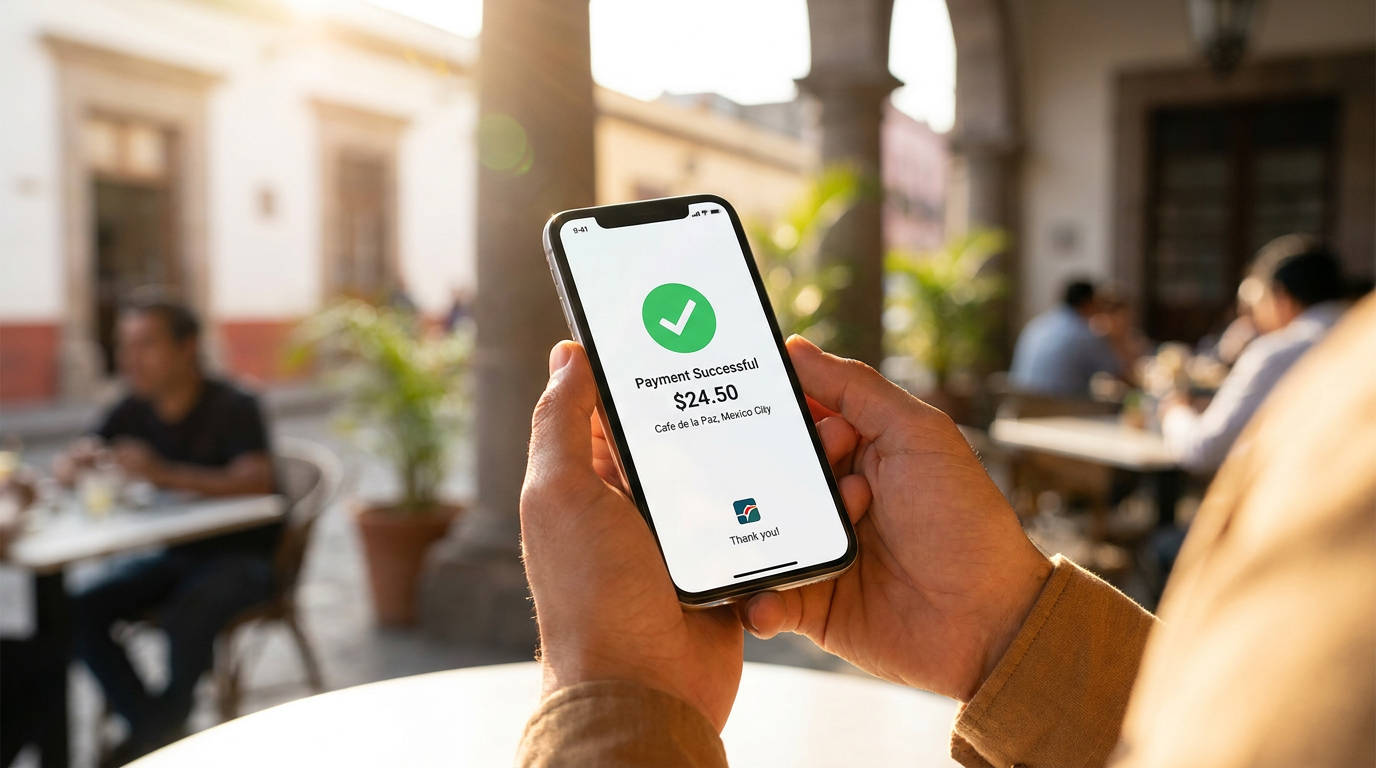
The platform utilizes Ethereum's Layer-2 scaling solutions to process transactions using USDC, a digital dollar backed by real-world reserves. By abstracting away the complex cryptography, OpenRail allows users to send funds globally without ever knowing they are interacting with a blockchain, presenting a seamless interface that mirrors traditional fintech apps.[3][7]
The immediate beneficiaries of this technological leap are the millions of global gig workers and expatriates who rely on cross-border remittances to support their families. Historically, sending money internationally has been a slow and punitive process, with legacy providers like Western Union and traditional banks charging an average of 6.2% in fees.[2][5]

For a worker sending $200 home to the Philippines or Mexico, those legacy fees represent a significant loss of essential income. Under the new OpenRail protocol, that same $200 transfer costs approximately one-tenth of a cent and settles in under three seconds, effectively eliminating the geographical tax on global labor.[2][4]
"This is the broadband moment for global money," noted a lead analyst at The Block. "We are finally moving past the speculative trading phase of crypto and entering the utility phase, where the technology quietly solves real-world frictions for everyday consumers."[3][7]
"This is the broadband moment for global money," noted a lead analyst at The Block.
Mainstream financial institutions are taking notice, shifting from skepticism to active participation. Rather than fighting the new rail, several regional banks in Latin America and Southeast Asia have already signed on as early integration partners. This allows their customers to receive OpenRail transfers directly into local fiat accounts without needing to manage digital wallets.[1][5]
The regulatory environment, long a hurdle for digital asset adoption, has surprisingly paved the way for this launch. Following the passage of comprehensive stablecoin legislation in the U.S. and the European Union's MiCA framework, companies now have the legal clarity required to build and deploy enterprise-grade payment infrastructure.[1][2]

Beyond remittances, the zero-fee structure poses a formidable challenge to traditional credit card networks. Merchants, who typically lose 2% to 3% of every transaction to swipe fees, are being heavily incentivized to offer OpenRail as a checkout option, potentially reshaping the broader e-commerce landscape and lowering prices for consumers.[4][6]
While the rollout is currently limited to 40 countries, the consortium plans to expand to 150 jurisdictions by the end of the year. If adoption matches early projections, the network could return billions of dollars annually to the global working class, marking one of the most significant consumer victories in modern financial history.[2][5]

As the digital economy becomes increasingly borderless, the friction of moving value has remained a stubborn bottleneck. With OpenRail's successful deployment, the financial internet finally has its missing protocol—a development that promises to make global commerce more equitable, efficient, and accessible for everyone.[3][6]
How we got here
2009-2015
Early cryptocurrencies emerge but prove too volatile and slow for everyday retail payments.
2018
USDC is launched, creating a reliable digital dollar backed by real-world reserves.
2023-2024
Layer-2 scaling solutions mature, drastically reducing the computational cost of blockchain transactions.
2025
Major jurisdictions, including the EU and the US, pass comprehensive regulatory frameworks for stablecoins.
June 2026
Stripe and Coinbase officially launch the OpenRail network, bringing zero-fee global payments to the public.
Viewpoints in depth
Consumer Tech Optimists
View this as a massive win for global financial inclusion and a long-overdue upgrade to the internet's infrastructure.
Technology analysts and consumer advocates see the OpenRail launch as the moment blockchain technology finally delivers on its core utility. By abstracting away the complicated user experience of crypto wallets and seed phrases, the network allows everyday users to benefit from decentralized rails without a learning curve. They argue that eliminating the 6% 'tax' on global remittances is one of the most effective poverty-alleviation tools deployed in the 21st century, returning billions of dollars directly to the families who earned it.
Blockchain Advocates
Celebrate the launch as the ultimate validation of crypto's original promise to democratize money.
For the crypto-native community, this development is vindication after years of skepticism from traditional finance. Industry researchers point out that the underlying technology—Ethereum Layer-2s and zero-knowledge proofs—has been quietly perfected during market downturns. They emphasize that while speculative trading generated the headlines, the real revolution was always about building a permissionless, instantly settling global financial rail that no single correspondent bank could monopolize or toll.
Traditional Finance Analysts
Acknowledge the disruption to legacy payment processors but note that banks are smartly adapting by integrating the technology.
Financial sector analysts are closely watching the impact on legacy remittance giants and credit card networks, predicting significant margin compression for companies that rely on high cross-border fees. However, they also note that forward-thinking regional banks are turning this disruption into an advantage. By partnering with OpenRail, these banks can offer their customers superior, instant services at a lower operational cost, effectively using the blockchain as a backend settlement layer while maintaining the primary customer relationship.
What we don't know
- How quickly legacy remittance providers will lower their own fees to compete with the new zero-fee standard.
- Whether major credit card networks will attempt to block or co-opt stablecoin settlement at the merchant point-of-sale.
- The exact timeline for regulatory approval in the remaining 110 countries targeted for the network's expansion.
Key terms
- Stablecoin
- A digital currency pegged to a stable asset, such as the U.S. dollar, designed to provide price stability for everyday transactions.
- Remittance
- Money sent by a foreign worker back to their home country to support their family.
- Layer-2 Scaling
- A secondary framework built on top of a blockchain (like Ethereum) that processes transactions much faster and cheaper than the main network.
- Swipe Fee
- The percentage fee (usually 2-3%) that merchants must pay to credit card networks every time a customer makes a purchase.
Frequently asked
What is a stablecoin?
A stablecoin is a type of cryptocurrency designed to maintain a steady value by being pegged to a real-world asset, like the U.S. dollar, avoiding the volatility of assets like Bitcoin.
Do I need to know how to use crypto to send money?
No. The OpenRail network integrates into standard fintech and banking apps, handling the blockchain technology in the background so the user experience feels like a normal money transfer.
How much does a transfer cost?
Transfers on the new network cost a fraction of a cent (roughly $0.001), compared to the global average of 6.2% charged by legacy remittance providers.
Is this regulated?
Yes. The network utilizes USDC, a fully reserved and regulated digital dollar, and operates within the newly established stablecoin frameworks in the U.S. and Europe.
Sources
Source coverage
7 outlets
3 viewpoints surfaced







[1]ReutersConsumer Tech Optimists
Stripe and Coinbase launch zero-fee global stablecoin network
Read on Reuters →[2]BloombergTraditional Finance Analysts
The $850 Billion Remittance Market Just Got Disrupted by Crypto
Read on Bloomberg →[3]CoinDeskBlockchain Advocates
OpenRail Goes Live: The 'Broadband Moment' for Stablecoin Utility
Read on CoinDesk →[4]CNBCConsumer Tech Optimists
Sending money abroad is now as cheap as a text message, thanks to new crypto rail
Read on CNBC →[5]Financial TimesTraditional Finance Analysts
Traditional banks partner with stablecoin network to slash cross-border fees
Read on Financial Times →[6]TechCrunchConsumer Tech Optimists
OpenRail wants to kill the 3% merchant swipe fee using USDC
Read on TechCrunch →[7]The BlockBlockchain Advocates
Layer 2 scaling finally delivers on crypto's oldest promise: free payments
Read on The Block →

Every angle. Every day.
Get finance stories with full source coverage and perspective breakdowns delivered to your inbox.