
The 2026 Buyer's Guide to Modular Electronics and the Right to Repair
As sweeping new repair laws take effect globally, a new generation of premium, modular laptops and smartphones is ending the era of disposable tech.
By Factlen Editorial Team
- Right-to-Repair Advocates
- Consumer protection groups arguing for hardware ownership and reduced e-waste.
- Modular Hardware Pioneers
- Startups proving that repairability can be a profitable, premium business model.
- Traditional Electronics Brands
- Established manufacturers defending tight integration for security and design reasons.
What's not represented
- · Independent Repair Shop Owners
- · E-waste Recycling Facilities
Why this matters
New legislation and hardware innovations mean you no longer have to replace your expensive devices every three years. Understanding repairability metrics can save you hundreds of dollars and significantly reduce your environmental footprint.
Key points
- Colorado's comprehensive Right to Repair law takes effect in 2026, explicitly banning parts pairing.
- The EU Directive taking effect in July 2026 extends warranties by 12 months for repaired devices.
- The Framework Laptop 13 Pro proves modular hardware can match the premium build quality of traditional ultrabooks.
- LPCAMM2 memory allows laptops to remain thin and light while still offering upgradeable RAM.
- Modular smartphones like the Fairphone 5 trade peak benchmark performance for a guaranteed decade of software support.
For the past decade, buying a new laptop or smartphone meant accepting a quiet compromise: you were purchasing a sealed glass-and-metal box with an expiration date. When the battery degraded or the charging port failed, the device was often destined for a landfill. But in 2026, the consumer electronics market is undergoing a fundamental rewiring [7]. Driven by sweeping new legislation and a new class of hardware startups, the era of disposable tech is ending. Shoppers are no longer just asking how fast a device is; they are asking how easily they can fix it, and manufacturers are finally being forced to answer.[7]
This shift is being forced by a wave of 'Right to Repair' laws that have finally grown teeth. In the United States, 2026 is a watershed year for consumer rights [4]. On January 1, Colorado enacted one of the nation's most comprehensive repair laws, covering almost any consumer electronic device with a microchip sold since 2021 [3]. Crucially, the Colorado legislation explicitly targets 'parts pairing'—a controversial software practice where manufacturers program a device to reject third-party replacement parts or disable features if an unauthorized repair is detected [3]. This effectively breaks the monopoly that original manufacturers held over the repair ecosystem.[3][4]
The regulatory pressure is even stronger across the Atlantic. On July 31, 2026, the European Union's Right to Repair Directive officially takes effect across all member states, creating a massive compliance deadline for global tech brands [5]. The directive fundamentally changes the math of consumer warranties. If a European shopper chooses to repair a covered appliance or electronic device rather than replace it, the manufacturer must extend the legal guarantee by an additional 12 months [5]. Furthermore, brands are now legally required to maintain a supply of spare parts for years after a product is discontinued, forcing a redesign of global supply chains [5].[5]

These legal mandates are forcing traditional tech giants to slowly open their ecosystems, but a new breed of companies is treating repairability as a premium feature rather than a frustrating compliance burden [7]. The most prominent example in the personal computing space is Framework. For years, the company's modular laptops were praised for their environmental mission but criticized by reviewers for feeling a bit flimsy and utilitarian compared to the sleekness of an Apple MacBook [6]. That narrative shifted dramatically in April 2026 with the launch of the highly anticipated Framework Laptop 13 Pro, which aimed to prove that sustainability does not require sacrificing luxury [1].[1][6][7]
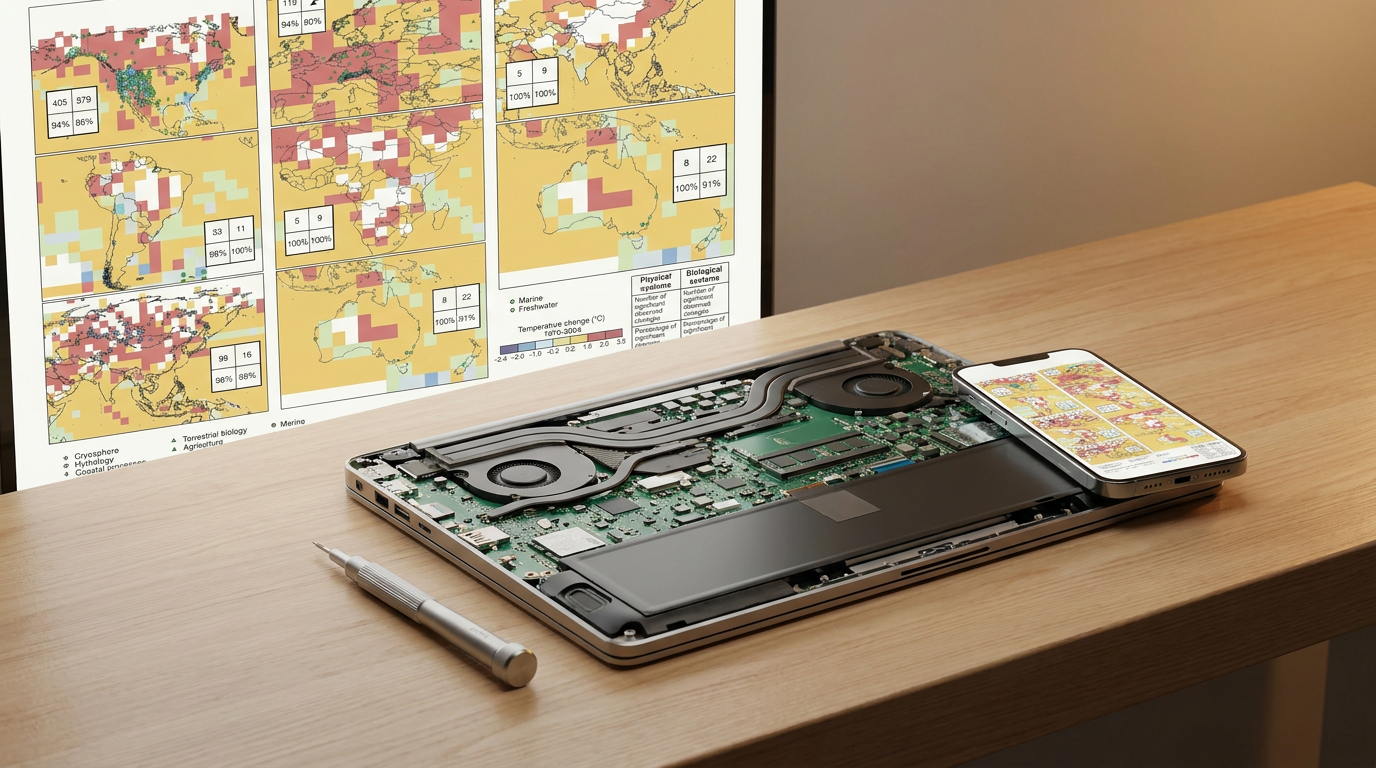
The new Framework model proves that shoppers no longer have to choose between modularity and premium aesthetics [1]. The 13 Pro features a fully machined CNC aluminum chassis, a smooth haptic trackpad, and a high-resolution 120Hz display, closing the build-quality gap with traditional premium ultrabooks [1] [6]. Yet, it remains entirely modular. Using a single included screwdriver, an owner can replace the screen, swap out the side ports, or upgrade the entire mainboard to a newer Intel or AMD processor years down the line, effectively giving the laptop an indefinite lifespan [6].[1][6]
The new Framework model proves that shoppers no longer have to choose between modularity and premium aesthetics [1].
A key technological breakthrough enabling this new generation of thin-but-repairable laptops is LPCAMM2 memory [6]. For years, traditional manufacturers argued that to make laptops incredibly thin and light, RAM had to be permanently soldered directly to the motherboard, preventing any future upgrades. LPCAMM2 is a new, highly compact memory module standard that allows users to easily upgrade their RAM without adding bulk to the laptop's chassis [6]. It represents a rare moment where industry standards evolved to benefit both device aesthetics and long-term consumer ownership [7].[6][7]

The smartphone market is also proving that longevity is a viable business model, even for devices that live in our pockets. The Fairphone 5, designed from the ground up for sustainability, continues to receive major Android updates in 2026, well into its promised eight-to-ten-year software support lifecycle [2]. The device features a transparent back that proudly displays its modular components, allowing users to swap out a dying battery, a broken USB-C port, or a cracked camera module in minutes without needing heat guns or specialized tools [2].[2]
However, shopping for a repairable smartphone requires understanding intentional hardware trade-offs [7]. To guarantee a decade of software updates, Fairphone opted not to use a standard consumer smartphone processor, which typically only receives three to five years of support from chipmakers before being abandoned. Instead, they utilized the Qualcomm QCM 6490, a chip originally designed for industrial and Internet of Things (IoT) applications, because Qualcomm guarantees enterprise-level long-term support for that specific silicon [2]. It is a deliberate choice to prioritize the 2031 user experience over the 2026 benchmark charts.[2][7]
For the consumer, this means the Fairphone 5 will not win benchmark speed tests against the latest Apple iPhone or Samsung Galaxy flagships, and tech reviewers note that its camera processing can sometimes struggle in challenging lighting conditions [2]. The shopper's dilemma in 2026 is clear: do you pay for peak performance and cutting-edge photography that might be obsolete or unsupported in three years, or do you invest in 'good enough' performance that is guaranteed to last until the next decade? [7][2][7]

Traditional manufacturers maintain that their sealed designs serve a purpose beyond simply driving new sales through planned obsolescence. Glued chassis and soldered components allow for tighter water and dust resistance, helping devices achieve the IP68 ratings that consumers have come to expect, while also leaving more internal volume for larger batteries [7]. Industry trade groups have also historically argued that restricting repairs to authorized technicians protects consumers from dangerous lithium-ion battery fires and ensures biometric data security, warning that third-party parts could compromise the integrity of the device [4].[4][7]
Despite these arguments from established brands, the momentum has definitively shifted toward the consumer, fundamentally altering how people shop for tech [4]. For shoppers navigating the electronics aisle in 2026, the buying advice has changed. Beyond checking processor speeds and camera megapixels, buyers are increasingly looking at independent repairability scores from organizations like iFixit, checking the price and availability of spare parts before checkout, and factoring in the new legal protections [7]. A laptop that cannot be opened with a standard screwdriver is increasingly viewed as a liability rather than a luxury.[4][7]
The true cost of a device is no longer just its retail price, but its total cost of ownership over five to ten years [7]. By choosing modular ecosystems or taking advantage of new warranty extensions under the EU and state directives, consumers are saving money, drastically reducing electronic waste, and finally reclaiming the right to truly own the hardware they buy [3] [5]. The era of the black box is closing, replaced by a market where longevity is the ultimate premium feature [7].[3][5][7]

How we got here
July 2021
Colorado's Right to Repair law covers devices manufactured from this date forward.
August 2023
Fairphone 5 launches, promising up to a decade of software support via an IoT-grade processor.
January 2026
Colorado's comprehensive consumer electronics repair law takes effect, banning parts pairing.
April 2026
Framework launches the Laptop 13 Pro, bringing premium CNC aluminum builds to the modular laptop market.
July 2026
The EU's Right to Repair Directive takes effect, mandating spare parts and extending warranties for repaired goods.
Viewpoints in depth
Right-to-Repair Advocates
Consumer protection groups arguing for hardware ownership and reduced e-waste.
Advocacy groups like PIRG and The Repair Association argue that the era of disposable electronics is an environmental and economic failure. They view 'parts pairing' and glued-in batteries as artificial monopolies designed to force consumers into expensive authorized repairs or premature upgrades. For this camp, the 2026 legislative victories in Colorado and the EU are essential steps toward a circular economy where consumers truly own the hardware they purchase.
Modular Hardware Pioneers
Startups proving that repairability can be a profitable, premium business model.
Companies like Framework and Fairphone are demonstrating that consumers will pay for longevity. They argue that modularity does not have to mean clunky, utilitarian design. By adopting new standards like LPCAMM2 memory and utilizing premium materials like CNC aluminum, these manufacturers are targeting the premium ultrabook and smartphone markets, betting that the total cost of ownership over a decade will win over buyers tired of the three-year upgrade cycle.
Traditional Electronics Brands
Established manufacturers defending tight integration for security and design reasons.
While traditional tech giants are slowly adapting to the new legal landscape, they maintain that tightly integrated, sealed devices offer tangible benefits. Industry trade groups argue that restricting repairs to authorized technicians protects consumers from dangerous lithium-ion battery fires and ensures biometric data security. Furthermore, they point out that glued chassis and soldered components allow for the ultra-thin designs and IP68 water resistance ratings that mainstream consumers demand.
What we don't know
- Whether major manufacturers like Apple and Samsung will fully embrace modularity or simply do the bare minimum to comply with new laws.
- How the long-term durability of new modular components like LPCAMM2 memory will hold up after a decade of real-world use.
- If the higher upfront cost of modular devices will prevent them from reaching mass-market adoption.
Key terms
- Parts Pairing
- A software restriction used by manufacturers to ensure a device only functions with factory-approved replacement parts, often disabling features if third-party parts are detected.
- LPCAMM2
- A compact memory standard for laptops that allows RAM to be easily upgraded or replaced without sacrificing the thinness of modern ultrabooks.
- Ecodesign Directive
- European Union regulations that set mandatory ecological requirements for products, including repairability and spare-part availability.
- Qualcomm QCM 6490
- An enterprise-grade processor used in devices like the Fairphone 5, chosen specifically because its manufacturer guarantees longer software support than standard smartphone chips.
Frequently asked
What is 'parts pairing' and why is it being banned?
Parts pairing is a software lock that prevents a device from working properly if a third-party replacement part is installed. New laws in states like Colorado ban this practice to allow for cheaper, independent repairs.
Can modular laptops be as thin as a MacBook?
Yes. Thanks to new technologies like LPCAMM2 memory and CNC aluminum chassis, the 2026 Framework Laptop 13 Pro offers a premium, thin-and-light build without sacrificing modularity.
Why do repairable phones sometimes have slower processors?
To guarantee up to a decade of software updates, companies like Fairphone use enterprise-grade IoT chips rather than standard consumer flagship processors, trading raw speed for long-term viability.
How does the EU's Right to Repair Directive affect warranties?
Starting in July 2026, if a European consumer chooses to repair a covered device instead of replacing it, the manufacturer must legally extend the device's warranty by an additional 12 months.
Sources
Source coverage
7 outlets
3 viewpoints surfaced







[1]PCMagModular Hardware Pioneers
Hands On With the Framework Laptop 13 Pro, a New Premium Player
Read on PCMag →[2]CNETTraditional Electronics Brands
Fairphone 5 Review: The Phone That Wants to Save the World
Read on CNET →[3]Colorado General AssemblyRight-to-Repair Advocates
Consumer Right to Repair Digital Electronic Equipment
Read on Colorado General Assembly →[4]Waste DiveRight-to-Repair Advocates
Right-to-repair bills are again popping up in numerous states this year
Read on Waste Dive →[5]ClaimlaneRight-to-Repair Advocates
The EU's Right to Repair Directive takes effect on July 31, 2026
Read on Claimlane →[6]CodeHelperModular Hardware Pioneers
Framework Laptop 13 Pro Review 2026
Read on CodeHelper →[7]Factlen Editorial TeamTraditional Electronics Brands
Synthesis by Factlen editorial team
Read on Factlen Editorial Team →
Every angle. Every day.
Get shopping stories with full source coverage and perspective breakdowns delivered to your inbox.