
How 'Solutions Journalism' is Rewiring the Media to Fight News Avoidance
A growing global movement is shifting newsrooms away from pure negativity, focusing instead on rigorous reporting about how communities are successfully solving complex problems.
By Factlen Editorial Team
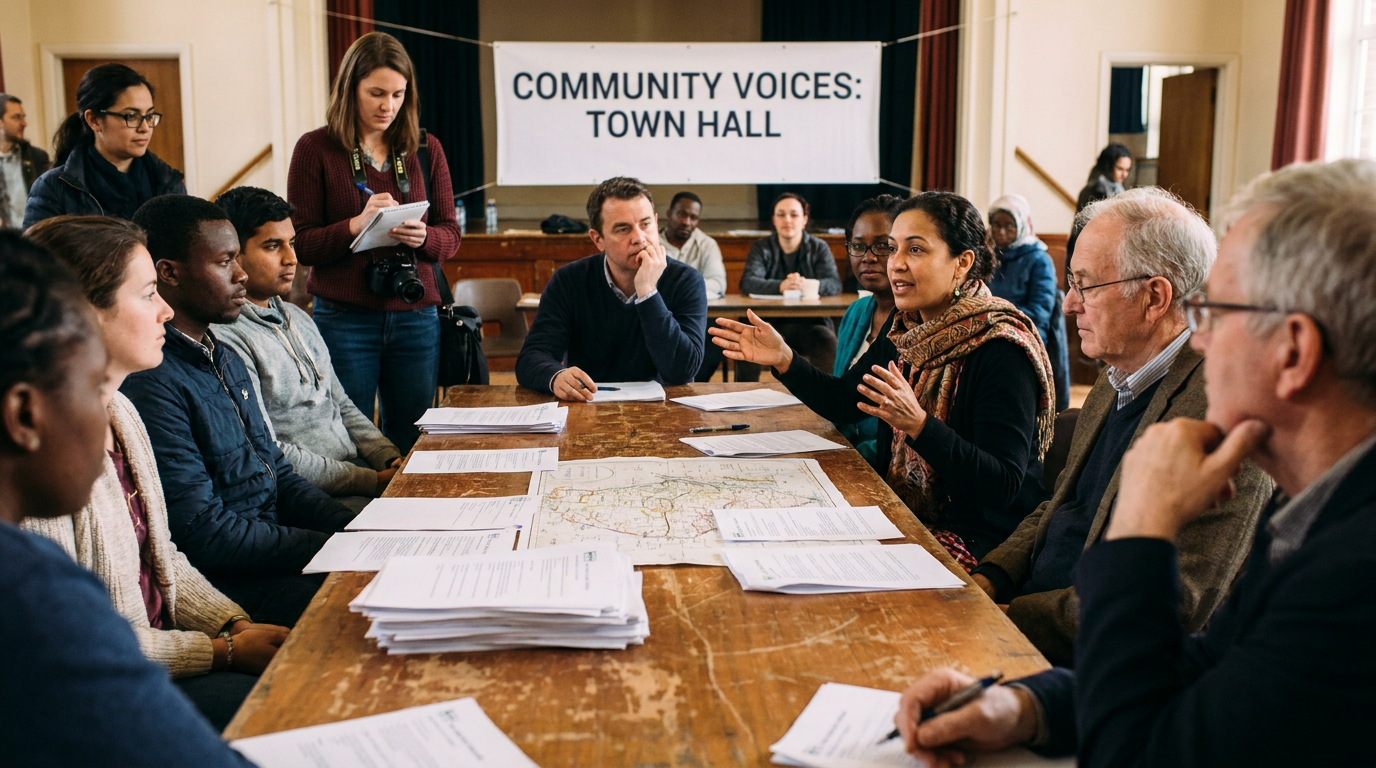
- Solutions Advocates
- Argue that journalism must highlight evidence-based responses to societal problems to empower citizens and rebuild trust.
- Media Researchers
- Focus on the empirical data showing that constructive framing improves audience mental health, engagement, and subscription retention.
- Traditional News Purists
- Maintain that the primary role of the press is accountability and exposing corruption, warning that focusing on solutions can risk veering into advocacy.
What's not represented
- · Social media algorithm designers who control the distribution of news
- · Local politicians whose policies are analyzed in solutions reporting
Why this matters
As political polarization and anxiety drive record numbers of people to avoid the news entirely, this editorial shift offers a blueprint for a healthier media diet. By focusing on evidence-based solutions, journalism can empower citizens to engage with civic life rather than retreat from it.
Key points
- News avoidance is at record highs due to the media's traditional negativity bias.
- Solutions journalism focuses on rigorous reporting about how communities are solving problems.
- The approach requires the same evidence-based scrutiny as traditional investigative journalism.
- Studies show solutions-oriented reporting increases reader self-efficacy and emotional connection.
- Newsrooms adopting this model are seeing increased trust and digital subscription growth.
- The practice is not suited for breaking news but excels in deep-dive enterprise reporting.
For decades, the unwritten rule of the newsroom was simple: "If it bleeds, it leads." The media industry built its economic model on highlighting conflict, corruption, and catastrophe. But as digital algorithms supercharged this negativity bias, a secondary crisis emerged. Audiences, overwhelmed by a relentless barrage of anxiety-inducing headlines, simply began tuning out. News avoidance has reached record highs globally, with nearly three-quarters of American adults now expressing the belief that the news media actively increases societal polarization.[6][7]
In response to this trust meltdown, a quiet but profound revolution is rewiring how journalists approach their craft. Known interchangeably as "constructive journalism" or "solutions journalism," this movement argues that exposing society's ills is only half the job. To fully inform the public, the Fourth Estate must also rigorously investigate how communities, institutions, and individuals are successfully responding to those very problems.[2][4][7]
The distinction between solutions journalism and mere "good news" is critical. This is not about publishing fluffy, feel-good stories or ignoring systemic failures. Instead, it applies the exact same rigorous, evidence-based scrutiny used in investigative reporting to potential remedies. If a traditional news story highlights a 20% spike in local homelessness, a solutions-oriented story acknowledges that baseline but dedicates the bulk of its word count to analyzing a neighboring city that successfully reduced homelessness by 15%—detailing the exact policies used, the cost, and the limitations.[4][5]
At the forefront of this shift is the Solutions Journalism Network (SJN), an independent nonprofit launched in 2013. Over the past decade, SJN has trained more than 100,000 journalists and partnered with hundreds of newsrooms and university journalism programs worldwide. Their core thesis is that deeply reported stories providing potential solutions to complex social problems yield a measurable, positive social impact.[1][4][5]

Across the Atlantic, the Constructive Institute in Aarhus, Denmark, has formalized this approach into three foundational pillars: solutions, nuance, and democratic conversation. The institute's mandate is to reinstall trust in the idea that shared facts and shared discussions are the bedrock of a functioning community. By embracing complexity rather than portraying issues in simplistic black-and-white terms, constructive journalism aims to help society self-correct.[2]
The psychological impact of this framing is substantial. Academic researchers and organizations like Media Impact Funders have rigorously tested how audiences respond to solutions-oriented reporting compared to traditional conflict-driven narratives. The data consistently shows that readers of solutions stories report higher levels of "self-efficacy"—a stronger belief that they themselves can contribute to solving societal issues.[4][5]
Furthermore, these readers exhibit increased emotional connection to the issues and a higher intent to learn more. Rather than feeling paralyzed by the sheer scale of a crisis like climate change or institutional failure, audiences exposed to evidence-based solutions feel energized and equipped to participate in civic life.[5][7]

Furthermore, these readers exhibit increased emotional connection to the issues and a higher intent to learn more.
This psychological shift is not just good for democracy; it is proving vital for the survival of the news business. The Bonn Institute in Germany recently highlighted that constructive journalism actively counters the trend of news avoidance. By adopting a less pronounced focus on negative events, media outlets are increasing their proximity to their audiences. This rebuilt trust is translating directly into stronger digital engagement metrics, longer time spent on articles, and, crucially, growth in digital subscriptions and memberships.[3]
In the United States, regional initiatives are testing these theories on the ground. The "Constructive Journalism in the South" project, backed by the W.K. Kellogg Foundation and Microsoft's Democracy Forward initiative, is exploring how this reporting style can bridge divides in highly polarized communities. By positioning the journalist not just as a passive observer but as a humble facilitator of civic dialogue, the project aims to elevate information that helps citizens make collective progress.[6]
Despite its momentum, the movement faces skepticism from traditional news purists. Critics argue that journalism's primary duty is accountability, and that focusing on solutions risks veering into advocacy, public relations, or policy endorsement. There is a persistent fear that highlighting a specific program's success might inadvertently campaign for a particular political agenda.[4][7]
Proponents counter this by emphasizing the "evidence-based" requirement of the practice. Solutions journalism does not advocate for untested ideas or celebrate good intentions; it reports on established results. If a proposed solution lacks data to prove its efficacy, or if it carries significant negative side effects, a constructive journalist is obligated to report those shortcomings just as aggressively as the successes.[2][4]

Practitioners also readily admit that the solutions framework is not a universal cure-all. It is poorly suited for breaking news, immediate natural disasters, or fast-moving crises where the facts on the ground are still being established. In those moments, traditional reporting remains essential. The solutions approach is best deployed in enterprise reporting, deep-dive explainers, and ongoing coverage of chronic societal challenges.[4][7]
As the media landscape continues to fracture, the integration of constructive journalism offers a compelling path forward. It challenges the cynical assumption that audiences only click on outrage. By treating readers as capable citizens who want to understand how to fix their world—not just how it is breaking—the industry is slowly discovering that hope, when backed by hard evidence, is a highly compelling narrative.[2][3][7]
How we got here
1998
The Columbia Journalism Review notes a rise in solutions-oriented stories in major outlets like the Los Angeles Times.
2010
The New York Times launches its 'Fixes' blog, dedicated to exploring solutions to social problems.
2013
The Solutions Journalism Network is founded to formalize and spread the practice globally.
2017
The Constructive Institute is established in Denmark to combat sensationalism and rebuild trust in media.
2023
The 'Constructive Journalism in the South' project launches to test the model's ability to depolarize communities in the US.
Viewpoints in depth
Solutions Advocates
Believe the media must evolve beyond simply pointing out society's flaws.
Advocates for this movement, spearheaded by organizations like the Solutions Journalism Network and the Constructive Institute, argue that the traditional 'watchdog' role of the press is necessary but insufficient. When the media only exposes corruption and failure, it leaves audiences feeling helpless and cynical, driving an epidemic of news avoidance. By applying the same rigorous investigative standards to potential remedies, advocates believe journalism can equip citizens with the knowledge they need to demand better policies and engage meaningfully in democracy.
Media Researchers
Focus on the measurable psychological and economic benefits of constructive framing.
For media researchers and industry analysts, the value of solutions journalism is found in the data. Studies consistently show that audiences exposed to solutions-oriented reporting exhibit lower anxiety and higher 'self-efficacy'—the belief that they can effect change. From a business perspective, institutes like Bonn have demonstrated that this approach increases reader trust, time spent on page, and conversion rates for digital subscriptions. In an era where traditional ad-based revenue models are collapsing, researchers view constructive journalism as a vital tool for the financial sustainability of newsrooms.
Traditional News Purists
Warn that focusing on solutions can compromise journalistic objectivity.
Skeptics within the old guard of journalism caution that the Fourth Estate's primary duty is to hold power accountable, not to solve society's problems. There is a persistent concern that 'solutions journalism' can easily slip into advocacy, public relations, or the endorsement of specific political agendas. Purists argue that by highlighting a specific program's success, a news outlet might inadvertently campaign for it. They stress that if solutions are covered, they must be subjected to intense scrutiny, focusing strictly on verifiable evidence of impact rather than the good intentions of the organizers.
What we don't know
- Whether solutions journalism can successfully scale to cover highly polarized, fast-moving political campaigns without appearing biased.
- The long-term impact of constructive journalism on the financial sustainability of local, independent newsrooms compared to national outlets.
- How effectively AI and algorithmic news aggregators can be trained to prioritize solutions-oriented reporting over high-engagement outrage content.
Key terms
- Constructive Journalism
- An editorial approach that adds nuance and solutions to traditional reporting, aiming to empower readers rather than just alarm them.
- Solutions Journalism
- Rigorous, evidence-based reporting on how people and institutions are responding to social problems.
- Negativity Bias
- The psychological tendency for humans to give more weight to negative events than positive ones, a trait historically exploited by news algorithms.
- Self-Efficacy
- An individual's belief in their capacity to execute behaviors necessary to produce specific performance attainments; in this context, the belief that one can help solve societal issues.
Frequently asked
Is solutions journalism just publishing 'good news'?
No. It is rigorous, evidence-based reporting on how people are responding to problems. It investigates the limitations and failures of those responses just as thoroughly as their successes.
Does this replace traditional investigative journalism?
Not at all. While investigative journalism exposes a systemic problem, solutions journalism investigates how other communities or institutions have successfully addressed similar problems.
Do audiences actually want this kind of reporting?
Yes. Research shows that solutions-oriented stories increase reader engagement, time on page, and the likelihood of subscribing to a news outlet by reducing news fatigue.
Can solutions journalism be used for breaking news?
Generally, no. It is best suited for enterprise reporting and deep dives into chronic issues, rather than fast-moving crises where facts are still emerging.
Sources
Source coverage
7 outlets
3 viewpoints surfaced







[1]Solutions Journalism NetworkSolutions Advocates
Explore Our Impact: Transforming Journalism
Read on Solutions Journalism Network →[2]Constructive InstituteSolutions Advocates
Why Constructive Journalism? Important for Journalism and Society
Read on Constructive Institute →[3]Bonn InstituteMedia Researchers
Solutions, perspectives, dialogue – Why constructive journalism pays off
Read on Bonn Institute →[4]BritannicaMedia Researchers
The Impact of Solutions Journalism
Read on Britannica →[5]Media Impact FundersMedia Researchers
What is solutions journalism?
Read on Media Impact Funders →[6]Constructive Journalism in the SouthSolutions Advocates
Constructive Journalism in the South: An Open Collaborative
Read on Constructive Journalism in the South →[7]Factlen Editorial TeamTraditional News Purists
Synthesis by Factlen editorial team
Read on Factlen Editorial Team →

Every angle. Every day.
Get meta stories with full source coverage and perspective breakdowns delivered to your inbox.