
How Sleep and Exercise Reprogram Mutant Blood Cells to Prevent Heart Disease
A breakthrough study reveals that healthy lifestyle habits can counteract specific age-related genetic mutations in white blood cells, directly reducing the risk of atherosclerosis.
By Factlen Editorial Team
- Molecular Cardiologists
- Focus on the precise biological mechanisms linking behavior to cellular changes.
- Preventive Medicine Advocates
- Emphasize the empowerment of patients to alter their genetic destiny.
- Genetic Researchers
- Highlight the complexity of gene-by-environment interactions and the resistance of certain mutations.
What's not represented
- · Patients living with diagnosed clonal hematopoiesis
- · Health insurance providers evaluating coverage for genetic screening
Why this matters
For decades, we knew sleep and exercise were good for the heart, but we couldn't fully explain how they override genetic risks. This research proves that lifestyle behaviors can literally reprogram mutant immune cells, opening the door to gene-specific lifestyle prescriptions for cardiovascular health.
Key points
- Clonal hematopoiesis (CH) causes mutant, inflammatory white blood cells to multiply, driving arterial plaque buildup in older adults.
- A major Nature study reveals that sleep and exercise can reprogram these mutant cells to behave normally.
- The protective effect is mutation-dependent, working against JAK2 and TET2 mutations but failing against DNMT3A and TP53.
- Exercise suppresses inflammation by triggering the brain to release noradrenaline, which binds directly to the mutant cells.
- The findings pave the way for precision lifestyle medicine, where behavioral prescriptions are tailored to a patient's genetic profile.
The age-old advice of getting enough sleep and exercising regularly has long been the cornerstone of cardiovascular health. Yet, the exact molecular pathways by which these behaviors protect the heart—especially in individuals genetically predisposed to heart disease—have remained one of modern medicine's most stubborn mysteries.[6]
A landmark study published in Nature has now provided a definitive answer, revealing that lifestyle factors do not merely improve general metabolic health. Instead, they actively reprogram mutant immune cells at the molecular level, suppressing their ability to cause inflammation and arterial damage.[1][3]
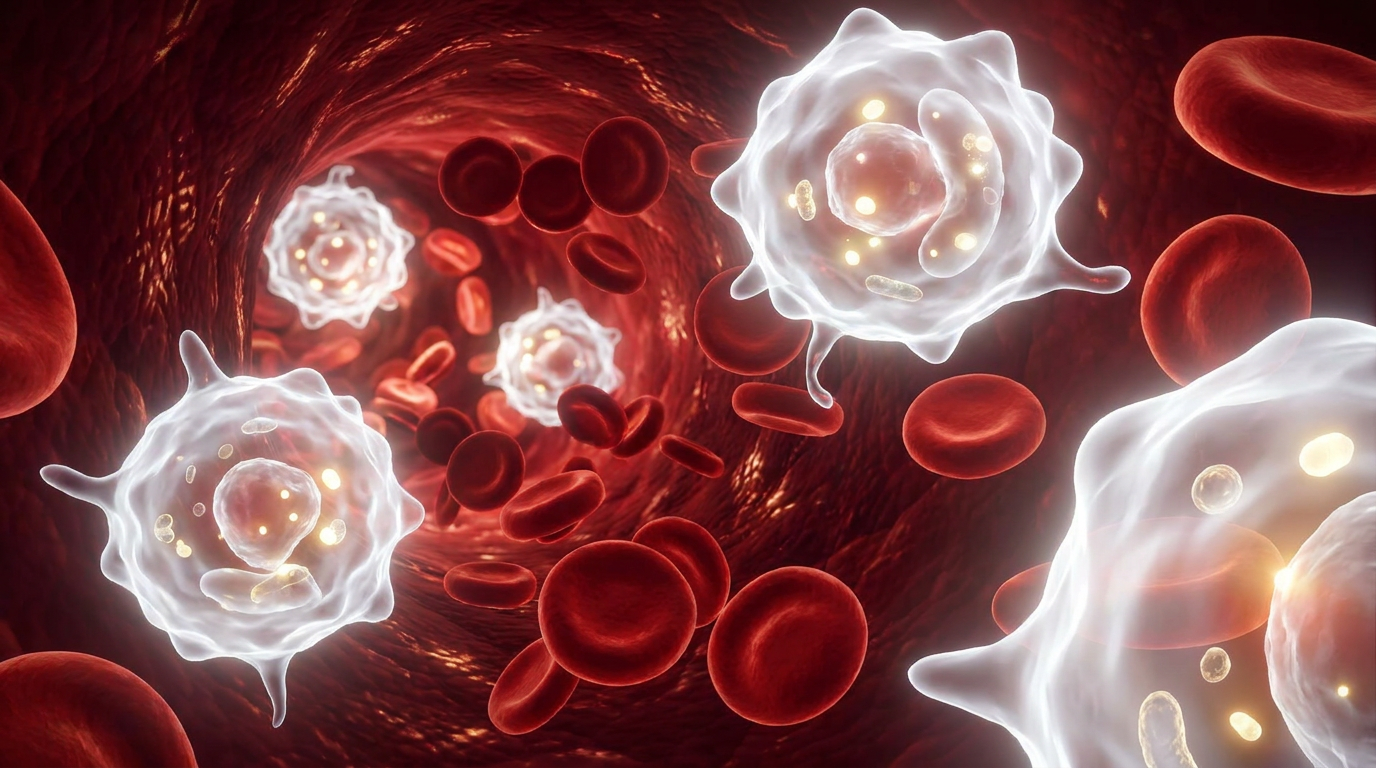
The research centers on a condition known as clonal hematopoiesis (CH), an age-related phenomenon where genetic mutations spontaneously occur in the bone marrow's hematopoietic stem cells. These stem cells are responsible for producing the body's white blood cells, including macrophages and monocytes, which serve as the frontline defenders of the immune system.[2][3]
As we age, these mutations accumulate. When a mutated stem cell gains a survival advantage, it begins to clone itself rapidly, flooding the bloodstream with rogue, hyper-inflammatory immune cells. This condition is remarkably common, detectable in roughly 25 percent of individuals over the age of 70, and half of all people over 80.[2][3]

For years, scientists have known that these mutant clones significantly increase the risk of atherosclerosis—the buildup of dangerous plaque in the arteries that leads to heart attacks and strokes. The rogue macrophages infiltrate the arterial walls, releasing inflammatory proteins that accelerate plaque formation, independent of traditional risk factors like high cholesterol or smoking.[2][4]
To understand if lifestyle could intervene, researchers from the Icahn School of Medicine at Mount Sinai analyzed massive human datasets, including nearly 83,000 participants from the UK Biobank and over 8,400 from the National Institutes of Health's All of Us program. They paired this epidemiological data with highly controlled studies using genetically engineered mice predisposed to atherosclerosis.[3]
The findings were unprecedented: sufficient sleep and moderate-to-vigorous physical activity directly counteract the cancer-like expansion of these mutant cells. However, the protective effects are not universal; they are strictly dictated by the specific genetic mutation driving the clonal expansion.[1][4]
The researchers focused on four primary genes implicated in clonal hematopoiesis: JAK2, TET2, TP53, and DNMT3A. In both human cohorts and mouse models, physical activity and uninterrupted sleep successfully curtailed the proliferation of clones driven by JAK2 and TET2 mutations.[1][2][4]
The researchers focused on four primary genes implicated in clonal hematopoiesis: JAK2, TET2, TP53, and DNMT3A.
For individuals harboring these specific mutations, lifestyle interventions effectively forced the mutant cells to behave like healthy, non-mutated cells. The physical activity and rest repressed the cells' proliferative programming, drastically shrinking the size of atherosclerotic lesions in the arteries.[3][5]
Conversely, the study revealed a stark limitation of lifestyle medicine. Clones driven by mutations in the DNMT3A and TP53 genes proved entirely resistant to the benefits of sleep and exercise. In these cases, the mutant cells continued their inflammatory expansion and plaque formation regardless of the host's behavioral interventions.[1][4][5]

This divergence highlights a profound gene-by-environment interaction. It suggests that the cardiovascular benefits of hitting the gym or getting eight hours of sleep are partially dependent on a person's underlying genetic blood profile, setting the stage for a new era of precision lifestyle medicine.[4]
Beyond identifying which mutations respond to lifestyle, the Nature study mapped exactly how the behaviors alter cell biology. The mechanisms for sleep and exercise operate through entirely distinct biological pathways, yet both converge to disarm the mutant macrophages.[1]
In the case of sleep, uninterrupted rest was found to blunt the activation of a specific inflammatory complex known as the CLEC4E-dependent inflammasome. By turning off this localized alarm system within the vascular macrophages, healthy sleep directly diminishes the formation of arterial lesions.[1][5]
Exercise, meanwhile, utilizes a neuroimmune axis. Physical activity activates a specific cluster of neurons in the brain's locus coeruleus. This neural activation triggers the release of peripheral noradrenaline into the bloodstream.[1]
The noradrenaline then binds to adrenergic receptors (ADRβ2) on the surface of the mutant macrophages. This binding acts as a molecular off-switch, selectively repressing the inflammatory programming of the JAK2 and TET2 mutant cells while leaving healthy, cohabitating wild-type cells unaffected.[1]

These discoveries represent a paradigm shift in cardiovascular disease prevention. Historically, the medical community has viewed genetic mutations as fixed, unalterable risk factors. The Mount Sinai research proves that certain mutant cells remain highly malleable and responsive to behavioral cues.[2][3]
As genetic sequencing becomes more accessible, doctors may soon screen older adults for clonal hematopoiesis to tailor their preventive care. A patient with a JAK2 mutation might be prescribed a rigorous, monitored exercise regimen as a primary medical intervention, knowing it directly targets their specific molecular vulnerability.[2][4]
Ultimately, the research underscores the profound interconnectedness of the human body. The daily choices we make regarding movement and rest echo all the way down to the bone marrow, dictating the behavior of our most fundamental cellular machinery and offering a powerful, accessible tool for extending human healthspan.[4][6]
How we got here
2014
Researchers first identify clonal hematopoiesis of indeterminate potential (CHIP) as a common age-related phenomenon linked to blood cancers.
2017
Major studies establish that CHIP mutations are an independent, massive risk factor for atherosclerotic cardiovascular disease.
2020
Longitudinal studies map the evolutionary dynamics and fitness landscape of different clonal mutations over a human lifespan.
June 10, 2026
Nature publishes breakthrough research demonstrating that sleep and exercise can selectively repress specific CH mutations.
Viewpoints in depth
Molecular Cardiologists
Focus on the precise biological mechanisms linking behavior to cellular changes.
For researchers studying the molecular basis of heart disease, the breakthrough lies in the discovery of the neuroimmune axis. The finding that exercise activates the locus coeruleus to release noradrenaline, which then binds to specific receptors on mutant macrophages, provides a concrete mechanical link between physical exertion and immune suppression. This shifts lifestyle advice from general epidemiological observation to targeted molecular therapy.
Preventive Medicine Advocates
Emphasize the empowerment of patients to alter their genetic destiny.
Public health experts view these findings as a powerful tool for patient motivation. Historically, patients informed of a genetic predisposition to heart disease often feel a sense of fatalism. By proving that mutant cells are malleable and that sleep and exercise can literally force rogue cells to behave normally, practitioners can frame lifestyle interventions as active, gene-modifying treatments rather than just general wellness tips.
Genetic Researchers
Highlight the complexity of gene-by-environment interactions and the resistance of certain mutations.
Geneticists are particularly interested in the divergence of the results. While the JAK2 and TET2 mutations respond beautifully to lifestyle changes, the stubborn resistance of DNMT3A and TP53 mutations underscores the limits of behavioral interventions. This camp argues that future cardiovascular care must begin with genetic sequencing, as prescribing exercise to a patient with a DNMT3A mutation will not address their specific pathway of plaque formation, necessitating alternative pharmacological approaches.
What we don't know
- Whether specific types of exercise (e.g., cardio vs. resistance training) yield different levels of protection against mutant cells.
- Exactly why the DNMT3A and TP53 mutations are entirely resistant to the anti-inflammatory effects of sleep and exercise.
- How early in life these lifestyle interventions need to begin to maximally suppress the expansion of mutant clones in old age.
Key terms
- Clonal Hematopoiesis (CH)
- A condition where a mutated blood stem cell begins cloning itself, filling the bloodstream with abnormal, inflammatory immune cells.
- Macrophage
- A type of white blood cell that normally protects the body from infection, but can cause dangerous inflammation when mutated.
- Atherosclerosis
- The buildup of fats, cholesterol, and inflammatory cells in and on the artery walls, forming plaques that can restrict blood flow.
- Inflammasome
- A complex of proteins within a cell that triggers an inflammatory response; in mutant cells, this system is often overactive.
- Noradrenaline
- A neurotransmitter and hormone released during physical activity that was found to suppress the inflammatory programming of specific mutant blood cells.
Frequently asked
What is clonal hematopoiesis (CH)?
It is an age-related condition where genetic mutations spontaneously occur in bone marrow stem cells, causing them to produce abnormal, highly inflammatory white blood cells that multiply rapidly.
How does clonal hematopoiesis affect the heart?
The mutant white blood cells infiltrate arterial walls and release inflammatory proteins, which accelerates the buildup of dangerous plaque (atherosclerosis) and increases the risk of heart attacks.
Which genetic mutations respond to sleep and exercise?
The study found that healthy lifestyle habits effectively suppress the harmful effects of JAK2 and TET2 mutations, but do not work against DNMT3A and TP53 mutations.
How does exercise communicate with these blood cells?
Physical activity activates specific neurons in the brain, releasing noradrenaline into the blood. This chemical binds to receptors on the mutant cells, acting as an 'off-switch' for their inflammatory behavior.
Sources
Source coverage
6 outlets
3 viewpoints surfaced






[1]NatureMolecular Cardiologists
Mutation-dependent responses to sleep and exercise in clonal haematopoiesis
Read on Nature →[2]Science NewsGenetic Researchers
Sleep and exercise may dampen genetic drivers of heart disease
Read on Science News →[3]Mount SinaiPreventive Medicine Advocates
Healthy Sleep and Regular Exercise Can Mitigate the Genetic Cardiovascular Risk of Mutant White Blood Cells
Read on Mount Sinai →[4]BioengineerGenetic Researchers
Mutation-Driven Sleep and Exercise Responses Explored
Read on Bioengineer →[5]Respiratory TherapyPreventive Medicine Advocates
Sleep, Exercise Mitigate Cardiovascular Risk From Blood Mutations
Read on Respiratory Therapy →[6]Circulation ResearchMolecular Cardiologists
Lifestyle Effects on Hematopoiesis and Atherosclerosis
Read on Circulation Research →

More in science
See all 45 stories →Green Chemistry
Scientists Convert Plant Waste Into Nylon Precursor, Bypassing a Major Greenhouse Gas
7 sources

Cellular Biology
Sleep and Exercise Can Reprogram Mutant Blood Cells to Prevent Heart Disease, Study Finds
6 sources
Carbon Budget
Global Carbon Budget for 1.5°C Will Be Exhausted in Three Years, Major Climate Assessment Warns
7 sources

Longevity Science
How Sleep and Exercise Reprogram Aging Blood Cells to Prevent Heart Disease
4 sources

Every angle. Every day.
Get science stories with full source coverage and perspective breakdowns delivered to your inbox.