
How Movement Rewires the Brain: The Evidence for Exercise-Induced Neurogenesis
A growing body of evidence reveals that physical exercise acts as a molecular trigger for the brain, releasing proteins that stimulate the growth of new neurons and enhance cognitive resilience.
By Factlen Editorial Team
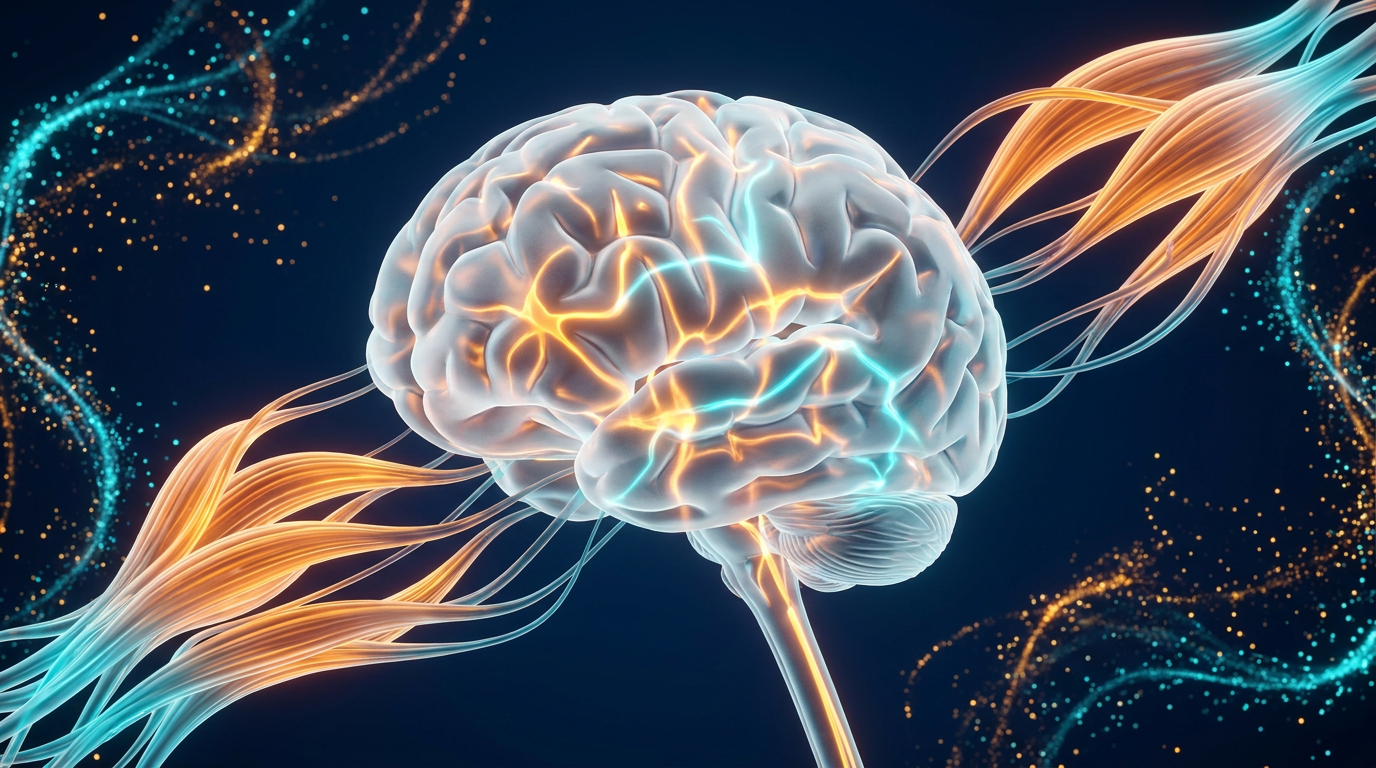
- Neurobiologists
- Focus on the molecular pathways and cellular mechanisms of neurogenesis in the brain.
- Clinical Neurologists
- Emphasize the translational potential of exercise as a non-pharmacological intervention to delay cognitive decline.
- Exercise Physiologists
- Study how skeletal muscle acts as an endocrine organ to communicate with the rest of the body.
What's not represented
- · Sedentary individuals with severe mobility limitations
- · Pharmacological researchers seeking pill-based BDNF mimetics
Why this matters
Understanding how muscle contractions directly communicate with the brain empowers individuals to use physical activity not just for cardiovascular health, but as a targeted intervention to protect memory, enhance learning, and delay cognitive decline.
Key points
- The adult brain is capable of generating new neurons throughout life, a process called neurogenesis.
- Physical exercise acts as a massive endocrine trigger, releasing signaling proteins called myokines into the bloodstream.
- Myokines like Irisin and Cathepsin B cross the blood-brain barrier to stimulate the production of Brain-Derived Neurotrophic Factor (BDNF).
- Consistent aerobic exercise has been clinically shown to increase the physical volume of the hippocampus, reversing age-related decline.
For decades, a central dogma of biology held that humans are born with a fixed number of brain cells, and that aging inevitably brings a slow, irreversible decline in neural architecture. Today, modern neuroscience has thoroughly dismantled that belief. The adult brain is now understood to be highly plastic, capable of generating entirely new neurons throughout a person's lifespan—a remarkable biological process known as neurogenesis. While cognitive exercises and mental puzzles are known to strengthen existing synaptic connections, physical movement has emerged as one of the most potent triggers for actual structural growth in the brain.[1][4]
The mechanism behind this phenomenon bridges a critical gap between the muscular system and the central nervous system. When skeletal muscles contract repeatedly during sustained aerobic activity, they do not merely consume energy and build physical endurance. Instead, they act as a massive endocrine organ, releasing a complex cascade of signaling proteins directly into the bloodstream. This chemical dialogue fundamentally alters how we understand the relationship between the body and the mind, proving that physical exertion is a direct metabolic trigger for cognitive enhancement.[3][6]
These muscle-derived signaling proteins are collectively known as "myokines." For much of modern medical history, researchers viewed skeletal muscle strictly as a mechanical tissue responsible for locomotion and posture. The discovery of myokines revolutionized this perspective, revealing a sophisticated biochemical communication network. As muscles work, they secrete hundreds of distinct myokines that travel throughout the body, ultimately reaching the brain to initiate cellular repair, reduce neuroinflammation, and stimulate the birth of new neural pathways.[2][3]
The primary architect of this exercise-induced brain growth is a protein called Brain-Derived Neurotrophic Factor, or BDNF. Often described by neurobiologists as "Miracle-Gro for the brain," BDNF is a crucial molecule that promotes the survival of existing neurons while actively encouraging the growth and differentiation of new neurons and synapses. Without sufficient circulating levels of BDNF, the brain struggles to learn new information, consolidate short-term memories into long-term storage, or recover effectively from neurological stress and trauma.[1][6]

In controlled animal models, the effects of physical activity on BDNF production are unmistakable. Rodents given free access to running wheels consistently show a massive upregulation of BDNF expression, particularly in the dentate gyrus of the hippocampus—the brain region most critical for learning, emotional regulation, and memory consolidation. This chemical surge directly correlates with significantly improved performance in complex spatial memory tasks, such as navigating mazes.[1][5]
Translating these precise molecular findings to humans has historically presented a challenge, as researchers cannot easily dissect living human brains to count newly formed neurons. However, advanced neuroimaging techniques and postmortem tissue analyses have provided compelling proxy evidence that the same mechanisms operate in human biology. Postmortem studies of patients who received specific cellular markers have confirmed that mature granule neurons are continually generated in the human hippocampus, even into the later decades of life.[1][4]
A landmark clinical trial provided some of the most striking evidence for this phenomenon in living humans, shifting the paradigm of how neurologists view aging. Researchers demonstrated that a regimen of moderate-intensity aerobic exercise—specifically, brisk walking for 40 minutes, three times a week—actually increased the physical volume of the anterior hippocampus by 1% to 2% in older adults over the course of a single year. This structural growth occurred in the exact region most vulnerable to age-related decline.[4][6]
A landmark clinical trial provided some of the most striking evidence for this phenomenon in living humans, shifting the paradigm of how neurologists view aging.
This volumetric increase is profound because the hippocampus typically shrinks by 1% to 2% annually in older adults without dementia. The exercise intervention effectively reversed age-related brain volume loss by one to two years. Crucially, the participants who demonstrated the greatest improvements in cardiovascular fitness also showed the highest increases in circulating BDNF levels and the most significant improvements in rigorous memory assessments.[4][5]

The success of this complex muscle-brain cross-talk relies entirely on specific myokines successfully navigating the body's vascular system and crossing the highly selective blood-brain barrier. One of the most intensely studied of these messenger molecules is Irisin, a hormone that is cleaved from a precursor protein in muscle tissue during intense physical exertion. The groundbreaking discovery of Irisin provided a long-sought missing link in the chain of biological events connecting a pounding heart to a sharper, more resilient mind.[2][7]
Once released into the bloodstream during sustained exercise, Irisin travels upward to the central nervous system, crosses the blood-brain barrier, and directly stimulates the genetic expression of BDNF in the hippocampus. This specific biological pathway provides a clear, observable molecular explanation for how moving the legs can physically alter the cellular composition of the brain. By triggering this neurotrophic cascade, Irisin effectively translates mechanical muscular work into enhanced synaptic plasticity, improved memory formation, and long-term cognitive resilience against aging.[3][7]
Another crucial myokine in this process is Cathepsin B (CTSB). While previously known to cellular biologists primarily as an intracellular enzyme involved in protein degradation, recent breakthrough studies have identified CTSB as a secretory protein that spikes significantly in the blood after running. In both murine models and human subjects, elevated plasma CTSB levels correlate directly with enhanced spatial memory and cognitive performance.[3][8]
Despite these remarkable breakthroughs, transparent uncertainty remains regarding the exact parameters required to optimize this biological response. The precise dose-response relationship—exactly how much exercise, at what specific intensity, and for what duration is required to maximize BDNF release in humans—is still a subject of intense scientific debate. Current evidence suggests that moderate-intensity aerobic exercise lasting 30 to 40 minutes is highly effective, but individual metabolic differences likely play a significant role.[6][8]

Furthermore, while aerobic exercises like running, cycling, and swimming consistently demonstrate robust effects on hippocampal volume and BDNF upregulation, the cognitive benefits of resistance training appear to operate through slightly different mechanisms. Weightlifting and strength training show clear cognitive benefits, but they may rely more heavily on other factors, such as Insulin-like Growth Factor 1 (IGF-1), rather than the Irisin-BDNF pathway.[2][5]
Researchers are also actively investigating how these exercise-induced pathways might be harnessed clinically to treat or delay severe neurodegenerative diseases. While physical activity cannot cure Alzheimer's disease or reverse advanced dementia, robust clinical evidence shows that building this "cognitive reserve" through lifelong exercise significantly delays the onset of severe cognitive decline. By continuously bathing the brain in neuroprotective factors like BDNF, regular exercise provides a crucial biological buffer against the pathological protein aggregations that characterize neurodegeneration.[2][4]
Ultimately, the accumulated scientific evidence points to a profound biological truth: the human brain evolved within a body that was fundamentally designed for regular, sustained movement. By understanding and harnessing the powerful endocrine function of skeletal muscle, individuals possess a non-pharmacological, highly accessible tool to actively shape their cognitive architecture. Exercise is not merely a tool for cardiovascular health; it is a targeted intervention to protect our memories, enhance our learning capabilities, and build lifelong neurological resilience.[6][8]
How we got here
1998
Researchers definitively demonstrate that the adult human brain generates new neurons in the hippocampus, overturning decades of scientific dogma.
2011
A landmark clinical trial shows that one year of moderate aerobic exercise increases hippocampal volume by 2% in older adults.
2013
Scientists identify the Irisin pathway, proving that an exercise-induced hormone can cross the blood-brain barrier to stimulate BDNF.
2016
Researchers discover that Cathepsin B, a protein secreted by contracting muscles, directly enhances spatial memory and neurogenesis.
2026
Ongoing research continues to map the complex 'exerkine' network, refining exercise prescriptions for optimal cognitive health.
Viewpoints in depth
Neurobiological Consensus
Focuses on the molecular pathways and cellular mechanisms of neurogenesis.
Neurobiologists emphasize that the brain is not a static organ, but a highly dynamic structure capable of continuous remodeling. Through the lens of molecular biology, exercise is viewed as a systemic stressor that triggers a survival response, primarily mediated by BDNF. This camp focuses heavily on the dentate gyrus of the hippocampus, where the proliferation, differentiation, and survival of new neurons can be directly observed in response to elevated neurotrophic factors.
Clinical Neurology Perspective
Views exercise as a non-pharmacological prescription for brain health and disease prevention.
For clinical neurologists, the discovery of exercise-induced neuroplasticity offers a powerful tool against the rising tide of neurodegenerative diseases. While acknowledging that exercise cannot cure Alzheimer's, this perspective champions physical activity as the most effective known method for building 'cognitive reserve.' By increasing hippocampal volume and improving vascular health in the brain, exercise provides a structural buffer that delays the clinical onset of memory loss and cognitive decline.
Exercise Physiology View
Studies the skeletal muscle as an endocrine organ that communicates with the rest of the body.
Exercise physiologists have revolutionized our understanding of muscle tissue, shifting the paradigm from viewing it purely as a mechanical engine to recognizing it as a vital endocrine organ. This viewpoint focuses on the complex network of 'myokines'—such as Irisin and Cathepsin B—that are secreted into the bloodstream during muscular contraction. Their research aims to map the exact dose-response relationship of different exercise modalities to optimize these systemic chemical signals.
What we don't know
- The exact dose-response relationship of exercise intensity and duration required to maximize BDNF release in humans.
- The precise mechanisms by which resistance training (weightlifting) confers cognitive benefits compared to aerobic exercise.
- How individual genetic differences in BDNF expression affect a person's cognitive response to physical activity.
Key terms
- Neurogenesis
- The biological process by which new neurons are formed in the brain, primarily occurring in the hippocampus.
- BDNF
- Brain-Derived Neurotrophic Factor, a crucial protein that promotes the survival of nerve cells and the growth of new synapses.
- Hippocampus
- A complex brain structure embedded deep in the temporal lobe that is critical for learning and memory consolidation.
- Myokines
- Small signaling proteins released by skeletal muscle cells into the bloodstream in response to muscular contractions.
- Irisin
- A specific exercise-induced hormone that travels from the muscles to the brain to trigger the production of BDNF.
- Blood-Brain Barrier
- A highly selective, semipermeable border of cells that prevents circulating blood solutes from non-selectively crossing into the central nervous system.
Frequently asked
Do I have to run to get these brain benefits?
No. While much of the research focuses on aerobic exercise like running or cycling, any sustained activity that elevates your heart rate—such as brisk walking or swimming—triggers the release of beneficial myokines.
Does weightlifting also help the brain?
Yes, though potentially through different pathways. Resistance training increases levels of IGF-1 and other factors that support cognitive function, making a combination of aerobic and resistance exercise ideal.
How long does it take to see changes in the brain?
While a single bout of exercise temporarily spikes BDNF levels, structural changes like increased hippocampal volume typically require consistent moderate-intensity exercise over several months.
Can exercise reverse Alzheimer's disease?
Exercise cannot cure or fully reverse Alzheimer's, but robust evidence shows it can significantly delay the onset of cognitive decline and improve memory in early stages by building 'cognitive reserve'.
Sources
Source coverage
8 outlets
3 viewpoints surfaced








[1]Frontiers in NeuroscienceNeurobiologists
Exercise-Mediated Neurogenesis in the Hippocampus via BDNF
Read on Frontiers in Neuroscience →[2]MDPIClinical Neurologists
Sarcopenia and Cognitive Function: Role of Myokines in Muscle Brain Cross-Talk
Read on MDPI →[3]Journal of PhysiologyExercise Physiologists
How does the skeletal muscle communicate with the brain in health and disease?
Read on Journal of Physiology →[4]PNASClinical Neurologists
Exercise training increases size of hippocampus and improves memory
Read on PNAS →[5]ResearchGateClinical Neurologists
Exercise-Induced Neuroplasticity: Mechanisms Underlying Hippocampal Growth and Cognitive Enhancement
Read on ResearchGate →[6]Factlen Editorial TeamExercise Physiologists
Synthesis by Factlen editorial team
Read on Factlen Editorial Team →[7]Nature MedicineNeurobiologists
Exercise induces hippocampal BDNF through a PGC-1α/FNDC5 pathway
Read on Nature Medicine →[8]Cell MetabolismNeurobiologists
Running-Induced Systemic Cathepsin B Secretion Is Associated with Memory Function
Read on Cell Metabolism →

Every angle. Every day.
Get science stories with full source coverage and perspective breakdowns delivered to your inbox.