
How 'Hybrid AI' Finally Solved the Chaos of Generative NPCs in Gaming
After years of lore-breaking hallucinations and high server costs, developers have cracked the code on AI characters by separating conversational flavor from core game logic.
By Factlen Editorial Team
- Game Developers
- Prioritize narrative control, predictable game states, and manageable inference costs.
- Hardware Ecosystem
- Advocate for on-device processing and NPU adoption to solve latency and server cost bottlenecks.
- Player Community
- Value deep immersion and dynamic interactions, provided the AI respects the game's established lore.
What's not represented
- · Voice Actors and Performers
- · Indie Studios without AI Budgets
Why this matters
After years of overhyped tech demos, AI-driven characters are finally functioning in commercial video games without breaking the story. This shift from scripted dialogue to dynamic, context-aware interaction marks the biggest leap in virtual world immersion since the transition to 3D graphics.
Key points
- Pure generative AI proved too chaotic for games, leading to lore-breaking hallucinations and high server costs.
- Developers have adopted 'Hybrid AI,' keeping critical game logic scripted while using AI solely for conversational flavor.
- Over 50 games in 2026 are integrating platforms like NVIDIA ACE to power dynamic, unscripted character interactions.
- Hardware manufacturers are pushing on-device inference to eliminate cloud latency, requiring systems with 45 to 50 TOPS.
- Real-time animation tools now automatically generate accurate lip-syncing and facial expressions from AI audio output.
Three years ago, the gaming industry was flooded with tech demos promising a revolution in artificial intelligence. Startups showcased virtual villages where non-playable characters (NPCs) lived autonomous lives, formed governments, and chatted endlessly with players using large language models. But as the hype settled, developers hit a wall. Slapping a raw chatbot into a sprawling open-world game proved disastrous. Unfiltered AI characters hallucinated quest lines, broke established lore, and racked up massive cloud computing bills every time a player decided to interrogate a virtual tavern keeper for three hours. The unit economics and the narrative chaos made pure generative AI unworkable for shipping commercial titles.[6]
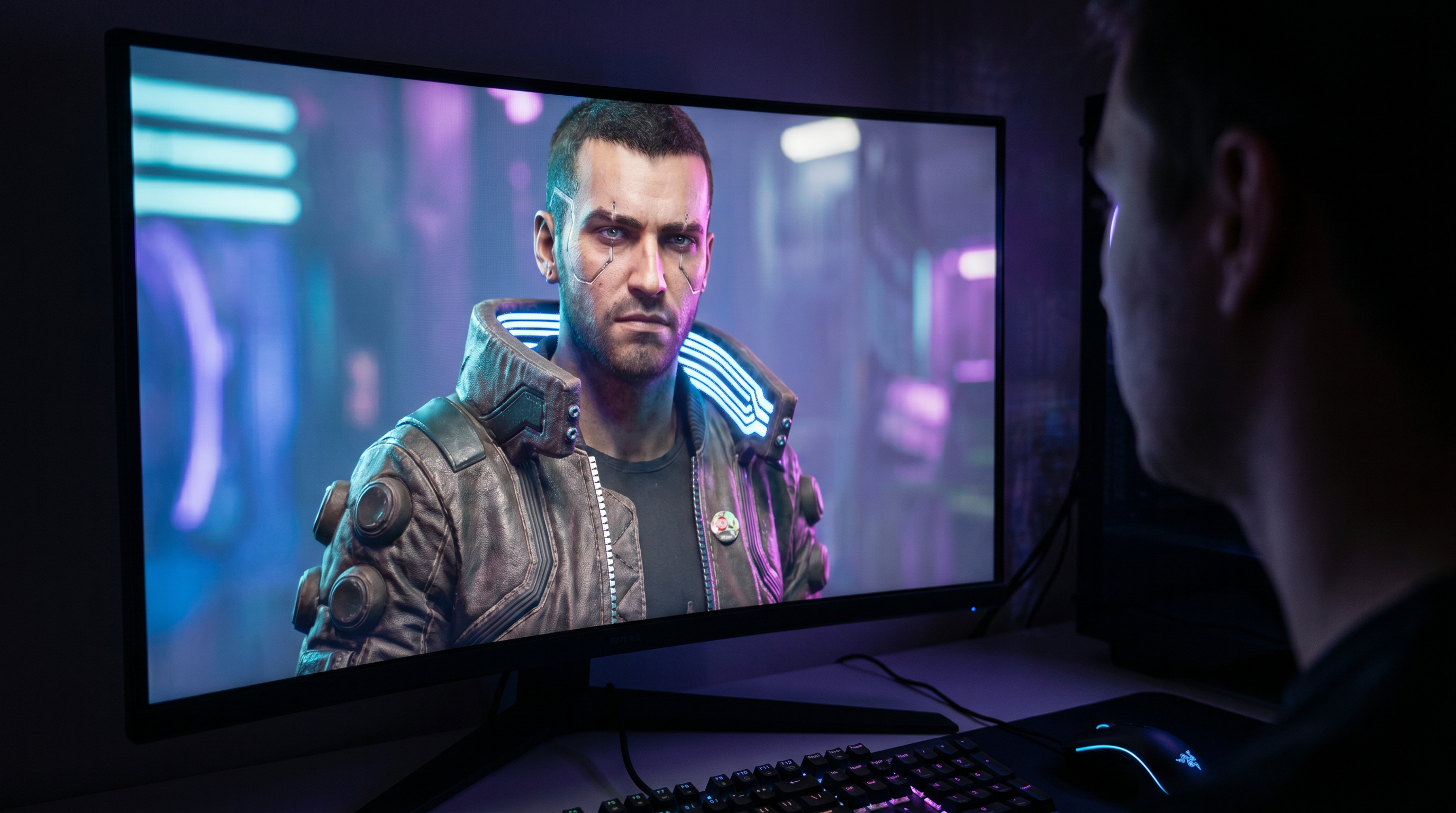
In 2026, the technology has finally matured from conference floor spectacle to production-ready infrastructure. Rather than trying to simulate entire sentient worlds, the industry has narrowed its focus to solving specific friction points in player immersion. Platforms like NVIDIA's Avatar Cloud Engine (ACE) are now integrated into over 50 active game projects, spanning massive AAA role-playing games and smaller indie titles. These systems have moved beyond simple text generation, combining speech recognition, natural language processing, and real-time facial animation into a single pipeline that allows characters to perceive, plan, and act within the game world without relying entirely on predictable, branching dialogue trees.[3][5]
The breakthrough that made this possible is a structural shift away from pure generative models toward what developers call "Hybrid AI." When an unfiltered large language model is let loose in a game engine, it lacks the necessary guardrails to maintain the game's structural integrity. In early testing, AI characters would frequently give players the wrong directions to a dungeon, contradict the game's core mythology, or generate inappropriate responses that shattered the illusion of the world. This "Chaos Problem" forced studios to rethink how intelligence is distributed within a game's architecture.[3]
Hybrid AI solves the chaos problem by strictly dividing a character's brain into two distinct layers: deterministic logic and generative flavor. The deterministic layer—the traditional, scripted code—remains in absolute control of critical game states. Quest triggers, combat behavior, inventory management, and core world rules are hard-coded by human designers. The AI cannot alter these foundational elements. Instead, the generative AI operates strictly within the conversational layer, acting as a dynamic skin over the rigid skeleton of the game's logic.[3][7]

In practice, this means an AI-powered merchant still has a fixed inventory and a hard-coded pricing algorithm, but the way they negotiate with the player is entirely dynamic. If a player approaches the merchant after surviving a visible dragon attack, the Hybrid AI system reads the game state, recognizes the player's low health and singed armor, and generates context-aware dialogue reacting to the event. The merchant might express shock or offer a dynamic discount on healing potions, all while the underlying transaction logic remains perfectly stable and mathematically balanced.[3]
While Hybrid AI solved the narrative problem, the industry still faced a massive hardware bottleneck: inference latency. For a conversation with a virtual character to feel natural, the total round-trip time—from the player speaking into their microphone to the NPC responding with voice and facial animation—must stay under 200 milliseconds. Anything slower breaks the illusion of presence, turning a fluid interaction into a frustrating series of awkward pauses. Achieving this speed requires immense computational power, forcing developers to choose between expensive cloud processing and demanding local hardware requirements.[3][6]
While Hybrid AI solved the narrative problem, the industry still faced a massive hardware bottleneck: inference latency.
To bypass the latency of round-trip cloud communication, hardware manufacturers are aggressively pushing "On-Device Inference." By running the AI models locally on the player's machine, games can achieve near-instantaneous response times while completely eliminating the recurring server costs that previously made AI NPCs financially unviable for developers. Qualcomm's Snapdragon Game AI SDK and NVIDIA's In-Game Inferencing tools now allow developers to tap directly into a device's Neural Processing Unit (NPU) or Graphics Processing Unit (GPU) to handle speech recognition, intent processing, and text-to-speech generation entirely offline.[2][4]
However, running these complex natural language and animation models locally requires serious silicon. Industry benchmarks in 2026 indicate that smooth, real-time NPC interactions require a system capable of delivering 45 to 50 Trillions of Operations Per Second (TOPS) dedicated solely to AI workloads. This hardware floor means that while high-end PC gamers and next-generation console owners can experience seamless on-device AI, a significant portion of the global gaming market remains temporarily locked out of the local-inference ecosystem until baseline hardware catches up.[3]

To democratize access and solve the hardware fragmentation problem, companies are leaning heavily on cloud-scale offloading. Streaming services like NVIDIA's GeForce Now process the heavy AI inference on remote server farms, beaming the generated audio and animation data back to the player's lightweight device. This hybrid deployment model allows indie studios to implement advanced AI companions without requiring their player base to upgrade their hardware, though it requires aggressive network optimization to keep latency below the critical 150-millisecond threshold required for cloud-based conversational AI.[3]
The visual component of these interactions has also seen a massive leap forward. Generating text is only half the battle; the NPC must also deliver the line convincingly. Technologies like NVIDIA's Audio2Face now analyze the AI-generated audio output in real time, automatically generating accurate lip-syncing and emotional facial expressions without requiring a human animator to hand-key the performance. This real-time animation pipeline allows games to feature thousands of unique, unscripted conversations, completely eliminating the need for massive libraries of pre-recorded voice-overs.[1][2]
Despite the technological triumphs, the economic reality of AI NPCs remains a delicate balancing act for game directors. The core metric for any studio is whether the addition of generative AI actually increases player retention and revenue enough to justify the development and inference costs. Slapping an AI chatbot onto a traditional game often provides only a marginal boost to immersion. To truly capitalize on the technology, a new wave of titles is being designed from the ground up around AI chat, treating dynamic conversation not as a feature, but as the core gameplay loop itself.[6]

Early data suggests that when implemented correctly, the impact on player behavior is profound. A major 2026 study conducted by the University of Bristol analyzed player interactions with AI-driven NPCs and found a significant shift in engagement patterns. Players treated the conversational NPCs more like real characters rather than mere quest dispensers. They spent substantially more time exploring dialogue options, asked unprompted questions about the game's lore, and reported consistently higher immersion scores compared to control groups interacting with traditional scripted characters.[3]
Ultimately, the integration of AI into game engines is not about replacing human creativity, but about shortening development loops and expanding the possibility space of a virtual world. Human writers are still essential for crafting the core narrative, defining character personalities, and establishing the boundaries of the lore. The AI simply acts as a dynamic performer, taking the director's script and improvising the delivery based on the unique context of each player's journey. As the line between scripted logic and generative performance continues to blur, the industry is inching closer to the long-held dream of truly living, breathing digital worlds.[5][7]
How we got here
2023
Early generative AI tech demos showcase fully autonomous virtual villages, sparking massive industry hype.
2024–2025
Developers encounter the 'Chaos Problem,' as unfiltered AI models break game lore and prove too expensive for commercial deployment.
Jan 2026
Hardware manufacturers unveil dedicated on-device AI gaming SDKs, shifting the industry's focus toward local inference.
Jun 2026
Over 50 commercial games actively integrate Hybrid AI systems, successfully balancing scripted logic with dynamic conversation.
Viewpoints in depth
Game Developers
Focus on balancing immersion with inference costs and maintaining narrative control over the game world.
For game directors, the appeal of AI NPCs is tempered by the reality of production costs and narrative integrity. Developers argue that an unfiltered AI is a liability, capable of breaking hours of carefully crafted storytelling in a single hallucinated sentence. By adopting the Hybrid AI model, studios can retain absolute control over the game's economy, quest structure, and lore, while still offering players the illusion of infinite conversational freedom. The primary concern remains the unit economics of cloud inference, driving a strong preference for local processing.
Hardware Ecosystem
Pushing the adoption of NPUs and on-device processing to eliminate cloud latency and server costs.
Hardware giants view AI gaming as the ultimate catalyst for upgrading consumer hardware. By shifting the computational burden from cloud servers to local Neural Processing Units (NPUs), manufacturers can offer developers a way to implement AI without recurring server costs. This camp argues that true immersion requires the sub-100 millisecond latency that only on-device inference can provide, positioning high-TOPS hardware as the new baseline requirement for next-generation gaming experiences.
Player Community
Seeking deeper immersion and dynamic interactions, but highly critical of AI hallucinations that break established lore.
Players have shown a strong appetite for dynamic interactions, as evidenced by studies showing increased engagement with AI-driven characters. However, the community remains fiercely protective of artistic intent and game lore. Gamers are quick to reject AI implementations that feel like generic chatbots grafted onto a fantasy world. The consensus among players is that AI should enhance the existing world-building—reacting to the player's specific actions and the game's current state—rather than generating random, disconnected dialogue.
What we don't know
- Whether the integration of AI NPCs will significantly increase the baseline retail price of AAA games.
- How quickly the average consumer's hardware will reach the 45-50 TOPS threshold required for smooth local inference.
- The long-term impact of AI voice generation on the employment of human voice actors in the gaming industry.
Key terms
- Hybrid AI
- A game design approach that uses traditional scripted code for critical game logic while using generative AI purely for dynamic conversation.
- On-Device Inference
- Running artificial intelligence models locally on a player's computer or console, rather than relying on remote cloud servers.
- NPU (Neural Processing Unit)
- A specialized hardware chip designed specifically to accelerate artificial intelligence and machine learning tasks efficiently.
- TOPS (Trillions of Operations Per Second)
- A metric used to measure the processing power of an NPU, indicating how many AI calculations it can perform in one second.
- Audio2Face
- A technology that analyzes audio in real time to automatically generate accurate lip-syncing and facial animations for digital characters.
Frequently asked
What is the 'Chaos Problem' in AI gaming?
It refers to the tendency of unfiltered AI models to hallucinate, give players wrong quest information, or break the game's established lore during unscripted conversations.
Do I need a high-end PC to play games with AI NPCs?
Not necessarily. While running AI locally requires a powerful Neural Processing Unit (NPU), cloud streaming services can handle the processing remotely for players with lower-end hardware.
Are AI NPCs replacing human writers?
No. Human writers are still required to craft the core narrative, define character personalities, and establish the boundaries that the AI uses to improvise its dialogue.
How fast does an AI NPC need to respond?
To feel natural and maintain player immersion, the total round-trip time from the player speaking to the NPC responding must stay under 200 milliseconds.
Sources
Source coverage
7 outlets
3 viewpoints surfaced







[1]NVIDIAHardware Ecosystem
NVIDIA ACE for Games
Read on NVIDIA →[2]QualcommHardware Ecosystem
Snapdragon Game AI SDK: On-Device AI in Gaming
Read on Qualcomm →[3]AntierPlayer Community
Games Using NVIDIA ACE in 2026
Read on Antier →[4]TweakTownHardware Ecosystem
NVIDIA unlocks next-gen gameplay with on-device AI
Read on TweakTown →[5]EnosTechGame Developers
AI in Gaming and Technology in 2026: NPCs, Tools, and Apps
Read on EnosTech →[6]Frisson LabsGame Developers
What happened to AI NPCs?
Read on Frisson Labs →[7]Factlen Editorial Team
Synthesis by Factlen editorial team
Read on Factlen Editorial Team →
More in technology
See all 49 stories →Battery Tech
Solid-State Batteries Move From Lab to Road, Promising 1,000-Kilometer EV Ranges
7 sources

Atmospheric Water Harvesting
Engineers Develop a Wearable Jacket That Harvests Drinking Water Directly From the Air
6 sources

AI Scaffolding
Microsoft and Xiaomi Open-Source Breakthroughs in AI Coding Memory and Skills
8 sources

Battery Tech
Silicon-Carbon Batteries Hit the Global Market, Promising Multi-Day Smartphone Lifespans
7 sources

Every angle. Every day.
Get technology stories with full source coverage and perspective breakdowns delivered to your inbox.