
How Esports Survived Its 'Winter' and Found Sustainable Profitability in 2026
After a brutal market correction that wiped out speculative investments, the competitive gaming industry has rebounded in 2026 with diversified revenue streams, data-driven sponsorships, and record player salaries.
By Factlen Editorial Team
- Esports Organizations
- Focus on diversified revenue, the media-tech pivot, and escaping the venture capital bubble.
- Brand Sponsors
- Demand for data-driven return on investment, multi-modal tracking, and measurable engagement.
- Professional Players
- Focus on revenue sharing, career longevity, health standards, and higher base salaries.
- Tournament Operators
- Focus on massive live events, nation-based competitions, and civic economic impact.
What's not represented
- · Game Publishers
- · Casual Viewers
Why this matters
The stabilization of the esports economy proves that digital-first entertainment can mature past venture-capital hype into a durable industry. For fans and aspiring professionals, it means more stable careers, better-funded events, and a competitive ecosystem built to last.
Key points
- The 'esports winter' of 2023-2024 eliminated organizations that relied too heavily on speculative venture capital and inflated valuations.
- Surviving teams have pivoted to operate as diversified media-tech companies, focusing on digital platforms and apparel.
- Brand sponsors now demand rigorous, data-driven return on investment metrics rather than relying on peak viewership numbers.
- Player compensation has risen, with average base salaries hitting $138,000 thanks to in-game digital item revenue sharing.
- Major live events have returned with massive financial backing, highlighted by the $120 million in sponsorships for the Paris Esports World Cup.
For the better part of three years, the phrase "esports winter" hung over the competitive gaming industry like a dark cloud. Following a decade of explosive, seemingly limitless expansion, a brutal market correction wiped out speculative investments, forced mass layoffs, and shuttered legacy organizations. Yet, as the industry navigates through 2026, the frost has definitively thawed. The ecosystem has emerged from its stress test not just intact, but fundamentally transformed. Gone are the days of chasing inflated valuations based on vanity metrics; in their place is a mature, structurally sound industry focused on sustainable profitability and diversified revenue streams.[1][2]
The crisis of 2023 and 2024 was largely self-inflicted, born of a fundamental mismatch between valuation and actual cash flow. During the boom years, esports organizations were frequently valued like hyper-growth Silicon Valley tech startups, yet they operated with the fragile, narrow revenue models of traditional sports clubs. Teams relied almost exclusively on outside capital, sponsor logos slapped onto jerseys, and unpredictable tournament prize pools. When global interest rates rose and venture capital dried up, the organizations that lacked stable, recurring revenue lines collapsed like dominoes, exposing the fragility of the early esports economic model.[2][4]
To survive the contraction, the organizations that remained had to fundamentally rewrite their operational playbooks. Industry analysts note that the most successful teams stopped acting purely as competitive rosters and transformed into diversified media-tech companies. Rather than depending solely on winning tournaments to keep the lights on, these franchises began treating their brands as broad entertainment intellectual property. They cultivated digital communities that could be monetized across multiple touchpoints, ensuring that a single roster's losing streak would not bankrupt the entire company.[2][6]

Revenue diversification quickly became the ultimate mandate for survival. Top-tier organizations built proprietary digital platforms to host their communities, launched localized, high-quality streetwear and apparel lines, and aggressively expanded into mobile gaming markets in regions like India and Brazil. By vertically integrating their operations—owning their own content hubs, performance centers, and direct-to-consumer merchandise pipelines—teams insulated themselves from the volatility of any single game publisher's league structure or sudden shifts in algorithmic platform distribution.[1][6]
Crucially, blue-chip brands and corporate sponsors did not abandon the esports space during the winter; they simply stopped guessing and started demanding accountability. The era of throwing millions of dollars at a team based on inflated, broad-brush viewership numbers is officially over. Today, brands require transparent, data-driven proof of return on investment. Sponsors now demand multi-modal tracking that measures visual, audible, and legible brand exposures across all streaming platforms, ensuring their marketing budgets translate into actual consumer engagement.[2]
Crucially, blue-chip brands and corporate sponsors did not abandon the esports space during the winter; they simply stopped guessing and started demanding accountability.
This shift toward data-driven partnerships has rewarded organizations that can provide demographic precision and real-time analytics. Sponsors want to know the exact age, income, and purchasing habits of the fans tuning in, and they expect insights delivered in hours rather than weeks. Consequently, the teams that survived the market correction are those capable of proving that their audiences are actively engaging with the product, rather than just passively inflating a stream's concurrent viewer count. Gut-feeling investments have been entirely replaced by measurable, conversion-focused marketing strategies.[2]
Surprisingly, the organizational belt-tightening and corporate restructuring did not devastate player compensation. In fact, the financial architecture of a professional esports career has matured significantly. The introduction of robust revenue-sharing models has been a game-changer for competitors. Across major franchise leagues, players and organizations now receive a direct percentage of in-game cosmetic sales—such as digital team skins and weapon bundles—creating a lucrative, recurring income stream that simply does not exist for professional athletes in traditional physical sports.[5]
The numbers reflect a highly lucrative landscape for top-tier talent. The average professional gamer's base salary recently reached $138,000, representing a 25% jump from previous years. At the highest echelons of competitive titles like Counter-Strike 2, tier-one roster salaries can reach a combined $240,000 per month, with individual star players securing contracts worth nearly half a million dollars annually. While these figures obscure some regional variations, they confirm that esports compensation now rivals, and sometimes exceeds, the earnings of mid-career professionals in traditional sports leagues.[5]

With higher financial stakes and longer contracts comes a pressing demand for extended career longevity. The days of players burning out and retiring at twenty-two are fading. Academic researchers and sports scientists emphasize that sustainable practice now requires structured physical conditioning, rigorous ergonomic interventions, and dedicated eye health regimens. Furthermore, psychological coaching has become standard practice, with experts identifying mental resilience as the single most critical trait for athletes navigating the high-pressure, high-scrutiny environment of modern competitive gaming.[4]
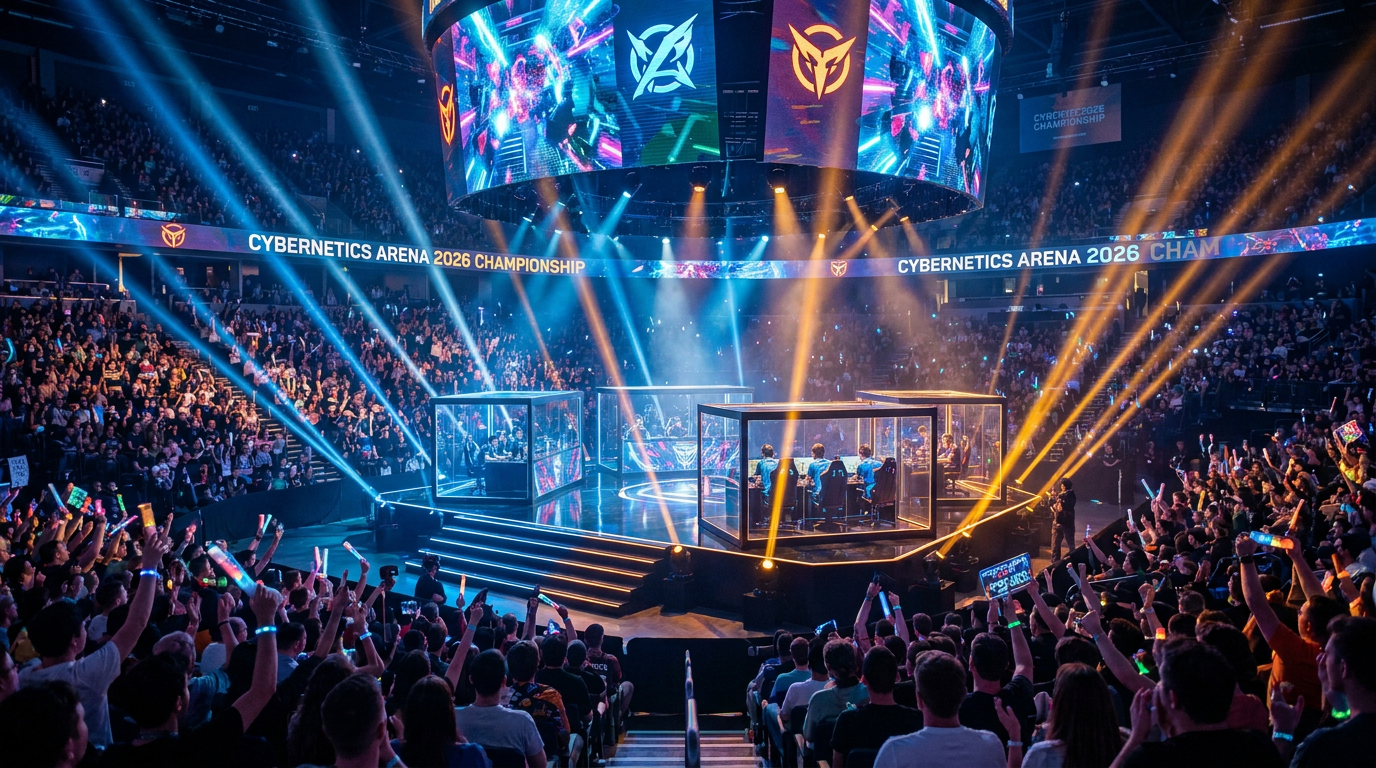
On the macro level, live events have returned with unprecedented scale and financial backing, proving that the appetite for stadium-filling spectacles remains ravenous. The 2026 Esports World Cup, hosted in Paris, serves as a prime example of this resurgence. The event's foundation secured a staggering $120 million in sponsorships, fueling a massive $290 million investment into the tournament's infrastructure. French authorities anticipate the event will generate roughly $700 million in indirect economic boosts, highlighting how major esports tournaments now rival traditional sporting events in their civic and economic impact.[3]

The global ecosystem is also diversifying its competitive formats to reduce reliance on publisher-owned franchise leagues. The rise of nation-based tournaments, such as the upcoming Esports Nations Cup scheduled for late 2026, is creating new structural anchors for the industry. By pitting national teams against one another across multiple game titles, these events are raising production benchmarks, expanding the global footprint of the sport, and tapping into deep-seated patriotic fandoms that transcend individual club loyalties.[1][7]
Ultimately, the global esports market has finally found its footing. Valued at over $1.8 billion in direct revenue and commanding an engaged audience of more than 500 million viewers worldwide, the industry has traded explosive, speculative growth for durable, resilient business models. The "esports winter" served as a necessary crucible, burning away the unsustainable practices of the past decade. What remains is a highly professionalized, data-driven entertainment powerhouse that is unequivocally built to last.[6]
How we got here
2023–2024
The 'Esports Winter' sees venture capital dry up, leading to mass layoffs and the collapse of over-leveraged organizations.
2025
Surviving teams pivot to diversified revenue models, prioritizing digital items, apparel, and proprietary media platforms.
Early 2026
Player compensation hits record highs, with average base salaries reaching $138,000 driven by revenue-sharing agreements.
Summer 2026
The Paris Esports World Cup secures $120 million in sponsorships, signaling the full return of blue-chip brand confidence.
Late 2026
The inaugural Esports Nations Cup launches, establishing a new nation-based competitive format independent of publisher leagues.
Viewpoints in depth
Esports Organizations' View
Teams must operate as diversified media-tech companies rather than fragile sports clubs.
Franchise owners argue that the "esports winter" was a necessary correction that forced the industry to abandon its reliance on speculative venture capital. By vertically integrating their operations—launching proprietary apps, streetwear lines, and mobile gaming divisions—organizations have insulated themselves against the volatility of publisher-run leagues. They view digital community ownership as the ultimate moat against future market downturns.
Brand Sponsors' View
Marketing investments require transparent, data-driven proof of return on investment.
Corporate sponsors and advertising agencies maintain that they never lost faith in the gaming audience, but rather lost patience with inflated vanity metrics. They now demand multi-modal tracking and real-time demographic analytics to justify their spending. For these brands, the maturation of esports means treating partnerships with the same rigorous financial scrutiny applied to traditional media buys, ensuring every dollar translates into measurable consumer engagement.
Professional Players' View
Athletes prioritize revenue sharing, career longevity, and structured health support.
For the competitors, the stabilization of the industry has brought unprecedented financial security through in-game cosmetic sales and revenue-sharing agreements. However, players and their associations are increasingly vocal about the physical and psychological toll of the profession. They advocate for mandatory ergonomic standards, mental health coaching, and structured off-seasons, arguing that sustainable profitability must include protecting the human capital that drives the broadcasts.
What we don't know
- Whether the new nation-based tournament formats will successfully capture the same audience loyalty as established club franchises.
- How mid-tier and grassroots organizations will survive in an ecosystem increasingly dominated by massive, vertically integrated media-tech teams.
- The long-term impact of publisher policy changes on the lucrative in-game cosmetic revenue sharing models.
Key terms
- Esports Winter
- A period of severe market correction in 2023 and 2024 characterized by reduced venture capital investment, layoffs, and the collapse of overvalued organizations.
- Revenue Sharing
- A financial model where game publishers distribute a percentage of the profits from in-game digital item sales directly to competing teams and players.
- In-Game Cosmetics
- Digital items, such as character skins or weapon designs, purchased by fans within a video game, often branded with a specific esports team's logo.
- Endemic Sponsors
- Brands that create products directly used in gaming, such as computer hardware or peripherals, as opposed to non-endemic brands like banks or car manufacturers.
- Vanity Metrics
- Surface-level data points, such as peak concurrent viewership, that look impressive but do not necessarily translate to active, monetizable consumer engagement.
Frequently asked
Did the esports bubble burst?
Yes, the speculative bubble burst during the 'esports winter' of 2023-2024, wiping out teams that relied solely on venture capital. However, the underlying audience continued to grow, allowing the industry to rebuild on more sustainable business models.
How do esports teams make money in 2026?
Modern teams operate as media-tech companies. They generate revenue through in-game digital item sales, proprietary apparel lines, content monetization, and highly targeted, data-driven brand sponsorships.
Are professional gamers making less money now?
No, player compensation has actually increased. The average base salary reached $138,000 in 2026, bolstered by lucrative revenue-sharing agreements that give players a cut of digital cosmetic sales.
Sources
Source coverage
7 outlets
4 viewpoints surfaced







[1]Esports ChartsTournament Operators
Esports Trends for 2026: Industry Figures Highlight What's Brewing
Read on Esports Charts →[2]Shikenso AnalyticsEsports Organizations
The Esports Winter is Over: What Spring Looks Like
Read on Shikenso Analytics →[3]Outlook IndiaBrand Sponsors
The Esports World Cup Foundation secures $120M in sponsorships
Read on Outlook India →[4]Frontiers in Sports and Active LivingProfessional Players
Editorial: Navigating sustainability: addressing esports winter challenges
Read on Frontiers in Sports and Active Living →[5]QuantumrunProfessional Players
Esports profitability model 2026
Read on Quantumrun →[6]MostPlaysEsports Organizations
The global esports industry in 2026
Read on MostPlays →[7]Sheep EsportsTournament Operators
South Korea eyes the inaugural Olympic Esports Games
Read on Sheep Esports →
More in gaming esports
See all 10 stories →Handheld PCs
Steam Deck OLED vs. ASUS ROG Ally X: The Definitive 2026 Handheld PC Comparison
7 sources
Gaming Accessibility
The Accessibility Revolution: How Hardware and Software Innovations Are Opening Gaming to Everyone
7 sources
Game Accessibility
How the Video Game Industry Standardized Accessibility for Millions of Players
8 sources

AI NPCs
The End of the Dialogue Tree: How Generative AI is Rewiring Video Game NPCs
9 sources
Every angle. Every day.
Get gaming esports stories with full source coverage and perspective breakdowns delivered to your inbox.