
The Evidence-Based Guide to Sleep Trackers: Do They Actually Work?
Consumer sleep trackers like the Oura Ring and Apple Watch excel at detecting when you fall asleep, but peer-reviewed validation studies reveal significant limitations in their ability to accurately classify sleep stages.
By Factlen Editorial Team
- Clinical Researchers
- Scientists evaluating device accuracy against medical gold standards.
- Consumer Tech Reviewers
- Journalists and analysts evaluating usability, price, and ecosystem integration.
- Evidence Synthesizers
- Editorial teams aggregating clinical data for consumer decision-making.
What's not represented
- · Individuals with severe insomnia
Why this matters
Millions of consumers spend hundreds of dollars on wearables to optimize their rest, but blindly trusting daily 'sleep scores' can lead to unnecessary anxiety. Understanding exactly which metrics are scientifically accurate—and which are just algorithmic estimates—empowers you to use these devices to genuinely improve your health.
Key points
- Consumer wearables demonstrate greater than 95% accuracy for detecting basic sleep versus wake states.
- Devices systematically overestimate total sleep time by misclassifying quiet wakefulness as light sleep.
- Sleep stage classification (light, deep, REM) remains the least accurate metric, as wearables cannot measure brain waves.
- Smart rings currently lead the consumer market in staging and heart rate variability accuracy due to superior arterial contact.
- FDA-cleared features like sleep apnea detection are turning wearables into valuable long-term health screening tools.
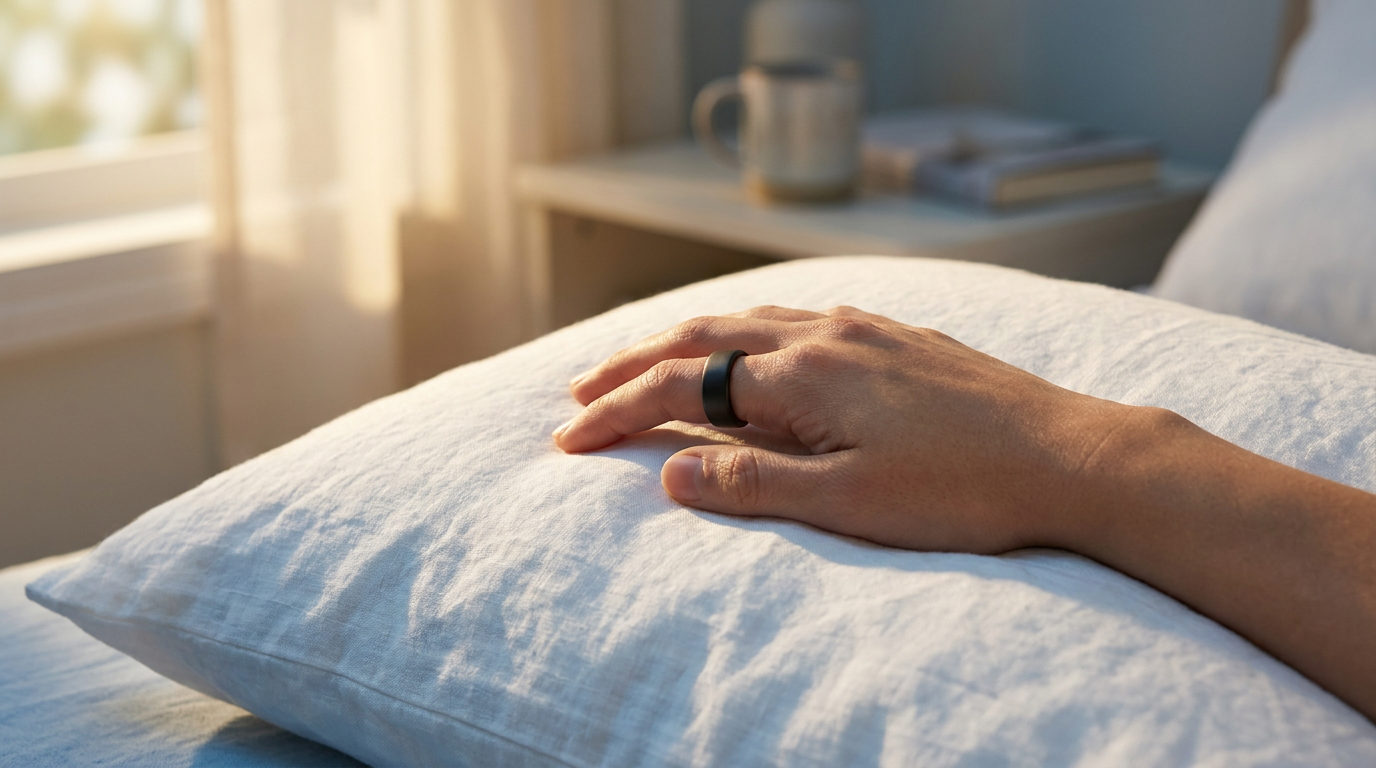
In 2026, the quest for perfect rest has evolved into a multi-billion dollar consumer technology industry. Millions of health-conscious individuals are strapping on sophisticated devices like the Oura Ring 4, the Apple Watch Series 11, and the Whoop 5.0 right before their heads hit the pillow, all in the hopes of decoding their nightly physiological recovery. The marketing surrounding these premium wearables is incredibly compelling, often promising clinical-grade insights into the exact minutes spent in light, deep, and rapid eye movement (REM) sleep cycles. For many, checking their morning "sleep score" has become as routine as brewing a cup of coffee.[4][5]
However, an evidence-based review of recent polysomnography validation studies reveals a significant and necessary distinction between consumer marketing claims and scientific reality. While the hardware inside these devices has undoubtedly improved over the last five years, the algorithms interpreting that data still face fundamental biological limitations. By synthesizing the latest peer-reviewed clinical data alongside hands-on consumer testing, we can separate the genuinely actionable health metrics from the educated algorithmic guesses, empowering users to make better decisions about their sleep hygiene without falling victim to data-induced anxiety.[6]
To understand the limitations of consumer wearables, it is essential to understand how sleep is measured in a clinical setting. The absolute medical gold standard for sleep measurement is polysomnography (PSG), an intensive in-lab study that utilizes electroencephalography (EEG) to directly monitor the electrical activity of the brain. Consumer trackers, by stark contrast, do not measure brain waves at all. Instead, they must estimate your sleep stages using a combination of photoplethysmography (PPG)—which uses optical sensors to track heart rate and blood oxygen—and sophisticated accelerometers that monitor your micro-movements throughout the night.[1]
When it comes to the fundamental task of basic sleep versus wake detection, the scientific evidence supporting modern wearables is exceptionally strong. A comprehensive 2024 multicenter validation study published in the journal JMIR mHealth and uHealth rigorously evaluated 11 different consumer trackers against clinical polysomnography. The researchers collected thousands of hours of sleep data across dozens of participants to determine exactly where the consumer algorithms succeeded and where they fell short compared to the medical baseline.[1]
The results of that extensive study found that modern consumer devices consistently demonstrate greater than 95 percent sensitivity for detecting actual sleep states. If a user simply wants to track what time they finally drifted off and exactly when they woke up in the morning, today's premium wearables are highly reliable and scientifically validated tools. For establishing a consistent sleep schedule and ensuring you are allocating enough total time in bed, the data provided by these devices is more than sufficient for the average consumer.[1]

Despite this high sensitivity for detecting sleep, a major 2025 meta-analysis published in the Journal of Clinical Sleep Medicine highlighted a consistent and frustrating flaw across the industry: wearables systematically overestimate total sleep time. The meta-analysis, which aggregated data from 24 independent studies encompassing nearly 800 patients, found that the algorithms heavily favor classifying stillness as sleep, leading to skewed duration metrics for certain types of users.[2]
The core issue lies in the devices' specificity for detecting wakefulness, which the meta-analysis found frequently falls below 60 percent. Because consumer trackers rely so heavily on movement data from their accelerometers, they regularly misclassify periods of "quiet wakefulness"—such as lying completely still in bed while trying to fall asleep, or resting motionless after waking up in the middle of the night—as periods of light sleep. The device simply cannot tell the difference between a still, awake body and a sleeping one.[2]
The core issue lies in the devices' specificity for detecting wakefulness, which the meta-analysis found frequently falls below 60 percent.
Consequently, consumer trackers typically overestimate total sleep duration by a margin of 2 to 10 percent on any given night. While this might seem like a minor discrepancy for a healthy sleeper, it presents a significant problem for individuals suffering from insomnia. Insomniacs often spend extended, frustrating periods in bed awake but entirely motionless. For these users, the wearable's error margin increases significantly, often resulting in a morning sleep score that falsely congratulates them for a full night of rest they never actually experienced.[2]
The most heavily marketed and fiercely contested feature of modern consumer wearables is undoubtedly sleep stage classification. Users frequently obsess over their nightly breakdown of "deep sleep" and "REM" cycles, using these specific numbers to dictate their training intensity or daily schedule. Yet, across the board, clinical validation data consistently demonstrates that these specific staging metrics are the least accurate data points these devices produce.[6]
According to rigorous validation research published in the journal Sensors, four-stage sleep classification—distinguishing between wake, light, deep, and REM sleep—achieves only moderate agreement when compared directly to clinical polysomnography. Because consumer wearables cannot read the brain waves that actually define these distinct neurological states, they are forced to rely on secondary physiological proxies like heart rate variability and respiration rate. As a result, they frequently struggle to definitively distinguish between light sleep and the restorative deep sleep stages.[3]
Among the crowded field of consumer devices, smart rings currently lead the market in staging accuracy. The Oura Ring Gen 3 and the newly released Gen 4 have demonstrated between 76 and 79.5 percent sensitivity for sleep stage discrimination in independent clinical testing. While still falling short of a medical diagnosis, this level of accuracy consistently outperforms most wrist-worn alternatives, making rings the preferred choice for data-driven biohackers and professional athletes.[3][5]

Wrist-worn devices, including popular models from Apple and Fitbit, generally show lower and more variable sensitivity for sleep staging. Depending on the specific device and the exact sleep stage being measured, accuracy ranges broadly from 50 to 86 percent. While these smartwatches offer incredible daytime utility and fitness tracking, their overnight staging data should be viewed as a broad estimate rather than a clinical certainty.[3]
The Wall Street Journal's comprehensive 2026 wearable showdown noted that the physical form factor of the device plays a crucial role in the quality of the data it collects. Finger-based sensors inherently benefit from a much closer proximity to arterial blood flow compared to sensors sitting on top of the wrist. Furthermore, rings are less prone to shifting out of place during the night, ensuring a more consistent optical connection with the skin.[4]
This superior arterial proximity allows smart rings to capture highly accurate nocturnal heart rate variability (HRV) measurements. HRV—the microscopic variation in time between consecutive heartbeats—is a scientifically validated proxy for autonomic nervous system recovery. Because wearables measure HRV with near-clinical accuracy, it remains one of the most actionable and reliable metrics a consumer device can provide for assessing daily readiness and physical strain.[3][5]
Despite their inherent limitations in precise sleep staging, consumer wearables are making massive, undeniable strides in the realm of clinical health screening. The Apple Watch Series 11, for instance, recently gained highly anticipated FDA clearance for its sleep apnea detection feature. By utilizing its advanced accelerometer to monitor breathing disturbances and wrist movements over a 30-day period, the watch can successfully identify the physiological signatures of moderate to severe sleep apnea.[4][5]

Clinical sleep specialists are quick to emphasize that while no consumer device can officially diagnose a sleep disorder, these passive, long-term screening tools are incredibly valuable. They serve as an early warning system, flagging long-term physiological changes and breathing disturbances that a user might otherwise ignore, ultimately prompting them to seek a formal medical evaluation and a proper in-lab sleep study.[2][6]
Ultimately, the most scientifically valid and psychologically healthy way to use a consumer sleep tracker is to focus entirely on personal baselines. Rather than fixating on the absolute accuracy of a single night's sleep score or stressing over a perceived lack of deep sleep, users should monitor their longitudinal trends. By observing how specific lifestyle changes—like late meals, alcohol consumption, or increased training loads—impact their baseline metrics over weeks and months, consumers can use these devices to make genuinely empowering health decisions.[6]
How we got here
2015–2018
Early wrist-worn trackers rely solely on basic accelerometers (actigraphy), offering very limited and often inaccurate sleep duration data.
2020–2022
The integration of advanced photoplethysmography (PPG) sensors allows consumer devices to track heart rate and begin estimating distinct sleep stages.
2024
Major multicenter validation studies confirm that premium consumer wearables have finally achieved greater than 95 percent accuracy for basic sleep and wake detection.
2025–2026
The FDA clears advanced sleep apnea detection features for major consumer smartwatches, officially bridging the gap between basic fitness tracking and medical screening.
Viewpoints in depth
Clinical Researchers
Scientists evaluating device accuracy against medical gold standards.
Clinical researchers and sleep specialists emphasize that while wearables are excellent for general wellness tracking, they cannot replace the diagnostic accuracy of an in-lab polysomnography (PSG) study. Because consumer devices do not measure brain waves (EEG), their ability to accurately classify REM and deep sleep remains an algorithmic estimation based on heart rate and movement. Specialists increasingly warn about 'orthosomnia'—a condition where patients develop severe anxiety over their wearable's sleep scores, which ironically degrades their actual sleep quality. They advocate for using these devices strictly as broad behavioral guides rather than diagnostic tools.
Consumer Tech Reviewers
Journalists and analysts evaluating usability, price, and ecosystem integration.
For consumer technology reviewers, a device's clinical perfection is often secondary to its usability, battery life, and software ecosystem. Reviewers highlight that the 'best' tracker is simply the one a user is willing to wear consistently. They praise devices like the Apple Watch for seamlessly integrating sleep data into a broader daytime productivity and fitness ecosystem, while lauding the Oura Ring for its unobtrusive form factor and multi-day battery life. From this perspective, the value of a sleep tracker lies in its ability to present complex data in an intuitive, user-friendly app that motivates positive lifestyle changes.
Evidence Synthesizers
Editorial teams aggregating clinical data for consumer decision-making.
Evidence synthesis teams focus on bridging the gap between dense academic validation studies and everyday consumer purchasing decisions. They argue that while tech companies often overstate their devices' capabilities in marketing materials, the underlying hardware has genuinely crossed a threshold of utility. By aggregating data across multiple peer-reviewed studies, synthesizers point out that metrics like nocturnal Heart Rate Variability (HRV) and basic sleep duration are now tracked with near-clinical reliability. Their primary advice to consumers is to ignore the proprietary 'sleep scores' and instead focus on the raw physiological trends over a period of months.
What we don't know
- Whether future consumer devices will ever be able to accurately measure brain waves (EEG) without requiring uncomfortable headgear.
- How the long-term psychological impact of daily sleep tracking affects overall population health and anxiety levels.
Key terms
- Polysomnography (PSG)
- The clinical gold standard for sleep testing, conducted in a medical lab using sensors that directly monitor brain waves, blood oxygen, heart rate, and breathing.
- Photoplethysmography (PPG)
- An optical measurement technique used by wearables, utilizing green or red LEDs to detect blood volume changes in the tissue to calculate heart rate.
- Heart Rate Variability (HRV)
- The microscopic variation in time between consecutive heartbeats, used as a highly reliable indicator of nervous system recovery and physical readiness.
- Orthosomnia
- An unhealthy obsession with achieving perfect sleep metrics, often exacerbated by the daily use of consumer sleep trackers, which can ironically cause insomnia.
Frequently asked
Can a consumer sleep tracker diagnose sleep apnea?
No consumer device can officially diagnose sleep apnea. However, devices like the Apple Watch Series 11 have FDA clearance to detect breathing disturbances associated with moderate to severe sleep apnea and can recommend a formal medical evaluation.
Why does my tracker say I was asleep when I was awake in bed?
Wearables rely heavily on movement data from accelerometers. If you are lying completely still (known as quiet wakefulness), the device often misclassifies this lack of movement as light sleep, leading to an overestimation of your total sleep time.
Is a smart ring or a smartwatch better for tracking sleep?
Validation studies suggest smart rings have a slight edge in sleep staging and HRV accuracy due to better arterial contact on the finger. Rings are also generally considered more comfortable for overnight wear and have longer battery life.
Sources
Source coverage
6 outlets
3 viewpoints surfaced






[1]JMIR mHealth and uHealthClinical Researchers
Accuracy of 11 Consumer Sleep Trackers Versus Polysomnography
Read on JMIR mHealth and uHealth →[2]Journal of Clinical Sleep MedicineClinical Researchers
Meta-Analysis of Consumer Wearables for Sleep Tracking
Read on Journal of Clinical Sleep Medicine →[3]SensorsClinical Researchers
Validation of Consumer Wearables Against Polysomnography
Read on Sensors →[4]The Wall Street JournalConsumer Tech Reviewers
Apple Watch Series 11 vs. Oura Ring 5: Health Tracker Showdown
Read on The Wall Street Journal →[5]Sleep FoundationConsumer Tech Reviewers
The Best Sleep Trackers of 2026
Read on Sleep Foundation →[6]Factlen Editorial TeamEvidence Synthesizers
Synthesis by Factlen editorial team
Read on Factlen Editorial Team →

More in shopping
See all 84 stories →Retail Strategy
Amazon, Walmart, and Target Announce Competing Summer Deal Events for Late June
8 sources

Sustainable Fabrics
Decoding Sustainable Fabrics: The Real Trade-Offs Behind Tencel, Recycled Polyester, and Organic Cotton
7 sources
Display Tech
The 2026 Guide to Premium Television Displays: OLED and Mini-LED Trade-Offs
8 sources

Premium TVs
OLED vs. Mini-LED in 2026: Which Premium TV Technology Wins?
7 sources
Every angle. Every day.
Get shopping stories with full source coverage and perspective breakdowns delivered to your inbox.