
SpaceX Completes Record $75 Billion IPO Ahead of Nasdaq Debut
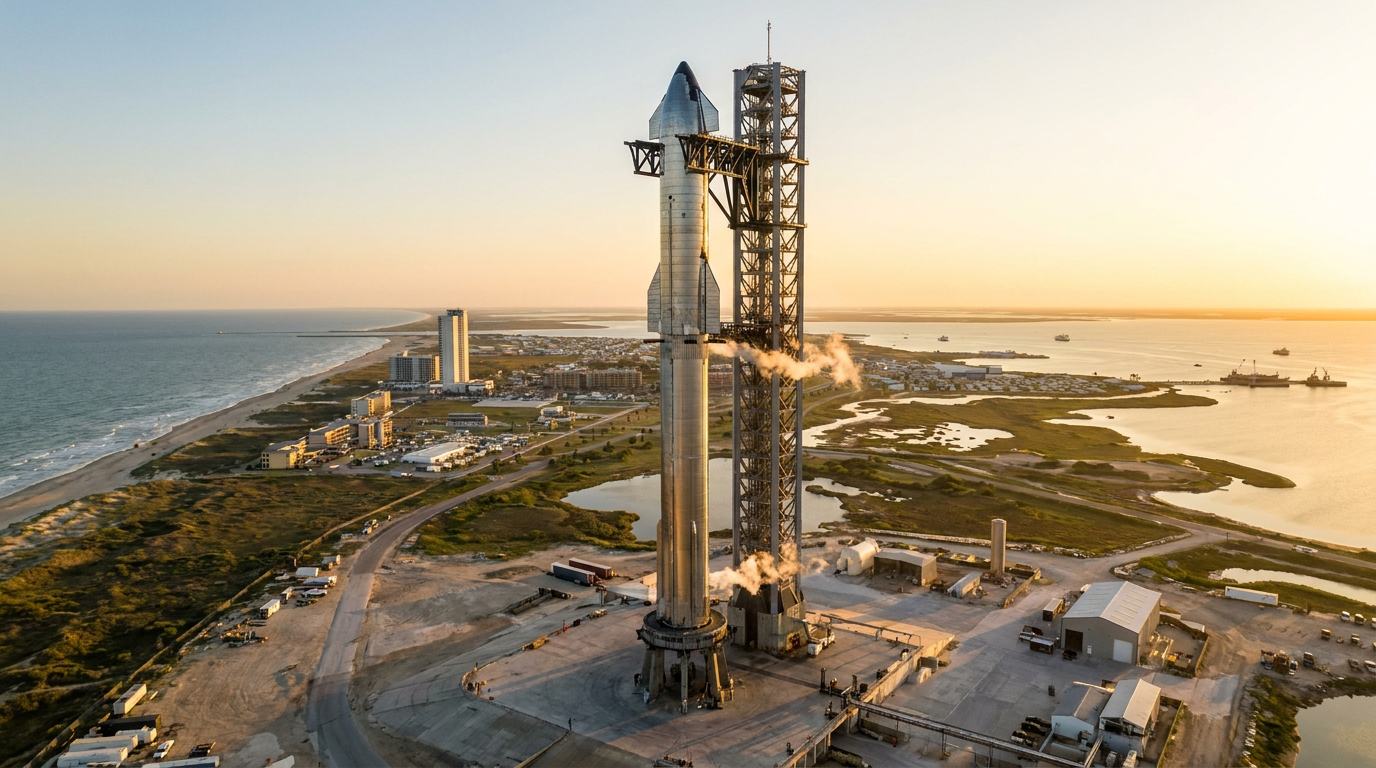
SpaceX has raised $75 billion in the largest initial public offering in history, setting the stage for a highly anticipated trading debut that could propel founder Elon Musk to trillionaire status.
By Factlen Editorial Team
- Bullish Investors
- View the IPO as a generational opportunity to invest in a monopoly-like space infrastructure company with massive recurring revenues.
- Cautious Analysts
- Warn that the unprecedented valuation prices in the flawless execution of highly speculative engineering feats.
- Space Economy Optimists
- See the listing as a catalyst that will legitimize and fund the broader commercial space sector by providing a clear exit benchmark.
What's not represented
- · Legacy Aerospace Competitors
- · Astronomers affected by Starlink expansion
Why this matters
This historic public offering not only provides everyday investors their first chance to own a piece of the world's dominant space company, but it also injects massive capital into SpaceX's ambitious goals of colonizing Mars and expanding global satellite internet. The sheer scale of the listing effectively legitimizes the commercial space sector as a foundational pillar of the modern economy.
Key points
- SpaceX has raised $75 billion in the largest initial public offering in history.
- Shares will be dually listed on the Nasdaq and the newly established Nasdaq Texas exchange.
- Shadow-market trading indicates the stock could surge by up to 35% on its opening day.
- The massive valuation is expected to push founder Elon Musk's net worth toward trillionaire status.
- Analysts warn the company must successfully execute its Mars and Starlink ambitions to maintain the premium.
- The IPO marks the first time retail investors can directly buy equity in the space exploration giant.
SpaceX has officially executed the largest initial public offering in global financial history, raising a staggering $75 billion from public markets. The highly anticipated pricing shatters previous records set by state-owned energy giants and massive tech conglomerates, cementing the aerospace manufacturer's position as a dominant force in the modern economy. The massive capital injection marks a profound shift for the company, transitioning it from a closely guarded private enterprise into a publicly traded behemoth subject to the scrutiny and demands of everyday shareholders.[1][4]
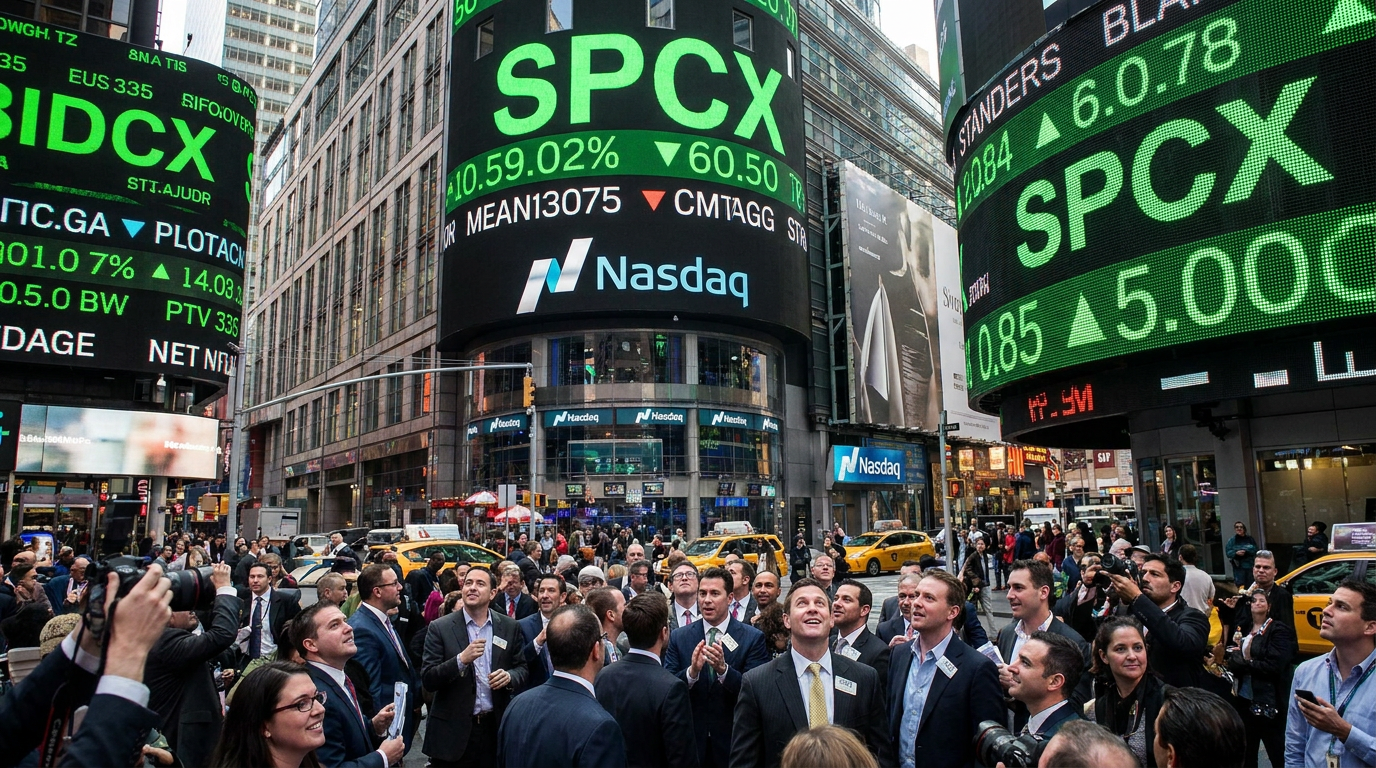
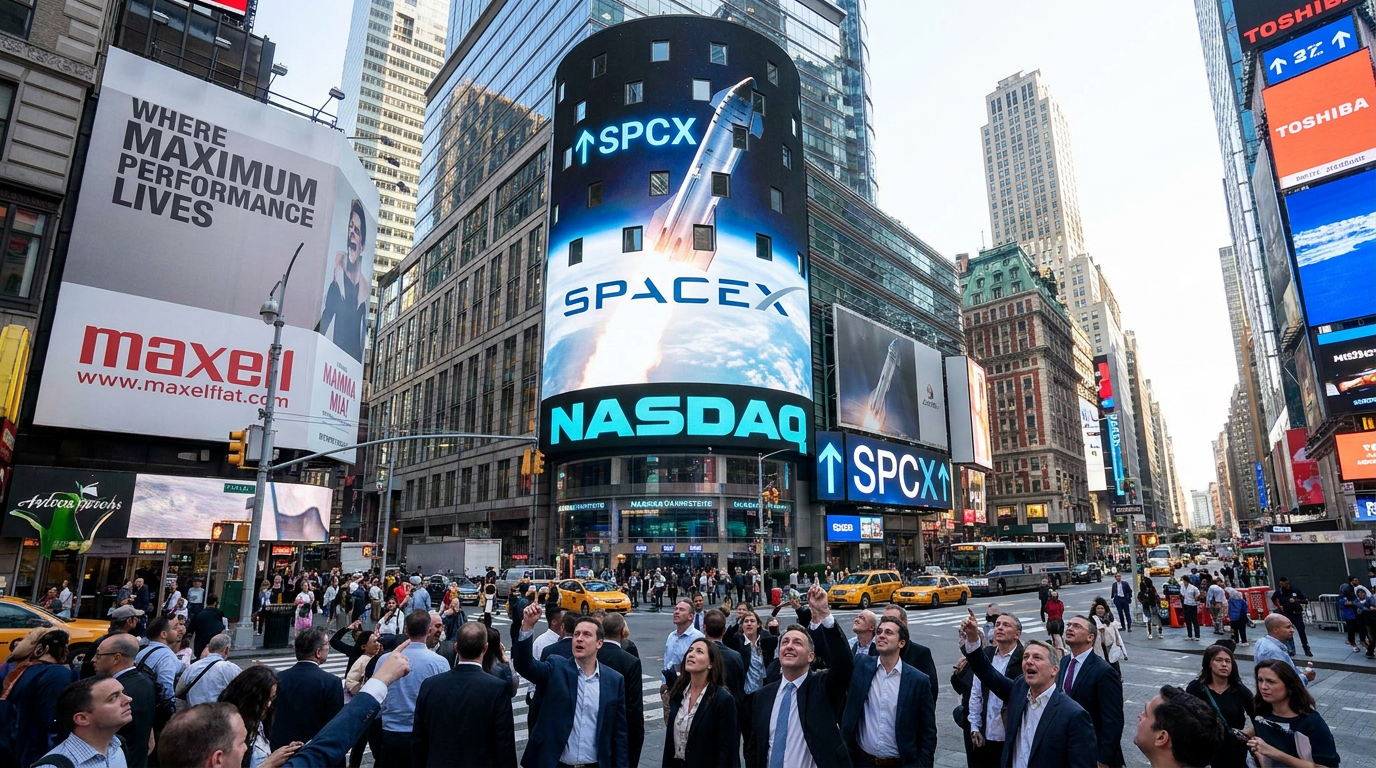
Shares of the space exploration giant are slated to begin trading on Friday in a unique dual-listing arrangement. The stock will debut simultaneously on the traditional Nasdaq exchange in New York and the newly established Nasdaq Texas exchange, a nod to the company's massive operational footprint in the Lone Star State. This dual approach not only highlights the growing financial infrastructure outside of Wall Street but also serves as a symbolic victory for Texas, which has heavily courted the company's manufacturing and launch facilities over the past decade.[1][6]

Investor appetite for the offering has been overwhelmingly voracious. Shadow-market trading—unofficial transactions that occur before the stock officially hits the public ticker—suggests that shares could experience a massive 35% surge the moment the opening bell rings. Institutional investors, sovereign wealth funds, and retail traders alike have scrambled for allocations, driven by the rare opportunity to buy into a company that effectively holds a near-monopoly on commercial space launch and operates the world's largest satellite internet constellation. If the pre-market enthusiasm holds, the debut could trigger one of the most volatile and heavily traded opening sessions in modern market history.[3][5]
The sheer scale of this valuation is poised to rewrite the global wealth rankings, pushing founder and CEO Elon Musk's net worth into entirely unprecedented territory. Financial analysts project that a successful opening day pop will place Musk on the verge of becoming the world's first trillionaire. This milestone reflects not just the success of SpaceX, but the compounding value of his interconnected ventures, though it is the space company's astronomical public pricing that serves as the final catalyst for this historic accumulation of wealth.[1]
The sheer scale of this valuation is poised to rewrite the global wealth rankings, pushing founder and CEO Elon Musk's net worth into entirely unprecedented territory.
However, maintaining this sky-high valuation will require flawless execution on some of the most difficult engineering challenges in human history. Former Tesla board members and prominent tech analysts have cautioned that SpaceX must successfully deliver on at least two of its three primary 'moonshots' to justify the premium. These long-term objectives include establishing a permanent human presence on Mars, achieving ubiquitous and highly profitable global broadband coverage with Starlink, and perfecting the fully reusable Starship megarocket for daily orbital flights.[2][5]

The $75 billion raised in the offering provides the exact war chest needed to fund these capital-intensive ambitions. Developing the infrastructure for interplanetary travel and manufacturing thousands of next-generation satellites requires a burn rate that even the most well-funded private companies struggle to sustain. By tapping into public markets, SpaceX has secured a financial runway that effectively insulates its core research and development programs from short-term macroeconomic headwinds, ensuring that work on the Starship platform can proceed without the constant need for private fundraising rounds.[4][7]
Beyond the immediate financial windfall for the company, tech analysts view the IPO as a watershed moment for the broader aerospace sector. For years, the commercial space industry has operated in the shadow of SpaceX's dominance, with smaller startups struggling to prove that space infrastructure can yield venture-scale returns. The successful public debut of the industry's apex player provides a clear, highly lucrative exit benchmark, potentially unlocking a new wave of funding for next-generation satellite manufacturers, orbital logistics firms, and zero-gravity research labs.[7]

Perhaps the most significant shift is the democratization of access to the space economy. For over two decades, SpaceX equity was locked away in private funding rounds, accessible only to elite institutional investors, venture capitalists, and early employees. Friday's debut finally opens the doors to retail investors, allowing the general public to directly participate in the commercialization of orbit. As the company prepares to ring the opening bell, the financial world is watching to see if the reality of public trading can match the lofty ambitions of humanity's push into the cosmos.[5][6]
How we got here
2002
Elon Musk founds Space Exploration Technologies Corp. with the ultimate goal of reducing space transportation costs.
2008
SpaceX becomes the first private company to successfully launch a liquid-fueled rocket into orbit.
2020
The company successfully launches humans to the International Space Station, restoring US crewed flight capabilities.
Early 2026
Rumors of an imminent IPO accelerate as the Starlink satellite network achieves massive global profitability.
June 12, 2026
SpaceX officially prices its record-breaking $75 billion IPO ahead of its highly anticipated Nasdaq debut.
Viewpoints in depth
Bullish Investors
Emphasize SpaceX's near-monopoly on global launch capabilities and the recurring revenue engine of Starlink.
Proponents of the massive valuation argue that SpaceX is no longer just a rocket manufacturer, but a foundational infrastructure company for the 21st century. They point to the company's insurmountable lead over legacy aerospace competitors and the highly lucrative, recurring revenue generated by the Starlink network. For these investors, the $75 billion raise is entirely justified by the company's ability to dictate the future economics of global telecommunications and orbital logistics.
Cautious Analysts
Point out that the valuation assumes the successful completion of highly speculative projects.
More skeptical financial analysts warn that the market is pricing in the flawless execution of unprecedented engineering feats. They note that while Starlink is profitable, the broader valuation relies heavily on the success of the Starship program and the eventual colonization of Mars—endeavors fraught with immense technical and regulatory risks. These analysts caution that any major setbacks or catastrophic failures in the testing phase could severely impact the stock price, leaving early retail investors vulnerable.
Space Economy Optimists
Focus on the macroeconomic impact, predicting that SpaceX's public debut will accelerate venture capital investment in space.
Industry insiders and tech analysts view the IPO through the lens of the broader commercial space ecosystem. They argue that SpaceX's transition to a publicly traded giant creates a 'halo effect' that will legitimize space as a standard investment category. By providing a clear example of a highly successful exit, they believe the IPO will drive billions of dollars in fresh venture capital toward smaller startups focused on asteroid mining, zero-gravity manufacturing, and orbital debris removal.
What we don't know
- Exactly how the $75 billion in new capital will be allocated across Starlink, Starship, and deep-space exploration initiatives.
- How the stock will perform in its first few weeks of trading once the initial retail frenzy and shadow-market enthusiasm subside.
Key terms
- Initial Public Offering (IPO)
- The process by which a private company offers shares of its stock to the public for the first time, allowing anyone to invest.
- Shadow-market trading
- Unofficial, pre-market trading of shares before they officially list on a public exchange, often used by analysts to gauge investor demand.
- Starlink
- SpaceX's satellite internet constellation designed to provide high-speed broadband coverage across the entire globe.
Frequently asked
Where will SpaceX shares be traded?
The shares will be listed dually on the traditional Nasdaq exchange in New York and the newly formed Nasdaq Texas exchange.
How much money did SpaceX raise?
The company raised $75 billion, making it the largest initial public offering in global financial history.
Can everyday people buy the stock?
Yes, once trading begins on Friday, retail investors will be able to purchase shares through standard brokerage accounts for the first time.
Sources
Source coverage
7 outlets
3 viewpoints surfaced






[1]BloombergBullish Investors
Musk On Verge of Trillionaire Status With SpaceX IPO
Read on Bloomberg →[2]CNBCCautious Analysts
Former Tesla board member says SpaceX needs to achieve 2 of its 3 moonshots to keep its valuation
Read on CNBC →SpaceX Poised to Pop After Record IPO
Read on Bloomberg →[4]ReutersBullish Investors
SpaceX Prices Historic $75 Billion IPO, Shattering Global Records
Read on Reuters →[5]Wall Street JournalCautious Analysts
SpaceX's Public Debut Tests Market Appetite for Deep Tech
Read on Wall Street Journal →[6]Financial TimesSpace Economy Optimists
Nasdaq Texas Secures Crown Jewel with SpaceX Listing
Read on Financial Times →[7]TechCrunchSpace Economy Optimists
The Space Economy Enters a New Era as SpaceX Goes Public
Read on TechCrunch →
More in business
See all 49 stories →SpaceX IPO
SpaceX Begins Trading After Record-Shattering $75 Billion IPO
8 sources
Skills-First Hiring
The Collapse of the 'Paper Ceiling': How Skills-First Hiring is Rewiring the Corporate Ladder
6 sources

SpaceX Listing
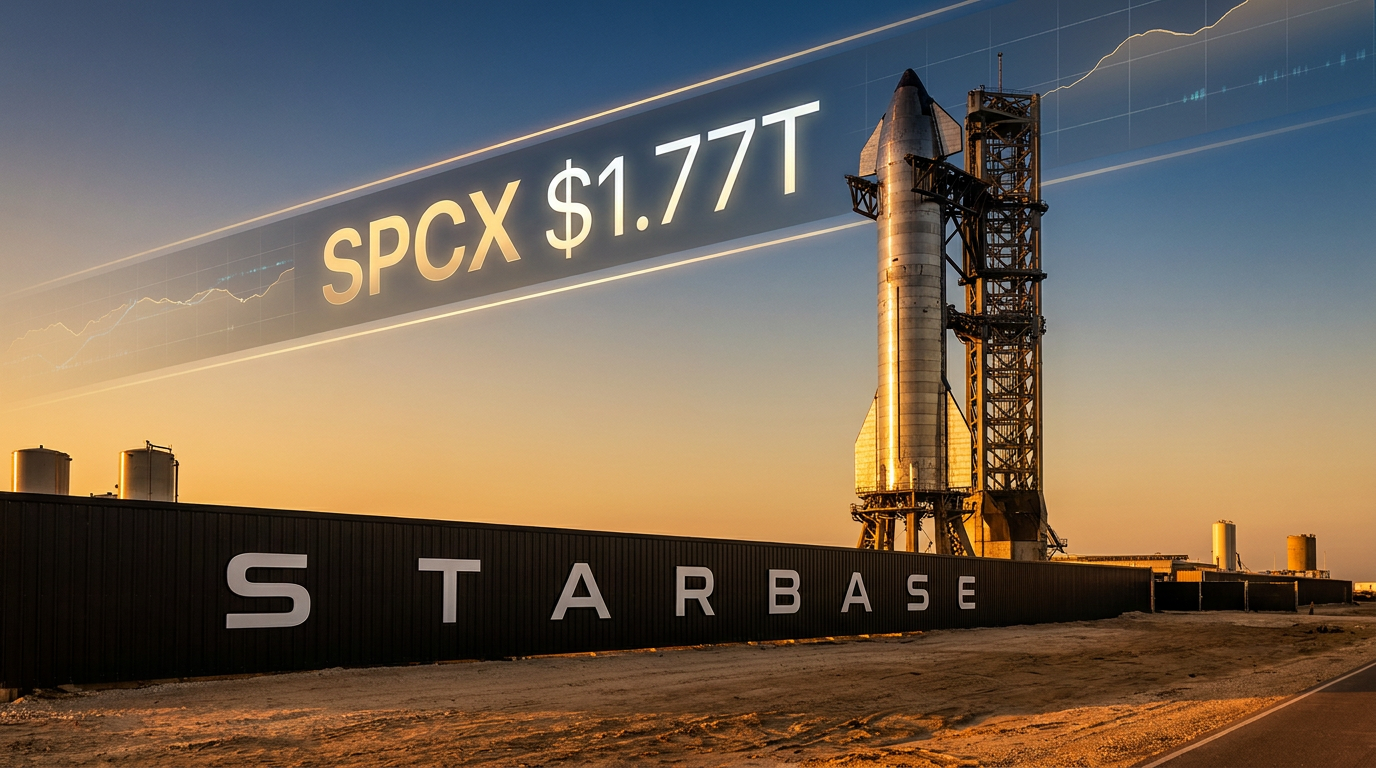
SpaceX Prices Record $1.77 Trillion IPO, Becoming Largest Public Offering in History
7 sources
Strait of Hormuz
Risk the Strait or Wait: The Costly Dilemma Trapping 500 Ships in the Persian Gulf
7 sources

Every angle. Every day.
Get business stories with full source coverage and perspective breakdowns delivered to your inbox.