
Trump Cancels Strikes as U.S. and Iran Weigh Draft Peace Framework
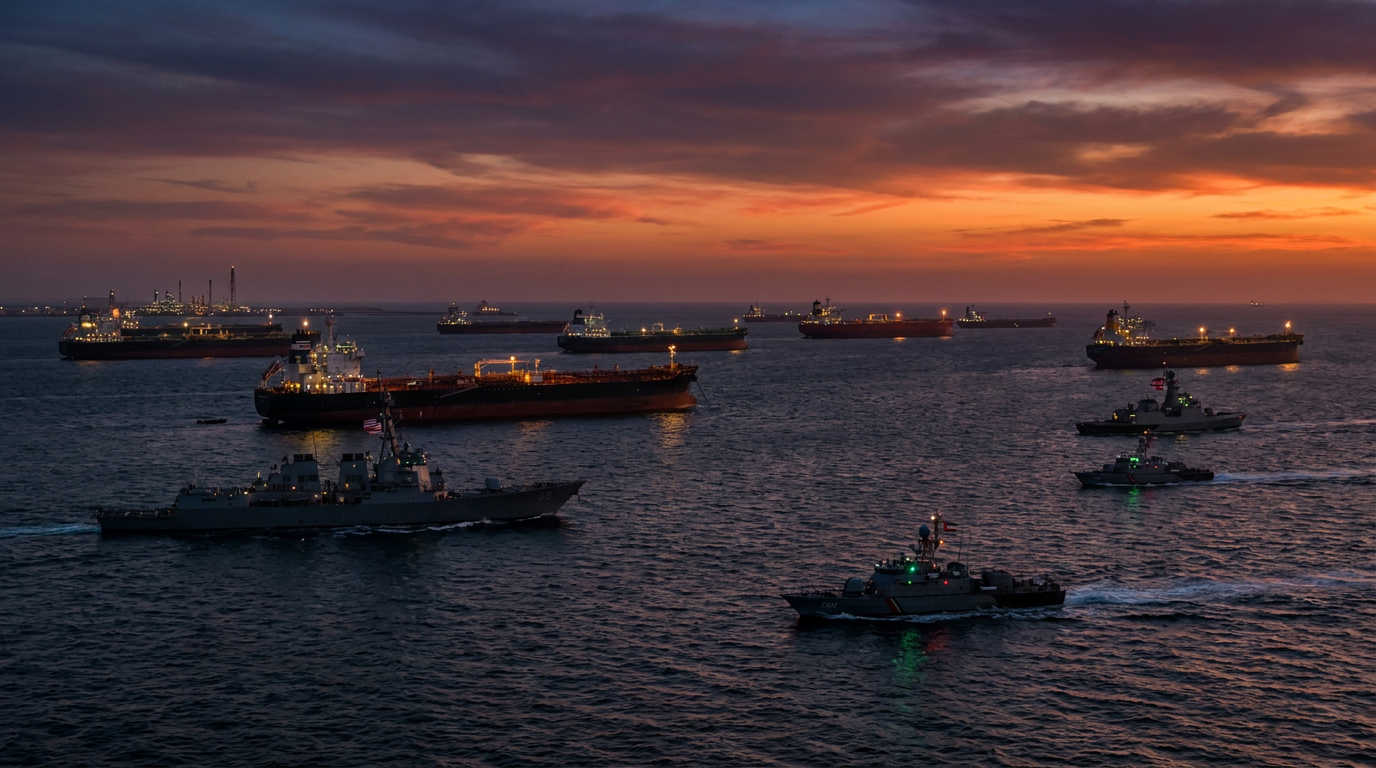
President Trump called off scheduled military strikes against Iran, announcing that a conceptual memorandum of understanding could soon reopen the Strait of Hormuz and pause the three-month conflict.
By Factlen Editorial Team
- U.S. Administration
- Argues that maximum military pressure and naval blockades successfully forced Iran to the negotiating table to accept nuclear concessions.
- Iranian Leadership
- Maintains that no final agreement is reached and insists that sanctions relief and territorial sovereignty are non-negotiable red lines.
- Global Markets
- Views the potential reopening of the Strait of Hormuz as a massive relief for global supply chains, pricing in an immediate drop in energy costs.
- Regional Security Allies
- Cautiously supports de-escalation but demands verifiable, physical dismantling of Iran's nuclear and missile infrastructure to ensure long-term safety.
What's not represented
- · Iranian civilians bearing the brunt of the economic blockade
- · European energy importers reliant on Gulf oil
Why this matters
A finalized peace deal would immediately reopen the Strait of Hormuz, drastically lowering global energy costs and easing the stagflation pressures that have squeezed consumers and forced central banks to raise interest rates worldwide.
Key points
- U.S. President Donald Trump canceled scheduled military strikes against Iran, announcing a conceptual peace agreement is close to being signed.
- The proposed memorandum of understanding would extend the current ceasefire by 60 days and immediately reopen the Strait of Hormuz to commercial shipping.
- In exchange for lifting the U.S. naval blockade, Iran would reportedly receive $24 billion in frozen assets and temporary oil sales waivers.
- The framework includes a 15-to-20-year lockout on Iranian uranium enrichment, though technical verification details remain unresolved.
- Iran's Foreign Ministry denied that a final agreement has been reached, emphasizing that the country will not compromise on its red lines.
- Global oil prices plummeted 5% on the news, with Brent crude dropping below $86 a barrel as markets priced in the de-escalation.
After three months of escalating warfare that rattled global energy markets and reshaped Middle Eastern geopolitics, the United States and Iran appear to be on the precipice of a diplomatic breakthrough, though the exact finality of the agreement remains heavily contested. On Thursday evening, U.S. President Donald Trump abruptly canceled a wave of scheduled military strikes against Iranian targets, announcing that a comprehensive peace settlement had been conceptually approved by the highest levels of leadership in Tehran. The sudden pivot effectively paused a conflict that began in late February with joint U.S.-Israeli bombardments, replacing the immediate threat of cruise missiles with the prospect of a formalized memorandum of understanding. Trump declared that the time and place for a signing ceremony would be announced shortly, potentially taking place in Europe over the coming weekend.[2][4][5]
The announcement represented a jarring reversal in tone from the White House, coming just hours after the president publicly threatened to escalate the conflict to unprecedented levels. Earlier in the day, Trump had vowed to hit Iran "very hard" and suggested the U.S. military might seize Kharg Island, Iran's most critical oil export terminal, to assume total control of the nation's energy markets. The whiplash from threatening the total annexation of sovereign oil infrastructure to declaring a historic peace settlement underscores the volatile nature of the current diplomatic back-channeling. U.S. officials indicated that the sudden cancellation of the bombing run was a direct result of last-minute assurances transmitted through regional mediators, which convinced Washington that Tehran was finally ready to formalize concessions.[1][4][5]
The core of the American claim is that intense military pressure and a crippling naval blockade have forced Tehran to accept a framework that permanently curtails its nuclear ambitions. According to the White House, the pending agreement ensures that Iran will never acquire a nuclear weapon, a demand that has anchored U.S. foreign policy in the region for decades. Trump stated that the broad contours of the deal have been reviewed and supported by a coalition of regional allies, including Saudi Arabia, the United Arab Emirates, and Bahrain. However, the administration acknowledged that the current document is a "conceptual" memorandum of understanding rather than a finalized, binding treaty, designed primarily to halt the immediate violence and establish a runway for deeper, highly technical negotiations.[3][4][5]
In Tehran, the official response has been a calibrated mix of cautious confirmation and outright denial, reflecting the intense domestic political pressure facing the Iranian leadership. Iran’s Foreign Ministry quickly pushed back against the narrative of an imminent, finalized surrender, with spokesperson Esmaeil Baghaei stating that while large portions of a draft text have been reviewed, the government has "not reached a final conclusion." Iranian officials insist that the country will not compromise on its established red lines, which include the total lifting of international sanctions and the maintenance of sovereignty over its territorial waters. Hardline factions within the Islamic Revolutionary Guard Corps have publicly dismissed the U.S. claims as exaggerated, framing the negotiations as a tactical pause rather than a strategic capitulation.[1][3][8]

Despite the diplomatic friction and public denials, the fact that Iranian state media outlets have begun circulating specific terms of the deal suggests that substantive, high-level negotiations are indeed underway. The semi-official Mehr News Agency and the state-run IRNA both published details of a 14-point draft agreement, indicating that the Iranian public is being prepared for a potential diplomatic shift. The leaked drafts align closely with the frameworks described by U.S. diplomatic sources, pointing to a phased approach where immediate military de-escalation is traded for localized economic relief, while the intractable ideological disputes are deferred to a later date. This synchronized leaking from both Washington and Tehran implies that while the ink is not yet dry, the architectural foundation of a truce has been laid.[3][8]
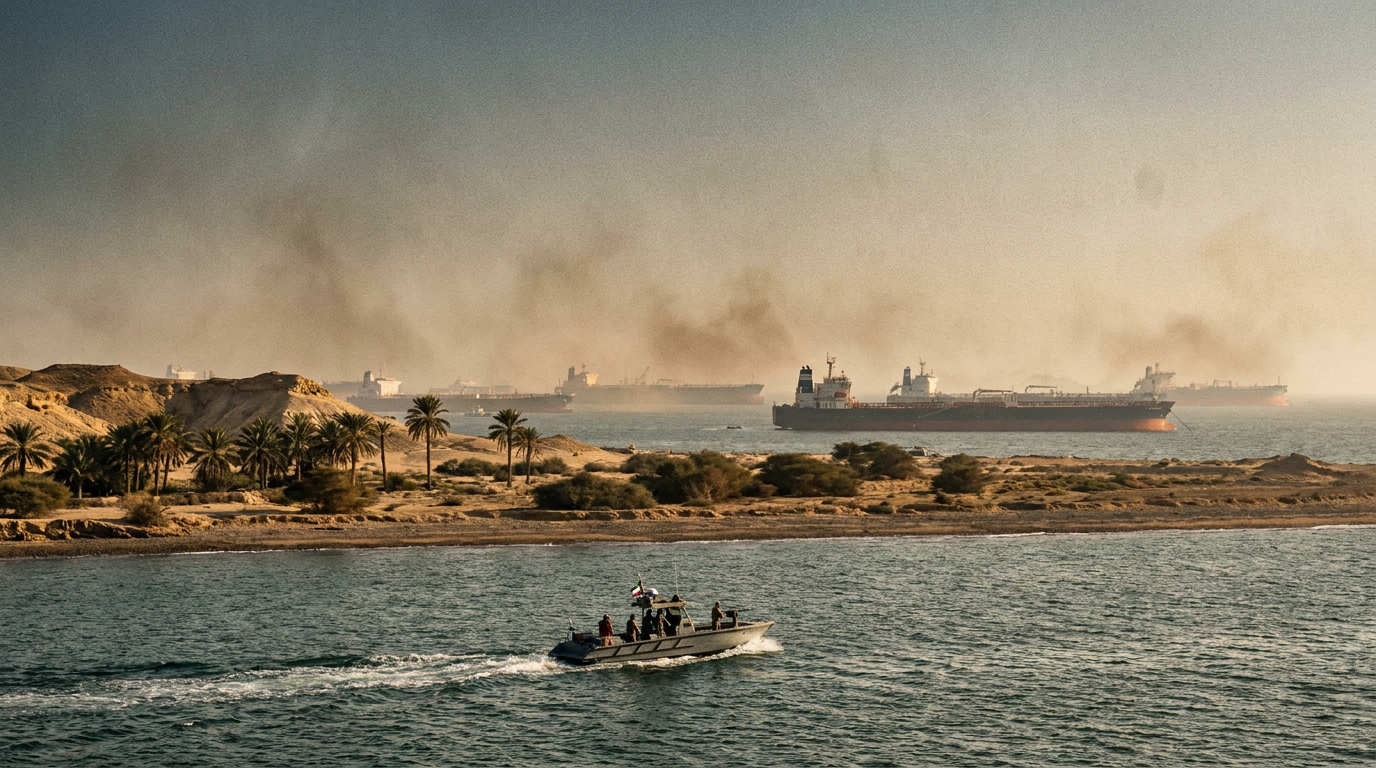
If signed, the immediate mechanism of the deal focuses on restoring the flow of global commerce through the Persian Gulf. The memorandum reportedly mandates a 60-day extension of the current fragile ceasefire and requires the immediate reopening of the Strait of Hormuz to international shipping without tolls or military harassment. In exchange, the United States would lift its naval blockade on Iranian ports, a siege that has severely choked the nation's economy and triggered widespread domestic shortages. The Strait of Hormuz is a vital maritime chokepoint through which roughly one-fifth of the world's oil production flows; its closure by Iranian forces earlier in the conflict was the primary catalyst for the recent global energy crisis. U.S. officials have clarified that the naval blockade will remain strictly enforced until the agreement is formally executed.[4][6][8]
If signed, the immediate mechanism of the deal focuses on restoring the flow of global commerce through the Persian Gulf.
Beyond the unblocking of maritime trade, the draft framework outlines significant and immediate financial reprieves for the Iranian government. Reports from both U.S. diplomatic sources and Iranian state media indicate that the agreement would trigger the release of approximately $24 billion in frozen Iranian financial assets currently held in foreign banks. This massive capital injection would be sequenced over the 60-day ceasefire period, providing critical economic relief to a country battered by years of sanctions and months of direct military strikes. Additionally, the U.S. would reportedly issue targeted sanctions waivers allowing Tehran to legally sell its oil on the global market during the negotiation window, a crucial concession that Iranian negotiators have long demanded as a prerequisite for any discussions regarding their nuclear program.[3][8]

The most complex and heavily scrutinized component of the proposed settlement involves the future of Iran's nuclear infrastructure. Under the preliminary framework, Iran would reportedly commit to a 15-to-20-year lockout period during which it would suspend uranium enrichment and dismantle key nuclear sites. This represents a significant shift from previous diplomatic efforts, trading the demand for a permanent, perpetual ban on enrichment for a defined, multi-decade suspension. The 60-day ceasefire window is explicitly designed to give technical teams from both nations the time to negotiate the exact verification protocols, inspection regimes, and enforcement mechanisms required to monitor a lockout of this magnitude across Iran's vast, deeply buried nuclear facilities.[3][4]
To address the immediate threat of weaponization before the broader treaty is finalized, negotiators are discussing a mechanism to neutralize Iran’s existing stockpile of highly enriched uranium. One leading proposal would require the material to be "down-blended" to lower, civilian-grade purity levels within the country, under the continuous, strict supervision of United Nations inspectors. This approach allows Iran to save face by keeping the material on its sovereign soil, while satisfying the core U.S. and Israeli demand that the uranium be rendered useless for military applications. However, the exact logistics of this down-blending process remain a massive sticking point, with hardliners in Tehran fiercely resisting any foreign interference in their nuclear stockpile.[3][4]
The mere prospect of a de-escalation sent immediate shockwaves through global financial markets, unwinding the "war premium" that had artificially inflated asset prices for months. International benchmark Brent crude plummeted by 5 percent on the news, dropping below $86 a barrel, while U.S. West Texas Intermediate saw similarly steep declines. Prior to the conflict, Brent crude hovered around $70 a barrel, but the outbreak of war and the subsequent closure of the Strait of Hormuz had driven prices as high as $125 a barrel. Equities rallied sharply across the globe, with the S&P 500 and Dow Jones Industrial Average posting significant gains as investors priced in the return of normalized energy costs and a drastically reduced risk of broader regional contagion.[6][7]
The economic stakes of finalizing this memorandum cannot be overstated. The three-month conflict had stoked fears of a prolonged global stagflationary shock, forcing central banks to recalibrate their monetary policies in real-time. Just hours before the peace deal was announced, the European Central Bank became the first major institution to raise interest rates in response to the war-driven inflation, highlighting the cascading global consequences of the Middle Eastern standoff. A reopened Strait of Hormuz and the reintroduction of Iranian crude to the seaborne market would fundamentally alter the global supply calculus, providing immediate relief to manufacturing sectors and consumers worldwide who have borne the brunt of the geopolitical instability.[6][7]

While financial markets celebrated the breakthrough, regional allies directly in the line of fire maintained a posture of intense scrutiny and skepticism. Israeli Prime Minister Benjamin Netanyahu, whose government jointly launched the initial wave of strikes against Iran, held a late-night phone call with the U.S. president to discuss the parameters of the deal. Netanyahu’s office released a statement clarifying that while Israel is not a direct party to the memorandum of understanding, it expects the final, binding agreement to guarantee the physical removal of enriched nuclear material from Iranian territory and the total dismantling of its missile production infrastructure. The Israeli position highlights the underlying tension of the negotiations: neighboring states view any arrangement that leaves Iran's nuclear knowledge and proxy networks intact as a temporary pause rather than a permanent peace.[3][4]
Despite the optimistic declarations from Washington, the path from a conceptual memorandum to a durable peace treaty remains fraught with strategic uncertainty. Regional analysts and foreign policy experts have questioned the coherence of the U.S. endgame, noting that the strategy of oscillating between threats of catastrophic infrastructure strikes and sudden diplomatic embraces creates a highly volatile negotiating environment. If the 60-day negotiation window opens, diplomats will face the monumental task of translating broad promises about nuclear lockouts and sanctions relief into verifiable, binding protocols. Without a comprehensive political resolution that addresses Iran's regional proxy networks and ballistic missile capabilities, experts warn that the Middle East may simply be entering a "gray zone" of calibrated escalation rather than an era of true stability.[1][8]
For now, the region waits to see if the conceptual agreements can survive the friction of actual implementation. Vice President JD Vance is reportedly preparing to travel to Europe to formalize the initial signing of the memorandum, a move that would officially trigger the 60-day ceasefire extension and the unblocking of the Strait of Hormuz. However, until the ink dries and the naval blockades are physically lifted, the military forces of both nations remain on high alert. The U.S. has made clear that its warships will continue to enforce the embargo until the transaction is finalized, leaving the fragile peace entirely dependent on both sides navigating the final, treacherous steps of diplomacy without triggering an accidental escalation.[1][3][4]
How we got here
Late Feb 2026
Conflict begins with joint U.S.-Israeli strikes against Iranian targets.
April 2026
A fragile truce temporarily pauses the heaviest bombardments.
June 11, 2026
U.S. threatens to strike Kharg Island oil infrastructure before abruptly canceling the operation.
June 12, 2026
Trump announces a conceptual memorandum of understanding; oil prices plummet 5%.
Viewpoints in depth
The U.S. Administration's view
Military pressure and economic blockades have successfully forced Iran to accept long-term nuclear concessions.
From Washington's perspective, the sudden diplomatic breakthrough is the direct result of a maximum-pressure military campaign. By demonstrating the willingness to strike critical infrastructure and enforcing a strict naval blockade, the U.S. believes it exhausted Tehran's resources and forced its leadership to prioritize economic survival over nuclear ambition. The administration views the proposed 15-to-20-year enrichment lockout as a historic victory that neutralizes the immediate threat of a nuclear-armed Iran without requiring a full-scale ground invasion.
Tehran's view
The negotiations represent a tactical exchange of temporary nuclear pauses for vital economic survival, not a strategic surrender.
Iranian officials and state media frame the memorandum not as a capitulation, but as a necessary diplomatic maneuver to break a crippling economic siege. By securing the release of $24 billion in frozen assets and the ability to sell oil on the global market, Tehran achieves its primary objective of economic relief. Hardliners within the establishment emphasize that Iran has not agreed to permanently dismantle its nuclear program, viewing the 60-day window and the 15-year lockout as reversible concessions that preserve the nation's underlying scientific infrastructure and sovereignty.
Israel and Regional Allies' view
Any deal that leaves Iran's nuclear infrastructure physically intact is merely a temporary pause, not a permanent solution.
For Israel and other neighboring states, the prospect of a diplomatic settlement is viewed with deep skepticism. Regional allies argue that a conceptual agreement focusing on temporary lockouts and down-blending fails to address the root of the threat. They demand the physical removal of enriched material and the destruction of subterranean enrichment facilities, arguing that allowing Iran to retain its technical knowledge and proxy networks simply gives Tehran time to rebuild its economy before resuming its regional ambitions.
What we don't know
- Whether hardline factions within Iran's Islamic Revolutionary Guard Corps will accept the nuclear concessions or attempt to sabotage the ceasefire.
- The exact technical mechanisms that will be used to down-blend Iran's existing stockpile of highly enriched uranium.
- How the United States and Israel will verify compliance across Iran's deeply buried nuclear facilities during the 15-year lockout.
Key terms
- Strait of Hormuz
- A narrow, strategically vital waterway between the Persian Gulf and the Gulf of Oman through which roughly 20% of the world's oil passes.
- Down-blending
- The process of mixing highly enriched, weapons-grade uranium with natural uranium to reduce its purity to civilian, reactor-grade levels.
- Memorandum of Understanding (MOU)
- A formal agreement between two or more parties that establishes a framework for cooperation, typically serving as a precursor to a binding legal treaty.
- Naval Blockade
- The use of military ships to prevent commercial vessels from entering or leaving a country's ports, effectively cutting off its international trade.
Frequently asked
Is the war between the U.S. and Iran officially over?
Not officially. The two sides have reportedly agreed to a conceptual memorandum of understanding that extends a ceasefire for 60 days, but a final, binding peace treaty has not yet been signed.
What happens to Iran's nuclear program under this deal?
The draft agreement reportedly requires Iran to accept a 15-to-20-year lockout on uranium enrichment and down-blend its existing highly enriched uranium, though the exact verification details are still being negotiated.
Why did oil prices drop so suddenly?
Global markets reacted to the news that the Strait of Hormuz, a critical chokepoint for global oil shipments, would reopen under the peace deal, easing fears of a prolonged energy shortage.
Sources
Source coverage
8 outlets
4 viewpoints surfaced








[1]The GuardianIranian Leadership
US-Iran peace deal remains elusive as choice of US targets draws legal questions
Read on The Guardian →[2]NPR
Trump cancels further Iran strikes
Read on NPR →[3]CBS NewsRegional Security Allies
Netanyahu spoke with Trump about proposed peace deal
Read on CBS News →[4]ForbesU.S. Administration
Trump Cancels Iran Strikes, Claims Peace Deal Is Close
Read on Forbes →[5]The Washington PostU.S. Administration
Trump withdraws threat to take Iran's oil terminal after progress on potential peace deal
Read on The Washington Post →[6]Times of IsraelGlobal Markets
Global oil prices drop amid optimism over potential US-Iran deal
Read on Times of Israel →[7]Business StandardGlobal Markets
Oil prices fall on US-Iran peace deal hopes
Read on Business Standard →[8]Iran InternationalIranian Leadership
Military escalation overshadows US-Iran peace efforts
Read on Iran International →
More in news politics
See all 111 stories →Strait of Hormuz
Trump Cancels Iran Strikes, Claims Peace Deal to Reopen Strait of Hormuz is Imminent
8 sources
Strait of Hormuz
Trump Cancels Strikes on Iran, Claims Peace Deal to Reopen Strait of Hormuz is Imminent
8 sources
Strait of Hormuz
Trump Cancels Iran Strikes, Claims 'Great Settlement' Reached as Tehran Pushes Back
8 sources
Student Debt
Sweeping Federal Student Loan Overhaul Set to Take Effect July 1 Amid 25-State Lawsuit
6 sources

Every angle. Every day.
Get news politics stories with full source coverage and perspective breakdowns delivered to your inbox.