
Video Game Industry Unites to Standardize Accessibility with New Global Initiative
Major publishers and hardware makers have launched a unified system to standardize accessibility tags across digital storefronts, alongside a wave of open-source adaptive hardware designs.
By Factlen Editorial Team
- Accessibility Advocates
- View standardized tags and open-source hardware as essential civil rights in digital spaces.
- Major Publishers
- Focus on market expansion and the benefits of cross-industry collaboration.
- Grassroots Modders
- Believe community-driven solutions and AI tools are necessary to patch official gaps.
What's not represented
- · Independent developers who may lack the budget to implement all 24 standardized accessibility features.
- · Esports tournament organizers navigating the standardization of custom adaptive controllers in competitive play.
Why this matters
For the estimated 400 million disabled gamers worldwide, buying a new title has historically been a gamble on whether they can actually play it. Standardized tags and open-source adaptive hardware remove this financial risk, transforming digital worlds into reliable spaces for social connection and recreation.
Key points
- The ESA launched the Accessible Games Initiative to standardize 24 accessibility tags across digital storefronts.
- Players can now filter games by features like 'narrated menus' and 'stick inversion' before purchasing.
- Xbox released seven new adaptive thumbstick designs as free, 3D-printable schematics.
- EA expanded its Patent Pledge, offering royalty-free access to its accessibility technologies.
- A recent study found 84% of visually impaired players report improved social interaction through gaming.
The gaming industry has historically treated accessibility as an afterthought, leaving disabled players to navigate a maze of incompatible hardware and unpredictable software. That paradigm shifted this week as the Entertainment Software Association (ESA) rolled out its Accessible Games Initiative, backed by heavyweights like Nintendo, Electronic Arts, and Ubisoft.[1]
The initiative introduces a unified system of 24 standardized tags across digital storefronts. Instead of relying on fragmented, publisher-specific labels, players can now filter games using universal criteria like "narrated menus," "playable with buttons only," and "stick inversion."[1]
According to the ESA, this standardization allows players to assess whether a game is compatible with their specific motor, visual, or auditory needs before they spend money. It also provides a reliable framework for parents and educators seeking accessible titles for children.[1]

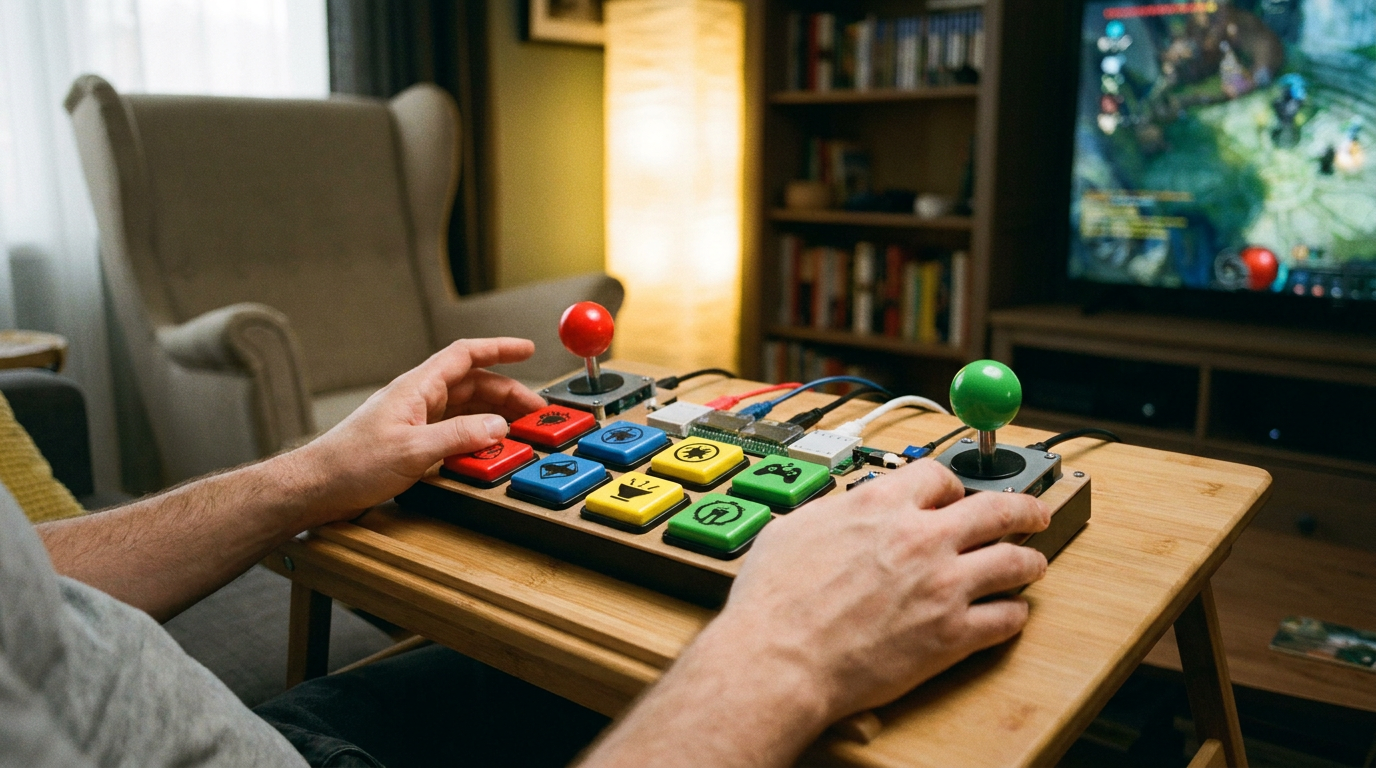
The software push is being matched by rapid advancements in adaptive hardware. Microsoft's Inclusive Tech Lab recently released seven new thumbstick configurations for the Xbox Adaptive Controller, developed in collaboration with the disabled gaming community.[2][4]
Crucially, Xbox is offering the design schematics for these toppers as free 3D-printable files. This open-source approach allows players to manufacture, replace, and modify their own hardware at home or at local libraries, bypassing the high costs traditionally associated with specialized medical or adaptive equipment.[2][4]

Crucially, Xbox is offering the design schematics for these toppers as free 3D-printable files.
This collaborative ethos is spreading across the fiercely competitive industry. Electronic Arts recently expanded its Patent Pledge, offering royalty-free access to its proprietary accessibility technologies so independent developers can implement features like advanced colorblind filters without fear of litigation.[6]
The movement is also gaining traction globally. In South Korea, Kakao Games was recently commended for its "Play Buddy Together" program, which has successfully matched disabled players with over 600 customized devices, including eye-trackers and sip-and-puff controllers, through partnerships with rehabilitation centers.[3]
Where official development lags, grassroots communities are stepping in. At the recent Game Accessibility Conference, panels highlighted a boom in AI-assisted mods that bring screen-reading and navigational aids to mainstream legacy games, proving that community-driven solutions remain a vital part of the ecosystem.[5]

The social impact of these tools extends far beyond entertainment. A recent study by the Royal National Institute of Blind People found that 84 percent of visually impaired players reported improved social interaction through gaming, while 87 percent cited significant stress relief.[2]
As disability advocates note, virtual worlds can erase the physical and transportation barriers that exist in offline spaces, opening room for friendship and shared challenges. With standardized tags and accessible hardware becoming the industry norm, gaming is finally opening its doors to everyone.[3]
How we got here
2018
Microsoft launches the original Xbox Adaptive Controller, bringing mainstream attention to accessible hardware.
March 2023
Kakao Games launches South Korea's first assistive-device support program for gamers.
December 2025
Electronic Arts expands its Patent Pledge, making more accessibility tech royalty-free for developers.
June 2026
The ESA rolls out the Accessible Games Initiative, standardizing 24 accessibility tags across major digital storefronts.
Viewpoints in depth
Accessibility Advocates
View standardized tags and open-source hardware as essential civil rights in digital spaces.
Advocacy groups argue that inclusive gaming now functions as a quality criterion rather than a bonus feature. They compare accessible game design to 'curb cuts' on sidewalks—where the same ramps that help wheelchair users also smooth the path for parents pushing strollers. By standardizing tags, they believe the industry is finally removing the financial risk disabled players face when purchasing games.
Major Publishers
Focus on market expansion and the benefits of cross-industry collaboration.
Companies like EA, Xbox, and Nintendo are increasingly viewing accessibility as both a moral imperative and a smart business strategy. By sharing patents royalty-free and standardizing storefront tags, publishers can expand their player base and foster a more welcoming brand image, turning previously excluded demographics into loyal communities.
Grassroots Modders
Believe community-driven solutions and AI tools are necessary to patch official gaps.
While praising official initiatives, modding communities emphasize that legacy titles and indie games often lack built-in accessibility. They are actively using new AI tools to build custom screen-readers and navigational aids, arguing that player-driven innovation will always be needed to push the boundaries of what is possible in inclusive design.
What we don't know
- It remains unclear how quickly all digital storefronts, including smaller indie platforms, will fully integrate the 24 new ESA tags.
- The long-term impact of AI-assisted accessibility mods on competitive multiplayer game balance is still being studied.
Key terms
- Adaptive Controller
- A highly customizable gaming interface designed primarily to meet the needs of gamers with limited mobility.
- Stick Inversion
- An accessibility option that reverses the directional input of a joystick, often necessary for players with specific motor or cognitive preferences.
- Screen Reader
- Assistive technology that renders text and image content as speech or braille output, crucial for blind or low-vision gamers.
- Sip-and-Puff Controller
- An assistive device used to send signals to a computer or console using air pressure by inhaling or exhaling on a straw.
Frequently asked
What is the Accessible Games Initiative?
It is a unified system created by the ESA that introduces 24 standardized accessibility tags across digital storefronts, helping players identify compatible games.
Can I 3D print my own controller parts?
Yes, Microsoft has released free 3D-printable schematics for seven new adaptive thumbstick toppers via the Xbox Design Lab.
Does this apply to older video games?
The official ESA tags apply to new and updated storefront listings, while community modders are increasingly using AI to add accessibility features to legacy titles.
Sources
Source coverage
6 outlets
3 viewpoints surfaced






[1]MashableAccessibility Advocates
Video game industry makes it easier to find accessible games for disabled players
Read on Mashable →[2]Xbox WireMajor Publishers
Xbox Celebrates Global Accessibility Awareness Day with Improved Adaptive Thumbstick Toppers
Read on Xbox Wire →[3]Thompson TribuneAccessibility Advocates
The Next Era of Accessibility Tools at CES and Beyond
Read on Thompson Tribune →[4]Console CreaturesMajor Publishers
For GAAD 2026, Xbox Releases Fresh Accessibility Updates
Read on Console Creatures →[5]Game Accessibility ConferenceGrassroots Modders
Not just vibes: How Blind Players Are Modding Accessibility into Games
Read on Game Accessibility Conference →[6]Electronic ArtsMajor Publishers
EA Expands Patent Pledge to Advance Game Accessibility
Read on Electronic Arts →

More in entertainment
See all 41 stories →Concert Accessibility
Haptic Suits Become Standard at Major Summer Festivals, Transforming Live Music for Deaf Fans
7 sources

Pixar Premiere
‘Toy Story 5’ Premieres in Los Angeles, Pitting Woody and Buzz Against Screen Time
6 sources

Video Game Films
‘The Super Mario Galaxy Movie’ Crosses $1 Billion, Becoming 2026’s First Global Megahit
6 sources

Celebrity Philanthropy
Dolly Parton's Imagination Library Hits 314 Million Books as Global Study Proves Massive Literacy Impact
7 sources

Every angle. Every day.
Get entertainment stories with full source coverage and perspective breakdowns delivered to your inbox.