
Trump Cancels Strikes on Iran, Claims Peace Deal to Reopen Strait of Hormuz is Imminent
President Trump called off planned military strikes against Iran, announcing that a diplomatic agreement to end the three-month conflict and reopen the Strait of Hormuz is nearing completion. While global markets rallied and oil prices plummeted on the news, Iranian officials cautioned that a final agreement has not yet been reached.
By Factlen Editorial Team
- U.S. Administration
- Argues that maximum pressure has forced Iran to the negotiating table and secured a deal to reopen global shipping lanes.
- Iranian Leadership
- Maintains that while progress has been made, no final surrender of sovereignty or red lines has occurred, and the deal is still under review.
- Global Markets
- Views the diplomatic breakthrough primarily through the lens of economic relief, reacting positively to the prospect of lower energy costs.
- Regional Security Allies
- Focuses on ensuring that any agreement permanently dismantles Iran's nuclear capabilities and proxy networks rather than just pausing hostilities.
What's not represented
- · Iranian Civilians
- · Commercial Shipping Operators
Why this matters
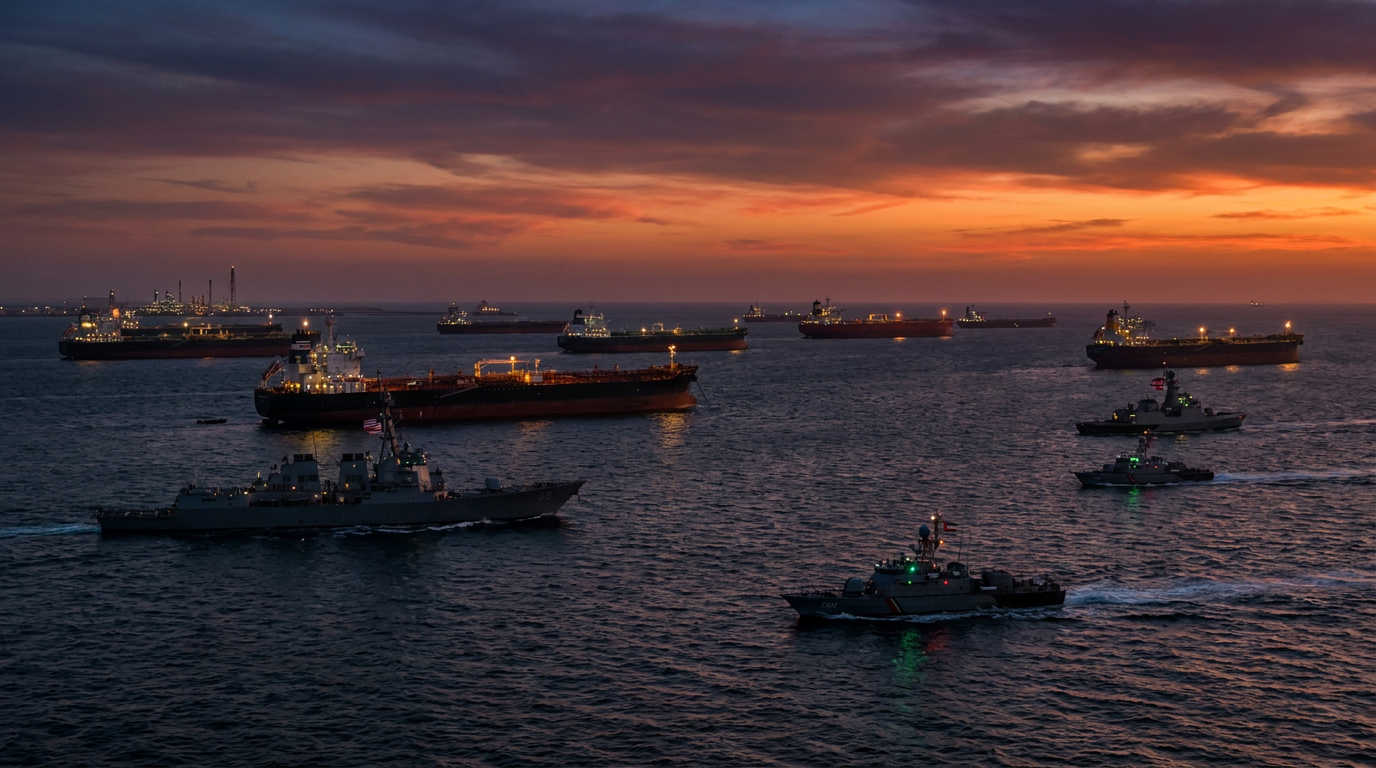
A finalized peace agreement would end a devastating three-month conflict that has severely restricted global shipping through the Strait of Hormuz. Reopening this vital maritime chokepoint would immediately lower global energy costs, easing the inflationary pressures that have strained economies worldwide.
Key points
- President Trump canceled planned military strikes against Iran, citing major progress in peace negotiations.
- A proposed memorandum of understanding would establish a 60-day ceasefire and reopen the Strait of Hormuz to commercial shipping.
- Iranian officials stated that while large parts of the text are finalized, the government has not yet formally approved the deal.
- Global oil prices dropped sharply and equities rallied as markets reacted to the potential easing of macroeconomic pressures.
President Donald Trump abruptly canceled a wave of scheduled military strikes against Iran late Thursday, announcing instead that the United States and Tehran are on the verge of signing a historic peace agreement to end their three-month war. Taking to social media, Trump declared that negotiations had reached a breakthrough and that the final points of a settlement had been approved by the highest levels of Iranian leadership. The sudden pivot from military escalation to diplomatic resolution marks a potential turning point in a conflict that has paralyzed global shipping and sent energy markets into turmoil.[2][5]
The proposed memorandum of understanding outlines a phased de-escalation designed to immediately relieve pressure on the global economy. According to details leaked to the press, the agreement centers on a 60-day ceasefire extension and the rapid reopening of the Strait of Hormuz. Under the framework, the United States would lift its naval blockade on the vital shipping lane, allowing a return to pre-war maritime traffic volumes within 30 days. In exchange, Washington would temporarily waive specific sanctions, permitting Tehran to resume limited oil exports during the two-month truce.[3][4]
Beyond immediate maritime relief, the 60-day window is intended to serve as a negotiating period for a broader, permanent treaty addressing Iran's nuclear ambitions. Trump has repeatedly emphasized that any final settlement must ensure Iran cannot develop a nuclear weapon, describing it as the central objective of his administration's pressure campaign. Iranian state media confirmed that the future of the country's nuclear enrichment program would be on the table during these forthcoming talks, though Tehran has historically maintained that its nuclear initiatives are strictly for civilian purposes.[3][4]

Despite the optimism emanating from the White House, Iranian officials quickly moved to temper expectations of an imminent signing ceremony. Foreign Ministry spokesperson Esmaeil Baghaei acknowledged that large portions of the negotiating text have been finalized, but he firmly denied that the Islamic Republic had formally agreed to the deal. Baghaei stated that the proposal is still being reviewed by relevant decision-making bodies in Tehran and warned that Iran would not compromise on its established "red lines."[1][6]
Despite the optimism emanating from the White House, Iranian officials quickly moved to temper expectations of an imminent signing ceremony.
The diplomatic whiplash follows a highly volatile week that saw the fragile April ceasefire nearly collapse. Prior to calling off the attacks, Trump had threatened to strike Iran "very hard," specifically targeting vital energy infrastructure such as Kharg Island. The U.S. military had already launched a wave of attacks targeting Iranian surveillance and air defense systems, while Iran retaliated by launching drones and missiles at U.S. positions in neighboring Gulf states and attempting to strike commercial vessels transiting the Strait of Hormuz.[5][8]
The prospect of an end to the hostilities triggered an immediate and massive rally across global financial markets. Equities surged on the news, with the Dow Jones Industrial Average leaping more than 800 points and the S&P 500 climbing 1.3%. Investors reacted to the easing of macroeconomic anxiety, as the three-month closure of the Strait of Hormuz—a chokepoint for roughly a fifth of the world's oil supply—had severely disrupted supply chains and forced central banks to grapple with sudden inflationary spikes.[7]

Energy markets experienced a sharp sell-off as the geopolitical risk premium evaporated. Brent crude, the international benchmark, tumbled 3.5% to fall below $90 per barrel, while U.S. West Texas Intermediate dropped to roughly $87 per barrel. The decline in crude prices offers immediate relief to global consumers and businesses, though analysts caution that the market remains highly sensitive to any potential breakdown in the final stages of the diplomatic process.[7][8]
Regional allies are closely monitoring the negotiations, with Israel taking a particularly keen interest in the security implications of the pact. Following a phone call with Trump, Israeli Prime Minister Benjamin Netanyahu’s office clarified that Israel is not a party to the memorandum of understanding. However, Netanyahu expressed appreciation for the U.S. president's commitment to ensuring that any final treaty will mandate the dismantling of Iran's nuclear enrichment infrastructure, limit its ballistic missile production, and halt its financial support for proxy militant groups across the Middle East.[3][4]
The logistical framework for formalizing the truce is already taking shape, with Trump suggesting that a signing ceremony could take place in Europe—potentially Switzerland—as early as this weekend. Vice President JD Vance is expected to attend the summit to sign on behalf of the United States. However, seasoned diplomats warn that the final mile of negotiations is often the most perilous, and until the ink is dry, the possibility of last-minute spoilers derailing the fragile consensus remains a significant threat.[1][2]
How we got here
March 2026
A major military escalation between the U.S. and Iran effectively closes the Strait of Hormuz, sparking a three-month conflict.
April 2026
A fragile ceasefire is implemented but is repeatedly strained by sporadic, tit-for-tat military strikes.
June 10, 2026
Hostilities flare as the U.S. strikes Iranian infrastructure and Iran targets U.S. bases and commercial shipping.
June 11, 2026
President Trump abruptly cancels a wave of planned strikes, announcing that a peace agreement is nearing completion.
Viewpoints in depth
The U.S. Administration's View
The White House frames the impending agreement as a victory for its maximum pressure campaign.
President Trump and his allies argue that the credible threat of overwhelming military force—demonstrated by the planned strikes on Kharg Island—ultimately compelled Tehran to accept terms. From Washington's perspective, the memorandum of understanding achieves the immediate goal of reopening the Strait of Hormuz while establishing a strict 60-day clock to dismantle Iran's nuclear infrastructure. The administration views the temporary waiving of sanctions not as a concession, but as a tactical pause to facilitate the broader treaty.
Tehran's View
Iranian officials emphasize that they are negotiating from a position of strength and have not capitulated.
Iran's foreign ministry and state media are actively pushing back against the narrative that a deal is already finalized. Tehran insists that any agreement must involve the permanent lifting of international sanctions and the release of frozen assets, rather than just a temporary reprieve. By publicly stating that the proposal is still under review by internal decision-making bodies, Iranian leadership is signaling to its domestic audience that it will not cross established 'red lines' regarding its sovereignty and defensive capabilities.
Israel's View
Israeli leadership supports the disarmament goals but remains cautious about the enforcement of the pact.
While not a direct party to the negotiations, Israel views the U.S.-Iran diplomacy through an existential lens. Prime Minister Benjamin Netanyahu has explicitly tied his support for the diplomatic track to ironclad guarantees that Iran will be stripped of its enriched nuclear material and ballistic missile production facilities. Israeli officials remain deeply concerned that a temporary ceasefire might simply allow Tehran to regroup and continue funding proxy militant groups across the region if the final treaty lacks rigorous enforcement mechanisms.
What we don't know
- Whether Iran's Supreme Leader has formally signed off on the exact terms of the memorandum of understanding.
- The specific mechanisms that will be used to enforce the reopening of the Strait of Hormuz and the lifting of the U.S. naval blockade.
- How the two nations will bridge their significant differences regarding Iran's nuclear enrichment program during the 60-day negotiating window.
Key terms
- Strait of Hormuz
- A narrow, strategically vital waterway between the Persian Gulf and the Gulf of Oman through which roughly a fifth of the world's oil supply passes.
- Memorandum of Understanding (MOU)
- A formal agreement between two or more parties that outlines the terms and details of an understanding, often serving as the foundation for a legally binding treaty.
- Brent Crude
- A major trading classification of sweet light crude oil that serves as a benchmark price for oil purchases worldwide.
Frequently asked
Is the war between the U.S. and Iran officially over?
Not officially. While President Trump announced that a settlement has been reached, Iranian officials state that the agreement is still under review and no final decision has been made.
What does the proposed deal include?
The memorandum of understanding reportedly includes a 60-day ceasefire, the reopening of the Strait of Hormuz within 30 days, a temporary lifting of some sanctions, and a framework to negotiate Iran's nuclear program.
How did the stock market react to the news?
Global markets rallied significantly, with the Dow Jones jumping over 800 points and oil prices dropping sharply as investors anticipated the reopening of vital shipping lanes.
Sources
Source coverage
8 outlets
4 viewpoints surfaced








[1]The GuardianIranian Leadership
US-Iran peace deal remains elusive as choice of US targets draws legal questions
Read on The Guardian →[2]Fox NewsU.S. Administration
Trump says Iran deal near after second day of US strikes and attacks
Read on Fox News →[3]CBS NewsRegional Security Allies
Iran hasn't reached a final decision on a peace deal with the U.S., Iranian official says
Read on CBS News →[4]ReutersRegional Security Allies
Hopes grow for peace between Iran and US after Trump says deal could be signed soon
Read on Reuters →[5]ForbesU.S. Administration
Trump Cancels Iran Strikes, Claims Peace Deal Imminent
Read on Forbes →[6]Channel News AsiaIranian Leadership
US President Donald Trump said the US and Iran could make a peace deal this weekend
Read on Channel News Asia →[7]1NewsGlobal Markets
US stocks jump, oil prices fall after Trump calls off threat to attack Iran
Read on 1News →[8]CNBCGlobal Markets
Oil prices fall as Trump tries to convince market an Iran deal is close despite recent violence
Read on CNBC →
More in news politics
See all 113 stories →Information Ecosystem
The Evidence Behind Crowdsourced Fact-Checking: Does It Actually Change Minds?
8 sources
Strait of Hormuz
Oil Prices Plummet as U.S. and Iran Edge Toward Deal to Reopen Strait of Hormuz
7 sources

Strait of Hormuz
Trump Cancels Iran Strikes, Claims Peace Deal to Reopen Strait of Hormuz is Imminent
8 sources
US-Iran Conflict
Trump Cancels Strikes as U.S. and Iran Weigh Draft Peace Framework
8 sources
Every angle. Every day.
Get news politics stories with full source coverage and perspective breakdowns delivered to your inbox.