
Oil Prices Plummet as U.S. and Iran Edge Toward Deal to Reopen Strait of Hormuz
Global markets rallied and crude oil prices dropped sharply after the U.S. announced a potential peace agreement with Iran. While a draft deal could reopen the Strait of Hormuz and release frozen assets, Tehran cautions that a final agreement has not yet been signed.
By Factlen Editorial Team
- U.S. Administration
- Frames the draft agreement as a major diplomatic victory that will stabilize the region.
- Iranian Leadership
- Downplays the imminence of a deal, demanding concrete financial relief before committing.
- Global Markets
- Relieved by the potential end to the energy shock but skeptical until ships actually move.
- Regional Allies
- Seeking guarantees that any final treaty will permanently dismantle Iran's nuclear capabilities.
What's not represented
- · Commercial shipping companies tasked with navigating the Strait of Hormuz
- · European nations heavily reliant on Middle Eastern energy imports
Why this matters
The three-month closure of the Strait of Hormuz has choked off 20% of the world's oil supply, driving up global inflation and forcing central banks to raise interest rates. A successful peace deal would stabilize energy markets and lower fuel costs for consumers worldwide.
Key points
- President Trump announced the cancellation of planned strikes on Iran, claiming a peace deal is imminent.
- Global oil prices dropped more than 4%, with Brent crude falling to $86.31 a barrel.
- The draft agreement reportedly includes a 60-day ceasefire and the reopening of the Strait of Hormuz.
- Iranian officials cautioned that no final decision has been made and red lines remain.
- The deal would reportedly release $24 billion in frozen Iranian financial assets.
- Israel stated it is not a party to the interim deal but expects a final treaty to address nuclear enrichment.
Global oil prices tumbled and equities rallied on Friday after U.S. President Donald Trump announced the cancellation of planned military strikes on Iran, claiming a "great settlement" is near to end the three-month war.[1][2]
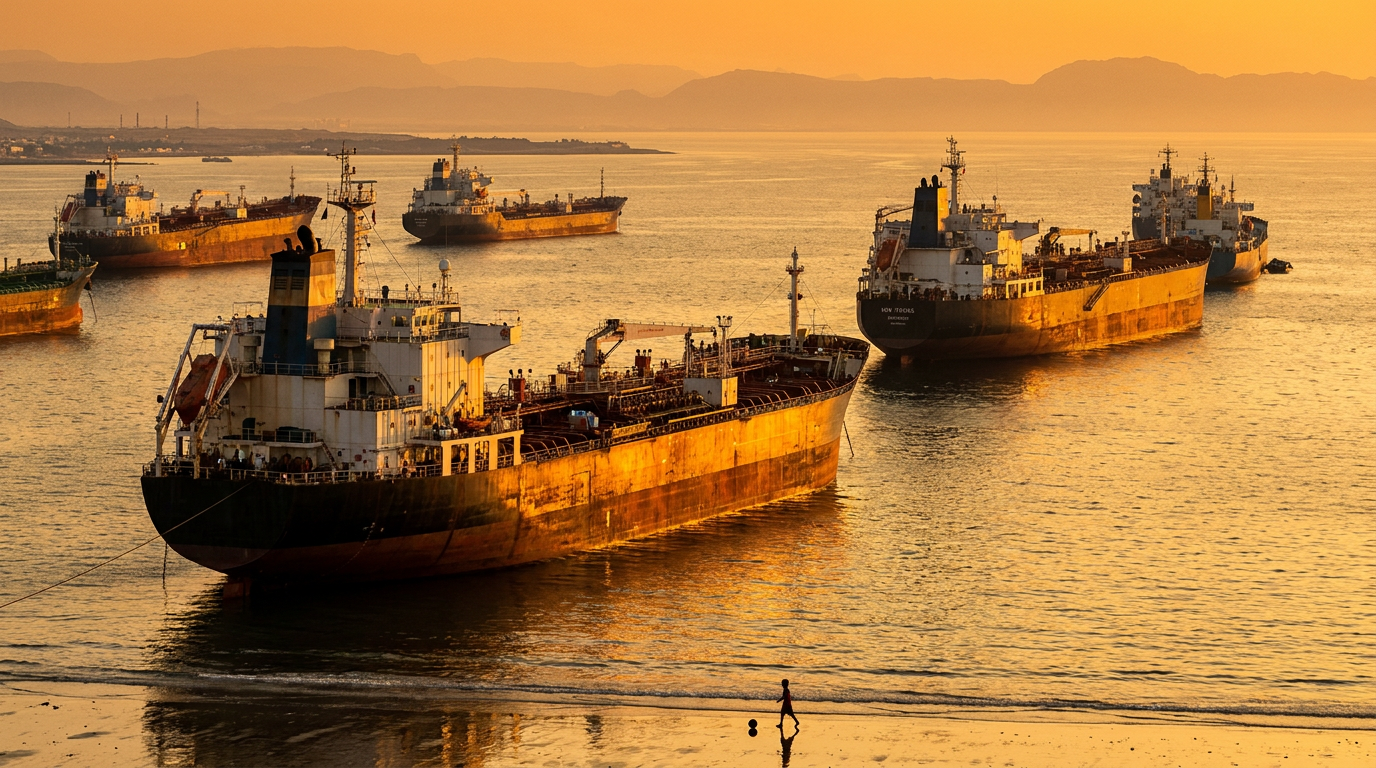
The conflict, which erupted in late February 2026, led to the near-total closure of the Strait of Hormuz. This maritime chokepoint typically handles roughly 20% of the world's crude oil supply, and its blockade has choked off fuel shipments and sent global inflation soaring.[2][5]
Markets reacted violently to the prospect of the strait reopening. Brent crude fell more than 4% to around $86 a barrel—its lowest level since the war began—as traders priced in a return of Persian Gulf supply. Benchmark U.S. crude similarly shed over 4% to drop below $84 a barrel.[1][5]

The sudden de-escalation followed a tense week of tit-for-tat military strikes that threatened to shatter a fragile April ceasefire. Trump stated from the Oval Office that a memorandum of understanding (MOU) had been approved at the highest levels of Iranian leadership, predicting a signing ceremony in Europe as soon as this weekend.[2][4]
However, Tehran quickly tempered expectations. Foreign Ministry spokesperson Esmaeil Baghaei stated that while large parts of a text have been finalized, "nothing has been finalized" overall, emphasizing that Iran will not compromise on its core red lines.[3][6]
Iranian state media offered a glimpse into the ongoing negotiations, reporting that the draft 14-point agreement includes a 60-day ceasefire extension and the reopening of the Strait of Hormuz to pre-war shipping volumes within 30 days.[2][3]

Crucially for Tehran, the draft reportedly includes a stipulation that the U.S. will release $24 billion in frozen Iranian financial assets as soon as the deal takes effect, alongside temporary waivers allowing Iran to sell oil during the 60-day window.[2]
Crucially for Tehran, the draft reportedly includes a stipulation that the U.S.
Market analysts remain cautious, noting that the U.S. administration has claimed a deal was imminent dozens of times in recent weeks without a breakthrough. Energy markets remain highly sensitive to any breakdown in talks, as physical shipments have yet to resume.[1][5]

Regional allies are watching the interim steps closely. Israeli Prime Minister Benjamin Netanyahu's office clarified that Israel is not a party to the MOU, but expressed appreciation for U.S. commitments that any final treaty would dismantle Iran's nuclear enrichment infrastructure and limit missile production.[2][7]
The economic stakes of the weekend's diplomacy are massive. The European Central Bank recently raised interest rates to combat inflation driven by the energy shock, and a sustained reopening of Hormuz is viewed by economists as critical to preventing a broader global recession.[5]
How we got here
Late Feb 2026
War breaks out between the U.S., Israel, and Iran, leading to the closure of the Strait of Hormuz.
April 2026
A fragile ceasefire is announced, temporarily halting major hostilities but leaving the shipping lanes closed.
Early June 2026
Tit-for-tat military strikes resume, threatening to collapse the ceasefire entirely.
June 11, 2026
President Trump cancels planned U.S. strikes and announces a draft peace agreement is nearing completion.
June 12, 2026
Oil prices plummet as markets react to the potential reopening of the Strait of Hormuz, despite Iranian caution.
Viewpoints in depth
The U.S. Administration's View
The White House frames the draft agreement as a major diplomatic victory that will stabilize the region.
President Trump and his administration are projecting confidence that the three-month war is effectively over. By canceling planned military strikes and announcing a 'great settlement,' the administration is attempting to reassure global markets and claim a foreign policy win. U.S. officials emphasize that the deal will reopen the Strait of Hormuz and eventually lead to a broader treaty dismantling Iran's nuclear ambitions, framing the temporary lifting of sanctions as a necessary concession to secure global energy supplies.
Tehran's View
Iranian officials are downplaying the imminence of a deal, demanding concrete financial relief before committing.
For Iran's leadership, the primary objective is the immediate release of $24 billion in frozen assets and a resumption of oil exports. Foreign Ministry officials have deliberately contradicted the U.S. timeline, insisting that critical red lines remain unresolved and that no final signature is guaranteed. Tehran's messaging is designed to maintain leverage in the final hours of negotiation, ensuring that the U.S. delivers on sanctions relief before Iran officially reopens the Strait of Hormuz to Western shipping.
Market & Economic View
Investors and central banks are desperate for a resolution to the inflationary energy shock.
The global economy has been battered by the closure of the Strait of Hormuz, which choked off 20% of the world's crude supply and forced central banks to hike interest rates. While equity markets and oil traders reacted euphorically to the news of a potential deal—sending Brent crude down over 4%—analysts remain deeply skeptical. Having witnessed dozens of premature declarations of peace over the past three months, the energy sector is waiting for physical oil tankers to safely transit the strait before fully pricing in an end to the crisis.
What we don't know
- Whether Iran's Supreme Leader has officially signed off on the 14-point memorandum of understanding.
- The exact timeline for when commercial shipping will safely resume through the Strait of Hormuz.
- How the U.S. plans to enforce the dismantling of Iran's nuclear infrastructure in a final treaty.
Key terms
- Strait of Hormuz
- A strategically vital maritime chokepoint between Iran and the Arabian Peninsula through which a massive portion of global oil and liquefied natural gas passes.
- Brent Crude
- The major trading classification of sweet light crude oil that serves as a benchmark price for purchases of oil worldwide.
- Memorandum of Understanding (MOU)
- A non-binding agreement stating the convergence of will between parties, often serving as the foundation for a formal treaty.
Frequently asked
Why did oil prices drop so suddenly?
Prices fell because President Trump announced a potential peace deal that would reopen the Strait of Hormuz, easing fears of a prolonged global supply shortage.
Is the war officially over?
No. While the U.S. claimed a 'great settlement' is near, Iranian officials state that no final decision has been made and negotiations are ongoing.
What is the Strait of Hormuz?
It is a narrow waterway between the Persian Gulf and the Gulf of Oman, serving as the transit chokepoint for about 20% of the world's oil supply.
How is Israel involved in the deal?
Israel is not a party to the interim memorandum of understanding, but is seeking assurances that any final treaty will dismantle Iran's nuclear and missile programs.
Sources
Source coverage
7 outlets
4 viewpoints surfaced







[1]The GuardianGlobal Markets
Oil prices plummet as Trump claims he is close to US-Iran deal
Read on The Guardian →[2]CBS NewsU.S. Administration
Oil prices fall after President Trump claims progress in Iran talks
Read on CBS News →[3]The Straits TimesIranian Leadership
Iran says no final decision made on deal that Trump hopes could be signed soon
Read on The Straits Times →[4]Al ArabiyaRegional Allies
Trump says US, Iran could sign peace deal as soon as this weekend
Read on Al Arabiya →[5]BNN BloombergGlobal Markets
World shares surge and oil prices slip over 4% after Trump claims a breakthrough in Iran war talks
Read on BNN Bloomberg →[6]Al JazeeraIranian Leadership
US-Iran peace deal remains elusive as choice of US targets draws legal questions
Read on Al Jazeera →[7]The Times of IsraelRegional Allies
Israel clarifies it is not party to US-Iran MOU, seeks nuclear guarantees
Read on The Times of Israel →
More in news politics
See all 113 stories →Information Ecosystem
The Evidence Behind Crowdsourced Fact-Checking: Does It Actually Change Minds?
8 sources
Strait of Hormuz
Trump Cancels Iran Strikes, Claims Peace Deal to Reopen Strait of Hormuz is Imminent
8 sources
Strait of Hormuz
Trump Cancels Strikes on Iran, Claims Peace Deal to Reopen Strait of Hormuz is Imminent
8 sources
US-Iran Conflict
Trump Cancels Strikes as U.S. and Iran Weigh Draft Peace Framework
8 sources
Every angle. Every day.
Get news politics stories with full source coverage and perspective breakdowns delivered to your inbox.