
The 2026 Guide to Premium Television Displays: OLED and Mini-LED Trade-Offs
As television technology reaches new heights in 2026, the choice between OLED's perfect contrast and Mini-LED's blinding brightness comes down to your room's lighting and viewing habits.
By Factlen Editorial Team
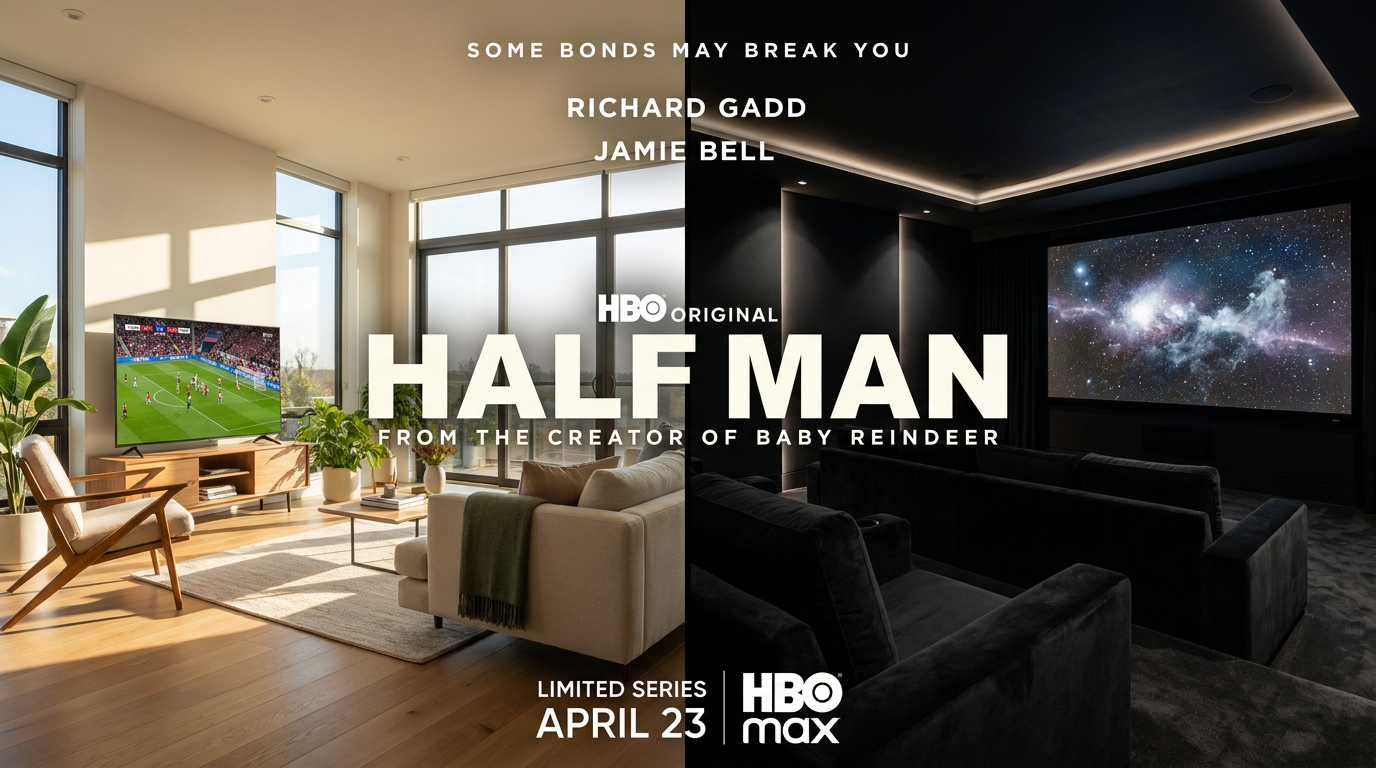
- Home Theater Purists
- Prioritize infinite contrast, perfect black levels, and cinematic accuracy in controlled lighting.
- Bright-Room Viewers
- Focus on peak brightness, glare reduction, and durability for daytime sports and casual viewing.
- Tech & Gaming Analysts
- Balance refresh rates, input lag, pixel response times, and overall value per square inch.
What's not represented
- · Budget TV Buyers
- · Projector Enthusiasts
Why this matters
A premium television is a multi-year investment that anchors a home's entertainment. Choosing the wrong panel technology for your room's lighting can result in washed-out daytime sports or distracting glowing artifacts during late-night movies.
Key points
- OLED technology utilizes self-emissive pixels to achieve perfect black levels and infinite contrast.
- Mini-LED relies on thousands of microscopic backlights to deliver peak brightness exceeding 3,000 nits.
- 2026 innovations like Tandem OLED and QD-OLED have significantly narrowed the brightness gap.
- Mini-LED remains the most cost-effective solution for ultra-large screens measuring 85 inches and above.
- The optimal choice depends entirely on room lighting, with OLED dominating dark rooms and Mini-LED excelling in sunlit spaces.
The 2026 television market has reached a golden age of display technology, leaving consumers with a luxurious but complex dilemma. As screen sizes balloon and prices stabilize, the decision for buyers no longer revolves around smart platforms or basic 4K resolution. Instead, it comes down to a heavyweight bout between two distinct panel technologies: OLED and Mini-LED. Both promise breathtaking picture quality, but they achieve it through fundamentally different engineering philosophies.[1][5]
To understand the stakes, one must look at how these screens generate light. OLED, or Organic Light-Emitting Diode, features self-emissive pixels. Every single pixel on the screen generates its own light and can turn itself off completely. Mini-LED, conversely, relies on a traditional LCD panel illuminated by thousands of microscopic LED backlights divided into local dimming zones. In 2026, both technologies have evolved dramatically, with OLED introducing "Tandem" and "QD-OLED" architectures, while Mini-LED has pushed zone counts into the thousands.[2][5][6]
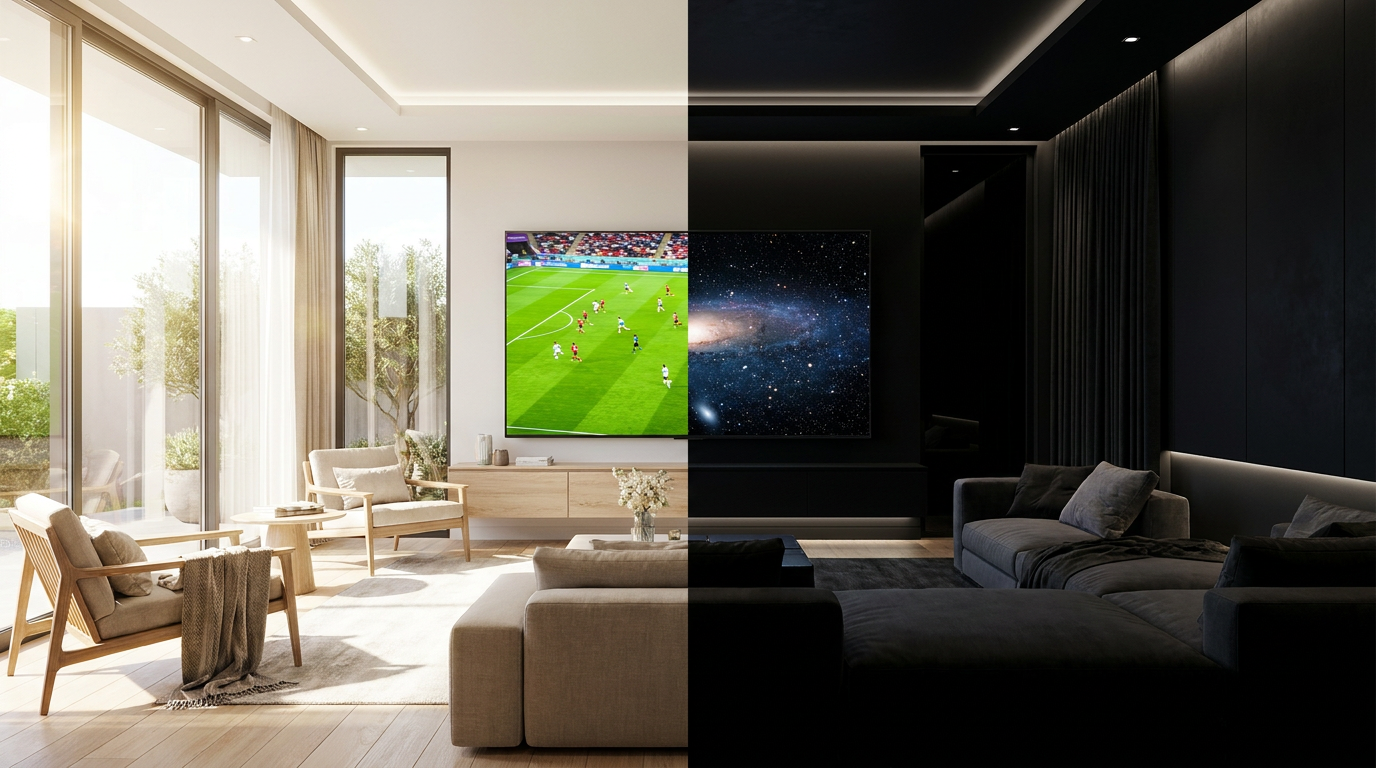
The argument for OLED rests entirely on precision and contrast. Because each pixel operates independently, an OLED panel can display a blindingly bright star right next to the pitch-black vacuum of space without any light bleeding between the two. This pixel-level control results in an infinite contrast ratio, which display testing labs consistently highlight as the most critical factor for perceived image depth.[2][4][6]

The evidence supporting OLED’s dominance in dark rooms is overwhelming. Reviewers and home theater purists note that in a controlled lighting environment, OLED panels deliver a cinematic experience that Mini-LED simply cannot replicate. Furthermore, OLED boasts near-instantaneous pixel response times, making it a favorite for fast-paced gaming and ensuring that motion remains crisp without the smearing sometimes associated with LCD panels.[1][3][7]
However, the case against OLED centers on two persistent limitations: peak brightness and durability. While 2026 innovations like LG’s Tandem OLED and Samsung’s QD-OLED have pushed peak brightness to between 2,300 and 2,800 nits in small highlights, they still aggressively dim the full screen during bright scenes to protect the organic materials. Additionally, while the risk has been heavily mitigated by modern software, OLED panels still carry a slight risk of permanent image retention, or "burn-in," if static elements like news tickers or gaming interfaces are displayed for thousands of hours.[2][4][5]
On the other side of the aisle, the argument for Mini-LED is built on sheer, unadulterated horsepower. By utilizing thousands of miniature backlights paired with a quantum dot layer, 2026 Mini-LED televisions can achieve peak brightness levels exceeding 3,000 nits. This allows them to maintain vibrant, punchy colors even when competing with direct sunlight pouring into a living room.[3][5][8]

The evidence for Mini-LED’s superiority shines brightest in everyday, mixed-use environments. Industry experts point out that for daytime sports viewing, culinary shows, or casual family gaming in a sun-drenched room, Mini-LED cuts through the glare effortlessly. Furthermore, because it relies on inorganic LED backlights, Mini-LED is entirely immune to burn-in, offering peace of mind to consumers who leave their televisions running all day.[3][8]
The evidence for Mini-LED’s superiority shines brightest in everyday, mixed-use environments.
Yet, the case against Mini-LED focuses on its inability to achieve perfect pixel-level precision. Even with thousands of dimming zones, a Mini-LED TV cannot control light at the individual pixel level. This leads to "blooming" or "haloing"—a faint glow around bright objects on dark backgrounds, such as white subtitles on a cinematic letterbox. Additionally, Mini-LED panels typically suffer from narrower viewing angles, meaning the picture may degrade for viewers sitting off to the side.[2][4][8]
When it comes to gaming, the two technologies are locked in a dead heat, though they cater to different priorities. Both OLED and Mini-LED flagships in 2026 support HDMI 2.1, Variable Refresh Rates, and 144Hz to 165Hz panels. OLED offers the edge in motion clarity and input lag, making it the weapon of choice for competitive esports. Mini-LED, however, is preferred by gamers who play in bright rooms or those who worry about static heads-up displays causing burn-in over marathon sessions.[5][7]
Cost and sizing also play a crucial role in the 2026 landscape. While OLED prices have come down, manufacturing massive organic panels remains expensive. For consumers looking to fill a massive wall with an 85-inch or 98-inch display, Mini-LED offers significantly better value per square inch. OLED remains the premium choice in the 55-inch to 77-inch categories, but Mini-LED dominates the ultra-large format market.[2][5][8]
Ultimately, choosing between these two titans requires an honest assessment of how and where the television will be used. There is no single winner without conditions; rather, there is a right tool for every specific viewing environment.[1][3]

OLED fits well when the television is placed in a dedicated home theater, a basement, or a room where lighting can be easily controlled. It is the undisputed champion for cinephiles who watch movies in the dark, gamers who demand flawless motion clarity, and anyone who prioritizes perfect black levels and infinite contrast over sheer brightness.[1][2][3]
Conversely, OLED does not fit well when the television will be placed in a sun-drenched living room with multiple windows, or in commercial settings where static logos and news tickers run for ten hours a day. In these scenarios, the panel will struggle to overcome glare, and the risk of burn-in becomes a legitimate concern.[3][4]
Mini-LED fits well when the television serves as the central hub of a busy, brightly lit household. It is the ideal choice for daytime sports fans, large families who leave the TV on in the background, and buyers looking to maximize screen size on a budget. Its immunity to burn-in and blinding peak brightness make it a rugged, versatile performer.[3][5][8]

However, Mini-LED does not fit well when the primary use case is watching moody, high-contrast films in a pitch-black room. In these environments, the blooming around subtitles and the slightly elevated black levels will distract viewers who are accustomed to the flawless precision of an OLED display.[2][8]
How we got here
Pre-2020
Standard LED LCDs dominated the market, with early OLEDs reserved for ultra-premium dark rooms.
2021–2023
Mini-LED technology debuted, shrinking backlights to increase dimming zones and challenge OLED's contrast.
2024–2025
QD-OLED and MLA (Micro Lens Array) technologies emerged, significantly boosting OLED brightness.
2026
Tandem OLED and RGB Mini-LED hit the mainstream, pushing both technologies to unprecedented performance peaks.
Viewpoints in depth
Home Theater Purists
Prioritize infinite contrast and pixel-level precision.
For cinephiles and display purists, the conversation begins and ends with OLED. They argue that no amount of peak brightness can compensate for the blooming artifacts inherent to LCD-based Mini-LEDs. In a light-controlled room, the ability of an OLED to turn individual pixels completely off creates a sense of three-dimensional depth and cinematic accuracy that remains unmatched.
Bright-Room Viewers
Focus on peak brightness, glare reduction, and durability.
Consumers with sun-drenched living rooms argue that OLED's perfect blacks are useless if the screen acts like a mirror during daytime viewing. This camp champions Mini-LED for its sheer horsepower, noting that 3,000-nit peaks allow sports and casual content to punch through heavy ambient light. They also value the inorganic nature of Mini-LED, which allows the TV to run all day without burn-in anxiety.
Hardcore Gamers
Balance motion clarity against static-image durability.
The gaming community is split based on playstyle. Competitive players lean toward OLED for its near-instantaneous pixel response times, which eliminate motion blur during fast camera pans. However, MMO and UI-heavy gamers often prefer Mini-LED, as it entirely removes the lingering fear of burning static heads-up displays into the panel over thousands of hours of gameplay.
What we don't know
- How long the new Tandem OLED architectures will truly last before showing signs of degradation under real-world, heavy-use conditions.
- Whether MicroLED—a technology combining OLED's contrast with Mini-LED's brightness—will become affordable enough for mainstream consumers before the end of the decade.
- How upcoming energy efficiency regulations might force manufacturers to artificially cap the peak brightness of future Mini-LED models.
Key terms
- Nits
- A measurement of visible light intensity; higher numbers mean a brighter screen.
- Blooming (Haloing)
- A visual artifact where light from a bright object bleeds into surrounding dark areas on an LCD or Mini-LED screen.
- Burn-in
- Permanent image retention on an OLED screen caused by displaying static elements (like logos) for thousands of hours.
- Local Dimming Zones
- Specific areas of a Mini-LED backlight that can dim or turn off independently to improve contrast.
- Tandem OLED
- A 2026 panel architecture that stacks multiple light-emitting layers to increase brightness and lifespan.
Frequently asked
Which TV is better for a bright living room?
Mini-LED is generally better for bright rooms because it can achieve significantly higher peak brightness (often over 3,000 nits) to cut through window glare.
Do OLED TVs still suffer from burn-in in 2026?
While the risk exists due to the organic materials, 2026 OLEDs use advanced software and cooling heatsinks to heavily mitigate burn-in, making it a non-issue for varied viewing.
Which technology is better for gaming?
Both are excellent, but OLED offers near-instant pixel response times for clearer motion, while Mini-LED provides peace of mind against static HUD burn-in during marathon sessions.
Why are Mini-LED TVs cheaper in larger sizes?
Manufacturing massive sheets of flawless organic material for OLEDs remains expensive, making Mini-LED much more cost-effective for 85-inch and 98-inch screens.
Sources
Source coverage
8 outlets
3 viewpoints surfaced








[1]What Hi-Fi?Home Theater Purists
Best TV 2026: flagship OLEDs and budget Mini LED sets tried and tested
Read on What Hi-Fi? →[2]RTINGS.comHome Theater Purists
Mini LED vs. OLED TVs: Which One Is The Best?
Read on RTINGS.com →[3]TCL InsightsBright-Room Viewers
QD-Mini LED vs OLED: How to Choose for Your Viewing Environment
Read on TCL Insights →[4]EcoPicksGoTech & Gaming Analysts
OLED vs Mini LED TVs (2026): LG G5 vs LG QNED9M
Read on EcoPicksGo →[5]Data Wire SolutionsTech & Gaming Analysts
Best TVs for 2026: 10 OLED and Mini-LED Picks by Room, Brightness, and Install Reality
Read on Data Wire Solutions →[6]AvantamaTech & Gaming Analysts
QD-OLED vs Mini-LED: Which is Better?
Read on Avantama →[7]NextGen PicksTech & Gaming Analysts
Best TVs of 2026 OLED vs Mini LED Battle
Read on NextGen Picks →[8]eFonesBright-Room Viewers
Mini-LED, QLED or OLED? Which TV To Go For In 2026
Read on eFones →

More in shopping
See all 84 stories →Retail Strategy
Amazon, Walmart, and Target Announce Competing Summer Deal Events for Late June
8 sources

Sustainable Fabrics
Decoding Sustainable Fabrics: The Real Trade-Offs Behind Tencel, Recycled Polyester, and Organic Cotton
7 sources

Premium TVs
OLED vs. Mini-LED in 2026: Which Premium TV Technology Wins?
7 sources
Wearable Tech
The Evidence-Based Guide to Sleep Trackers: Do They Actually Work?
6 sources

Every angle. Every day.
Get shopping stories with full source coverage and perspective breakdowns delivered to your inbox.