
The Rise of the Cozy Web: Why the Internet is Retreating to Digital Campfires
As public social media becomes increasingly hostile and algorithmic, users are migrating to private, high-trust micro-communities to reclaim their digital lives.
By Factlen Editorial Team
- Digital Minimalists & Community Builders
- Advocates for the Cozy Web prioritize mental health and high-trust spaces.
- Open Web Idealists
- Critics worry about the fragmentation and loss of the global town square.
- Consumer Behavior Analysts
- Researchers focus on the dual personas required to navigate the modern internet.
What's not represented
- · Platform engineers tasked with re-engaging users on public feeds.
- · New creators struggling to build audiences without algorithmic discovery.
Why this matters
The era of broadcasting your life to the entire internet is ending. Understanding the shift toward the 'Cozy Web' is essential for anyone trying to build a community, reach an audience, or simply protect their own mental health in an increasingly noisy digital landscape.
Key points
- Users are increasingly abandoning public social media feeds in favor of private, gatekeeper-bounded spaces known as the 'Cozy Web.'
- The 'Dark Forest Theory' suggests the public internet has become too hostile and predatory for authentic self-expression.
- Community experts identify three main types of 'digital campfires': private messaging, micro-communities, and shared experiences.
- This migration allows users to reclaim their mental health and digital agency, though it risks fragmenting the global town square.
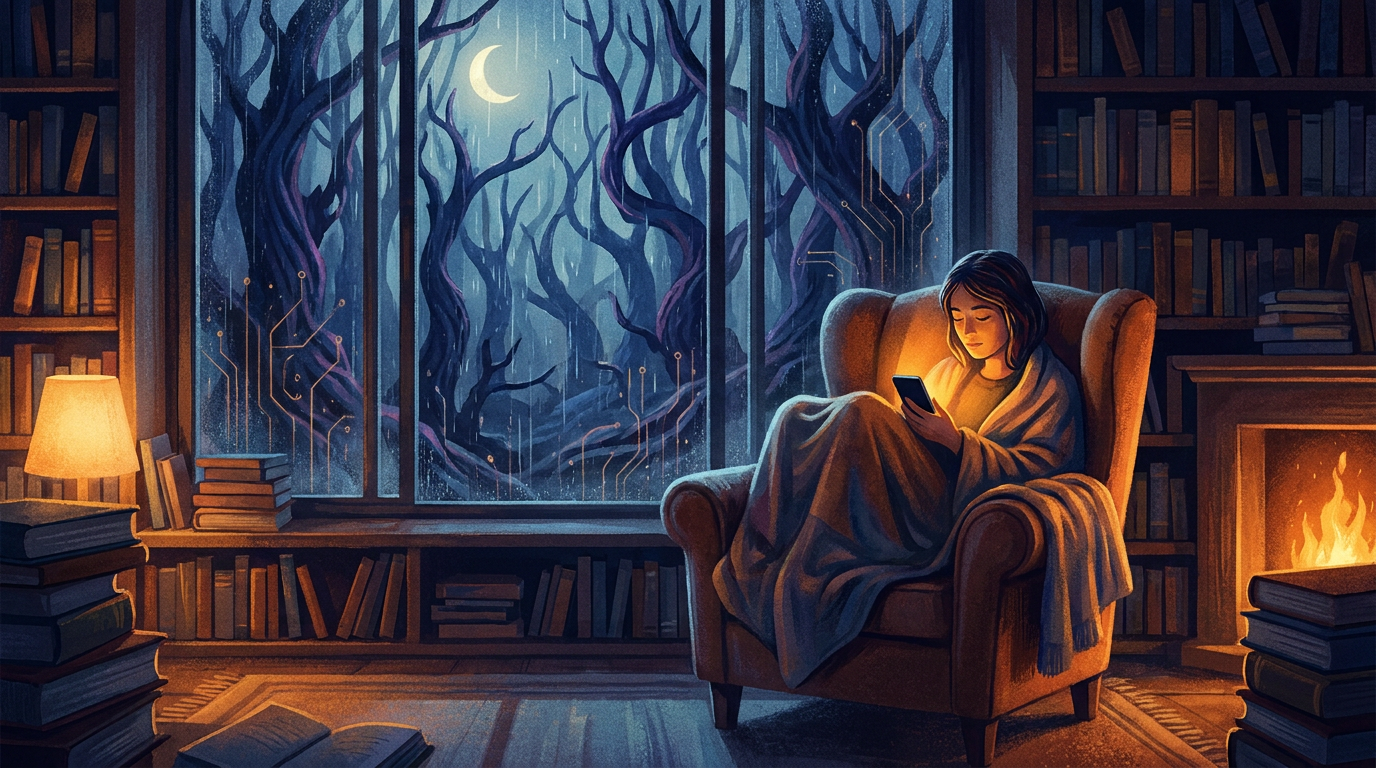
The public internet of 2026 feels increasingly like a crowded, noisy airport terminal where everyone is allowed, but nobody is particularly excited to be there. Algorithmic feeds prioritize outrage and engagement over genuine connection, AI-generated content floods the timeline with synthetic noise, and every post is subject to the exhausting scrutiny of a global audience. For years, the prevailing assumption among tech analysts was that users would eventually log off entirely in frustration, abandoning digital life for the analog world. Instead, a quieter, more profound migration has taken place right under the surface. Users are not abandoning the internet; they are simply retreating into its hidden, warmly lit corners to escape the chaos of the main feed.[1]
This phenomenon, widely recognized by digital anthropologists and community strategists, marks a fundamental shift in how people experience online life. The era of the 'Open Web' idealism—where the ultimate goal was to broadcast your life, thoughts, and creations to the largest possible audience—has definitively given way to a desire for high-trust, low-scale intimacy. People are no longer optimizing for reach; they are optimizing for psychological safety. This transition represents a rejection of the performative metrics that defined the 2010s, replacing the pursuit of viral fame with the pursuit of genuine, unrecorded human connection.[1][6]
To fully understand this migration, one must first look at the hostile environment users are fleeing. In 2019, writer Yancey Strickler proposed the 'Dark Forest Theory of the Internet,' a chilling conceptual framework that has only grown more relevant as the web has matured. The theory suggests that the public web has become a dark forest filled with apex predators: tracking bots, data-hungry advertisers, algorithmic scrapers, reply guys, and bad-faith trolls. In such a predatory environment, revealing your authentic self is inherently dangerous. To survive, the logical response for any living creature is to stay completely silent and hide in the shadows.[6][7]
When users hide from the dark forest of the public timeline, they seek refuge in what tech essayist Venkatesh Rao famously dubbed the 'Cozy Web.' The Cozy Web is not a single destination or a specific app, but rather a sprawling collection of private, gatekeeper-bounded spaces. It comprises invite-only Discord servers, specialized Slack channels, encrypted WhatsApp group chats, private subreddits, and hidden Geneva rooms. These are the digital equivalent of a friend's living room—spaces where the door is locked to the outside world and everyone inside shares a baseline level of mutual trust and context.[2][6]

Unlike the main public internet, which operates on a rigid protocol of publishers broadcasting polished content to passive users, the Cozy Web operates on a distinctly human, delightfully messy protocol. It is fueled by the synchronous sharing of cut-and-pasted text, out-of-context screenshots, voice notes, and hyper-specific inside jokes. Crucially, the Cozy Web is unindexed by major search engines, largely invisible to algorithmic scrapers, and inherently ephemeral. Because the content is not being optimized for a recommendation algorithm, the conversation can flow naturally without the pressure of performing for an invisible audience.[2]
This architectural shift is heavily driven by younger demographics who have grown up entirely under the watchful, unforgiving eye of public social media. According to comprehensive data from the Pew Research Center, attitudes toward public broadcasting have soured significantly among the youth. By 2025, nearly half of all U.S. teens reported that social media had a mostly negative effect on people their age, marking a sharp and alarming increase from previous years. The generation that was supposed to be the most digitally native is actively rejecting the platforms built for them.[4]

Consequently, market research firm YPulse notes that many young consumers now actively maintain two distinct online personas to navigate this divide. The first is a highly curated, sanitized public profile that serves essentially as a digital business card—a place to look professional, uncontroversial, and aesthetically pleasing. The second is a semi-private, authentic self that only exists within the safety of the Cozy Web. In these private spaces, the pressure to perform perfection is completely removed, allowing for vulnerability, mistakes, and genuine emotional support.[5]
Consequently, market research firm YPulse notes that many young consumers now actively maintain two distinct online personas to navigate this divide.
Within these private spaces, a new social architecture has emerged, which community expert Sara Wilson categorizes as 'Digital Campfires.' Wilson identifies three distinct types of campfires where modern internet culture actually happens, far away from the trending topics of the public square. The first category is private messaging campfires, such as direct messages and intimate group chats. In these spaces, one-to-one or small-group trust is paramount, and the conversation is usually restricted to people who know each other intimately in the physical world.[3]
The second type consists of micro-community campfires. These are digital spaces built around highly specific shared interests, niche hobbies, or dedicated creator fandoms. Unlike the massive, chaotic subreddits or Facebook groups of the past, these modern micro-communities are heavily moderated and fiercely protected. They often require detailed applications, vetting processes, or monthly subscription fees to enter, ensuring that every participant is genuinely invested in the culture and willing to uphold the community's specific behavioral norms. By raising the barrier to entry, these communities filter out the noise and hostility of the dark forest, creating a high-signal environment where deep, meaningful discussions can flourish without the threat of context collapse.[3]
The third category is shared experience campfires. These occur in immersive, interactive environments like Fortnite, Roblox, or specialized virtual reality spaces. In these settings, the primary activity is ostensibly playing a game or attending a virtual concert, but the underlying social value is the synchronous, unrecorded conversation happening in the voice chat. Here, the shared digital activity serves as the literal campfire around which the community gathers, providing a low-pressure backdrop for hours of unstructured socializing. For many younger users, logging into these spaces is less about the gameplay and entirely about hanging out with friends in a space where parents, teachers, and algorithms cannot intrude.[3]

For creators, journalists, and brands, this mass migration presents a complex, existential challenge. Traditional engagement metrics—such as public likes, comments, and follower counts—are rapidly becoming weaker indicators of true cultural resonance. The real influence, the actual shifting of opinions and tastes, has moved into spaces where traditional advertising cannot easily reach. Brands are now forced to act less like broadcasters shouting into a void and more like gracious hosts, attempting to earn invitations into these private spaces by providing genuine utility rather than disruptive spectacle.[1][3]
However, the retreat into the Cozy Web is not without its significant societal trade-offs. Open Web idealists warn that as the internet fractures into millions of private, gated communities, we lose the serendipity of the global town square. When conversation happens exclusively behind closed doors, the shared reality that public platforms occasionally provided begins to dissolve entirely. This fragmentation can accelerate the creation of echo chambers, where unchallenged ideas fester and cross-cultural understanding becomes increasingly difficult to achieve. Without a centralized public square, the internet risks becoming a series of isolated digital fiefdoms.[1][6]
Furthermore, the Cozy Web inherently favors those who already possess established networks and social capital. For a new creator, artist, or thinker trying to find an audience in 2026, the dark forest of the public web remains a necessary, if deeply unpleasant, gauntlet. The public feeds must act as the storefront to attract attention, but the actual relationship-building and community retention must quickly be moved into a private campfire. Navigating this dual-layered internet requires immense digital literacy and constant code-switching.[1]

Despite these structural concerns, the psychological benefits of this digital reorganization are undeniable for the average user. By firmly separating public performance from private connection, users are reclaiming their agency over how, when, and with whom they interact in the digital world. The internet is no longer viewed as a single, monolithic place you log into; it is a vast, varied landscape, and users have finally learned how to build their own shelters to weather the algorithmic storms.[1]
Ultimately, the rise of the Cozy Web represents a profound maturation of internet culture. After two decades of relentlessly scaling up to connect billions of people in a single, chaotic feed, the pendulum has decisively swung back toward human-scale interaction. In the face of an increasingly automated, performative, and synthetic digital world, the most radical and empowering act is simply gathering around a small, digital fire with people you genuinely trust. It is a reminder that technology is at its best not when it broadcasts our lives to the masses, but when it deepens the bonds we share with our chosen communities.[1]
How we got here
2019
Yancey Strickler publishes the 'Dark Forest Theory of the Internet,' articulating the hostility of the public web.
2020
Sara Wilson coins the term 'Digital Campfires' to describe the micro-communities users are fleeing toward.
2024
The proliferation of AI-generated content accelerates the degradation of public social media feeds.
2025
Pew Research data reveals a sharp spike in teens reporting negative effects from public social media platforms.
2026
The Cozy Web matures from a reactionary retreat into the default architecture for new digital communities.
Viewpoints in depth
Digital Minimalists & Community Builders
Advocates for the Cozy Web prioritize mental health and high-trust spaces.
This camp argues that the original promise of the open web has been entirely compromised by algorithmic feeds and engagement-based business models. By retreating to the Cozy Web, users are actively reclaiming their mental health and digital agency. They view digital campfires not as a retreat from society, but as a necessary boundary-setting exercise that allows for genuine, unperformative human connection without the constant surveillance of advertisers and bad actors.
Open Web Idealists
Critics worry about the fragmentation and loss of the global town square.
While acknowledging the toxicity of the dark forest, this perspective warns that abandoning public platforms leads to severe cultural fragmentation. When all meaningful conversation moves behind closed doors, society loses the serendipity of discovering new ideas and the shared reality that a global town square provides. Furthermore, they argue that the Cozy Web inherently favors those with existing social capital, making it incredibly difficult for new voices, artists, or marginalized groups to find an audience or build a community from scratch.
Consumer Behavior Analysts
Researchers focus on the dual personas required to navigate the modern internet.
Analysts observing this shift note that users aren't logging off; they are simply bifurcating their identities. The public internet is increasingly treated as a 'storefront' or a digital business card—highly sanitized, professional, and performative. Meanwhile, the authentic self is reserved exclusively for private campfires. This camp emphasizes that brands, creators, and institutions must fundamentally change how they measure engagement, moving away from public vanity metrics and toward retention and trust within micro-communities.
What we don't know
- How new creators and artists will reliably build audiences if the public internet continues to degrade and communities remain entirely walled off.
- Whether major social media platforms will successfully pivot to monetize these private spaces, or if they will slowly lose cultural relevance.
Key terms
- Cozy Web
- The private, gatekeeper-bounded spaces of the internet where users retreat from public platforms to engage in high-trust, unindexed conversations.
- Digital Campfires
- Intimate online micro-communities where people gather around shared interests, private messaging, or shared experiences, away from algorithmic feeds.
- Dark Forest Theory
- The concept that the public internet is full of 'predators' like bots and trolls, prompting real users to hide in private spaces to survive.
- Bitrot
- The slow degradation of digital data over time; in the Cozy Web, it refers to the unsearchable, ephemeral nature of shared links and screenshots.
Frequently asked
What exactly is the Cozy Web?
The Cozy Web is a term for the private, gatekeeper-bounded spaces of the internet, such as Discord servers, Slack channels, and group chats, where users interact away from public algorithms.
Why are people leaving public social media?
Users are experiencing fatigue from performative pressures, algorithmic feeds, and an influx of AI-generated content, prompting a retreat to high-trust, semi-private spaces.
What is a digital campfire?
Coined by community expert Sara Wilson, a digital campfire is an intimate online micro-community where people gather around shared interests, private messaging, or shared experiences.
Does this mean public platforms are dying?
No. Public platforms still serve as discovery engines and digital 'storefronts,' but the actual relationship-building and authentic conversations have moved to private channels.
Sources
Source coverage
7 outlets
3 viewpoints surfaced







[1]Factlen Editorial TeamConsumer Behavior Analysts
Synthesis by Factlen editorial team
Read on Factlen Editorial Team →[2]RibbonfarmDigital Minimalists & Community Builders
The Extended Internet Universe
Read on Ribbonfarm →[3]Harvard Business ReviewDigital Minimalists & Community Builders
The Era of Antisocial Social Media
Read on Harvard Business Review →[4]Pew Research CenterConsumer Behavior Analysts
Teens, Social Media and Technology 2025
Read on Pew Research Center →[5]YPulseConsumer Behavior Analysts
How Gen Z is Reorganizing Their Digital Lives
Read on YPulse →[6]Maggie AppletonDigital Minimalists & Community Builders
The Dark Forest and the Cozy Web
Read on Maggie Appleton →[7]Yancey StricklerOpen Web Idealists
The Dark Forest Theory of the Internet
Read on Yancey Strickler →

More in culture
See all 31 stories →Historical Breakthrough
How AI is 'Unburning' the Lost Ancient Library of Herculaneum
8 sources

Nervous System
The Science of 'Glimmers': How Micro-Joys Rewire the Nervous System for Calm
7 sources

Digital Trust
How Content Credentials Are Saving Photography in the AI Era
6 sources

Sustainable Architecture
The Rise of the 'Plyscraper': How Mass Timber is Rewriting the Rules of High-Rise Construction
7 sources
Every angle. Every day.
Get culture stories with full source coverage and perspective breakdowns delivered to your inbox.