
Why 2026 is the Year AI Moves from the Cloud to Your Device
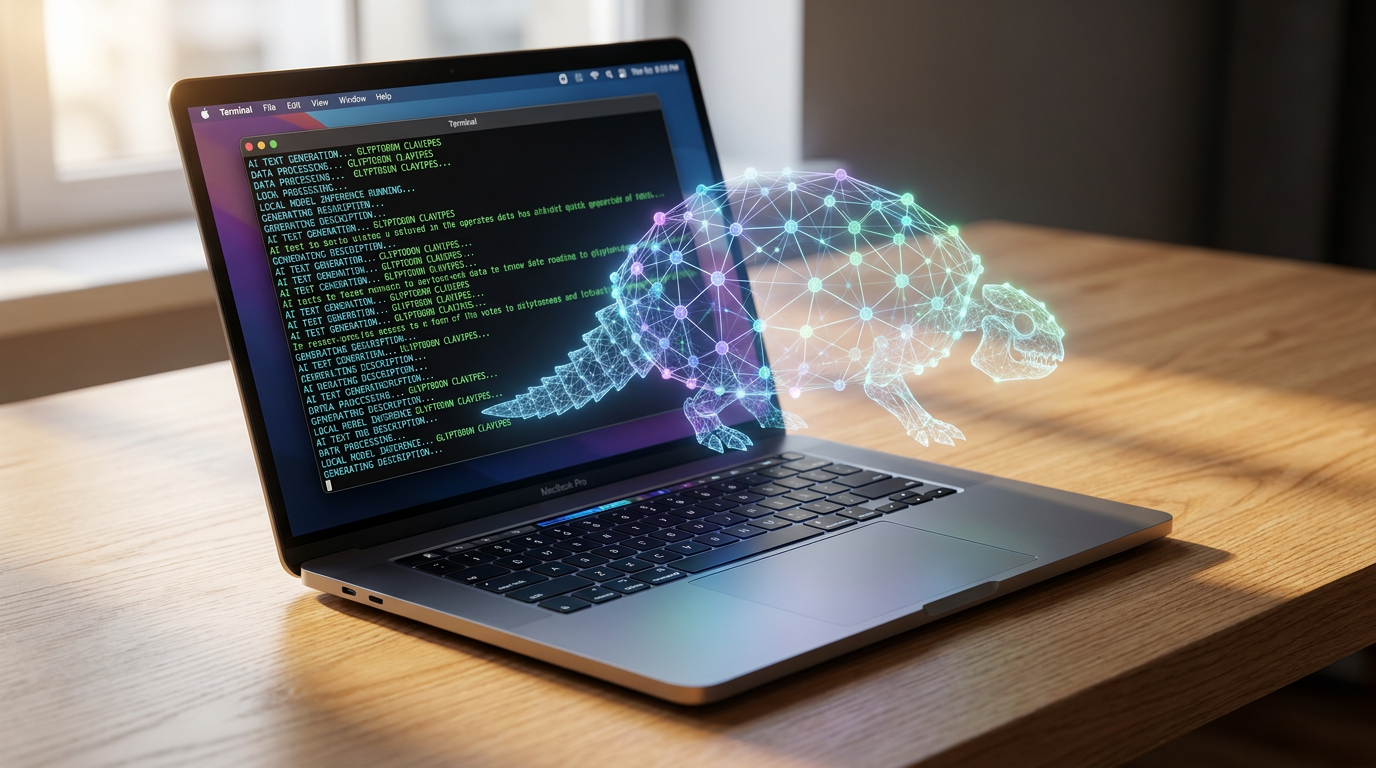
The tech industry is rapidly shifting toward Small Language Models (SLMs)—highly efficient AI systems that run entirely locally on consumer devices. This transition to on-device processing is solving AI's biggest challenges regarding data privacy, latency, and offline capability.
By Factlen Editorial Team

- Enterprise IT Leaders
- Focus on the economics and reliability of AI, valuing SLMs for slashing API costs and eliminating latency.
- Privacy & Security Advocates
- Argue that cloud AI is fundamentally incompatible with sensitive data, viewing SLMs as the only ethical path forward.
- Frontier AI Researchers
- Maintain that while SLMs are highly efficient, massive cloud models are still required for emergent reasoning and broad world knowledge.
What's not represented
- · Hardware Manufacturers
- · Open-Source Contributors
Why this matters
By running artificial intelligence directly on your phone or laptop instead of in the cloud, Small Language Models guarantee your data remains private, eliminate API subscription costs, and deliver instant answers even without an internet connection.
Key points
- Small Language Models (SLMs) allow powerful AI to run entirely on local devices without an internet connection.
- On-device processing guarantees data privacy, as sensitive information never leaves the user's hardware.
- Local inference eliminates cloud network latency, enabling sub-100-millisecond response times for real-time applications.
- Quantization techniques compress massive models to fit within the 4GB to 8GB RAM constraints of standard consumer devices.
- Modern applications are adopting a hybrid approach, using local SLMs for routine tasks and cloud LLMs for complex reasoning.
For the past three years, using artificial intelligence meant renting a supercomputer. Every prompt typed into a chatbot traveled to massive data centers, processed by models with hundreds of billions of parameters, before beaming an answer back. But in 2026, the paradigm has fundamentally shifted. The tech industry is pivoting from massive cloud-based Large Language Models (LLMs) to Small Language Models (SLMs)—highly efficient AI that runs entirely locally on smartphones, laptops, and edge devices.[1][4]
This transition marks the moment AI moves from a cloud service to a native utility. SLMs are generally defined as neural networks containing between 1 billion and 15 billion parameters, a fraction of the estimated trillion-plus parameters powering frontier models like GPT-4. Despite their smaller footprint, these models have achieved remarkable capability. Through better training data and architectural refinements, today's SLMs can match the performance of 2024's massive models on reasoning, coding, and language tasks, all while operating entirely offline.[2][3]
The primary driver of this local AI revolution is privacy. When a user queries a cloud-based LLM, sensitive data—whether personal health symptoms, proprietary corporate code, or financial records—must leave the device. In an era defined by strict data sovereignty laws like the EU AI Act and growing corporate anxiety over data leakage, SLMs offer an airtight solution. Because the model runs on the user's hardware, the data never traverses the internet. There are no API calls, no server logs, and no third-party processing agreements required.[1][6]

Beyond privacy, local execution eliminates the latency inherent to cloud computing. Cloud API calls typically add 200 to 800 milliseconds of network delay before the first word of a response appears. On-device inference strips this away entirely, enabling sub-100-millisecond response times. This near-instantaneous processing is unlocking real-time applications that were previously impossible, such as fluid voice assistants, instant code completion, and augmented reality interactions that respond at the speed of human thought.[2][6]
The economic advantages are equally transformative for enterprises. Serving millions of users via cloud AI APIs can cost organizations hundreds of thousands of dollars monthly. By shifting routine tasks to SLMs running on edge devices or local servers, companies are slashing their AI infrastructure costs by up to 95%. Gartner estimates that by 2027, organizations will deploy task-specific SLMs three times more often than general-purpose LLMs, driven largely by this dramatic reduction in compute expenditure.[3][6]
This software revolution is being enabled by a quiet hardware revolution. Modern consumer devices are now purpose-built for AI. Apple's M4 and A18 chips, alongside the latest Snapdragon processors, feature dedicated Neural Processing Units (NPUs) capable of trillions of operations per second. Crucially, these systems utilize unified memory architectures, allowing the AI model to share a single pool of high-speed RAM with the CPU and GPU, eliminating the data bottlenecks that previously crippled local inference.[2]
This software revolution is being enabled by a quiet hardware revolution.
But powerful hardware is only half the equation; the models themselves had to shrink. This is achieved through a mathematical technique called quantization. In standard AI training, a model's parameters are stored as highly precise 16-bit floating-point numbers. Quantization compresses these weights into 8-bit or even 4-bit integers. This compression dramatically reduces the model's memory footprint with minimal loss in reasoning capability. A 7-billion parameter model that normally requires 14 gigabytes of RAM can be squeezed into roughly 4 gigabytes, making it comfortably runnable on an average smartphone.[2][3]

The landscape of available SLMs in 2026 is fiercely competitive. Microsoft's Phi-4 family has emerged as a leader in logic and reasoning. The 14-billion parameter Phi-4 routinely beats much larger models on graduate-level math and science benchmarks, while the ultra-compact Phi-4-mini is optimized for low-latency smartphone deployment. Microsoft's approach proved that meticulously curated, high-quality training data is more important than raw model size.[3][4]
Google's Gemma 3 series has pushed the boundaries of what small models can perceive. Unlike text-only competitors, Gemma 3 models are natively multimodal, meaning they can process and analyze images directly on-device. This capability is rapidly being adopted in smart manufacturing, where edge devices equipped with Gemma 3 can perform real-time visual defect detection on assembly lines without requiring an internet connection.[4][5]

Meta's Llama 3.2 and Alibaba's Qwen 3 round out the top tier. Llama 3.2 excels at tool-calling and structured outputs, making it ideal for powering local agents that interact with a user's calendar or file system. Meanwhile, Qwen 3 has set the standard for multilingual support, offering robust performance across dozens of languages in a highly compact form factor.[3][5]
Deploying these models has also become remarkably user-friendly. Just a few years ago, running local AI required complex Python environments and deep technical knowledge. Today, open-source frameworks like Ollama and MLX have reduced the process to a single click or terminal command. These tools automatically handle hardware optimization, memory management, and quantization, democratizing access to local AI for developers and hobbyists alike.[2][5]
The future of AI architecture is not strictly local or strictly cloud, but a hybrid approach. In 2026, the smartest applications use local-first routing: an on-device SLM handles 90% of routine queries—summarizing emails, drafting texts, or answering basic questions—instantly and privately. Only when a query requires massive general knowledge or complex multi-step reasoning does the system seamlessly fall back to a cloud-based frontier model.[2][3][7]

How we got here
2023
Large Language Models (LLMs) like GPT-4 dominate the landscape, requiring massive cloud data centers for inference.
Mid-2024
The first highly capable open-weight SLMs, such as Llama 3 8B and Phi-3, prove that smaller models can punch above their weight.
2025
Hardware catches up as Apple, Qualcomm, and Intel make Neural Processing Units (NPUs) standard in consumer laptops and smartphones.
Early 2026
Multimodal SLMs like Gemma 3 bring local vision and image processing directly to mobile and edge devices.
Mid-2026
Local-first hybrid routing becomes the enterprise standard, drastically reducing cloud AI costs and ensuring data privacy.
Viewpoints in depth
Privacy & Security Advocates
Argue that cloud AI is fundamentally incompatible with sensitive data.
For privacy advocates and compliance officers, the shift to SLMs is not just a technological upgrade—it is an ethical necessity. They argue that routing sensitive healthcare data, financial records, or personal communications through third-party cloud servers introduces unacceptable risks of data leakage and surveillance. By processing data strictly on-device, SLMs ensure absolute data sovereignty, making them the only viable path for AI adoption in heavily regulated industries governed by frameworks like the EU AI Act and HIPAA.
Enterprise IT Leaders
Focus on the economics and reliability of AI deployments.
Corporate IT departments view SLMs primarily through the lens of cost and operational stability. Relying entirely on cloud-based LLMs results in unpredictable, usage-based API bills that scale linearly with user adoption. By offloading 90% of routine AI tasks to local hardware, enterprises can slash their cloud compute expenditures. Furthermore, IT leaders value the offline capabilities of SLMs, ensuring that critical business applications—from factory floor defect detection to field service tools—remain functional even during network outages.
Frontier AI Researchers
Maintain that massive cloud models are still required for emergent reasoning.
While acknowledging the efficiency of SLMs, researchers working on frontier models caution against viewing them as a complete replacement for massive LLMs. They point out that SLMs, constrained by their parameter counts, lack the broad world knowledge and emergent multi-step reasoning capabilities found in trillion-parameter models. This camp advocates for a hybrid future where SLMs act as highly capable front-end triage agents, but seamlessly hand off complex, novel problems to the cloud supercomputers that possess true general intelligence.
What we don't know
- Whether the rapid pace of hardware improvements will eventually allow massive frontier models to run locally.
- How intellectual property laws will adapt to open-weight models running entirely offline and out of regulatory sight.
- The long-term environmental impact of embedding dedicated AI silicon into billions of disposable consumer devices.
Key terms
- Small Language Model (SLM)
- An AI model with roughly 1 to 15 billion parameters, designed to run efficiently on consumer hardware rather than cloud servers.
- Quantization
- A compression technique that reduces the precision of an AI model's internal numbers (e.g., from 16-bit to 4-bit), drastically lowering its memory requirements.
- Neural Processing Unit (NPU)
- A specialized hardware chip built into modern processors specifically designed to accelerate artificial intelligence calculations efficiently.
- Edge Computing
- Processing data locally on the device where it is generated (like a phone or a factory sensor) rather than sending it to a centralized cloud server.
- Parameter
- The internal numeric weights a neural network learns during training; the 'knowledge' of the model.
Frequently asked
Can an SLM write code as well as a large cloud model?
For standard boilerplate, bug fixing, and common languages, top SLMs like Phi-4 perform on par with large models. However, for highly complex, multi-file architectural tasks, massive cloud models still hold an edge.
Do I need a specialized AI PC to run these models?
No. Thanks to a compression technique called quantization, models like Llama 3.2 and Gemma 3 can run smoothly on standard laptops with 8GB of RAM, and even on modern smartphones from 2024 onward.
Does running AI locally drain my phone's battery?
It uses more power than a simple web search, but modern Neural Processing Units (NPUs) are highly efficient. A typical local query uses less than 1% of a modern smartphone's battery.
Sources
Source coverage
7 outlets
3 viewpoints surfaced







[1]KnowAIPrivacy & Security Advocates
Why Choose Small Language Models (SLM) Over Large Language Models (LLM) in 2026?
Read on KnowAI →[2]Knolli AIFrontier AI Researchers
Small Language Models: A Complete Guide for 2026
Read on Knolli AI →[3]Local AI MasterEnterprise IT Leaders
Best Small Language Models 2026: 12 SLMs for 8GB RAM
Read on Local AI Master →[4]Enterprise Edge AIEnterprise IT Leaders
Small Language Models: Phi-4 vs Gemma 3 vs Llama 3.3
Read on Enterprise Edge AI →[5]HAVEN SurvivalPrivacy & Security Advocates
Best AI Models You Can Run on Your Phone Offline in 2026
Read on HAVEN Survival →[6]Ruh AIEnterprise IT Leaders
Small Language Models (SLMs): The Efficient Future of AI in 2026
Read on Ruh AI →[7]Factlen Editorial TeamFrontier AI Researchers
Synthesis by Factlen editorial team
Read on Factlen Editorial Team →

More in ai
See all 96 stories →EU AI Act
EU AI Act Enforcement Begins: What the August 2026 Deadlines Mean for Global Tech
7 sources

Local AI
The 2026 Guide to Local AI: How to Run LLMs on Your Own Hardware
7 sources
Drug Discovery
New AI Model Accelerates Molecular Simulations 10,000x, Speeding Up Early Drug Discovery
7 sources

Optical Computing
How Photonic Chips Are Rewiring AI to Run on Light
7 sources

Every angle. Every day.
Get ai stories with full source coverage and perspective breakdowns delivered to your inbox.