
How Costa Rica Doubled Its Forest Cover in a Single Generation
By paying landowners to protect trees rather than cut them down, Costa Rica reversed decades of deforestation and became a global model for environmental policy.
By Factlen Editorial Team
- Market-Based Conservationists
- Argue that pricing nature's services is the most sustainable way to prevent deforestation.
- State Intervention Advocates
- Emphasize that strict government regulation and taxation are the true drivers of the program's success.
- Rural Development Proponents
- Focus on how the policy shifted rural economies and provided a social safety net.
What's not represented
- · Commercial agricultural producers facing land restrictions
- · Private sector companies expected to voluntarily fund the program
Why this matters
Costa Rica's success proves that environmental conservation and economic development are not mutually exclusive. By treating intact forests as valuable national utilities, the country offers a proven, scalable blueprint for other nations struggling to combat climate change and rural poverty.
Key points
- Costa Rica's forest cover has doubled from a historic low of 26% in 1983 to over 52% today.
- The 1996 Forestry Law established the Payment for Environmental Services (PES) program to incentivize conservation.
- Landowners are paid to protect forests based on four services: carbon storage, water protection, biodiversity, and scenic beauty.
- The program is primarily funded by a national tax on fossil fuels and water usage.
- Over 18,000 families and numerous indigenous communities have received direct financial benefits from the initiative.
- The model is now being studied globally as a blueprint for balancing economic growth with environmental protection.
In the early 1980s, Costa Rica was facing an ecological crisis. Decades of unchecked logging and agricultural expansion had laid waste to the country's once-lush landscapes, reducing its dense tropical tree canopy to a historic low of just 26 percent. The destruction ravaged the habitats of indigenous species, accelerated soil erosion, and threatened the nation's water supply. To outside observers, Costa Rica appeared locked into the same downward spiral of deforestation that was consuming tropical regions worldwide.[1][6]
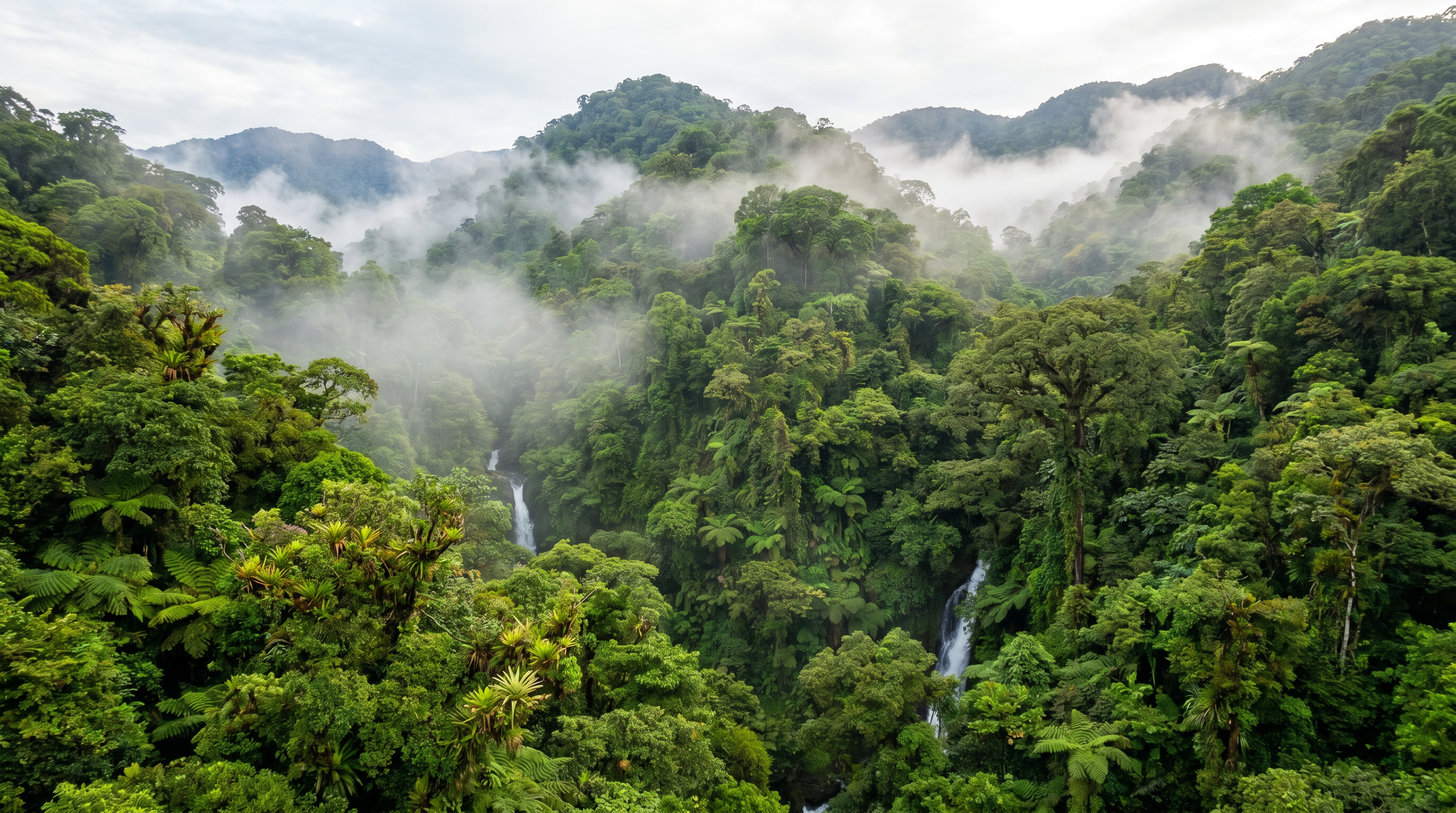
Today, the visual and statistical contrast is staggering. Costa Rica has successfully doubled its forest cover, which now blankets more than 52 percent of the country's landmass. It stands as the first tropical nation to reverse deforestation on a national scale, transforming a degraded landscape into a massive carbon sink and a thriving biodiversity hotspot. This dramatic reversal was not a happy accident of nature, but the result of a radical reimagining of how a national economy interacts with its environment.[1][7]
The turning point arrived with the passage of the 1996 Forestry Law, which introduced a pioneering concept: the Payment for Environmental Services (PES) program. Before 1996, economic logic dictated that a forest was only valuable if it was cut down for timber or cleared to make way for cattle pasture. The new legislation flipped that paradigm, legally recognizing that intact forests provide continuous, quantifiable value to the entire nation.[5][6]
Under the PES framework, the Costa Rican government treats forests as active utility providers rather than idle land. The program specifically identifies and compensates landowners for four distinct ecosystem services. The first is carbon sequestration—the absorption of greenhouse gases that mitigate climate change. The second is watershed protection, ensuring clean and reliable water sources for human consumption and hydroelectric power.[5][6]
The third recognized service is the conservation of biodiversity, which safeguards the genetic wealth of the country's flora and fauna. Finally, the program pays for the preservation of scenic beauty, a direct acknowledgment that pristine landscapes are the foundational asset of Costa Rica's lucrative eco-tourism industry. By breaking down the abstract concept of "nature" into these four tangible services, the government created a market where none previously existed.[6][7]

To fund this ambitious initiative, policymakers implemented a mechanism where polluters pay the protectors. The primary financial engine of the PES program is a national tax on fossil fuels, specifically gasoline, alongside a dedicated water tariff. These revenues are channeled into the National Forestry Financing Fund (FONAFIFO), which then distributes the money directly to private landowners and indigenous communities who commit to preserving their trees.[3][6]
The mechanics of the program are straightforward but strictly enforced. Landowners sign multi-year contracts with the government, agreeing to protect existing forests, plant new trees, or implement sustainable agroforestry practices. In exchange, they receive direct per-hectare cash payments. If a landowner violates the contract by clearing the land, the payments stop and legal penalties apply. This system effectively outbid the short-term profits of illegal logging.[2][3]
The mechanics of the program are straightforward but strictly enforced.
The economic ripple effects of the PES program have fundamentally reshaped rural Costa Rica. By providing a reliable income stream for conservation, the program made forest protection a competitive alternative to cattle ranching and cash-crop agriculture. Landowners who once viewed trees as an obstacle to income now view them as a yielding asset, aligning their personal financial interests with the ecological health of the country.[1][7]
Over the past two decades, the program has injected more than $524 million into rural economies, directly benefiting over 18,000 families. The infusion of capital has spurred the creation of an estimated 18,000 direct jobs in conservation, sustainable forestry, and eco-tourism, while indirectly supporting another 30,000 roles. For many rural communities, the PES payments provide crucial capital for education, healthcare, and local infrastructure.[1][3]
Crucially, the program was designed with specific mechanisms to ensure equitable access. Indigenous territories operate under special conditions that promote collective participation, benefiting an estimated 100,000 indigenous people. Subsequent iterations of the initiative, supported by international institutions, explicitly targeted small- and medium-sized landholders and female property owners, ensuring that the financial windfalls of conservation were not monopolized by massive estates.[2][3]
The ecological dividends have been equally profound. By halting the chainsaw and allowing secondary rainforests to naturally regenerate, Costa Rica has revitalized critical habitats. Species that were pushed to the brink of extinction in the 1980s, such as the golden toad and various poison dart frogs, have seen their ecosystems stabilized. Today, more than half of the country's tree canopy consists of resilient secondary rainforest.[1][4]

Despite its overwhelming success, the PES model is not without its challenges and critics. One persistent hurdle is the program's heavy reliance on public funds. When the system was designed, architects hoped that private sector actors—such as hotels benefiting from scenic beauty or agricultural firms relying on clean water—would voluntarily pay into the fund. However, private contributions have remained stubbornly low, leaving the state to shoulder the financial burden.[5][7]
Furthermore, the program operates in a constant tug-of-war with global commodity markets. While the PES payments are sufficient to deter logging on marginal lands, they sometimes struggle to compete with the soaring profitability of export crops like pineapples and palm oil. In regions where agricultural yields are exceptionally high, the financial incentive to clear land remains a persistent threat that requires constant regulatory vigilance.[7]
Even with these friction points, the Costa Rican experiment has become the gold standard for environmental policy. International organizations and developing nations frequently study the FONAFIFO model, attempting to adapt its architecture to their own landscapes. Platforms linked to the World Economic Forum are currently exploring how similar payment structures could be applied globally to make the production of high-demand commodities more sustainable.[1][2]

Ultimately, Costa Rica's journey from a heavily deforested landscape to a global green pioneer dismantles the long-held assumption that environmental protection inherently stifles economic growth. By proving that a nation can double its forest cover while simultaneously expanding its economy and reducing rural poverty, the PES program offers a pragmatic, scalable blueprint for the defining challenge of the 21st century.[3][7]
How we got here
1983
Costa Rica's forest cover hits a historic low of 26% due to decades of unchecked logging and agricultural expansion.
1996
The government passes a landmark Forestry Law, banning the clearing of mature forests and establishing the PES program.
1997
The first nationwide payments are distributed to landowners, funded by a newly implemented tax on fossil fuels.
2014
The program expands its reach, significantly increasing the participation of small-holder farmers and indigenous communities.
Today
Forest cover surpasses 52%, making Costa Rica the first tropical nation to reverse deforestation on a national scale.
Viewpoints in depth
Market-Based Conservationists
Advocates who argue that pricing nature's services is the only sustainable way to prevent deforestation.
This camp, which includes environmental economists and international development banks, views the PES program as a triumph of market design. They argue that moral appeals to save the rainforest inevitably fail when landowners are economically desperate. By turning carbon sequestration and water filtration into quantifiable, tradable services, the government successfully aligned ecological health with rational self-interest. From this perspective, the forest is no longer a passive victim of the economy, but an active, revenue-generating sector.
State Intervention Advocates
Policy experts who emphasize that the market only functions because of strict government regulation and taxation.
While acknowledging the market mechanisms, this camp points out that Costa Rica's success is fundamentally rooted in strong state intervention. The PES system is entirely dependent on a government-mandated tax on fossil fuels and a strict legal ban on land-use changes in forested areas. They argue that without the state artificially creating the market and forcing polluters to fund it, the financial incentives would collapse. To them, the lesson is not about free markets, but about bold, centralized environmental governance.
Rural Development Proponents
Focus on how the policy shifted rural economies and provided a social safety net.
For rural advocates and indigenous groups, the primary triumph of the PES program is its impact on human livelihoods. Before the program, rural landowners faced a stark choice between preserving their heritage and feeding their families. By injecting over $500 million directly into rural communities, the policy functioned as a highly effective poverty-alleviation tool. This perspective highlights how the funds have been used to build schools, improve local healthcare, and empower women and indigenous populations who were previously marginalized by traditional agricultural economies.
What we don't know
- Whether the PES model can successfully compete long-term against highly profitable export crops like pineapple and palm oil.
- How the program will adapt if national fossil fuel consumption drops, reducing its primary source of tax revenue.
Key terms
- Payment for Environmental Services (PES)
- A financial mechanism that pays landowners for the ecological benefits their land provides, such as clean water and carbon storage.
- Carbon Sequestration
- The process by which trees and plants capture and store carbon dioxide from the atmosphere, helping to mitigate climate change.
- Secondary Rainforest
- A forest that has regrown naturally after the original, primary forest was cleared or degraded by human activity.
- Agroforestry
- An agricultural approach that integrates the planting and conservation of trees alongside traditional crops or livestock.
Frequently asked
How much of Costa Rica is covered by forest?
Today, over 52% of Costa Rica's landmass is covered by forest, a significant recovery from a historic low of 26% in 1983.
What is the PES program?
The Payment for Environmental Services (PES) program is a government initiative that pays private landowners to protect existing forests, plant new trees, and maintain sustainable agroforestry.
How does Costa Rica fund its conservation payments?
The program is primarily funded through a national tax on fossil fuels, specifically gasoline, as well as a dedicated water tariff.
Can anyone cut down trees in Costa Rica?
The 1996 Forestry Law strictly bans land-use changes in established forests, meaning it is illegal to clear natural forests for agriculture or development without highly restricted permits.
Sources
Source coverage
7 outlets
3 viewpoints surfaced






[1]World Economic ForumRural Development Proponents
Costa Rica has doubled its tropical rainforest in just a few decades. Here's how
Read on World Economic Forum →[2]World BankMarket-Based Conservationists
Costa Rica: Forest Conservation and Sustainability
Read on World Bank →[3]UNFCCCState Intervention Advocates
Payments for Environmental Services Program | Costa Rica
Read on UNFCCC →[4]Food and Agriculture OrganizationState Intervention Advocates
Forestry Policies and Institutions in Costa Rica
Read on Food and Agriculture Organization →[5]International Institute for Environment and DevelopmentState Intervention Advocates
Costa Rica's payments for ecosystem services: paradox or practical mix?
Read on International Institute for Environment and Development →[6]Green Policy PlatformMarket-Based Conservationists
Costa Rica: Payment for Environmental Services
Read on Green Policy Platform →[7]Factlen Editorial TeamRural Development Proponents
Synthesis by Factlen editorial team
Read on Factlen Editorial Team →

More in world
See all 10 stories →Rail Infrastructure
Europe's Rail Renaissance: Inside the €345 Billion Masterplan to Replace Short-Haul Flights
8 sources

Mega-Grids
The Euro-African Energy Bridge: How Subsea Cables Are Rewiring the Mediterranean
7 sources

Agri-Tech Innovation
How Singapore is Rewriting the Rules of Urban Farming to Secure Its Food Supply
7 sources

Marine Conservation
How a Remote Chilean Island Pushed the Country to Protect 50% of Its Ocean
6 sources

Every angle. Every day.
Get world stories with full source coverage and perspective breakdowns delivered to your inbox.