
How Biomechanics and Pitch Design Are Rewiring the 2026 MLB Draft
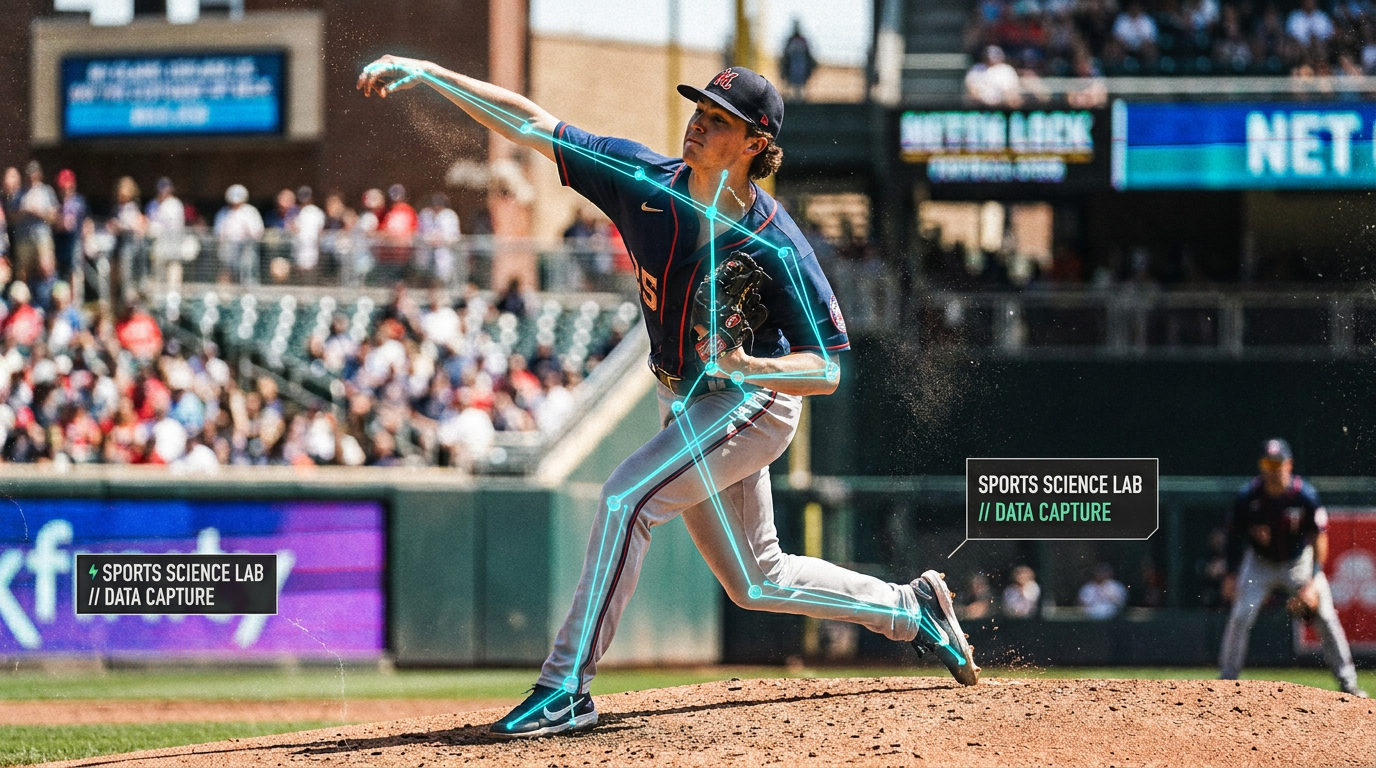
As the 2026 MLB Draft approaches, front offices are moving beyond the radar gun, using motion-capture technology and biomechanical testing to evaluate prospects and protect young arms from injury.
By Factlen Editorial Team
- Biomechanical Analysts
- Focus on kinetic efficiency, posture, and reducing joint stress to prevent injuries.
- Front Office Evaluators
- Balance raw stuff (velocity/spin) with long-term health projections and draft value.
- Player Development Coaches
- Emphasize pitch design, seam-shifted wake, and optimizing arsenals once a player is drafted.
- Traditional Scouts
- Still value in-game performance, competitiveness, and traditional scouting looks alongside the new data.
What's not represented
- · Youth Baseball Coaches
- · Independent Pitching Instructors
Why this matters
Understanding how teams evaluate pitchers reveals a massive shift in modern sports: the transition from brute-force velocity to sustainable, science-backed performance. This evolution is actively reducing severe injuries and extending the careers of the next generation of athletes.
Key points
- The 2026 MLB Draft Combine features 334 prospects undergoing advanced biomechanical testing alongside traditional evaluations.
- Front offices are shifting focus from raw radar-gun velocity to kinetic efficiency to combat a surge in pitcher injuries.
- Research indicates that lower arm slots and optimized posture can significantly reduce elbow and shoulder torque.
- Teams are increasingly drafting pitchers with pristine mechanics and high spin rates, planning to safely develop their velocity post-draft.
The 2026 Major League Baseball Draft is less than a month away, and front offices are finalizing their boards ahead of the July 11 event in Philadelphia. While top position players like UCLA shortstop Roch Cholowsky and Georgia Tech catcher Vahn Lackey dominate the top-ten projections, the evaluation of pitching prospects has undergone a quiet, high-tech revolution.[1][5]
When 334 draft-eligible prospects gather at Chase Field in Phoenix for the MLB Draft Combine, the radar gun will no longer be the sole arbiter of a pitcher's future. Instead, the event serves as a state-of-the-art laboratory where the game's brightest young stars are measured in three dimensions.[3]
Prospects like USC left-hander Mason Edwards—who led the nation with 169 strikeouts—and his teammate Grant Govel will undergo rigorous biomechanical testing alongside traditional on-field showcases. This shift reflects a fundamental change in how organizations value young arms, prioritizing sustainable mechanics over raw, unrefined velocity.[3]
The catalyst for this evolution is an industry-wide reckoning with pitcher health. Average fastball velocity in the major leagues has climbed relentlessly, rising from 91.3 mph in 2008 to 94.2 mph in 2024.[2]

However, that pursuit of speed has come at a steep physical cost. Injury rates have surged across all levels of the sport, prompting teams to rethink their developmental pipelines. The correlation between chasing maximum velocity and early-career structural damage has forced scouts to look beyond the radar gun readings that once defined showcase culture.[2]
Today, the focus has shifted toward "movement from the inside out." Biomechanical analysis allows teams to evaluate how efficiently a pitcher transfers energy from their lower half, through their torso, and into their throwing arm.[2]
Recent sports science research has provided compelling evidence for this new approach. A comprehensive study of elite college pitchers revealed that lower arm slots significantly reduce joint stress without sacrificing velocity.[2]
Specifically, overhand pitchers were found to experience elbow torque equivalent to 6.7 percent of their body weight multiplied by their height. In contrast, sidearm and lower-slot pitchers experienced a reduced torque of 6.0 percent. Over the course of thousands of throws, that fractional difference translates to massive reductions in cumulative ligament stress.[2]

This does not mean organizations are forcing every prospect to drop their arm angle. Instead, biomechanists emphasize that a pitcher's slot should be dictated by their natural posture and scapular mobility.[2]
This does not mean organizations are forcing every prospect to drop their arm angle.
When a pitcher's mechanics work in harmony with their unique anatomy, the arm slot naturally optimizes itself. Teams are now drafting for this kinetic efficiency, looking for prospects whose bodies move fluidly rather than those who generate velocity through violent, high-effort deliveries.[2]
Beyond injury prevention, biomechanics is unlocking new frontiers in pitch design. Evaluators are increasingly focused on how prospects manipulate the baseball's flight using spin efficiency and seam-shifted wake.[6]
Pitchers are finding immense success by moving the ball horizontally. The rise of the "sweeper"—a breaking ball with massive lateral movement—has shown that horizontal break can be just as devastating as pure north-south velocity.[6]
This analytical approach is reshaping the draft stock of college arms across the country. Prospects like UC Santa Barbara right-hander Jackson Flora are being evaluated not just on their current arsenals, but on how their biomechanical profiles suggest they can adopt new pitch shapes at the professional level.[4]

Yet, for all the advancements in motion-capture technology, predicting pitcher health remains an inexact science. The human body is inherently unpredictable, and fatigue introduces variables that algorithms struggle to quantify.[7]
Research published in the Journal of Strength and Conditioning Research highlights how quickly mechanics can degrade under fatigue. In a study of adolescent pitchers, 56 percent showed more than a 20 percent loss in finger flexor strength after just 35 pitches.[7]
As fatigue sets in, rotational coordination falters and hip strength drops. The pitcher's brain continues to send signals calibrated for a fresh body, but the muscles can no longer execute the kinetic sequence efficiently.[2][7]
This biological reality creates a complex challenge for teams drafting 18-year-old high school pitchers. Their bodies are still developing, and early structural damage can have long-lasting consequences. Data shows that pitchers who undergo ulnar collateral ligament reconstruction before age 20 have their odds of reaching the major leagues cut in half.[2]

Consequently, the 2026 draft represents a balancing act. Teams must weigh the immediate appeal of a 98-mph fastball against the long-term sustainability of the athlete's kinetic chain.[5]
Many organizations are now willing to pass on maximum velocity if a pitcher's biomechanical profile raises red flags. They are increasingly opting for arms that sit in the low-90s but possess pristine mechanics, high spin rates, and the physical foundation to safely add velocity in a professional development system.[4][5]
Ultimately, the integration of biomechanics into the MLB Draft is about protecting the sport's most valuable assets. By evaluating pitchers as complex kinetic systems rather than simple radar-gun readings, baseball is taking a crucial step toward a healthier, more sustainable future on the mound.[1][3]
How we got here
2008
Average MLB fastball velocity sits at 91.3 mph.
2024
Average MLB fastball velocity reaches a record 94.2 mph, accompanied by a spike in pitcher injuries.
June 2026
334 draft-eligible prospects attend the MLB Draft Combine in Phoenix for biomechanical testing.
July 11, 2026
The 2026 MLB Draft begins in Philadelphia.
Viewpoints in depth
Biomechanical Analysts
Focus on kinetic efficiency, posture, and reducing joint stress to prevent injuries.
Analysts argue that the traditional scouting model is fundamentally flawed because it rewards maximum effort over efficient movement. By utilizing motion-capture labs, they believe teams can identify the root causes of UCL tears before they happen. Their evidence points to the clear correlation between high-effort, overhand deliveries and increased elbow torque, advocating for a development model that prioritizes natural scapular mobility over forced arm slots.
Front Office Evaluators
Balance raw stuff (velocity/spin) with long-term health projections and draft value.
For general managers and scouting directors, the draft is an exercise in risk management. While they acknowledge the importance of biomechanics, they must still weigh these findings against a player's on-field performance and competitive makeup. Evaluators use biomechanical data not just to avoid injury-prone pitchers, but to find undervalued arms—pitchers with low velocity but pristine kinetic chains who can be safely developed into hard throwers within a professional system.
Player Development Coaches
Emphasize pitch design, seam-shifted wake, and optimizing arsenals once a player is drafted.
Once a player enters a farm system, development coaches take the biomechanical data and apply it to pitch design. They argue that a pitcher doesn't need to throw 100 mph if they can master the aerodynamic properties of the baseball. By tweaking grips and utilizing seam-shifted wake, these coaches help prospects develop pitches like the sweeper, which rely on horizontal break and spin efficiency to miss bats, thereby reducing the need for maximum-effort fastballs.
Traditional Scouts
Still value in-game performance, competitiveness, and traditional scouting looks alongside the new data.
Veteran scouts caution against reducing pitching to a purely mathematical equation. They argue that while biomechanics can measure torque and spin rates, it cannot quantify a pitcher's resilience, baseball IQ, or ability to perform under pressure. Traditionalists believe that the best draft picks emerge when organizations blend cutting-edge motion-capture data with old-school, boots-on-the-ground scouting that evaluates the human element of the game.
What we don't know
- It remains unclear if biomechanical optimizations at the amateur level will definitively lower the injury rate over a full 162-game professional season.
- The long-term impact of heavily relying on horizontal "sweeper" pitches on elbow ligaments is still being studied by sports scientists.
Key terms
- Biomechanics
- The study of the mechanical laws relating to the movement or structure of living organisms, used in baseball to analyze pitching motions.
- Arm Slot
- The angle of a pitcher's arm relative to their body at the release point of the baseball.
- Seam-Shifted Wake
- An aerodynamic effect where the orientation of a baseball's seams alters the air pressure around it, creating unexpected movement.
- Kinetic Chain
- The sequence of body segments and joints that transfer energy from the ground up through the torso and into the throwing arm.
- UCL Reconstruction
- Commonly known as Tommy John surgery, a medical procedure to replace a torn ulnar collateral ligament in the elbow.
Frequently asked
What is the MLB Draft Combine?
It is a pre-draft showcase where draft-eligible prospects undergo on-field evaluations, medical tests, and advanced biomechanical assessments.
Why are teams moving away from just using radar guns?
While velocity is important, chasing maximum speed has led to a surge in arm injuries. Teams now use biomechanics to ensure a pitcher's mechanics are safe and sustainable.
Does throwing sidearm prevent injuries?
Research shows lower arm slots can reduce elbow and shoulder torque. However, experts emphasize that a pitcher's slot should naturally match their body's posture rather than being forced.
What is seam-shifted wake?
It is a pitch design concept where the baseball's seams are oriented to create asymmetrical air pressure during flight, causing the pitch to move in unexpected directions.
Sources
Source coverage
7 outlets
4 viewpoints surfaced







[1]MLB.comTraditional Scouts
Updated Top 10 2026 Draft prospects
Read on MLB.com →[2]Baseball AmericaBiomechanical Analysts
How Arm Slot Influences Stress on the Shoulder and Elbow
Read on Baseball America →[3]247SportsPlayer Development Coaches
USC's top two pitchers set to attend 2026 MLB Draft Combine
Read on 247Sports →[4]Sox MachineFront Office Evaluators
Updated 2026 MLB Draft Top 100
Read on Sox Machine →[5]On3Front Office Evaluators
2026 MLB Mock Draft: CBS Sports releases updated projections
Read on On3 →[6]ESPNPlayer Development Coaches
MLB draft buzz: Why UCLA's ace could shoot up draft
Read on ESPN →[7]Journal of Strength and Conditioning ResearchBiomechanical Analysts
Assessment of muscular fatigue on hip and torso biomechanics in adolescent baseball pitchers
Read on Journal of Strength and Conditioning Research →

More in sports
See all 5 stories →NBA Salary Cap
The Knicks Won Their First Title in 53 Years. Now the NBA's 'Second Apron' Threatens to Break Them Up.
8 sources

Women's Soccer
Women's Soccer Reaches New Heights as NWSL Shatters Attendance Records and USL Super League Crowns Champion
7 sources

Women's Soccer
Angel City FC Acquires USWNT Star Ally Sentnor in Record $850,000 Transfer
7 sources
Every angle. Every day.
Get sports stories with full source coverage and perspective breakdowns delivered to your inbox.