
How AI Voice Translation is Rewiring Global Podcasting
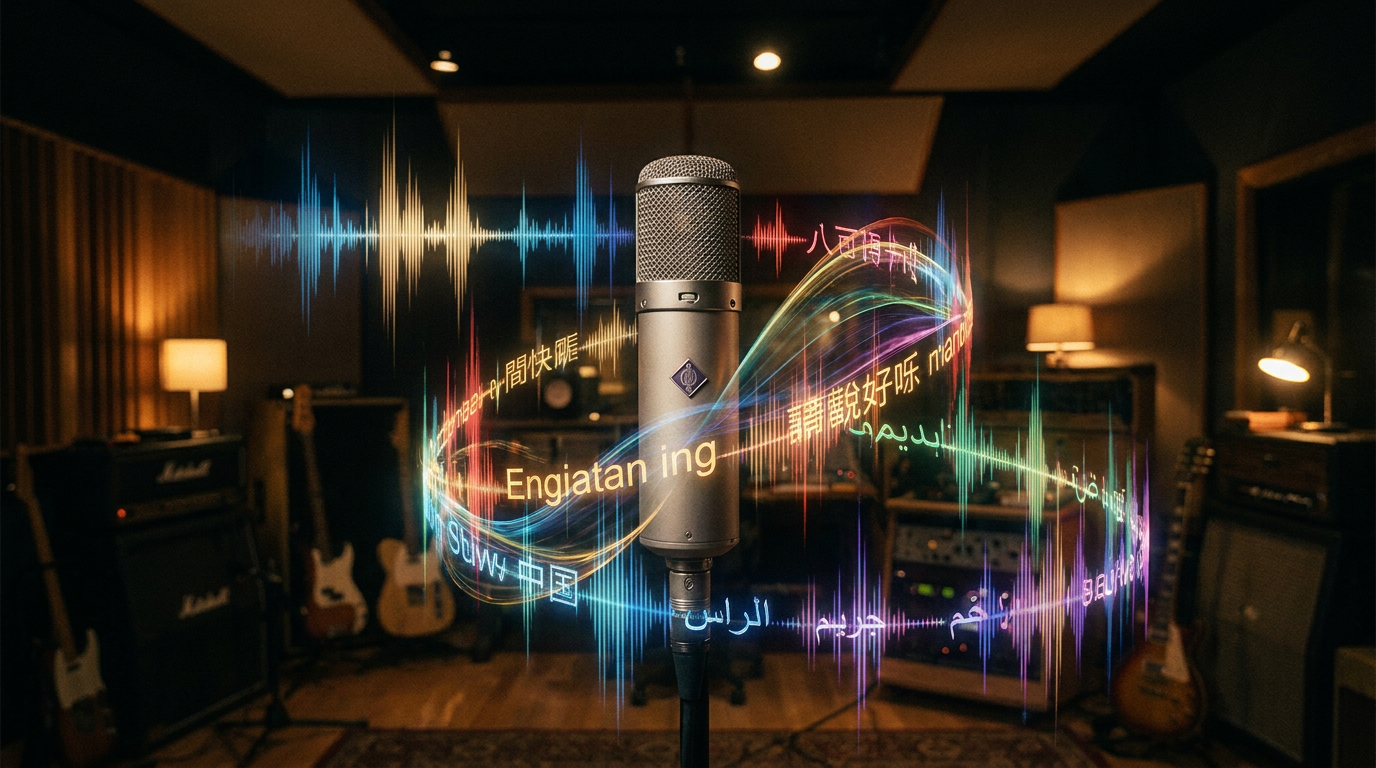
Advanced voice-cloning and auto-dubbing tools are allowing podcasters to broadcast in dozens of languages simultaneously, preserving their original tone and emotion.
By Factlen Editorial Team
- Platform Providers & Creators
- Focus on the massive scale, audience growth, and seamless integration of AI translation tools for content creators.
- Enterprise Localization Experts
- Emphasize the need for semantic accuracy, custom glossaries, and precise lip-syncing over raw translation speed.
- Tech Observers & Ethicists
- Highlight the cultural impact of the technology while raising questions about authenticity, consent, and voice ownership.
What's not represented
- · Deaf and Hard of Hearing Audiences
- · Traditional Voice Actors
Why this matters
Language barriers have historically siloed audio content by region. By seamlessly translating podcasts into native languages while retaining the host's voice, AI is unlocking a truly global exchange of ideas, education, and entertainment.
Key points
- AI audio-to-audio models can now translate podcasts while perfectly preserving the host's original voice, tone, and emotion.
- Spotify and YouTube have integrated voice translation tools, allowing creators to reach global audiences without re-recording content.
- Advanced systems automatically separate multiple speakers and maintain background audio, creating a seamless listening experience.
- Enterprise tools are tackling complex challenges like frame-accurate lip-syncing for video podcasts and semantic translation of cultural idioms.
For decades, the global podcasting industry has been bound by a fundamental and seemingly insurmountable limitation: the language barrier. A brilliant, hours-long interview recorded in English was effectively invisible to a listener in Tokyo, Buenos Aires, or Berlin, unless they were willing to rely on clunky, text-based transcripts that stripped away the emotion of the conversation. Traditional dubbing—the process of hiring professional voice actors to re-record episodes in local languages—was a luxury reserved exclusively for massive media conglomerates with deep pockets. But over the past two years, artificial intelligence has fundamentally rewired the economics of audio localization, allowing independent creators to broadcast globally in dozens of languages simultaneously.[6]
The technological breakthrough driving this revolution lies in the industry's shift from traditional text-to-speech systems to highly advanced audio-to-audio models. Early iterations of AI translation were highly mechanical: they simply transcribed the spoken speech, translated the resulting text, and read it back using a robotic, generic synthesizer. Today’s models perform a much more complex and nuanced operation. They analyze the original audio file, clone the speaker's unique vocal characteristics, and generate the translated speech using that exact voice clone, ensuring the new language sounds like it is coming from the original host.[2][6]
Spotify was among the first major streaming platforms to publicly signal this shift, launching a highly publicized Voice Translation pilot program that targeted its top-tier exclusive shows. Recognizing the potential to unlock new international markets, the streaming giant partnered with heavyweight podcasters—including Lex Fridman, Dax Shepard, Monica Padman, and Steven Bartlett—to translate their English-language episodes into Spanish, French, and German, introducing their distinct personalities to entirely new demographics. The initiative marked a significant departure from standard localization, proving that audiences were hungry for translated content as long as it felt authentic to the original creator's brand.[1][7]
To power this ambitious feature, Spotify integrated OpenAI’s newly released voice generation technology directly into its production pipeline. The primary goal was to maintain the host's distinctive speech patterns, pacing, and emotional delivery across different languages. By matching the creator’s own voice rather than substituting it with a generic actor, the platform aimed to give international listeners a more authentic, intimate experience than traditional dubbing could ever provide, preserving the vital parasocial connection that drives long-term podcast loyalty and audience retention.[1]

While Spotify built proprietary tools specifically for its exclusive, high-profile roster, independent AI platforms like ElevenLabs moved quickly to democratize the technology for the broader creator economy. With the release of its sophisticated Dubbing v2 model, ElevenLabs enabled everyday users to upload a standard audio or video file and automatically translate it into over 90 different languages. This shift meant that a solo podcaster recording in their bedroom suddenly had access to the same global distribution capabilities as a major television network.[2]
The critical advancement in these newer, consumer-facing models is the flawless preservation of human emotion. Because the AI conditions its output on the original audio performance rather than relying solely on a flat text transcript, it carries over the speaker's exact tone and energy. A whispered secret, a sudden burst of laughter, a sarcastic inflection, or a raised voice in a heated argument is perfectly replicated in the target language, maintaining the dramatic arc and authenticity of the original conversation.[2]
Podcasts rarely feature just one voice, which introduces the complex technical challenge of speaker separation. Modern AI dubbing tools have evolved to automatically detect and isolate multiple speakers, even in chaotic environments where guests interrupt each other or speak simultaneously. The system intelligently separates each voice onto its own distinct track, clones the speakers individually, and seamlessly reassembles the translated conversation without losing the background ambiance, room tone, or accompanying sound effects that give a podcast its atmosphere.[2][5]
Podcasts rarely feature just one voice, which introduces the complex technical challenge of speaker separation.
The impact of this translation technology extends far beyond audio-only platforms, deeply affecting the booming and highly lucrative video podcast (vodcast) sector. YouTube has aggressively integrated localization tools into its creator dashboard, rolling out its Multi-Language Audio (MLA) feature to millions of channels worldwide. This powerful tool allows a channel to upload multiple dubbed audio tracks to a single video, letting viewers seamlessly select their preferred language from a simple gear-icon menu without ever leaving the primary video page.[3]
To accelerate the adoption of these multi-language tracks, YouTube introduced an integrated auto-dubbing tool powered by sophisticated "Expressive Speech" algorithms. This feature automatically detects the video's original language and generates dubbed versions that mirror the original pitch, intonation, and energy of the creator. By early 2026, YouTube had expanded this capability across dozens of languages, effectively turning local vloggers and independent podcasters into global broadcasters overnight, completely removing the friction of manual translation workflows. The scale of this rollout has fundamentally changed how creators view their potential audience, shifting the focus from domestic growth to international expansion.[3]

The economic incentives driving creators to adopt these tools are massive and immediate. According to platform analytics, creators who actively utilize multi-language audio tracks see an average watch time increase of over 25 percent from non-primary language viewers. A single piece of well-produced content can now monetize vast audiences in Latin America, Europe, and Asia without the creator needing to launch separate regional channels, dilute their brand identity, or spend thousands of dollars on professional translation services. This efficiency is reshaping the creator economy, making localization a standard step in the publishing process rather than an afterthought.[3]
However, translating video podcasts introduces a unique and highly complex visual hurdle: lip-synchronization. Hearing a host speak fluent, perfectly accented Spanish while their mouth clearly forms English words creates a jarring cognitive dissonance that can quickly break viewer immersion. Enterprise-grade AI tools have begun tackling this issue head-on by subtly altering the video frames to match the translated audio, ensuring frame-accurate lip-syncing that makes it appear as though the host actually filmed the episode in the target language.[5]
Beyond the technical mechanics of audio and video syncing, the localization industry is currently grappling with the profound nuances of semantic translation. Literal, word-for-word translation often destroys the essence of a podcast, ruining jokes, cultural references, and industry-specific idioms. The latest generation of AI models focuses heavily on semantic understanding—interpreting the underlying meaning and intent of a phrase, and adapting the wording so that it sounds completely natural and culturally relevant to a native speaker. This ensures that the host's personality and intelligence translate just as accurately as their actual voice.[4]
This semantic leap is particularly crucial for specialized, high-stakes content where accuracy is paramount. A medical podcast discussing clinical trials or a highly technical software engineering interview requires precise, unwavering terminology. Enterprise translation platforms now allow creators to upload custom glossaries and style guides, ensuring that specific brand names, complex acronyms, and niche technical jargon are handled correctly and consistently across all translated languages, preventing embarrassing or legally problematic mistranslations. By combining AI speed with human-defined rules, these systems offer a hybrid approach that satisfies both creators and compliance teams.[4][5]

As this powerful technology scales across the internet, it brings significant ethical and legal questions to the forefront of the media landscape. The ability to perfectly clone a human voice requires strict, enforceable consent frameworks to prevent malicious misuse, such as deepfakes or unauthorized commercial endorsements. Platforms have had to implement rigorous safeguards, ensuring that users can only clone voices they have the explicit legal right to use, and often watermarking synthetic audio to maintain absolute transparency with their audiences.[6]
Looking ahead, the audio industry is moving rapidly toward the holy grail of localization: real-time speech-to-speech translation. While current podcast workflows still require post-production processing and rendering time, the ultimate goal is zero-latency translation for live podcast broadcasts, virtual town halls, and interactive digital events. As these underlying AI models become faster, cheaper, and more computationally efficient, the concept of a language barrier in digital media may soon become nothing more than a historical artifact. The future of global communication is one where anyone can speak to the world, and the world can listen in whatever language feels like home.[4][6]
How we got here
Late 2023
Spotify pilots AI Voice Translation with top podcasters like Lex Fridman and Dax Shepard.
Mid 2025
YouTube rolls out auto-dubbing tools to 80 million creators globally.
Early 2026
YouTube introduces Expressive Speech to mirror pitch and intonation in auto-dubs.
Mid 2026
Semantic translation models begin replacing literal translation, preserving idioms and context.
Viewpoints in depth
Platform Providers & Creators
Viewing AI dubbing as a frictionless tool for global audience expansion.
For streaming platforms and independent creators, AI voice translation is primarily an engine for growth. By removing the prohibitive costs associated with traditional human dubbing studios, platforms like YouTube and Spotify are allowing creators to multiply their total addressable market overnight. The focus here is on seamless integration—enabling a podcaster to check a box and instantly deliver their content to millions of non-English speakers while retaining their personal brand and vocal identity.
Enterprise Localization Experts
Prioritizing semantic accuracy and brand consistency over raw translation speed.
Professionals working in corporate communication and specialized localization argue that consumer-grade AI dubbing is insufficient for high-stakes content. They emphasize that literal translations often destroy industry-specific jargon, cultural idioms, and humor. For this camp, the true value of AI translation lies in semantic models that can interpret intent, utilize custom glossaries, and provide frame-accurate lip-syncing for video formats, ensuring that the translated message is as precise as the original.
Tech Observers & Ethicists
Balancing the excitement of global connectivity with concerns about authenticity and consent.
While acknowledging the democratizing power of AI translation, tech journalists and ethicists focus heavily on the guardrails required to deploy it safely. The ability to perfectly clone a human voice opens the door to deepfakes and unauthorized commercial use. This perspective advocates for strict consent protocols, transparent watermarking of synthetic audio, and clear labeling so that audiences always know when they are listening to an AI-generated translation rather than a human performance.
What we don't know
- How copyright law will adapt to protect a creator's synthetic voice clone from unauthorized commercial use.
- Whether audiences will develop a preference for AI-dubbed original voices over traditional, localized human voice actors.
- How quickly real-time, zero-latency speech-to-speech translation will become viable for live podcast broadcasting.
Key terms
- Voice Cloning
- AI technology that analyzes a speaker's unique vocal characteristics to generate synthetic speech that sounds identical to them.
- Multi-Language Audio (MLA)
- A platform feature allowing creators to upload multiple language tracks to a single video or podcast, letting listeners choose their preferred language.
- Semantic Translation
- AI translation that focuses on preserving the underlying meaning, context, and idioms of a phrase, rather than translating it word-for-word.
- Speaker Separation
- The ability of an AI model to distinguish between multiple voices in a single audio file, isolating them to translate and dub each person accurately.
Frequently asked
Do I need to record my podcast in multiple languages?
No. AI dubbing tools automatically transcribe, translate, and synthesize your original audio into new languages using a clone of your voice.
Does the translated audio sound like a robot?
Modern audio-to-audio models preserve the original speaker's pitch, pacing, and emotional delivery, making it sound remarkably human.
Can listeners tell it's AI?
While highly realistic, platforms like Spotify and YouTube typically label AI-translated content to maintain transparency with listeners.
Does this work for video podcasts?
Yes. Platforms are now introducing frame-accurate lip-synchronization to match the translated audio with the speaker's mouth movements.
Sources
Source coverage
7 outlets
3 viewpoints surfaced







[1]Spotify NewsroomPlatform Providers & Creators
Spotify Pilots Voice Translation for Podcasts
Read on Spotify Newsroom →[2]ElevenLabsPlatform Providers & Creators
AI Dubbing & Video Translation
Read on ElevenLabs →[3]MetricoolPlatform Providers & Creators
YouTube Multi-Language Audio Tracks Guide
Read on Metricool →[4]KudoEnterprise Localization Experts
AI Speech Translation Trends 2026
Read on Kudo →[5]DublyEnterprise Localization Experts
Translating Podcasts with AI
Read on Dubly →[6]Factlen Editorial TeamTech Observers & Ethicists
Synthesis by Factlen editorial team
Read on Factlen Editorial Team →[7]MashableTech Observers & Ethicists
Spotify's AI voice translation feature is here
Read on Mashable →
Every angle. Every day.
Get entertainment stories with full source coverage and perspective breakdowns delivered to your inbox.