
Global Oil Reserves Drain Rapidly Amid Iran Conflict, Forcing Timeline for Peace Deal
The U.S. and its allies are burning through emergency oil stockpiles to offset the constriction of the Strait of Hormuz, creating a strict geopolitical deadline for negotiators.
By Factlen Editorial Team
- Energy Security Analysts
- Focus on maintaining reserve buffers and the danger of total depletion.
- Diplomatic Observers
- View the draining reserves as a strict timeline forcing a peace settlement.
- Global Market Trackers
- Focus on price volatility, dark transits, and supply-demand fundamentals.
What's not represented
- · Consumer Advocacy Groups
- · Middle Eastern Civilian Populations
Why this matters
The artificial price stability currently protecting consumers at the gas pump is entirely dependent on finite emergency reserves. If a diplomatic resolution is not reached before these stockpiles hit their statutory minimums, the global economy faces a severe energy shock and a potential recession.
Key points
- The ongoing U.S.-Israeli war against Iran has severely restricted oil flows through the Strait of Hormuz.
- To prevent a global economic crisis, the U.S. and IEA allies are draining their emergency oil reserves at an unprecedented rate.
- The U.S. is currently executing a 120-day, 172-million-barrel drawdown from the Strategic Petroleum Reserve.
- As these emergency stockpiles approach their statutory minimums, the physical limits of the reserves are acting as a ticking clock.
- The impending end of the reserve releases is placing immense pressure on diplomats to secure a peace deal before prices skyrocket.
- Meanwhile, producers are increasingly relying on 'dark transits' to sneak a fraction of the normal oil volume out of the Persian Gulf.
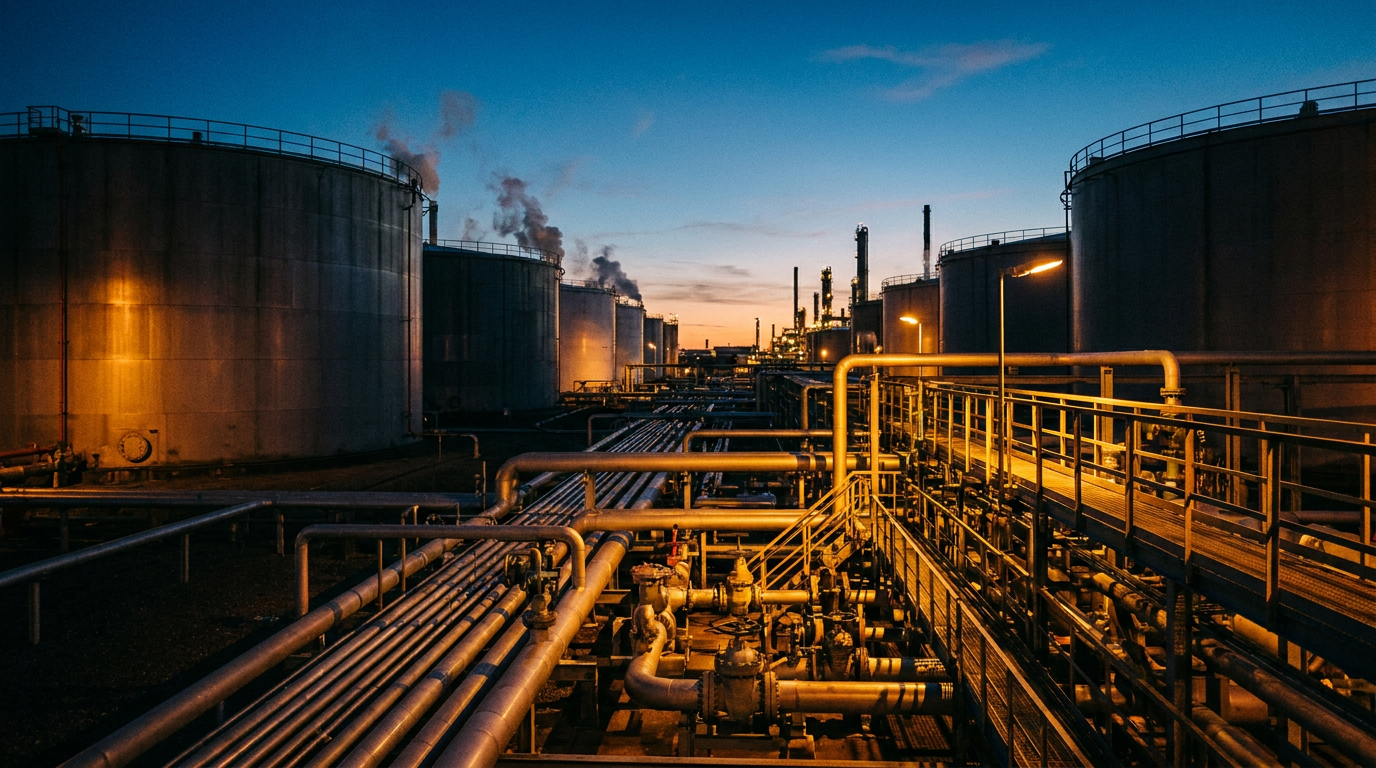
The global economy is currently running on a ticking clock. Since the outbreak of the U.S.-Israeli war against Iran in late February 2026, the world's most critical energy artery has been severely constricted. To prevent a catastrophic spike in global energy prices, the United States and its allies have deployed their ultimate economic weapon: the coordinated, massive release of emergency oil stockpiles.[1][6]
But emergency reserves are designed for short-term shocks, not protracted regional wars. As the conflict drags into its fourth month, the sheer volume of oil being drained from subterranean salt caverns in the U.S. and storage tanks across Europe and Asia is reaching a critical threshold. The math of depletion is now exerting immense pressure on diplomats to forge a peace deal before the safety net tears completely.[1][6]
To understand why the world is burning through its rainy-day funds, one must look at the geography of the conflict. The Strait of Hormuz, a narrow waterway between Oman and Iran, is the world's most important maritime chokepoint. Before the war, approximately 20.9 million barrels of petroleum and crude oil passed through the strait every single day, representing roughly 25 percent of the world's maritime oil trade.[3]

When hostilities commenced, Iran moved to restrict the corridor, prompting a massive diversion of maritime traffic to avoid the crossfire. While some Persian Gulf producers have recently managed to increase "dark transits"—untracked shipments sneaking out of the Gulf, which surged by 50 percent in early June—the overall flow remains a fraction of its pre-war baseline.[2]
This sudden evaporation of global supply threatened to send crude prices into the stratosphere, which would have triggered a severe global recession. In response, the U.S. government activated the Strategic Petroleum Reserve (SPR). Located in heavily guarded underground salt caverns along the Gulf Coast of Texas and Louisiana, the SPR is the world's largest publicly known emergency supply.[1][5]
On March 11, 2026, U.S. Secretary of Energy Chris Wright announced an unprecedented intervention: the release of 172 million barrels of oil over approximately 120 days. This drawdown was explicitly designed to blunt the price shock resulting from the military strikes and the subsequent constriction of the Strait of Hormuz.[5]
The mechanism of an SPR release is blunt but effective. The Department of Energy issues exchange contracts and emergency sales, flooding the physical market with crude to offset the missing Middle Eastern barrels. However, the SPR has physical and statutory limits. The maximum removal rate is roughly 4.4 million barrels per day, and the reserve had already been significantly drawn down during previous crises in 2022 and 2023.[5]

The Department of Energy issues exchange contracts and emergency sales, flooding the physical market with crude to offset the missing Middle Eastern barrels.
The United States is not acting alone in this drawdown. The International Energy Agency (IEA), formed in the wake of the 1973 oil crisis, mandates that all member countries hold emergency oil stocks equivalent to at least 90 days of their net oil imports. This collective security umbrella ensures that the burden of stabilizing the global market does not fall entirely on Washington.[4]
In the event of a severe supply disruption, the IEA coordinates a collective action. Member states, spanning Europe, Asia, and the Pacific, release their own government-held stocks or lower the mandatory reserve requirements for commercial industry stocks. This synchronized flooding of the market has successfully kept the global economy afloat through the spring of 2026.[1][4]
However, the IEA's 90-day stockholding obligation is a floor, not an infinite well. As the 120-day window of the U.S. SPR release approaches its end in mid-July, the buffer is thinning. Governments are increasingly reluctant to draw their reserves down to the absolute statutory minimums, fearing that a sudden escalation in the war could leave them completely defenseless against a total blockade.[1][4][5]

This physical reality is fundamentally altering the diplomatic calculus. The draining of the reserves has transformed from an economic buffer into a strict geopolitical deadline. Negotiators recognize that the artificial price stability purchased by the SPR and IEA releases will evaporate once those releases taper off.[1][6]
If a peace deal is not reached before the emergency taps are turned off, the market will be forced to price in the true scarcity of the missing Hormuz barrels. Analysts warn that such a scenario would not only cause domestic gasoline prices to spike but could also fracture the political coalitions supporting the war effort in both the U.S. and allied nations.[1][6]
There are some mitigating factors. U.S. domestic oil production remains robust, and the recent 50 percent increase in non-Iranian oil sneakouts through the Strait of Hormuz suggests that the blockade is somewhat porous. Tankers are increasingly utilizing satellite-evading tactics and alternative routing to get barrels to market despite the military presence.[2]

Furthermore, alternative pipelines, such as those allowing Saudi Arabia and the UAE to bypass the Strait and export directly to the Red Sea or the Gulf of Oman, are operating at maximum capacity. Yet, these overland routes can only offset a fraction of the 20 million barrels per day that normally transit the maritime chokepoint.[3]
Ultimately, the global energy infrastructure is functioning exactly as designed in a crisis—buying time. The SPR and the IEA reserves have successfully absorbed the initial shock of the conflict. But as the tanks run low, the message to policymakers is clear: the economic shield is expiring, and a diplomatic resolution is no longer just preferable, but mathematically necessary.[1][4][6]
How we got here
Late Feb 2026
The U.S.-Israeli war against Iran begins, prompting severe constrictions of maritime traffic through the Strait of Hormuz.
Mar 11, 2026
U.S. Secretary of Energy Chris Wright announces the release of 172 million barrels from the Strategic Petroleum Reserve over 120 days.
May 2026
Global oil and fuel reserves held by businesses and governments fall sharply as the market relies on emergency stockpiles.
Early Jun 2026
Non-Iranian oil 'sneakouts' through the Strait of Hormuz surge by 50 percent as producers adapt to the conflict.
Viewpoints in depth
The Geopolitical Clock
Diplomats view the draining reserves as a strict deadline for a peace settlement.
For international negotiators, the physical limits of the Strategic Petroleum Reserve and IEA stockpiles represent a hard stop. The artificial price stability purchased by these emergency releases has insulated domestic populations from the true cost of the U.S.-Israeli war against Iran. However, once the 120-day drawdown window closes, the resulting price shock could fracture the political coalitions supporting the war effort, making a negotiated settlement mathematically necessary before the tanks run dry.
The Energy Security Warning
Analysts caution against drawing emergency buffers down to their statutory minimums.
Energy security experts and agencies like the IEA emphasize that emergency reserves are designed to bridge short-term supply shocks, not to sustain protracted regional conflicts. Drawing these stocks down to their absolute minimums leaves the global economy entirely defenseless against a secondary shock—such as a total, hermetic seal of the Strait of Hormuz or a natural disaster hitting domestic refining capacity. They argue that the buffer must be preserved to deter further escalation.
The Market Adaptation View
Traders highlight how the physical oil market is finding ways to bypass the conflict zone.
Commodity trackers and market analysts point out that the global oil trade is highly adaptable. The recent 50 percent surge in 'dark transits'—untracked shipments sneaking out of the Persian Gulf—demonstrates that producers and buyers will find ways to move barrels despite military tensions. While these alternative routes and satellite-evading tactics cannot fully replace the 20 million barrels per day that normally flow through Hormuz, they provide a crucial pressure release valve that extends the timeline of the emergency reserves.
What we don't know
- It remains unclear if the U.S. and its allies will authorize further reserve drawdowns if the 120-day window expires without a peace deal.
- The exact volume of oil successfully bypassing the conflict zone via 'dark transits' is difficult to verify independently.
- It is unknown how much longer the political coalitions in allied nations will support the war effort if domestic energy prices begin to spike.
Key terms
- Strategic Petroleum Reserve (SPR)
- A massive emergency stockpile of crude oil maintained by the U.S. Department of Energy in underground salt caverns along the Gulf Coast.
- Strait of Hormuz
- A narrow maritime chokepoint between Oman and Iran through which roughly 25 percent of the world's maritime oil trade normally passes.
- IEA 90-Day Obligation
- A requirement by the International Energy Agency that all member countries hold emergency oil stocks equivalent to at least 90 days of their net oil imports.
- Dark Transit
- The practice of maritime vessels turning off their automatic identification systems (AIS) to obscure their location and movements, often used to bypass blockades or sanctions.
- Chokepoint
- A narrow channel along widely used global sea routes that is critical to global trade and highly vulnerable to disruption.
Frequently asked
Why can't the U.S. just produce more oil to cover the gap?
While U.S. domestic oil production is robust, it cannot instantly scale to replace the roughly 20 million barrels per day that normally transit the Strait of Hormuz. Furthermore, global refineries are calibrated for specific types of crude, meaning domestic production cannot always perfectly substitute for missing Middle Eastern barrels.
What happens if the emergency reserves run out?
If reserves fall to their minimum operational thresholds and the supply disruption continues, the market will face a severe physical shortage. This would likely cause global energy prices to skyrocket, potentially triggering a severe economic recession.
How are some ships still getting through the Strait of Hormuz?
Some producers are utilizing 'dark transits'—turning off satellite tracking transponders and using alternative routing to sneak shipments out of the Persian Gulf, resulting in a recent 50 percent increase in non-Iranian flows.
What is the timeline for the U.S. reserve release?
On March 11, 2026, the U.S. Department of Energy announced the release of 172 million barrels from the Strategic Petroleum Reserve, distributed over an approximately 120-day window.
Sources
Source coverage
6 outlets
3 viewpoints surfaced






[1]The New York TimesDiplomatic Observers
The World Is Draining Oil Reserves, Raising Pressure for a Peace Deal
Read on The New York Times →[2]BloombergGlobal Market Trackers
Hormuz oil sneakouts rise 50% as Iran and US vie for control
Read on Bloomberg →[3]U.S. Energy Information AdministrationEnergy Security Analysts
Volume of crude oil and petroleum liquids transported through world chokepoints
Read on U.S. Energy Information Administration →[4]International Energy AgencyEnergy Security Analysts
IEA mandatory oil stockholding requirements
Read on International Energy Agency →[5]Wikipedia
Strategic Petroleum Reserve (United States)
Read on Wikipedia →[6]Factlen Editorial TeamDiplomatic Observers
Synthesis by Factlen editorial team
Read on Factlen Editorial Team →

More in news politics
See all 106 stories →Surveillance Law
FISA Surveillance Powers Set to Expire Amid Standoff Over Trump Intelligence Pick
8 sources
Surveillance Law
FISA Section 702 Set to Expire at Midnight After House Rejects Extension
8 sources
Defense Spending
UK Defense Secretary Resigns Over Military Funding Dispute With Prime Minister
6 sources
Olympic Wage
Los Angeles Delays $30 'Olympic Wage' for Tourism Workers Following Corporate Tax Threat
7 sources

Every angle. Every day.
Get news politics stories with full source coverage and perspective breakdowns delivered to your inbox.