
The Rise of Astrotourism: How Dark Sky Sanctuaries Are Reshaping Global Travel
As light pollution erases the stars for billions, a booming travel sector is turning pristine night skies into protected, lucrative destinations.
By Factlen Editorial Team
- Conservationists & Ecologists
- Argue that astrotourism is a vital tool for combating light pollution and protecting nocturnal wildlife habitats.
- Rural Economic Developers
- Value dark skies as a sustainable, low-infrastructure resource that brings high-value, year-round tourism to isolated communities.
- Hospitality & Travel Industry
- View the night sky as a premium experiential commodity, investing in specialized lodging and eclipse-chasing itineraries to meet surging consumer demand.
What's not represented
- · Indigenous communities whose ancestral sky traditions are commodified
- · Airlines and transport operators managing the carbon footprint of remote travel
Why this matters
With 80% of Americans unable to see the Milky Way from home, natural darkness is becoming a rare commodity. Astrotourism provides a powerful economic incentive for communities to turn off the lights, protecting nocturnal ecosystems while creating sustainable jobs in rural areas.
Key points
- Astrotourism is rapidly expanding as travelers seek out remote destinations free from light pollution.
- Over 250 locations worldwide have been certified as International Dark Sky Places by meeting strict lighting standards.
- The trend provides a significant economic boost to rural communities, creating jobs without requiring heavy infrastructure.
- Preserving dark skies also protects nocturnal wildlife, as artificial light disrupts the biological rhythms of many species.
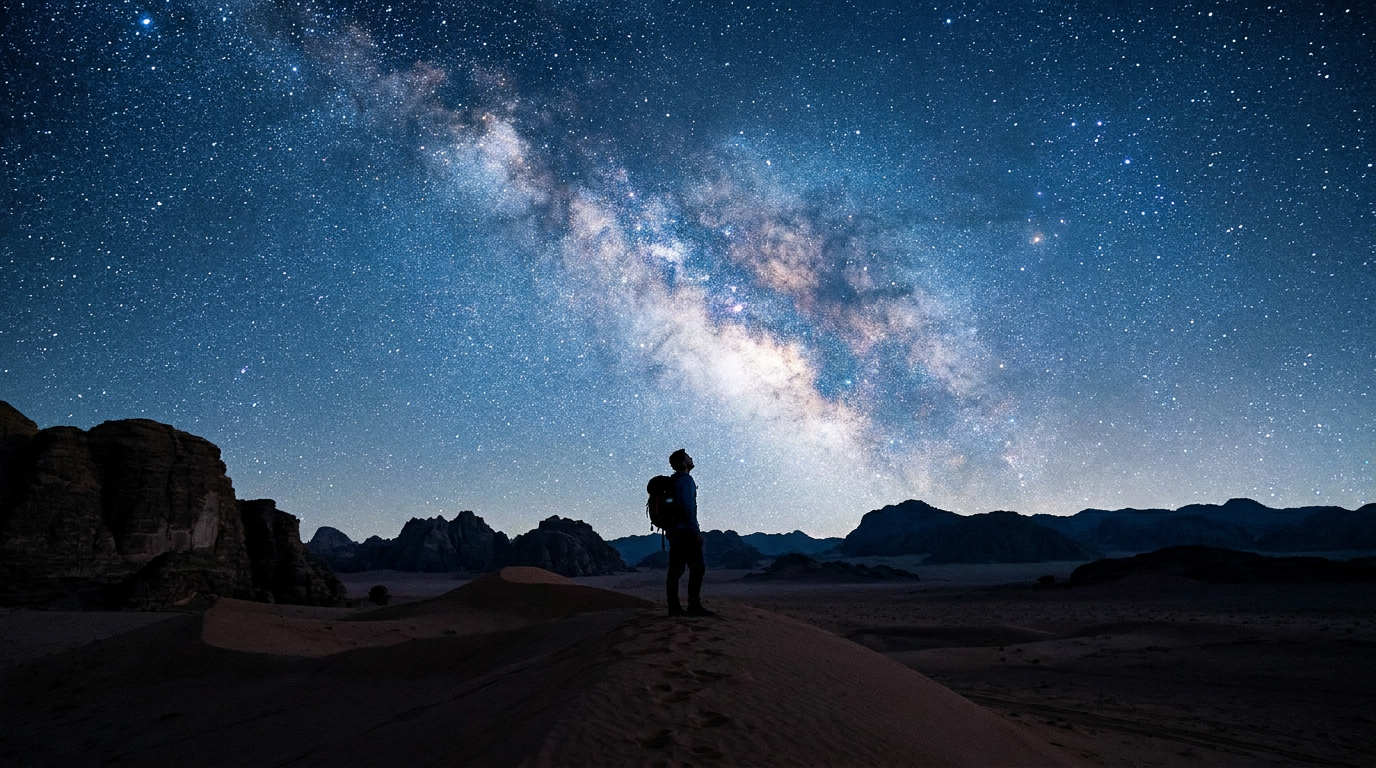
In an era where travel is often defined by crowded beaches and sun-drenched cities, a rapidly growing segment of tourists is heading in the opposite direction: into the pitch black. Astrotourism—traveling specifically to experience pristine night skies and celestial events—has evolved from a niche hobby for amateur astronomers into a multi-billion-dollar global industry. Driven by recent solar eclipses and a peak in the sun's solar maximum cycle, travelers are increasingly seeking out remote destinations where the cosmos is still visible.[1][4]
The catalyst for this trend is a profound modern loss: natural darkness. Since the widespread adoption of artificial light at night, light pollution has steadily encroached on the night sky. Today, an estimated 80% of Americans and nearly a third of humanity can no longer see the Milky Way from their homes. For urbanites accustomed to skies glowing with the orange haze of streetlights, a truly dark sky has become a rare and awe-inspiring natural resource worth traveling across the globe to witness.[3][5]

Astronomers measure this loss using the Bortle Scale, a nine-level numeric system that quantifies the brightness of the night sky. Most city dwellers live their entire lives under Bortle 8 or 9 skies, where only the moon and a few exceptionally bright planets pierce the glare. Astrotourists, by contrast, are hunting for Bortle 1 or 2 skies—environments so dark that the Milky Way casts a visible shadow and thousands of stars blanket the horizon.[7]
To protect these vanishing frontiers, a global conservation movement has emerged, led by DarkSky International. Founded in 1988 in Tucson, Arizona, the nonprofit organization established the International Dark Sky Places program to formally recognize and protect areas with exceptional nocturnal environments. Today, there are over 250 certified Dark Sky Places across 22 countries, ranging from national parks to remote island sanctuaries.[1][5]
Becoming a certified Dark Sky Place is not simply a matter of being geographically isolated; it requires a rigorous, years-long commitment to light management. Applicants must conduct extensive sky quality measurements to prove their darkness meets strict thresholds. More importantly, they must implement comprehensive lighting policies. This involves retrofitting local infrastructure to ensure all outdoor lighting is shielded, directed downward, no brighter than necessary, and utilizes warm color temperatures that minimize atmospheric scattering.[5]

Becoming a certified Dark Sky Place is not simply a matter of being geographically isolated; it requires a rigorous, years-long commitment to light management.
Within the certification program, the "Dark Sky Sanctuary" is the most elite and fragile designation. Unlike Dark Sky Parks, which are often accessible public lands, sanctuaries are typically situated in the world's most remote locations—such as the Aotea Great Barrier Island in New Zealand or the Gabriela Mistral Dark Sky Sanctuary in Chile. These areas face minimal threats from encroaching development, but their certification serves as a preemptive shield against future light pollution.[4][5]
For rural and isolated communities, the stars have become a vital economic engine. The global dark sky tourism market was valued at $1.45 billion in 2024 and is projected to surpass $4 billion by 2033. Because astrotourism requires overnight stays, it injects capital directly into local hospitality sectors. A case study of the Northumberland Dark Sky Park in the United Kingdom documented £25 million in regional economic benefits, translating to new investments and job creation.[2]

This economic influx is particularly transformative in developing regions. In the high-altitude Himalayas of Ladakh, India, a community-led initiative called Astrostays trains rural villagers—predominantly women—to serve as sky guides. The revenue generated from hosting stargazing tourists has funded community greenhouses and solar water heaters, demonstrating how astronomy can catalyze sustainable socio-economic development without requiring massive infrastructure investments.[3][6]
The benefits of astrotourism extend far beyond human economics; they are deeply intertwined with ecological conservation. Nearly three-quarters of mammal species are nocturnal, relying on natural darkness for navigation, foraging, and reproduction. Artificial light disrupts these ancient biological rhythms. By enforcing strict lighting ordinances to maintain their Dark Sky status, communities inadvertently create vast protected habitats for nocturnal wildlife, making astrotourism a highly effective form of ecotourism.[3][5]
Recognizing the financial potential, the hospitality industry is rapidly adapting to cater to the astrotourist. In 2023, DarkSky International launched the "DarkSky Approved Lodging" program, setting a new standard for hotels, inns, and resorts. To earn the badge, properties must prove that their outdoor lighting does not contribute to skyglow and must provide educational materials to guests about night sky preservation. Luxury desert lodges in places like Chile's Atacama Desert are now being built with roll-off roofs and personal observatory domes.[5]

For Destination Marketing Organizations (DMOs), astrotourism offers a strategic advantage: it disperses visitors geographically and seasonally. Stargazing is often optimal during colder, drier winter months when the atmosphere is more stable and nights are longer. This allows rural destinations to attract visitors during traditional off-seasons, smoothing out the boom-and-bust cycles of summer-dependent tourism economies.[6][7]
As the 2026 total solar eclipse approaches Europe and the 2027 eclipse promises a staggering six minutes of totality over Egypt, the demand for dark skies is only accelerating. What began as a niche scientific pursuit has matured into a mainstream travel philosophy. By assigning a tangible economic value to darkness, astrotourism is proving that sometimes, the most lucrative thing a destination can do is simply turn off the lights.[4][7]
How we got here
1988
The International Dark-Sky Association (now DarkSky International) is founded in Tucson, Arizona to combat light pollution.
2001
The International Dark Sky Places program is established to formally recognize and protect areas with pristine night skies.
2018
Astrostays launches in Ladakh, India, pioneering a community-led model for rural economic development through stargazing.
2023
DarkSky International launches the DarkSky Approved Lodging program to certify hotels and inns practicing responsible lighting.
April 2024
A total solar eclipse across North America triggers a massive surge in mainstream interest in astrotourism.
August 2026
A highly anticipated total solar eclipse is scheduled to cross Iceland, Greenland, and Spain, driving future astrotourism bookings.
Viewpoints in depth
The Conservationist View
Focuses on the ecological and scientific necessity of preserving natural darkness.
For ecologists and astronomers, astrotourism is a Trojan horse for environmental protection. By attaching a monetary value to the night sky, conservationists can convince municipalities to adopt strict lighting ordinances that they might otherwise ignore. These advocates emphasize that light pollution is a highly disruptive environmental pollutant that wreaks havoc on the migratory and reproductive patterns of nocturnal wildlife. To this camp, the ultimate goal of astrotourism isn't just human enjoyment, but the restoration of ancient biological rhythms.
The Rural Development View
Views dark skies as a sustainable, low-infrastructure resource that democratizes tourism.
Local governments and rural tourism boards see astrotourism as an economic lifeline. Unlike traditional tourism, which often requires massive investments in airports, beach resorts, or theme parks, astrotourism relies on a resource that isolated communities already possess: darkness. This allows remote towns to generate high-value, year-round income, creating jobs that help stem the tide of rural brain drain. Furthermore, because stargazing is often best in the winter, it provides a crucial off-season revenue stream for local businesses.
The Hospitality Industry View
Treats the night sky as a premium experiential commodity to meet surging consumer demand.
For hotels, tour operators, and travel agents, astrotourism represents a shift from standard luxury to experiential luxury. Modern travelers are increasingly willing to pay a premium for authenticity and awe. In response, the hospitality sector is investing heavily in specialized infrastructure—from glass-roofed igloos in Iceland to private observatory domes in the Atacama Desert. By securing 'DarkSky Approved' certifications, these businesses can market themselves directly to a highly motivated, affluent demographic of eclipse-chasers and stargazers.
What we don't know
- Whether the rapid influx of tourists to fragile, remote Dark Sky Sanctuaries will eventually degrade the very environments they come to admire.
- How the proliferation of low-earth orbit satellite mega-constellations will impact the long-term viability of ground-based astrotourism.
Key terms
- Astrotourism
- Travel focused on experiencing starry skies, celestial events, and environments free from artificial light.
- Light Pollution
- The inappropriate or excessive use of artificial light at night, which obscures the stars and disrupts ecosystems.
- Bortle Scale
- A nine-level numeric scale used by astronomers to measure the brightness of the night sky and the observability of celestial objects.
- Skyglow
- The brightening of the night sky over inhabited areas, caused by artificial light scattering in the atmosphere.
- Dark Sky Sanctuary
- A highly remote public or private land designated by DarkSky International for its exceptionally pristine and fragile nocturnal environment.
Frequently asked
What is a Dark Sky Sanctuary?
It is the strictest designation awarded by DarkSky International, given to the most remote and fragile locations on Earth that possess exceptional starry nights and are protected from encroaching light pollution.
Why is astrotourism growing so fast?
The trend is driven by a combination of recent celestial events like solar eclipses, a desire for sustainable and authentic travel experiences, and the increasing rarity of natural darkness in urban areas.
How does light pollution affect wildlife?
Nearly 75% of mammal species are nocturnal. Artificial light disrupts their natural biological rhythms, interfering with their ability to navigate, forage for food, and reproduce safely.
Can hotels get certified for dark skies?
Yes. In 2023, DarkSky International launched the DarkSky Approved Lodging program, which certifies accommodations that use responsible, shielded outdoor lighting and educate guests about the night sky.
Sources
Source coverage
7 outlets
3 viewpoints surfaced







[1]Wikipedia
Astrotourism
Read on Wikipedia →[2]HiJiffyRural Economic Developers
Astrotourism: Dark Sky & Stargazing Tourism Guide
Read on HiJiffy →[3]Outside MagazineConservationists & Ecologists
Why Dark Sky Tourism and Astrotourism Are Growing
Read on Outside Magazine →[4]Expats Traveling GroupHospitality & Travel Industry
Plan Your Astrotourism Adventure
Read on Expats Traveling Group →[5]DarkSky InternationalConservationists & Ecologists
Dark Sky Places certification program
Read on DarkSky International →[6]arXivRural Economic Developers
Sustainable, Local Socio-Economic Development Through Astronomy
Read on arXiv →[7]Factlen Editorial Team
Synthesis by Factlen editorial team
Read on Factlen Editorial Team →
More in travel
See all 32 stories →Luxury Rail
The $10,000 Ticket: Inside the Booming Renaissance of Ultra-Luxury Sleeper Trains
8 sources
Aviation Tech
How AI, Lasers, and Crowdsourcing Are Making Flights Smoother
8 sources

Space Tourism
How Stratospheric Balloons Are Redefining Luxury Space Tourism for 2026
7 sources

Digital Nomad Visas
The 2026 Global Digital Nomad Visa Landscape: Income Thresholds, Tax Traps, and Corporate Pushback
6 sources

Every angle. Every day.
Get travel stories with full source coverage and perspective breakdowns delivered to your inbox.