
The $10,000 Ticket: Inside the Booming Renaissance of Ultra-Luxury Sleeper Trains
Driven by a post-pandemic desire for 'slow travel' and lower-carbon journeys, the ultra-wealthy are abandoning private jets for meticulously curated, multi-day rail experiences.
By Factlen Editorial Team
- Hospitality Conglomerates
- Hotel brands view luxury rail as a highly profitable extension of their five-star property portfolios.
- Travel Economists
- Analysts view the luxury rail boom as proof of the travel industry's extreme premiumization and resilience.
- Slow Travel Advocates
- Proponents argue that luxury rail represents a necessary cultural shift toward sustainable, mindful exploration.
What's not represented
- · Commuter rail advocates arguing that luxury trains monopolize prime track space
- · Middle-class travelers priced out of the rail renaissance
Why this matters
The explosion of the luxury rail market signals a profound shift in how high-net-worth individuals value their time and environmental footprint, transforming the travel industry's focus from speed and efficiency to immersive, low-carbon hospitality.
Key points
- Cross-border spending on international rail tours surged by 59% between 2019 and 2024.
- The global luxury train market is projected to reach $7.2 billion by 2034.
- Major hotel conglomerates like LVMH and Accor are aggressively expanding into rail to capture high-net-worth loyalty members.
- Operators meticulously engineer 'route design' to ensure scenic views occur during daylight hours.
- The trend is heavily driven by post-pandemic 'slow travel' desires and a push for lower-carbon transit alternatives.
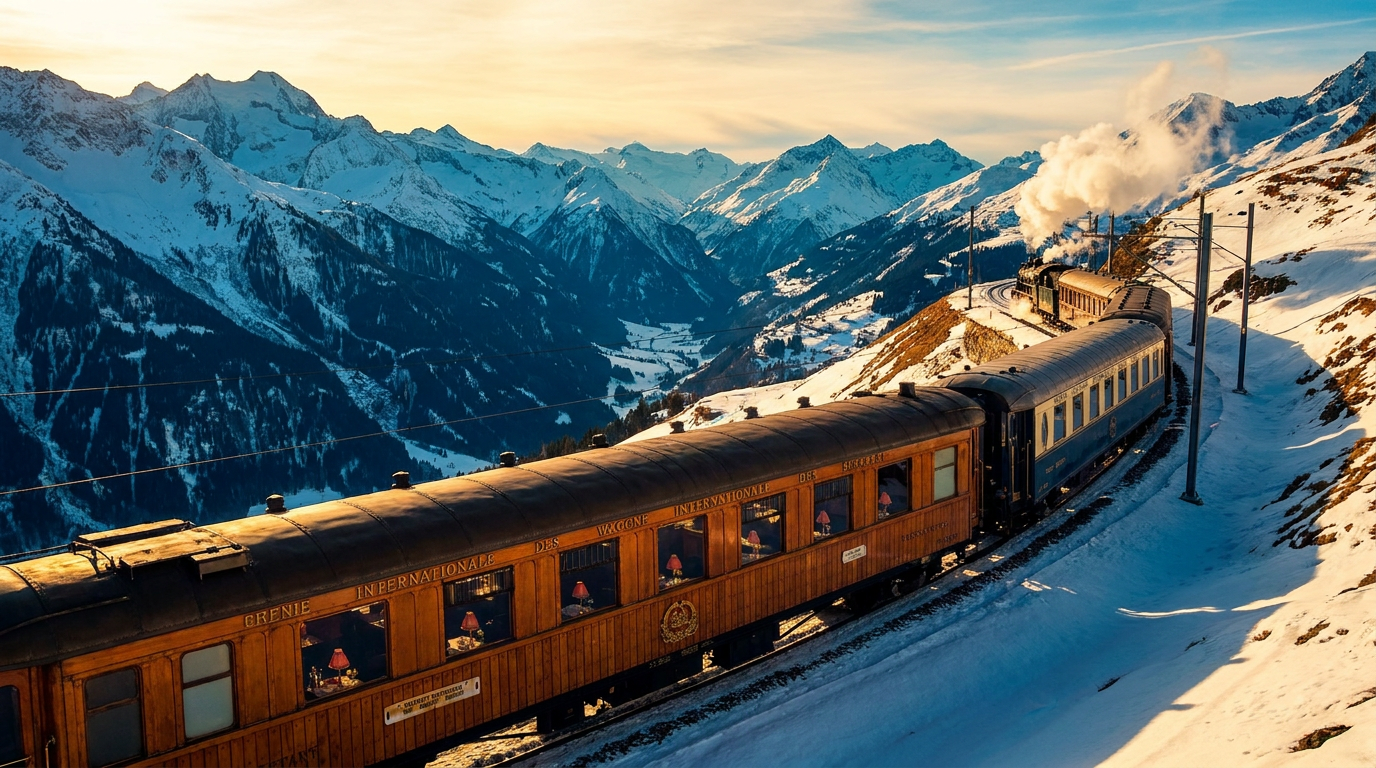
For decades, the ultimate symbol of luxury travel was speed. The private jet and the supersonic Concorde promised to erase the friction of distance, shrinking the globe for those who could afford it. But as the 2020s progress, the ultra-wealthy are increasingly spending astronomical sums to do the exact opposite: slow down. A renaissance of ultra-luxury sleeper trains is sweeping across Europe, Asia, and the Americas, replacing the sterile efficiency of aviation with the deliberate, romantic pacing of the Belle Époque. At an average cruising speed of just 50 miles per hour, these rolling palaces are proving that for a certain tier of traveler, the journey is no longer a logistical hurdle to be cleared, but the primary destination itself.[8]
The financial metrics behind this shift are staggering, outpacing almost every other sector of the post-pandemic travel economy. According to aggregated transaction data from Visa Business and Economic Insights, cross-border spending on international rail tours surged by 59 percent between 2019 and 2024, vastly outperforming the 18 percent growth seen in traditional cross-border tourism. This is not merely a bump in commuter rail usage or standard intercity transit; it is a massive influx of capital into curated, multi-day rail experiences where the ticket price often exceeds the cost of a first-class transatlantic flight.[1]
Industry analysts project that this momentum is only accelerating. The global luxury train travel market, valued at roughly $3.8 billion in 2025, is forecast to reach $7.2 billion by 2034, expanding at a compound annual growth rate of 7.4 percent. Europe currently dominates this landscape, holding nearly 40 percent of the global revenue share thanks to its dense network of scenic routes and its monopoly on iconic heritage brands. Yet, despite per-person fares that routinely exceed $10,000 for a multi-night journey, operators are reporting waitlists that stretch into the thousands, insulating the sector from broader macroeconomic headwinds.[2][7]

To understand why consumers are willing to pay these premiums, one must look past the mahogany paneling and crystal glassware to the underlying economics of premium rail. Travel analysts at SilkHarbor Travel divide the cost into four distinct buckets: cabin comfort, high staff-to-guest ratios, fine dining, and the hidden variable of "route design." Unlike standard commuter trains that prioritize the shortest distance between two points, luxury operators meticulously engineer their itineraries to maximize aesthetic and emotional impact.[3]
Route design is the invisible architecture of the luxury rail experience. Operators negotiate with national rail networks to ensure that the most breathtaking segments of a journey—such as winding through the Swiss Alps or tracing the Italian Riviera—occur during peak daylight hours. Conversely, the train might be scheduled to pass through less scenic industrial corridors or freight yards in the dead of night while passengers sleep. This level of logistical choreography requires immense coordination and premium track-access fees, which are ultimately passed on to the consumer as part of the curated immersion.[3]
The boom has triggered a fierce arms race among the world's largest hospitality conglomerates, who view rail as a natural extension of their five-star hotel portfolios. Major hotel groups are aggressively pushing into rarefied transit, betting that their high-net-worth loyalty members will seamlessly transition from their suites to their sleeper cars. This "hotelification" of the rails means that modern luxury trains are no longer just restored heritage cars; they are mobile extensions of the world's most exclusive hospitality brands, complete with onboard spas, Michelin-starred chefs, and 24-hour butler service.[4]

Nowhere is this corporate rivalry more visible than in the battle over the legendary "Orient Express" moniker. The name, which defined high-society travel in the late 19th and early 20th centuries, is currently split between two massive luxury titans. Belmond, owned by the luxury conglomerate LVMH, operates the famed Venice Simplon-Orient-Express (VSOE), utilizing meticulously restored 1920s Art Deco carriages. Meanwhile, the French hospitality giant Accor, which owns the actual Orient Express brand trademark, is launching its own fleet of ultra-luxury trains to directly compete in the same European corridors.[4][5][6]
Nowhere is this corporate rivalry more visible than in the battle over the legendary "Orient Express" moniker.
Both companies are rolling out highly ambitious expansions for the 2025 and 2026 seasons. Belmond has announced a new "Villeggiatura by Train" series, connecting its rail journeys directly to its legendary Italian hotel properties. In the spring of 2026, the VSOE will embark on its first-ever route from Paris to the Amalfi Coast, featuring a curated stop at the archaeological ruins of Pompeii before depositing guests at the Belmond Hotel Caruso. With tickets starting around $11,400 per person—and significantly more for the train's six Grand Suites—the route exemplifies the seamless blending of rail transit and destination hospitality.[6]
Accor's counter-offensive is equally lavish. The company is launching the "La Dolce Vita Orient Express," a train designed to evoke the glamour of 1960s Italian cinema, featuring multi-day routes through Venice, Sicily, and the Tuscan countryside. Furthermore, Accor plans to resurrect the original, historic Paris-to-Istanbul route by late 2026, utilizing newly restored carriages from the Nostalgie-Istanbul-Orient-Express. This dual-track expansion by both LVMH and Accor ensures that the European luxury rail market will see unprecedented capacity and competition over the next few years.[4][5]
Beyond the allure of Belle Époque nostalgia, the resurgence of sleeper trains is being heavily driven by shifting cultural attitudes toward sustainability and the environment. As "flight shame" becomes a more prominent factor among environmentally conscious travelers, luxury rail offers a way to traverse continents with a fraction of the carbon footprint associated with private jets or short-haul commercial aviation. While the extreme exclusivity of these trains prevents them from being a mass-market climate solution, they provide a highly visible, aspirational model for low-carbon, slow-paced tourism.[5][8]
This environmental calculus dovetails perfectly with the broader "slow travel" movement, which gained massive traction in the wake of the global pandemic. Travelers are increasingly rejecting the frantic, multi-city itineraries of the past in favor of deeper, more deliberate immersion. On a luxury train, the transit time is not lost; it is reclaimed. The rhythm of the rails, the enforced disconnection from digital life, and the communal atmosphere of the dining and bar cars create a psychological buffer that modern aviation simply cannot replicate.[3][5]
For those who wish to push the slow travel ethos to its absolute limit, the industry is now offering itineraries of unprecedented scale. Railbookers, a premium rail travel agency, recently unveiled a staggering 60-day round-the-world rail journey scheduled to depart in September 2026. Priced at $125,000 per person, the itinerary strings together some of the most famous luxury trains on earth, including Canada's Rocky Mountaineer, Scotland's Belmond Royal Scotsman, the Maharajas' Express in India, and the Venice Simplon-Orient-Express in Europe.[7]

Executing a 60-day global rail itinerary requires a logistical mechanism that bridges multiple continents, operators, and track gauges. Because no single train can cross oceans or navigate every country's distinct railway infrastructure, the journey operates as a highly choreographed relay race. Guests are transferred between the world's premier rolling stock, with luxury hotel stays and private flights filling the geographical gaps where rail networks do not connect. It is the ultimate manifestation of the rail-as-destination philosophy, transforming a circumnavigation of the globe into a continuous, two-month hospitality experience.[7][8]
Despite the soaring demand and record-breaking investments, the luxury rail sector still faces significant operational uncertainties. The most pressing limitation is track infrastructure. Unlike cruise ships, which operate on the open ocean, luxury trains must share their routes with national freight networks and high-speed commuter lines. Securing prime daylight paths through congested European or Asian rail corridors is a constant logistical battle, and unexpected freight delays or track maintenance can easily disrupt a meticulously timed luxury itinerary.[3][8]
Geopolitics also casts a long shadow over the industry's expansion. The closure of Russian airspace and rail networks has effectively severed the traditional Trans-Siberian routes, forcing operators to look elsewhere for epic, transcontinental journeys. While new routes are emerging to fill the void—such as the Golden Eagle Silk Road expedition launching in late 2026 from Beijing to Tashkent—the reliance on cross-border cooperation means that luxury rail remains highly sensitive to international relations and regional stability.[2][7][8]

Ultimately, the renaissance of the luxury sleeper train represents a profound reevaluation of what constitutes premium travel in the 21st century. In a world where technology has made speed a commodity, time and tranquility have become the ultimate luxuries. Whether winding through the Scottish Highlands, crossing the Andalusian plains, or rolling toward the Amalfi Coast, these trains offer a fleeting return to an era when the act of moving across the earth was an event worthy of celebration.[3][6][8]
How we got here
1883
The original Orient Express embarks on its first journey from Paris to Vienna, defining Belle Époque luxury.
1982
Belmond revives the Venice Simplon-Orient-Express, sparking the modern era of heritage rail tourism.
2024
Visa reports a 59% post-pandemic surge in cross-border spending on international rail tours.
July 2025
Belmond launches the Britannic Explorer, a new ultra-luxury sleeper train traversing the UK.
Spring 2026
The Venice Simplon-Orient-Express expands to the Amalfi Coast, while Accor resurrects the historic Paris-to-Istanbul route.
Viewpoints in depth
Hospitality Conglomerates
Hotel brands view luxury rail as a highly profitable extension of their five-star property portfolios.
For companies like LVMH (Belmond) and Accor, the train is no longer just a mode of transport; it is a mobile hotel suite. By controlling the entire ecosystem—from the moment a guest boards the train in Paris to the moment they check into a branded hotel in Italy—these conglomerates capture a larger share of ultra-high-net-worth spending. They argue that their loyalty members expect the exact same standard of Michelin-starred dining, spa services, and butler attention on the rails as they do in a stationary resort.
Travel Economists
Analysts view the luxury rail boom as proof of the travel industry's extreme premiumization and resilience.
Economists point to the staggering 59% growth in rail tour spending as evidence that the ultra-wealthy are highly insulated from broader economic downturns. While middle-class tourism fluctuates with inflation, the demand for $10,000-a-night train suites continues to outpace supply. Analysts emphasize that operators possess immense pricing power because the barriers to entry—acquiring heritage rolling stock and securing prime track access—are incredibly high, creating a lucrative moat for established brands.
Slow Travel Advocates
Proponents argue that luxury rail represents a necessary cultural shift toward sustainable, mindful exploration.
For this camp, the appeal of a 50-mph train is a direct reaction against the friction, indignity, and carbon cost of modern aviation. They argue that the true luxury of these journeys is the reclamation of time and the enforced disconnection from digital life. Furthermore, as "flight shame" alters the habits of climate-conscious travelers, advocates see rail as the only defensible way to conduct transcontinental luxury tours, even if the current price points restrict access to the global elite.
What we don't know
- Whether national rail networks will continue to grant prime daylight track access to private luxury operators as commuter traffic increases.
- How geopolitical tensions in Eastern Europe and Asia will impact the viability of long-haul transcontinental routes like the Silk Road.
Key terms
- Route Design
- The logistical engineering of a train's schedule to ensure it passes through the most scenic landscapes during daylight hours while hiding industrial areas at night.
- Rolling Stock
- The physical vehicles that move on a railway, including the locomotives, sleeper carriages, and dining cars used by luxury operators.
- Villeggiatura
- An Italian concept referring to the art of a leisurely, prolonged summer holiday in the countryside, which hospitality brands are now applying to slow rail travel.
- Track-Access Fees
- The tolls that private luxury train operators must pay to national railway networks in order to use their tracks and secure specific timetable slots.
Frequently asked
Why are luxury train tickets so expensive?
You are paying for high staff-to-guest ratios, Michelin-quality dining, restored heritage carriages, and premium track-access fees that ensure the train passes scenic areas during daylight.
Do luxury trains have private bathrooms?
Yes, modern ultra-luxury trains and upgraded heritage carriages now feature private en-suite bathrooms, often with heated floors and full showers, unlike the shared facilities of the past.
What is the difference between the Belmond and Accor Orient Express trains?
Belmond operates the Venice Simplon-Orient-Express using restored 1920s carriages, while Accor owns the Orient Express trademark and is launching new trains, including the 1960s-inspired La Dolce Vita.
Are luxury trains better for the environment than flying?
Yes, traveling by rail generates a significantly lower carbon footprint per passenger than flying on a private jet or taking short-haul commercial flights, making it a popular choice for climate-conscious travelers.
Sources
Source coverage
8 outlets
3 viewpoints surfaced








[1]Visa Economic InsightsTravel Economists
Full steam ahead: Spending more when traveling by train
Read on Visa Economic Insights →[2]DatainteloTravel Economists
Luxury Train Travel Market Outlook 2025-2034
Read on Dataintelo →[3]SilkHarbor TravelTravel Economists
Pricing: What You're Really Paying For in Luxury Rail
Read on SilkHarbor Travel →[4]Financial TimesHospitality Conglomerates
Hotel groups push into luxury rail and cruises
Read on Financial Times →[5]The WeekSlow Travel Advocates
The new golden age of luxury train travel
Read on The Week →[6]Belmond OfficialHospitality Conglomerates
Rail Experiences in Italy: Villeggiatura by Train
Read on Belmond Official →[7]ICE Global NewsSlow Travel Advocates
Railbookers unveils 60-day round-the-world rail journey for 2026
Read on ICE Global News →[8]Factlen Editorial TeamSlow Travel Advocates
Synthesis by Factlen editorial team
Read on Factlen Editorial Team →
More in travel
See all 34 stories →Maritime Tech
How the Cruise Industry is Engineering the Zero-Emission Ship
7 sources
Astrotourism
The Rise of Astrotourism: Why 'Dark Skies' Are the Most Coveted Travel Amenity of 2026
6 sources
Aviation Tech
How AI, Lasers, and Crowdsourcing Are Making Flights Smoother
8 sources
Astrotourism
The Rise of Astrotourism: How Dark Sky Sanctuaries Are Reshaping Global Travel
7 sources

Every angle. Every day.
Get travel stories with full source coverage and perspective breakdowns delivered to your inbox.