
FISA Section 702 Set to Expire at Midnight After House Rejects Extension
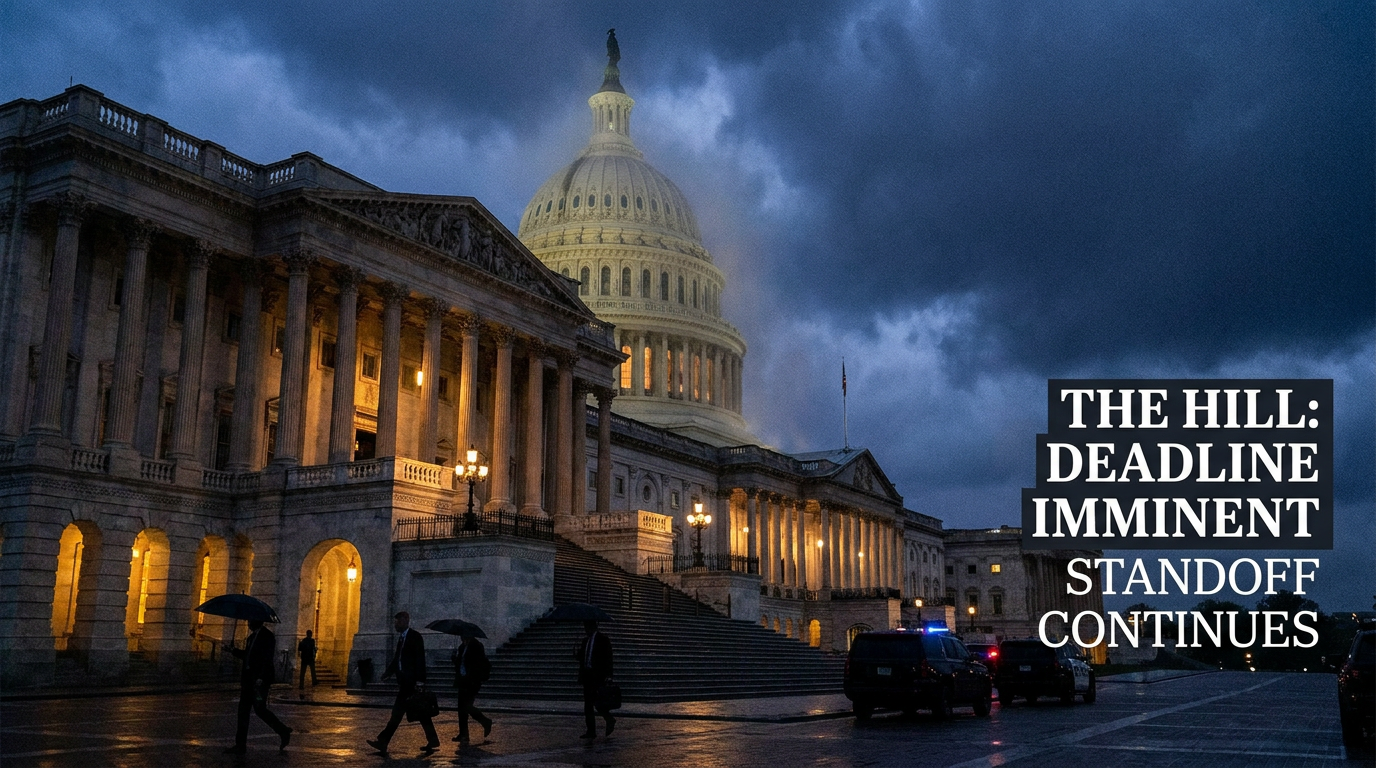
A controversial warrantless surveillance law is set to lapse Friday night after lawmakers, alarmed by President Trump's appointment of a loyalist to lead U.S. intelligence, rejected a last-minute extension.
By Factlen Editorial Team
- Civil Liberties Reformers
- Demand a strict warrant requirement for searching Americans' data, arguing the current 'backdoor search' loophole violates the Fourth Amendment.
- National Security Advocates
- Argue that Section 702 is an indispensable tool for tracking foreign threats and that statutory expiration creates dangerous legal uncertainty for telecom providers.
- Executive Power Skeptics
- Warn that without strict guardrails, the vast surveillance apparatus could be weaponized against domestic political opponents by unqualified loyalists.
What's not represented
- · Telecommunications companies facing legal liability
- · Foreign nationals subjected to the surveillance
Why this matters
Section 702 is the engine behind America's global intelligence gathering, but it also sweeps up the private texts and emails of U.S. citizens. Its expiration forces a historic showdown over the balance between national security, Fourth Amendment privacy rights, and the political independence of the intelligence community.
Key points
- The House voted 218-198 to reject a short-term extension of FISA Section 702.
- The law allows warrantless surveillance of foreigners but routinely sweeps up Americans' communications.
- Bipartisan support collapsed after President Trump appointed loyalist Bill Pulte to lead U.S. intelligence.
- Reformers are demanding a strict warrant requirement before agencies can search the database for U.S. citizens.
- Despite the statutory expiration, a grandfather clause allows surveillance to continue until March 2027.
The U.S. government's most sweeping foreign surveillance program is set to lapse at midnight on Friday, following a dramatic collapse of bipartisan consensus in the House of Representatives.[1][2]
Lawmakers voted 218-198 on Thursday to reject a short-term extension of Section 702 of the Foreign Intelligence Surveillance Act (FISA). Nineteen Republicans joined nearly all Democrats in opposing the measure, effectively ensuring the statutory authority will expire for the first time since its creation in 2008.[1][7]
The immediate catalyst for the legislative failure was not the surveillance law itself, but President Donald Trump's decision to appoint Bill Pulte as acting Director of National Intelligence. Pulte, a MAGA loyalist and housing regulator with no intelligence background, previously used his position at the Federal Housing Finance Agency to refer political opponents for mortgage fraud investigations.[1][6][7]
That history terrified lawmakers across the political spectrum, who balked at handing Pulte the keys to a vast warrantless surveillance apparatus. Even a last-minute pivot by the White House—nominating former SEC Chair Jay Clayton as the permanent intelligence chief—failed to salvage the extension vote before lawmakers left Washington for recess.[1][6][7]

To understand the stakes of the standoff, it is necessary to understand how Section 702 actually works. Enacted to legalize portions of the Bush administration's post-9/11 "Stellarwind" program, the law allows the National Security Agency and the FBI to intercept the electronic communications of foreign nationals located outside the United States without a warrant.[5][6]
The intelligence community considers the tool indispensable. Officials estimate that Section 702 collection contributes to more than 60 percent of the intelligence featured in the President's Daily Brief, tracking everything from terrorist plots to international espionage.[5][8]
The intelligence community considers the tool indispensable.
However, the mechanism of collection creates a massive privacy loophole. When foreign targets communicate with American citizens, the Americans' texts, emails, and phone calls are swept into the government's databases—a process known as "incidental collection."[4][5]
Once that data is stored, U.S. law enforcement and intelligence agencies can query the database using the names or identifiers of American citizens. Civil liberties advocates refer to this practice as a "backdoor search," arguing it allows the government to bypass the Fourth Amendment's warrant requirement for domestic surveillance.[4][5][7]

For years, a bipartisan coalition of reformers has demanded that Congress require a warrant before agencies can search the 702 database for Americans' communications. Republican leadership has repeatedly blocked floor votes on those amendments, leading to the current impasse.[4][7]
Despite warnings from the administration that a lapse will be "devastating" to national security, the surveillance will not actually go dark at midnight. Section 702 operates under annual programmatic certifications approved by the Foreign Intelligence Surveillance Court (FISC).[3][5]
Because the FISC recertified the program in March 2026, a grandfather clause in the statute allows the existing surveillance directives to remain fully operational until March 2027. The underlying collection capability, which relies heavily on human intelligence and partner relationships, will continue uninterrupted.[3][4][5]

The real risk of the midnight expiration lies in the private sector. The operation of Section 702 relies on the compelled cooperation of major U.S. telecommunications and tech companies, who are granted legal immunity in exchange for providing the government with data.[8]
Without the active statutory authority of Section 702, some major communications carriers have previously warned the government they might stop complying with surveillance directives, fearing they could face massive civil liability for handing over user data without a clear legal mandate.[8]
As the midnight deadline approaches, the intelligence community faces an unprecedented period of legal uncertainty. While the immediate surveillance operations are shielded by the court's certification, the political appetite to permanently reauthorize the program—without significant privacy reforms or a change in intelligence leadership—appears to have vanished.[1][7][8]
How we got here
2008
Congress enacts Section 702 to provide a legal framework for the Bush administration's warrantless wiretapping program.
March 2026
The Foreign Intelligence Surveillance Court recertifies the Section 702 program for another year.
June 2026
President Trump appoints housing regulator Bill Pulte as acting Director of National Intelligence, shattering bipartisan support for the surveillance law.
June 11, 2026
The House votes 218-198 to reject a short-term extension of the law.
June 12, 2026
Section 702 statutory authority officially expires at midnight.
Viewpoints in depth
Civil Liberties Advocates
Argue that the 'backdoor search' loophole is a fundamental violation of the Fourth Amendment.
Privacy organizations and bipartisan reformers emphasize that Section 702 was sold to the public as a tool to monitor foreign threats, not to build a massive database of Americans' communications. They argue that allowing the FBI and NSA to query this database for U.S. citizens without a warrant constitutes an illegal end-run around the Constitution. For these advocates, the expiration of the law is a necessary forcing function to finally implement a strict warrant requirement.
The Intelligence Community
Maintains that Section 702 is an irreplaceable tool for national security that cannot function with a warrant requirement.
National security officials argue that Section 702 provides the foundation for over 60 percent of the President's Daily Brief. They contend that requiring a warrant to search the database for Americans would critically slow down investigations into fast-moving threats, such as cyberattacks or terrorism. Furthermore, they warn that allowing the statute to lapse creates dangerous legal ambiguity for the private telecommunications companies that the government relies upon to execute the surveillance.
Executive Power Skeptics
Fear the weaponization of the surveillance apparatus by unqualified political appointees.
A distinct faction of lawmakers and analysts are less focused on the statutory mechanics of Section 702 and more alarmed by who controls it. The appointment of Bill Pulte—a loyalist with a history of using government data to target political opponents—crystallized fears that the intelligence community's vast powers could be turned inward. For these skeptics, the lack of robust guardrails makes the program too dangerous to reauthorize under leadership that lacks traditional national security independence.
What we don't know
- Whether major telecommunications companies will refuse to comply with surveillance directives without active statutory immunity.
- If the Senate confirmation of Jay Clayton as permanent DNI will eventually revive bipartisan support for the law.
- How the intelligence community will adapt its operations if the private sector halts cooperation.
Key terms
- Section 702
- A post-9/11 legal authority allowing the U.S. government to conduct warrantless surveillance on non-citizens located outside the United States.
- Incidental Collection
- The process by which Americans' communications are swept up and stored by intelligence agencies because they were interacting with a foreign surveillance target.
- Backdoor Search
- The controversial practice of law enforcement querying the foreign intelligence database to find the communications of U.S. citizens without a warrant.
- FISC
- The Foreign Intelligence Surveillance Court, a secret federal court that reviews and authorizes U.S. national security surveillance programs.
Frequently asked
What exactly is Section 702?
It is a provision of the Foreign Intelligence Surveillance Act that allows U.S. intelligence agencies to intercept the communications of foreign targets abroad without a warrant.
Will the government stop spying at midnight?
No. A secret intelligence court recertified the program in March 2026, meaning the surveillance directives are legally grandfathered to continue until March 2027.
Why did the House reject the extension?
A bipartisan coalition blocked the renewal after President Trump appointed Bill Pulte, a loyalist with no intelligence background, to lead the nation's spy agencies, sparking fears of political weaponization.
What is a backdoor search?
It occurs when U.S. agencies search the vast database of intercepted foreign communications specifically looking for the texts or emails of American citizens, without obtaining a warrant.
Sources
Source coverage
8 outlets
3 viewpoints surfaced








[1]The Washington PostExecutive Power Skeptics
House votes against extending controversial wiretapping law set to lapse Friday
Read on The Washington Post →[2]The GuardianCivil Liberties Reformers
A powerful US surveillance law is set to expire – what happens now?
Read on The Guardian →[3]Cato InstituteExecutive Power Skeptics
FISA Section 702 Lapse Assured—What Now?
Read on Cato Institute →[4]EPICCivil Liberties Reformers
FISA Section 702 Almost Certain to Expire After House Votes Against Extension, EPIC Continues to Urge Reforms
Read on EPIC →[5]NPRCivil Liberties Reformers
What is FISA's Section 702?
Read on NPR →[6]Nextgov/FCWNational Security Advocates
House vote puts Section 702 on brink of historic lapse amid fight over acting spy chief
Read on Nextgov/FCW →[7]Free PressCivil Liberties Reformers
House Blocks Extension of Section 702 Spying Powers at a Time of Widespread Concern Over Trump Administration's Crackdown on Privacy and Dissent
Read on Free Press →[8]Just SecurityNational Security Advocates
Response to the Brennan Center's “Myths and Facts” on Section 702
Read on Just Security →

More in news politics
See all 111 stories →Strait of Hormuz
Trump Cancels Iran Strikes, Claims Peace Deal to Reopen Strait of Hormuz is Imminent
8 sources

Strait of Hormuz
Trump Cancels Strikes on Iran, Claims Peace Deal to Reopen Strait of Hormuz is Imminent
8 sources

US-Iran Conflict
Trump Cancels Strikes as U.S. and Iran Weigh Draft Peace Framework
8 sources

Strait of Hormuz
Trump Cancels Iran Strikes, Claims 'Great Settlement' Reached as Tehran Pushes Back
8 sources

Every angle. Every day.
Get news politics stories with full source coverage and perspective breakdowns delivered to your inbox.