
UK Defense Secretary Resigns Over Military Funding Dispute With Prime Minister
John Healey stepped down from his post, warning that the government's upcoming defense budget leaves the military underfunded and the country vulnerable to rising global threats.
By Factlen Editorial Team
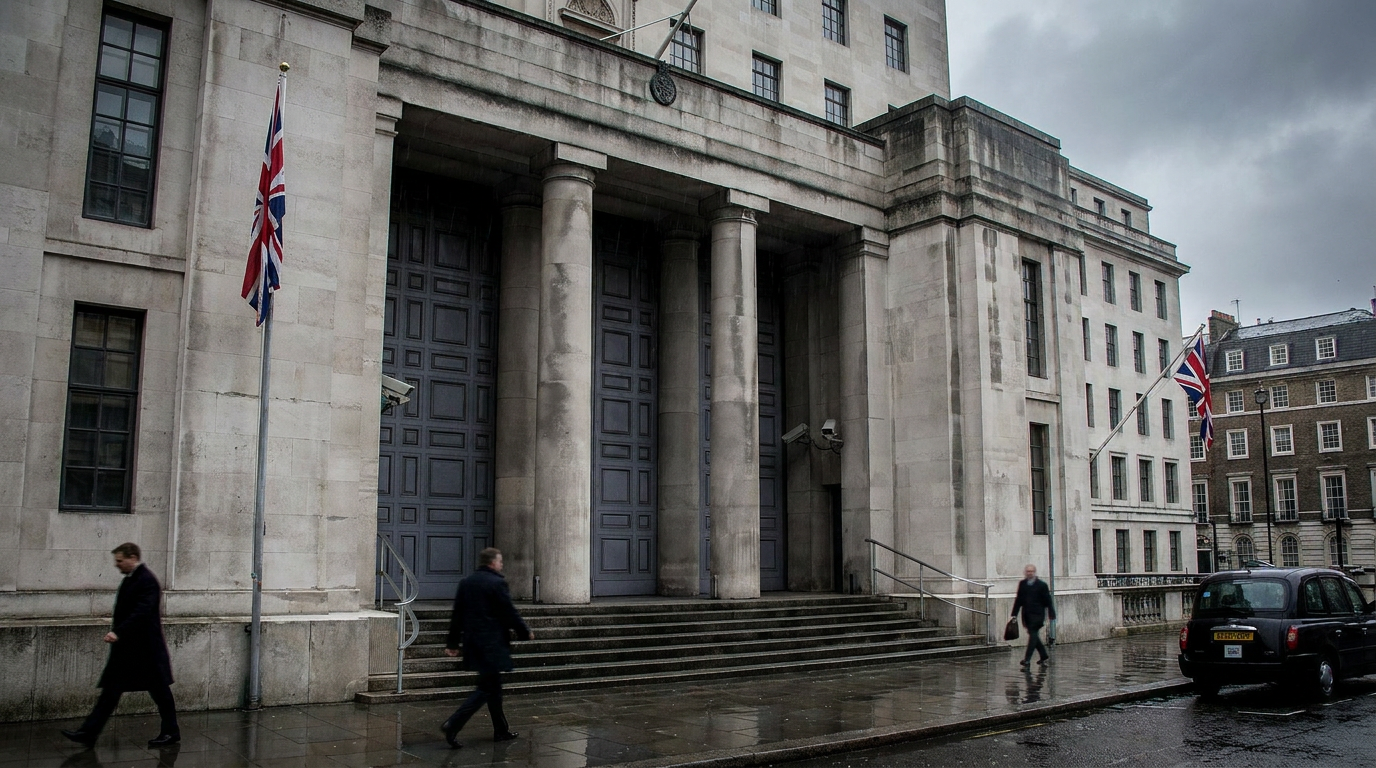
- Defense Hawks & Military
- Argues that rising global threats require immediate, massive increases in defense spending, regardless of domestic fiscal constraints.
- Fiscal Pragmatists
- Maintains that military spending must be balanced against responsible borrowing and the needs of other government departments.
- International Observers
- Focuses on how the UK's internal funding disputes impact its global commitments and NATO readiness.
What's not represented
- · Rank-and-file British military personnel facing operational strain
- · UK defense industry workers relying on procurement contracts
Why this matters
As a leading NATO member, the UK's internal struggle over military spending raises immediate questions about its ability to maintain commitments in Europe and the Middle East, signaling potential cracks in the alliance's deterrence posture against Russia.
Key points
- UK Defense Secretary John Healey resigned, citing inadequate military funding in the government's upcoming budget.
- Healey demanded defense spending reach 3% of GDP by 2030, but the Treasury capped the figure at 2.68%.
- Armed Forces Minister Al Carns also resigned hours later, deepening the crisis for Prime Minister Keir Starmer.
- Healey is the sixth minister to leave Starmer's cabinet in the past month amid growing internal party pressure.
- Military leaders warn the funding shortfall diminishes the UK's standing in NATO and weakens readiness against global threats.
The abrupt resignation of UK Defense Secretary John Healey has triggered a political crisis in London and raised alarms across NATO. Stepping down on Thursday, Healey issued a stark warning that Prime Minister Keir Starmer's government is refusing to adequately fund the military at a time of escalating global threats.[1][3]
The core of the dispute centers on the UK's forthcoming Defence Investment Plan (DIP). In a scathing resignation letter published on X, Healey revealed that the Treasury's proposed financial settlement "falls well short of what is required for defence and the country at this dangerous time." He argued that the budget constraints would force decisions that reduce the readiness of British forces and increase operational risks.[3][4][5]
The numbers at the heart of the clash reflect a fundamental disagreement over the scale of the threat environment. Healey had been pushing for a firm commitment to raise defense spending to 3 percent of the UK's gross domestic product by 2030. Instead, the Treasury's plan, presented to him earlier in the week, capped the 2030 figure at 2.68 percent, up only marginally from the 2.6 percent projected for next year.[3][4]

The fallout was swift and compounded the crisis for the Starmer administration. Just hours after Healey's announcement, Minister for the Armed Forces Al Carns—a decorated former Royal Marines colonel who served in Afghanistan—also submitted his resignation. By the end of the day, the government had tapped Dan Jarvis to succeed Healey as Defense Secretary, thrusting him into an immediate baptism of fire.[5]
Healey's departure is a severe blow to Starmer, who is already grappling with deep internal fractures. Healey is the sixth minister to resign from the cabinet in the past month, a staggering attrition rate that includes the recent departure of Health Secretary Wes Streeting. At least 95 Labour MPs have reportedly called on the Prime Minister to set out a departure timetable, underscoring his waning authority.[3][4]

Healey's departure is a severe blow to Starmer, who is already grappling with deep internal fractures.
In his response to Healey, Starmer defended the government's fiscal choices. The Prime Minister insisted that the planned spending increases are "sustainable and fair," arguing that they require "significant reallocations of funding from across government departments." Starmer emphasized that responsible borrowing and strong public finances are foundational to national security, a clear nod to Chancellor Rachel Reeves's tight grip on the Treasury.[2][3]
However, military leaders and defense analysts have forcefully backed Healey's assessment. General Sir Richard Barrons, co-author of the 2025 Strategic Defence Review, stated that by refusing to fully fund its own review, the government is "actively going backwards." Barrons warned that the funding shortfall diminishes the UK's standing within NATO and weakens its credibility with allies.[3][6]
The UK aerospace and defense trade body, ADS Group, echoed these concerns. CEO Kevin Craven called the resignation a "damning reflection on the current state of affairs," arguing that national security is "not an accountant's job" and that getting the investment plan wrong carries consequences far beyond worst-case scenarios.[5]
The strategic context makes the funding dispute particularly acute. The UK military is currently stretched across multiple high-stakes commitments, including leading a multinational maritime mission in the Strait of Hormuz amid ongoing conflict with Iran, heading NATO's Arctic Sentry mission, and supporting Ukraine against Russia.[3][4]

Healey pointedly used Starmer's own rhetoric against him in his resignation letter, reminding the Prime Minister of his speech at the Munich Security Conference where he warned that Russia could attack a NATO member as soon as 2030. "You know what defence needs," Healey wrote, challenging the government's willingness to match its threat assessments with hard capital.[4][5]
The crisis in London is being watched closely in Washington and across European capitals. As the United States increasingly pressures its NATO allies to shoulder a larger share of the collective security burden, the sight of a top-tier European military power fracturing over a 3 percent spending target sends a troubling signal about the alliance's political will.[1][6]
Ultimately, the clash between the Ministry of Defence and the Treasury represents a classic guns-versus-butter dilemma, exacerbated by a volatile geopolitical landscape. As Chatham House analysts noted, the government is choosing not to spend the necessary funds, but "we do not get to choose whether war matters. War can choose us, whether we prefer to ignore it or not."[6]
How we got here
February 2026
Prime Minister Keir Starmer warns at the Munich Security Conference that Russia could attack a NATO member by 2030.
May 14, 2026
Health Secretary Wes Streeting resigns, beginning a wave of cabinet departures that weakens Starmer's government.
June 8, 2026
The Treasury presents John Healey with a financial settlement capping defense spending at 2.68% of GDP by 2030.
June 11, 2026
John Healey and Armed Forces Minister Al Carns resign in protest over the defense budget.
Viewpoints in depth
Defense Establishment
Argues that the global threat environment requires a wartime footing and a minimum of 3% GDP spending.
Military leaders, defense think tanks, and outgoing officials like John Healey argue that the world has fundamentally changed, pointing to active conflicts involving Russia and Iran. They view the Treasury's constraints as a dangerous dereliction of duty that directly risks military personnel and national security, insisting that 3% of GDP is the bare minimum required to maintain credible deterrence.
Treasury & Fiscal Pragmatists
Argues that national security fundamentally relies on economic stability and responsible borrowing.
The Prime Minister and the Chancellor contend that defense cannot be given a blank check while other domestic departments face severe cuts. They argue that the proposed increases to 2.68% are already substantial given the country's fiscal realities, and that long-term security is impossible without a strong, stable domestic economy.
NATO Allies
Views the internal UK dispute with deep concern over broader alliance readiness.
International partners, particularly the United States, are watching the UK's internal strife with alarm. There is a growing fear that if a leading European military power cannot commit to necessary funding increases, the broader alliance's deterrence against adversaries will be fatally undermined, shifting an even heavier burden onto Washington.
What we don't know
- Whether the new Defense Secretary, Dan Jarvis, will accept the Treasury's 2.68% spending cap or push for further negotiations.
- How NATO allies, particularly the United States, will formally respond to the UK's internal disputes over defense burden-sharing.
- If Prime Minister Keir Starmer can survive the growing rebellion within his party following this sixth ministerial resignation.
Key terms
- Defence Investment Plan (DIP)
- A long-term strategic budget document outlining the UK government's planned financial commitments to military procurement, readiness, and operations.
- Gross Domestic Product (GDP)
- The total value of goods and services produced by a country, often used as a baseline to measure the proportional size of defense spending.
- NATO Arctic Sentry
- A strategic military mission led by the North Atlantic Treaty Organization to monitor and secure the High North region against potential Russian incursions.
Frequently asked
Why did John Healey resign?
Healey resigned because he believed the government's proposed Defence Investment Plan severely underfunded the military, leaving the UK vulnerable to rising global threats.
What were the specific budget numbers in dispute?
Healey pushed for defense spending to reach 3% of GDP by 2030, but the Treasury's plan capped it at 2.68%.
Who is replacing John Healey?
Dan Jarvis has been appointed as the new UK Defense Secretary.
How does this affect Prime Minister Keir Starmer?
The resignation is a major blow to Starmer, marking the sixth minister to quit his cabinet in a month and intensifying calls from within his party for him to step down.
Sources
Source coverage
6 outlets
3 viewpoints surfaced






[1]Fox NewsDefense Hawks & Military
Top US ally's defense chief quits, warns military lacks resources for rising threats
Read on Fox News →[2]BBC NewsFiscal Pragmatists
Why has Defence Secretary John Healey quit in shock resignation?
Read on BBC News →[3]PBS NewsFiscal Pragmatists
UK defense secretary abruptly resigns, saying government won't spend enough on military
Read on PBS News →[4]Al JazeeraInternational Observers
Britain's defence secretary Healey quits over defence spending
Read on Al Jazeera →[5]Breaking DefenseDefense Hawks & Military
British defense secretary, Armed Forces minister resign over defense funding
Read on Breaking Defense →[6]Chatham HouseDefense Hawks & Military
John Healey's resignation highlights profound strategic failure in the UK government's approach to defence
Read on Chatham House →

More in news politics
See all 111 stories →Strait of Hormuz
Trump Cancels Iran Strikes, Claims Peace Deal to Reopen Strait of Hormuz is Imminent
8 sources

Strait of Hormuz
Trump Cancels Strikes on Iran, Claims Peace Deal to Reopen Strait of Hormuz is Imminent
8 sources

US-Iran Conflict
Trump Cancels Strikes as U.S. and Iran Weigh Draft Peace Framework
8 sources

Strait of Hormuz
Trump Cancels Iran Strikes, Claims 'Great Settlement' Reached as Tehran Pushes Back
8 sources

Every angle. Every day.
Get news politics stories with full source coverage and perspective breakdowns delivered to your inbox.