
CAR-T Cell Therapy Induces Drug-Free Remission in Severe Lupus Patients
A pioneering UK trial has successfully used genetically modified T-cells to "reset" the immune systems of patients with severe lupus, building on foundational evidence that CAR-T therapy can reverse autoimmune diseases.
By Factlen Editorial Team
- Medical Researchers
- Focus on the biological mechanism of resetting the immune system and the need for long-term safety data.
- Patient Advocates
- Emphasize the life-changing impact of achieving drug-free remission after decades of debilitating symptoms.
- Biotech Industry
- View the breakthrough as a platform technology that can be commercialized and scaled via off-the-shelf therapies.
What's not represented
- · Health economists evaluating the high cost of personalized CAR-T therapies for public health systems.
- · Patients who do not respond to or cannot tolerate the preconditioning chemotherapy.
Why this matters
For decades, severe autoimmune diseases have required lifelong immune suppression that leaves patients vulnerable to infections. This breakthrough provides concrete evidence that a one-time genetic therapy can fundamentally reset the immune system, offering a potential cure rather than just symptom management.
Key points
- Five UK patients achieved drug-free remission from severe lupus after receiving CAR-T cell therapy.
- The therapy genetically modifies T-cells to hunt and destroy the rogue B-cells causing the disease.
- Data shows the immune system 'resets,' eventually producing healthy B-cells without destructive autoantibodies.
- Researchers are developing 'off-the-shelf' donor cells to bypass the need for harsh preconditioning chemotherapy.
- Long-term studies are still required to confirm if the remission is permanent.
Five patients in the United Kingdom have achieved drug-free remission from severe lupus following a pioneering clinical trial of CAR-T cell therapy. The experimental treatment, originally developed to eradicate blood cancers, appears to have successfully "reset" their malfunctioning immune systems, allowing them to cease all traditional lupus medications.[1][2]
Systemic lupus erythematosus (SLE) is a chronic autoimmune disease where the body's immune system attacks its own tissues, causing widespread inflammation and organ damage. For decades, the standard of care has relied on lifelong, broad-spectrum immunosuppressive drugs that manage symptoms but leave patients vulnerable to severe infections and long-term complications.[2][6]
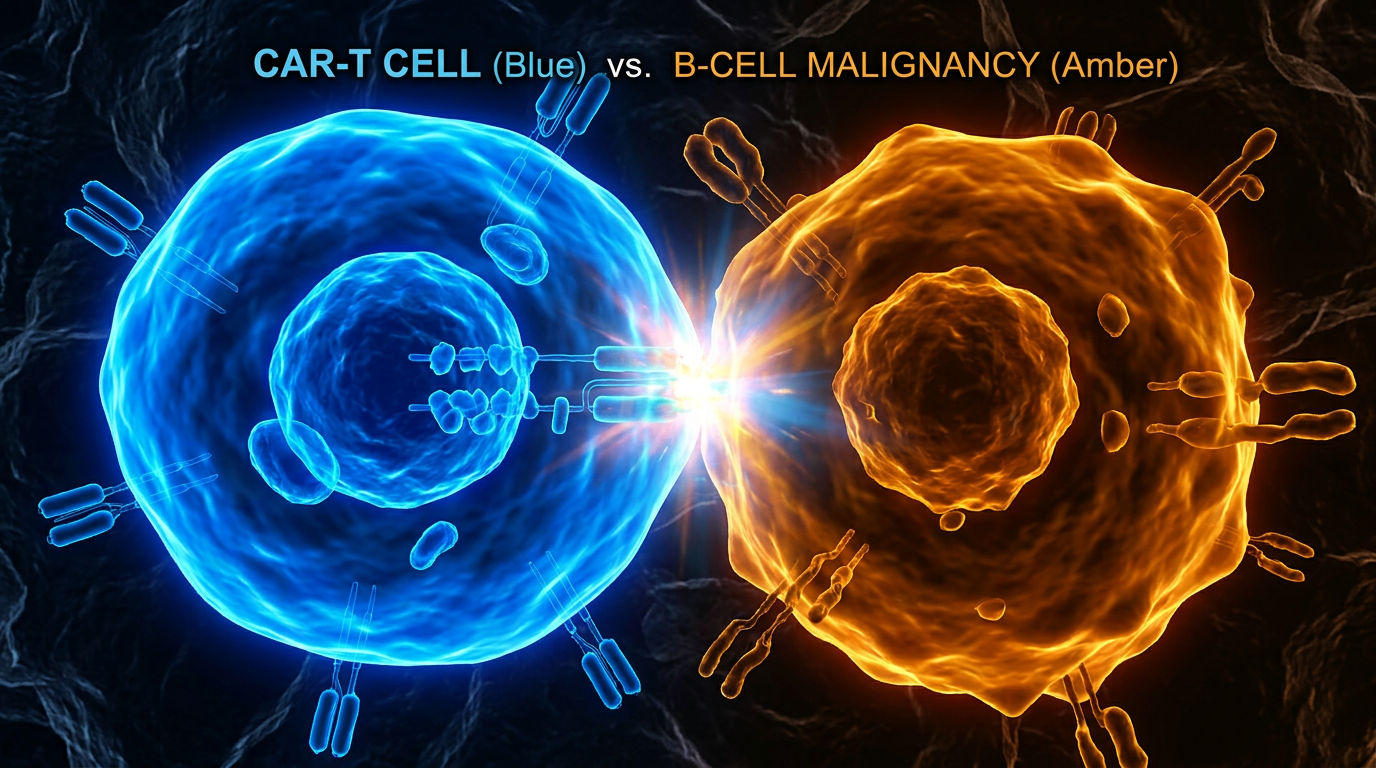
The core claim of this therapeutic approach is that CAR-T cells can be reprogrammed to hunt the specific drivers of autoimmunity. Chimeric antigen receptor (CAR) T-cell therapy involves extracting a patient's own T-cells—the immune system's natural hunters—and genetically modifying them in a laboratory. The cells are engineered to recognize and bind to a specific protein called CD19, which is found on the surface of B-cells.[2][4]
In patients with lupus, rogue B-cells produce destructive autoantibodies that attack the kidneys, joints, and skin. By infusing the modified CAR-T cells back into the patient, the therapy acts as a targeted strike force, systematically hunting down and destroying the entire B-cell population while leaving the rest of the immune system largely intact.[3][4]

The clinical evidence from the UK trial demonstrates rapid and profound efficacy. Led by University College London Hospitals (UCLH), researchers treated nine patients with severe, treatment-refractory lupus. Most suffered from lupus nephritis, a life-threatening complication that severely impairs kidney function.[2][3]
The results have been characterized by researchers as transformative. Five patients who received a lower dose of the therapy were followed for an average of 11 months. All five achieved complete remission within a few months of the infusion, allowing them to safely halt their traditional immunosuppressive regimens.[1][2]
The human impact of this biological reset is striking. One trial participant, 52-year-old Katie Tinkler, had lived with debilitating lupus symptoms for three decades. Following the CAR-T infusion, she reported being completely symptom-free, allowing her to ski for the first time in ten years and dance at her daughter's wedding.[1][2]
The UCLH trial builds upon foundational science published in a landmark 2024 study in the New England Journal of Medicine (NEJM). That study tracked 15 patients in Germany with severe autoimmune diseases, including lupus, idiopathic inflammatory myositis, and systemic sclerosis, providing the first major evidence of CAR-T's efficacy outside of oncology.[4]
The UCLH trial builds upon foundational science published in a landmark 2024 study in the New England Journal of Medicine (NEJM).
The NEJM data revealed a crucial biological phenomenon: after the CAR-T cells eradicated the existing B-cells, the patients' immune systems eventually generated new, healthy B-cells. Crucially, these newly reconstituted cells did not produce the destructive autoantibodies that caused the disease, effectively proving that a true "immune reset" had occurred.[4][6]

Despite the unprecedented success rates, researchers maintain transparent uncertainty regarding the long-term durability of the treatment. The follow-up periods for both the German and UK cohorts range from 11 months to two years. It remains biologically plausible that rogue B-cells could eventually re-emerge, necessitating retreatment decades later.[2][4]
Furthermore, the safety profile of autologous (self-donated) CAR-T therapy requires careful clinical management. Before receiving the engineered cells, patients must undergo "lymphodepletion"—a harsh chemotherapy regimen using fludarabine and cyclophosphamide to clear out existing immune cells and make room for the CAR-T cells to multiply.[4]
This preconditioning phase leaves patients temporarily immunocompromised. Additionally, while CAR-T therapy in cancer patients frequently triggers severe cytokine release syndrome (an intense, sometimes fatal inflammatory response), autoimmune patients have so far experienced much milder side effects, though the sample size remains too small to guarantee universal safety.[4][6]
To make the therapy accessible to the estimated 5 million people worldwide living with lupus, researchers are already developing next-generation solutions. The Norton Cancer Institute in the United States is currently running the RESOLUTION trial to test an allogeneic, or "off-the-shelf," CAR-T product.[5]
Unlike the UCLH trial, which required weeks of complex laboratory manufacturing for each individual patient, the allogeneic approach uses T-cells harvested from healthy donors. These cells are genetically modified in advance and stored, allowing for immediate treatment without the logistical bottlenecks of personalized cell engineering.[5]

Crucially, the investigational therapy being tested at Norton Cancer Institute targets both B-cells (CD19) and T-cells (CD70). By potentially eliminating the need for harsh lymphodepletion chemotherapy, this advancement could make the treatment viable for patients of childbearing age who cannot safely undergo traditional preconditioning regimens.[5][6]
The broader horizon for autoimmune treatment is rapidly expanding. If the immune reset mechanism proves durable in larger Phase 2 and Phase 3 clinical trials, CAR-T therapy could fundamentally alter the trajectory of rheumatology and immunology.[2][6]
Beyond lupus, biotechnology firms are currently launching dozens of clinical trials to test cell therapies against a spectrum of B-cell-mediated conditions, including multiple sclerosis, myasthenia gravis, and rheumatoid arthritis.[4][6]

For decades, a diagnosis of severe autoimmune disease meant a lifetime of managing decline through immune suppression. The converging evidence from London and Germany suggests that medicine is crossing a threshold where these chronic conditions can be actively, and perhaps permanently, reversed.[2][4][6]
How we got here
2021
The first successful use of CAR-T cell therapy in a single patient with severe systemic lupus erythematosus is reported.
Feb 2024
The New England Journal of Medicine publishes a landmark study showing 15 patients achieved remission from severe autoimmune diseases using CAR-T.
Jan 2026
The Norton Cancer Institute launches a clinical trial testing 'off-the-shelf' allogeneic CAR-T cells for autoimmune diseases.
Jun 2026
University College London Hospitals announces five NHS patients achieved drug-free remission in a pioneering UK trial.
Viewpoints in depth
Medical Researchers
Scientists emphasize the biological proof of an immune reset while cautioning about long-term unknowns.
For immunologists and trial investigators, the most significant finding is not just the immediate remission, but the biological mechanism behind it. The data published in the New England Journal of Medicine proved that after the CAR-T cells wipe out the B-cell population, the body eventually generates new B-cells that do not produce disease-causing autoantibodies. This suggests a true 'reset' of the immune system rather than mere suppression. However, researchers are careful to avoid the word 'cure,' noting that follow-up periods are currently limited to a few years, and it remains unknown if the autoimmune memory could eventually reassert itself.
Patient Advocates
Advocates focus on the life-altering potential of escaping lifelong immunosuppression.
For the autoimmune patient community, the breakthrough represents a paradigm shift in quality of life. Standard treatments for severe lupus involve broad-spectrum immunosuppressants and steroids, which carry heavy side effects including weight gain, osteoporosis, and a constant vulnerability to infections. Patient advocates highlight stories like that of Katie Tinkler, who regained the ability to walk normally and ski after 30 years of debilitating symptoms. For this camp, the prospect of a one-time treatment that offers drug-free remission is the holy grail of rheumatology, fundamentally changing what it means to live with an autoimmune diagnosis.
Biotech Industry
Industry leaders view the breakthrough as a platform technology ripe for commercial scaling.
The biotechnology sector is rapidly pivoting to capitalize on these findings, launching dozens of clinical trials to test CAR-T against a wide range of B-cell-mediated diseases, including multiple sclerosis and rheumatoid arthritis. The primary focus for industry developers is overcoming the logistical and financial hurdles of autologous therapy, which requires extracting and engineering each patient's own cells. Companies are heavily investing in allogeneic, or 'off-the-shelf,' CAR-T products derived from healthy donors. If successful, this would transform a bespoke, highly expensive hospital procedure into a scalable pharmaceutical product.
What we don't know
- Whether the rogue B-cells will eventually return and cause a relapse decades after the initial treatment.
- If the milder side effect profile seen in autoimmune patients will hold true in larger, more diverse Phase 3 clinical trials.
- Whether 'off-the-shelf' allogeneic CAR-T cells will be as effective and durable as a patient's own engineered cells.
Key terms
- Systemic Lupus Erythematosus (SLE)
- A chronic autoimmune disease in which the body's immune system mistakenly attacks healthy tissue in many parts of the body.
- CAR-T Cell Therapy
- Chimeric antigen receptor T-cell therapy; a treatment that genetically alters a patient's immune cells to attack specific disease-driving cells.
- B-cells
- A type of white blood cell that produces antibodies; in autoimmune diseases, malfunctioning B-cells produce autoantibodies that attack the body.
- CD19
- A protein found on the surface of B-cells that serves as the target for the engineered CAR-T cells.
- Lymphodepletion
- A chemotherapy regimen used before CAR-T infusion to clear out existing immune cells and make room for the engineered cells to multiply.
- Allogeneic Therapy
- A treatment using cells or tissues from a healthy donor rather than the patient themselves, often referred to as 'off-the-shelf' therapy.
Frequently asked
What is CAR-T cell therapy?
CAR-T is a treatment where a patient's T-cells are extracted, genetically engineered in a lab to target specific disease-causing cells, and infused back into the body. It was originally developed to treat blood cancers.
How does CAR-T cure lupus?
In lupus, rogue B-cells produce antibodies that attack the body's own tissues. CAR-T cells are engineered to hunt down and destroy these B-cells, allowing the immune system to 'reset' and produce healthy cells.
Is the lupus remission permanent?
While early trial patients have remained in drug-free remission for up to two years, researchers caution that longer follow-up studies are needed to determine if the disease will eventually return.
What are the side effects?
The therapy requires harsh preconditioning chemotherapy, which leaves patients temporarily immunocompromised. It also carries a risk of cytokine release syndrome, an intense inflammatory response, though this has been mild in autoimmune patients so far.
Sources
Source coverage
6 outlets
3 viewpoints surfaced





[1]BBC NewsPatient Advocates
'I've never been this good' – revolutionary immune reset puts lupus in remission
Read on BBC News →[2]The GuardianPatient Advocates
Lupus patients in England in remission after pioneering NHS trial of GM therapy
Read on The Guardian →[3]University College London HospitalsMedical Researchers
CAR T-cell therapy transforms life of patient with severe lupus
Read on University College London Hospitals →[4]New England Journal of MedicineMedical Researchers
CD19 CAR T-Cell Therapy in Autoimmune Disease — A Case Series with Follow-up
Read on New England Journal of Medicine →[5]Norton Cancer InstituteMedical Researchers
CAR T-cell therapy for lupus, myositis and scleroderma: New clinical trial offers hope
Read on Norton Cancer Institute →[6]Factlen Editorial TeamBiotech Industry
Synthesis by Factlen editorial team
Read on Factlen Editorial Team →

Every angle. Every day.
Get health stories with full source coverage and perspective breakdowns delivered to your inbox.