
CAR-T Cell Therapy Induces Drug-Free Remission in Severe Lupus Patients
Early clinical trials show that a cellular therapy originally designed for cancer can effectively 'reset' the immune system in patients with severe lupus. The treatment has allowed patients to achieve long-lasting remission without the need for lifelong immunosuppressive drugs.
By Factlen Editorial Team
- Clinical Researchers
- View the therapy as a historic breakthrough that fundamentally shifts the goal of autoimmune treatment from symptom management to functional cure.
- Autoimmune Patients & Advocates
- Emphasize the life-changing impact of drug-free remission and the heavy physical toll of legacy immunosuppressive treatments.
- Health Economists & Safety Monitors
- Urge caution regarding the therapy's exorbitant cost, manufacturing bottlenecks, and the need for long-term safety data before widespread adoption.
What's not represented
- · Insurance providers evaluating coverage costs
- · Patients in developing nations without access to advanced cell therapies
Why this matters
Autoimmune diseases like lupus have historically required lifelong management with heavy immunosuppressants that carry severe side effects. If these early results hold, CAR-T therapy could shift the medical paradigm from merely managing autoimmune conditions to functionally curing them.
Key points
- CAR-T cell therapy, originally a cancer treatment, is successfully putting severe lupus patients into drug-free remission.
- The therapy works by genetically modifying a patient's T-cells to hunt down and destroy the rogue B-cells causing the disease.
- After the rogue cells are destroyed, the body generates new, healthy B-cells, effectively 'resetting' the immune system.
- While short-term results are unprecedented, researchers are still monitoring patients to determine if the cure is permanent.
For decades, a diagnosis of systemic lupus erythematosus (SLE) has meant a lifetime of managing a malfunctioning immune system. Patients rely on a heavy regimen of steroids and broad immunosuppressants to prevent their own bodies from attacking healthy tissue, often enduring severe side effects, chronic fatigue, and progressive organ damage. The word 'cure' has historically been absent from the rheumatology lexicon. However, a wave of recent clinical data suggests a profound paradigm shift is underway. By repurposing a highly advanced cellular technology originally developed for blood cancers, researchers are achieving what was previously thought impossible: deep, drug-free remission in patients with severe autoimmune disease.[1][2]
The intervention driving this shift is chimeric antigen receptor (CAR) T-cell therapy. In early trials across Germany and the United Kingdom, patients with severe, treatment-resistant lupus have experienced rapid and sustained disease reversal. The therapy effectively performs an 'immune reset,' clearing out the rogue cells responsible for the disease and allowing a healthy immune system to regenerate in their place. For patients who had exhausted all conventional options, the results have been life-altering, prompting the medical community to re-evaluate the biological limits of autoimmune treatment and sparking a global race to refine the technology.[1][3][6]
The primary mechanism behind this breakthrough hinges on the role of B-cells. In a healthy immune system, B-cells produce antibodies to fight off external infections. In lupus, a subset of these cells malfunctions, producing autoantibodies that mistakenly attack the patient's own kidneys, skin, joints, and central nervous system. Traditional therapies attempt to suppress the entire immune system to quiet this attack, leaving patients vulnerable to severe infections. CAR-T therapy, by contrast, acts as a highly specific cellular assassin, designed to eliminate only the problematic cell populations while leaving the broader immune architecture intact.[1][4][6]
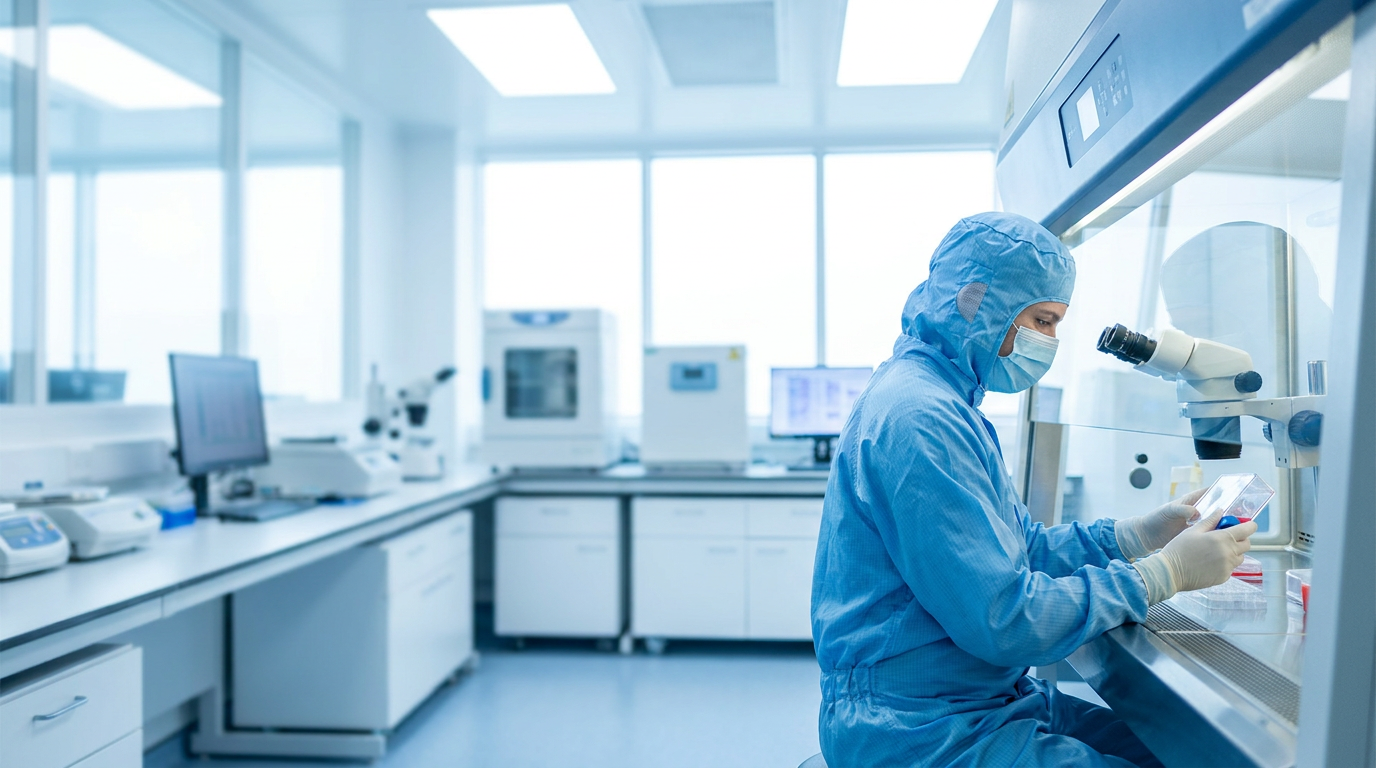
The process begins by extracting a patient's own T-cells—the immune system's natural enforcers. In a specialized laboratory, these cells are genetically engineered to express a synthetic receptor (the CAR) designed to seek out a specific protein called CD19. Because CD19 is present on the surface of almost all B-cells, the modified T-cells become hyper-targeted hunters. Once multiplied into the millions and re-infused into the patient's bloodstream, the CAR-T cells systematically track down and destroy the B-cell population, including the rogue cells driving the lupus pathology.[3][4][6]

The clinical evidence supporting this mechanism is unusually robust for early-stage trials. A landmark case series published in the New England Journal of Medicine detailed the outcomes of 15 patients with severe autoimmune diseases, including eight with refractory lupus. Following a single infusion of CD19-targeted CAR-T cells, the results were unequivocal: all eight lupus patients achieved complete disease remission according to strict international criteria. The speed and depth of the response stunned researchers, who noted that the dynamics of B-cell ablation were highly consistent across the diverse patient group.[3]
The clinical evidence supporting this mechanism is unusually robust for early-stage trials.
The most striking data point from the German cohort is the complete cessation of standard therapies. After a median follow-up of 15 months, 100 percent of the patients remained in remission without the need for any immunosuppressive drugs. This clinical success has recently been replicated in a UK National Health Service (NHS) trial, where five out of six patients with severe lupus entered rapid remission. Participants reported unprecedented improvements in energy and mobility, with some returning to physically demanding activities they had abandoned decades prior.[1][2][3]

The durability of the treatment appears to stem from how the immune system recovers. Following the initial CAR-T infusion, patients experience a period of B-cell aplasia—a complete absence of B-cells in the bloodstream. However, within several months, the body's stem cells begin producing new B-cells. Crucially, evidence shows that these newly generated cells are healthy and do not produce the destructive autoantibodies that characterized the patient's lupus. This biological reboot is what researchers refer to as the 'immune reset,' effectively giving the patient a naive, functional immune system.[1][3][4]
While the short-term efficacy data is exceptionally strong, the long-term durability of the immune reset remains an open scientific question. The longest follow-ups currently extend to roughly two to three years. It is not yet known whether the newly generated B-cell populations will eventually 're-learn' their autoreactive behaviors over a five- or ten-year horizon, driven by underlying genetic or environmental factors. If relapses do occur, researchers must determine whether patients can safely receive a second CAR-T infusion, or if the initial treatment only provides a temporary, albeit multi-year, reprieve.[3][4][6]
The safety evidence presents a nuanced picture. In oncology, CAR-T therapy is notorious for severe toxicities, most notably cytokine release syndrome (CRS)—a systemic inflammatory response—and neurotoxicity. In the autoimmune trials to date, the safety profile has been surprisingly manageable. In the NEJM cohort, while 11 of the 15 patients developed CRS, all but one case were classified as mild (Grade 1), and there were no instances of severe neurotoxicity. Researchers hypothesize that because lupus patients have a lower overall burden of target cells compared to leukemia patients, the resulting inflammatory cascade is significantly less intense.[3][4]

The success in lupus is catalyzing a broader re-evaluation of autoimmune diseases across the medical spectrum. Clinical trials are rapidly expanding to test CAR-T therapy against other severe, B-cell-mediated conditions, including systemic sclerosis, idiopathic inflammatory myositis, and multiple sclerosis. Early data from these parallel indications mirrors the lupus results, with patients showing major clinical responses, reduced disease activity scores, and an ability to taper off highly toxic legacy medications.[3][4][5]
To address the logistical bottlenecks of personalized cell therapy—which requires weeks of complex manufacturing for each individual and carries an exorbitant price tag—the next frontier of research is focusing on allogeneic, or 'off-the-shelf,' CAR-T products. Trials like the RESOLUTION study at the Norton Cancer Institute are currently evaluating whether T-cells from healthy donors can be engineered to treat lupus patients without triggering immune rejection. If successful, this approach could dramatically lower costs and increase accessibility, transforming a boutique medical marvel into a scalable standard of care.[4][5][6]

The transition of CAR-T therapy from a last-resort cancer treatment to a potential cure for autoimmune disease represents one of the most significant medical pivots of the decade. While rigorous, large-scale Phase 3 trials are still required to definitively prove long-term safety and efficacy, the current evidence pack offers undeniable hope. For the millions of patients living with the daily burden of systemic lupus, the prospect of a permanent immune reset is no longer a theoretical concept, but a tangible clinical reality.[1][2][6]
How we got here
2021
The first German lupus patients receive experimental CAR-T cell therapy under compassionate use protocols.
Feb 2024
The New England Journal of Medicine publishes a landmark study showing 15 autoimmune patients achieved complete remission.
Jan 2026
The Norton Cancer Institute launches a trial for 'off-the-shelf' allogeneic CAR-T therapy to improve accessibility.
Jun 2026
A UK NHS trial reports that five out of six severe lupus patients achieved rapid remission following the treatment.
Viewpoints in depth
Clinical Researchers
View the therapy as a historic breakthrough that fundamentally shifts the goal of autoimmune treatment.
For decades, rheumatologists have operated under the assumption that autoimmune diseases can only be managed, never cured. Clinical researchers view the CAR-T data as a profound biological proof-of-concept that this assumption is false. By demonstrating that a targeted cellular intervention can completely ablate the autoreactive B-cell compartment and allow a healthy immune system to regenerate, researchers argue that the field must now pivot toward curative strategies. Their primary focus is currently on expanding clinical trials to other B-cell mediated diseases like multiple sclerosis and systemic sclerosis, while closely monitoring the long-term durability of the 'immune reset.'
Autoimmune Patients & Advocates
Emphasize the life-changing impact of drug-free remission and the heavy physical toll of legacy treatments.
Patient advocacy groups highlight that the current standard of care for severe lupus—which often involves high-dose corticosteroids and broad-spectrum immunosuppressants—carries a devastating physical and psychological toll. Patients face chronic fatigue, severe weight fluctuations, bone density loss, and a constant vulnerability to infections. For this camp, the true value of CAR-T therapy is not just the cessation of the disease itself, but the liberation from these toxic legacy drugs. Advocates are pushing for accelerated trial timelines and early discussions with health systems to ensure that if the therapy is approved, it is made accessible to those who need it most, rather than being restricted to a wealthy few.
Health Economists & Safety Monitors
Urge caution regarding the therapy's exorbitant cost, manufacturing bottlenecks, and the need for long-term safety data.
While acknowledging the remarkable clinical results, health economists and safety monitors warn that personalized CAR-T therapy is currently one of the most expensive medical interventions in the world, often costing upwards of $400,000 per infusion in the oncology setting. They argue that scaling this bespoke, labor-intensive manufacturing process to the millions of patients suffering from autoimmune diseases is logistically and financially impossible under current healthcare models. Furthermore, safety monitors emphasize that the long-term risks of genetically modifying the immune system—including the potential for secondary malignancies or late-onset immune deficiencies—remain unknown, necessitating decades of rigorous follow-up before the therapy can be declared a definitive cure.
What we don't know
- Whether the newly generated B-cells will eventually 're-learn' their autoreactive behaviors over a 10-to-20 year horizon.
- If patients who do experience a relapse can safely and effectively receive a second dose of CAR-T therapy.
- How quickly the industry can transition from expensive, personalized cell manufacturing to scalable 'off-the-shelf' donor treatments.
Key terms
- Systemic Lupus Erythematosus (SLE)
- A chronic autoimmune disease where the immune system mistakenly attacks healthy tissue, causing inflammation and damage to organs like the kidneys, skin, and joints.
- B-cells
- A type of white blood cell that normally produces antibodies to fight infections, but in autoimmune diseases, produces autoantibodies that attack the body.
- CD19
- A specific protein found on the surface of almost all B-cells, which CAR-T cells are genetically programmed to target and destroy.
- Cytokine Release Syndrome (CRS)
- A potentially dangerous immune overreaction that can occur after CAR-T therapy, causing fever, nausea, and in severe cases, organ dysfunction.
- Allogeneic Therapy
- A treatment using cells from a healthy donor rather than the patient's own cells, allowing the therapy to be manufactured in advance and stored 'off-the-shelf.'
Frequently asked
What is CAR-T cell therapy?
It is a treatment where a patient's own immune cells (T-cells) are extracted, genetically modified in a lab to attack specific disease-causing cells, and then infused back into the body.
How does it cure lupus?
The modified T-cells hunt down and destroy the malfunctioning B-cells that cause lupus. When the body eventually produces new B-cells, they are healthy, effectively 'resetting' the immune system.
Are patients still taking lupus medication?
In the early trials, 100% of the patients who achieved remission were able to completely stop taking their standard immunosuppressive drugs and steroids.
What are the side effects?
The most common side effect is Cytokine Release Syndrome (CRS), a systemic inflammatory response. However, in autoimmune trials so far, these reactions have been mostly mild and highly manageable compared to when the therapy is used for cancer.
Sources
Source coverage
6 outlets
3 viewpoints surfaced





[1]BBCAutoimmune Patients & Advocates
'I've never been this good' – revolutionary immune reset puts lupus in remission
Read on BBC →[2]The GuardianAutoimmune Patients & Advocates
'Exciting' new lupus treatment could end need for lifelong medication
Read on The Guardian →[3]New England Journal of MedicineClinical Researchers
CD19 CAR T-Cell Therapy in Autoimmune Disease — A Case Series
Read on New England Journal of Medicine →[4]Frontiers in ImmunologyHealth Economists & Safety Monitors
CAR-T cell therapy for autoimmune diseases: current clinical trial landscape and the next wave of development
Read on Frontiers in Immunology →[5]Norton Cancer InstituteClinical Researchers
CAR T-cell therapy for lupus, myositis and scleroderma: New clinical trial offers hope
Read on Norton Cancer Institute →[6]Factlen Editorial TeamHealth Economists & Safety Monitors
Synthesis by Factlen editorial team
Read on Factlen Editorial Team →

Every angle. Every day.
Get health stories with full source coverage and perspective breakdowns delivered to your inbox.