
AI-Driven Video Codecs Are Halving Bandwidth Requirements for Global Streaming
Major streaming platforms and tech consortiums are deploying neural video codecs that use artificial intelligence to slash data consumption by up to 50 percent. The breakthrough promises to eliminate buffering, expand 4K access, and significantly reduce the internet's carbon footprint.

The internet is currently undergoing a massive, invisible upgrade that will fundamentally alter how digital media is consumed. Throughout 2026, major streaming platforms, telecommunications providers, and technology consortiums have begun deploying artificial intelligence to rewrite the rules of video transmission across the globe. By replacing decades-old, rigid mathematical formulas with highly adaptable neural networks, these new video codecs are successfully slashing the data required to stream high-quality video by up to 50 percent. This invisible shift is quietly solving some of the internet's most persistent bottlenecks.[2]
The stakes for this technological transition are monumental for both consumers and infrastructure providers. Video streaming currently accounts for the vast majority of all global internet traffic, and the relentless consumer push toward 4K, 8K, and immersive virtual reality resolutions has placed unprecedented strain on global network infrastructure. For years, the industry relied on standard codecs like H.264 and HEVC, which compress video by breaking frames into rigid, predictable blocks and estimating motion. While effective for the HD era, these legacy methods struggle to keep up with modern data demands.
However, those traditional compression methods have finally reached a point of diminishing returns, prompting the shift toward artificial intelligence. Enter Neural Video Codecs (NVCs) and AI-assisted hybrid encoders. Rather than treating every pixel equally, these deep learning models analyze video frames contextually, closely mimicking human visual perception. They intelligently allocate more data to critical areas—such as a speaking actor's face or fast-moving sports action—while aggressively compressing out-of-focus backgrounds, dark shadows, or static skies where the human eye naturally ignores missing detail.[2]
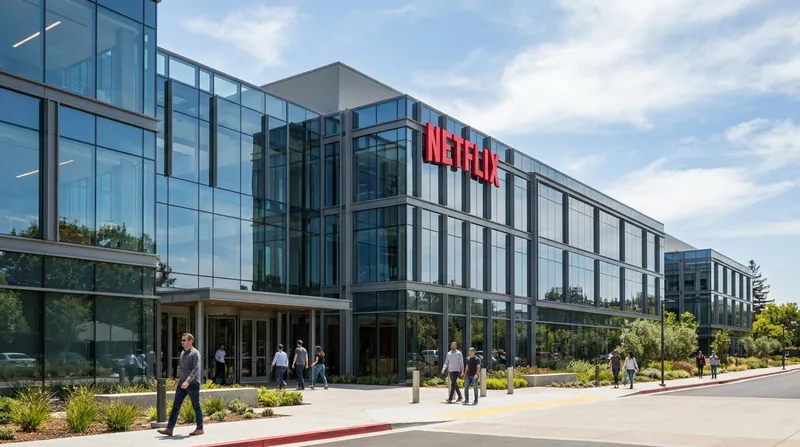
The results of this perceptual optimization are already reshaping consumer experiences on a massive scale. Major platforms like Netflix and YouTube have successfully integrated machine learning techniques into their existing encoding pipelines, specifically optimizing the delivery of the open-source AV1 codec. Netflix recently reported that its AI-assisted AV1 streams use roughly one-third less bandwidth than older standards while maintaining superior visual fidelity. For the end user, this translates to a remarkable 45 percent reduction in buffering interruptions for viewers worldwide, regardless of their local network conditions.
This efficiency leap is not merely about delivering sharper pictures to high-end home theaters; it serves as a crucial tool for bridging the global digital divide. By dropping the bandwidth required for a stable, high-definition 1080p stream from 5,000 kilobits per second down to under 2,000, AI compression democratizes access to digital media. It allows users in rural areas or developing nations with constrained cellular networks to seamlessly access educational content, telehealth services, and entertainment without suffering through the dreaded loading wheel.[2]
Beyond these hybrid systems, fully neural codecs are moving rapidly from academic research laboratories into practical, commercial deployment. Historically, the primary knock against pure AI video compression was its immense computational cost, which made real-time encoding virtually impossible outside of a supercomputer. Early neural models took minutes to encode a single frame of video. But recent breakthroughs in algorithmic efficiency and hardware optimization have entirely shattered that barrier, bringing neural codecs to the brink of mainstream consumer viability.[1][3]
An open-source project known as DCVC-RT has recently achieved real-time 1080p encoding at over 125 frames per second on standard, consumer-grade graphics processing units. By dropping explicit motion estimation in favor of a technique called temporal feature concatenation, and by converting complex floating-point math into simpler integer operations, researchers have proven that fully neural compression is now commercially viable. This represents a watershed moment for the streaming industry, proving that AI can handle live broadcasting speeds.[1][3]
This specific neural model delivers the exact same visual quality as the highly efficient, next-generation H.266 standard while utilizing 21 percent less bitrate. More importantly, the integer-based architecture ensures that the video decodes identically across vastly different hardware platforms. This cross-device consistency is a critical, non-negotiable requirement for mass consumer adoption, ensuring that a video compressed by an AI on a cloud server will play back flawlessly on smartphones, tablets, smart TVs, and aging laptops alike.[1][3]
Meanwhile, the Alliance for Open Media—a powerful consortium that includes industry heavyweights like Google, Amazon, and Microsoft—has officially unveiled AV2. Positioned as the direct successor to the widely used AV1, this next-generation standard integrates advanced predictive methods to reduce bandwidth requirements by an additional 30 percent. Industry engineers view AV2 as the foundational technology that will finally make seamless 8K streaming and immersive virtual reality viable over standard, everyday internet connections without requiring users to upgrade their broadband plans.
The aggressive push for hyper-efficient video delivery is also being driven by a growing, urgent awareness of the internet's environmental impact. The massive server farms, data centers, and content delivery networks required to push billions of hours of video to consumers consume staggering amounts of electricity. As global streaming volume continues to break records year over year, the carbon footprint associated with powering the infrastructure behind digital entertainment has become a major target for corporate sustainability initiatives.[2]
Researchers estimate that a single hour of standard high-definition streaming generates roughly 42 grams of carbon dioxide equivalents under typical network conditions. When that figure is scaled across billions of users simultaneously transitioning to data-heavy 4K and 8K resolutions, the resulting carbon footprint rivals that of entire industrialized nations. Consequently, "green compression" has transformed from a niche engineering concept into a primary, board-level objective for major telecommunications providers and streaming platforms looking to slash their emissions.[2]
By cutting the data payload of a video stream in half, AI-driven compression directly and proportionally reduces the energy required to transmit and process that data across the network. Companies like Harmonic and SimaLabs are currently deploying advanced AI video processors that deliver up to 50 percent bitrate savings. This immense reduction allows 5G and 6G network operators to effectively double their active user capacity without being forced to build new, energy-intensive physical infrastructure or lay additional fiber-optic cables.[2]
The transition to a fully AI-compressed internet is not without its technical hurdles. While software-based decoding of AI codecs is currently functional on modern devices, maximizing battery life on mobile phones requires dedicated hardware decoders built directly into the silicon. Apple's recent integration of hardware-accelerated AV1 decoding in its mobile chips removed a major bottleneck, and the broader technology industry expects dedicated neural codec silicon to arrive as a standard feature in consumer devices by 2028.
Until that dedicated hardware becomes ubiquitous, the streaming landscape will continue to rely on a highly sophisticated hybrid approach, dynamically selecting the best codec based on the viewer's specific device, internet speed, and content type. But the long-term trajectory is now undeniably clear: artificial intelligence has fundamentally rewritten the mathematical rules of video transmission. By prioritizing human perception over rigid data blocks, this technology ensures that the future of the internet will be faster, visually sharper, and significantly more sustainable for the planet.
Key points
- Neural video codecs use AI to analyze frames and compress video based on human perception.
- Major platforms like Netflix report a 45% drop in buffering by using AI-assisted encoding.
- New open-source models can encode 1080p video at 125 frames per second on consumer GPUs.
- Halving bandwidth requirements significantly reduces the massive carbon footprint of global data centers.
Unanswered questions
- Exactly when dedicated hardware decoders for fully neural codecs will become standard in budget smartphones.
- How upcoming generative AI video models will integrate with these new compression standards at scale.
How we got here
Early 2000s
The H.264 standard is introduced, enabling the first wave of high-definition internet video streaming.
2018
The Alliance for Open Media releases AV1, a royalty-free codec offering major efficiency gains over older formats.
2025
Netflix and YouTube widely deploy AI-assisted AV1 encoding, reducing global buffering interruptions by 45 percent.
Early 2026
Open-source neural codecs like DCVC-RT achieve real-time 1080p encoding on consumer hardware for the first time.
June 2026
The AV2 standard is officially presented, promising another 30 percent reduction in bandwidth requirements.
- Streaming Platforms & Engineers
- Focused on reducing infrastructure costs, eliminating buffering, and delivering 4K/8K efficiently to consumers.
- Environmental Advocates
- Prioritize 'green compression' to reduce the massive carbon footprint of data centers and network transmission.
- AI & Codec Researchers
- Focused on the technical breakthroughs of end-to-end neural networks and cross-device hardware compatibility.
Perspectives this story doesn't cover
- Hardware Manufacturers
- Independent Content Creators
Sources
Source coverage
3 outlets
3 viewpoints surfaced



- [1]Streaming Learning CenterAI & Codec Researchers
Evaluating DCVC-RT: A Real-Time Neural Video Codec That Delivers on Speed and Compression
Read on Streaming Learning Center → - [2]Digen AIEnvironmental Advocates
Leading Technologies Shaping the 2026 Compression Market
Read on Digen AI → - [3]arXivAI & Codec Researchers
Towards real-time neural video codec for cross-platform application
Read on arXiv →
More in Entertainment
See all →Streaming Economics
Disney Agrees to $50 Million Antitrust Settlement Over ESPN Bundling, Must Consider Unbundling Networks
3 sources

Streaming Economics
Free Streaming Hits Record Highs as Viewers Beat Subscription Fatigue
4 sources

Unified Discovery
The End of the Endless Scroll: How 2026 Became the Year Streaming Finally Fixed Discovery
3 sources

Free Streaming
Free Streaming Platforms Hit Historic Viewership Milestones as Consumers Combat Subscription Fatigue
6 sources

Comments
Every angle. Every day.
Get Entertainment stories with full source coverage and perspective breakdowns, free every day.