
Why Enterprises Are Abandoning Massive AI Models for Local 'Small Language Models'
In a major shift for 2026, businesses are moving away from costly, cloud-based large language models in favor of compact, highly specialized AI that runs locally. These Small Language Models (SLMs) are slashing computing costs by up to 95% while keeping sensitive corporate data strictly on-premises.
By Factlen Editorial Team

- Enterprise IT Leaders
- Prioritize data sovereignty, predictable infrastructure costs, and strict regulatory compliance by keeping sensitive data strictly on-premises.
- AI Efficiency Advocates
- Focus on the sustainability, lower energy consumption, and the strategic 'right-sizing' of compute resources for specific tasks.
- Open-Source Developers
- Value the democratization of AI, as open-weights SLMs allow teams to build custom, private agents without relying on Big Tech APIs.
What's not represented
- · Cloud Infrastructure Providers
- · Hardware Manufacturers
Why this matters
For the past three years, adopting AI meant sending your company's private data to third-party cloud providers and paying unpredictable, skyrocketing fees. The rise of local Small Language Models democratizes AI, allowing businesses of any size to run highly capable, secure, and private automation entirely on their own hardware.
Key points
- Enterprises are shifting from massive cloud AI to Small Language Models (SLMs) in 2026.
- SLMs run locally, ensuring sensitive corporate data never leaves the building.
- Local deployment solves strict compliance risks like GDPR and DORA.
- Operating costs are reduced by up to 95% compared to cloud API fees.
- Techniques like knowledge distillation allow SLMs to match large model accuracy on specific tasks.
For the better part of a decade, the artificial intelligence industry chased scale with single-minded devotion. The prevailing philosophy dictated that bigger was inherently better, leading to an arms race of massive models, trillions of parameters, and sprawling cloud-compute infrastructure.[1][3]
But as the enterprise technology landscape matures in 2026, a stark reality check has arrived. While generative AI proof-of-concepts dazzled corporate boardrooms, transitioning those massive models into daily production exposed severe bottlenecks. Organizations quickly found themselves grappling with spiraling infrastructure costs, sluggish performance, and insurmountable data privacy hurdles.[3]
The pendulum is now swinging decisively toward efficiency. Global research firms and enterprise leaders are identifying 2026 as the year of the Small Language Model (SLM)—a compact, purpose-built AI designed to handle the vast majority of real-world business tasks at a fraction of the cost and complexity.[1][2]
To understand this architectural shift, it helps to look at the underlying math. Large Language Models (LLMs) like GPT-4 are built with hundreds of billions, or even trillions, of parameters. They are designed as ultimate generalists, possessing the capacity to write poetry, translate ancient languages, and pass the bar exam all at once.[2][4]
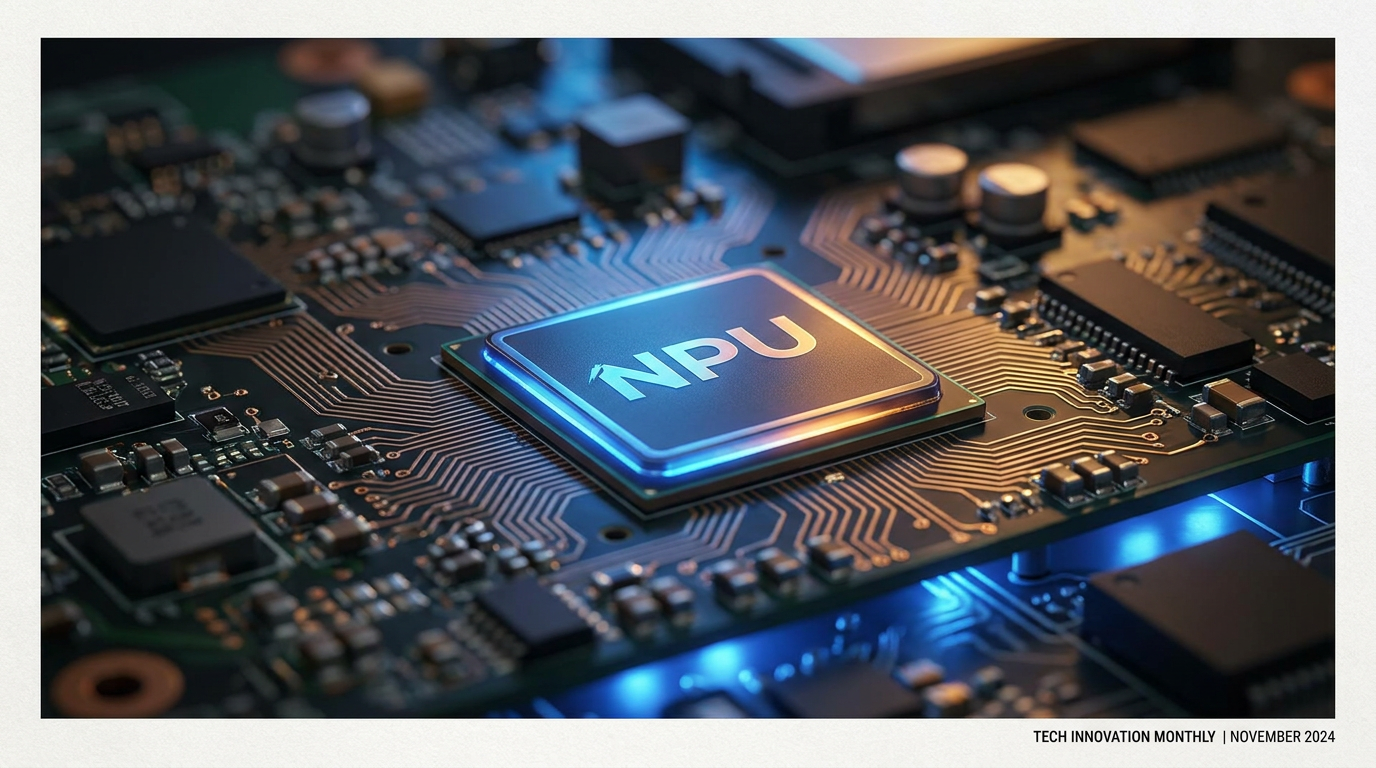
Small Language Models, by contrast, typically contain between 1 billion and 20 billion parameters. Models such as Microsoft’s Phi-3.5, Google’s Gemma 2, and Mistral Nemo are compact enough to fit on a single consumer-grade GPU, or in some cases, run directly on a smartphone or edge device.[2][5]

Because they are smaller, SLMs are not meant to know everything about the internet. Instead, they are fine-tuned on proprietary corporate data to become absolute experts in one specific, narrow domain.[3]
How does a model with a fraction of the parameters compete with a trillion-parameter giant? The secret lies in a training breakthrough known as knowledge distillation.[4]
In this process, a massive "teacher" model is used to train a smaller "student" model. The SLM learns to mimic the advanced reasoning and logic capabilities of the larger model, but discards the bloat of unnecessary internet trivia that it will never need for its specific corporate job.[1][4]
When combined with quantization—a technique that compresses the model's mathematical weights to reduce its memory footprint—these highly tuned SLMs can match or even surpass the accuracy of general-purpose models on domain-specific tasks.[1][4]
The most urgent driver of enterprise SLM adoption is data sovereignty. When companies rely on cloud-based LLMs, sensitive corporate information must travel to external servers for processing, creating a massive vulnerability.[6]
The most urgent driver of enterprise SLM adoption is data sovereignty.
For regulated industries like healthcare, finance, and law, this cloud dependency is often a non-starter. Strict regulations, such as the European Union's Digital Operational Resilience Act (DORA) and global data privacy laws, make external data routing a severe compliance risk.[6]
SLMs solve this tension by running entirely on-premises. Whether deployed in a company's secure Frankfurt data center or directly on an employee's laptop via a local vector database, the data never leaves the building. The jurisdiction, security, and control remain entirely in the hands of the enterprise.[2][6]

Then there is the undeniable economic reality. Running an SLM on local infrastructure can reduce total AI operating costs by 85% to 95% compared to relying on cloud-based API calls.[1][2]
Instead of paying external providers a few cents for every token generated—a cost structure that scales disastrously for high-volume, routine tasks—companies pay a predictable, flat infrastructure cost. Furthermore, fine-tuning an SLM can cost under $100,000, compared to the millions required to train massive models.[2][4]
Speed is another critical advantage. Because they require significantly less computational overhead and avoid network round-trips to the cloud, SLMs cut inference latency from seconds down to a blistering 50 to 150 milliseconds.[2]
This real-time responsiveness is the foundation for what the industry calls "agentic workflows." Rather than acting as simple chatbots waiting for human prompts, SLMs are increasingly deployed as autonomous agents that orchestrate tools, query internal APIs, and execute multi-step processes.[3][5]
For example, a telecom company might deploy one SLM specifically trained to audit billing discrepancies across thousands of accounts, while an insurance firm uses a different SLM to instantly process routine claims against its internal policy documents.[3]
This localized approach also aligns perfectly with growing corporate sustainability mandates. Research indicates that SLMs consume 90% to 95% less energy than their massive counterparts, drastically reducing the carbon footprint associated with enterprise AI deployments.[2][7]

Viewpoints in depth
Enterprise IT Leaders
Prioritize data sovereignty, predictable infrastructure costs, and strict regulatory compliance by keeping sensitive data strictly on-premises.
For Chief Information Officers and IT directors, the allure of generative AI has long been tempered by the terrifying prospect of data leaks. Sending proprietary code, customer financial records, or internal strategy documents to a third-party cloud provider violates the core tenets of enterprise security. By shifting to SLMs, IT leaders can deploy powerful AI capabilities entirely within their own firewalls. This local-first architecture transforms compliance from a massive legal vulnerability into a solved problem, allowing companies to meet stringent frameworks like the EU's DORA without sacrificing technological advancement.
AI Efficiency Advocates
Focus on the sustainability, lower energy consumption, and the strategic 'right-sizing' of compute resources for specific tasks.
Efficiency advocates argue that using a trillion-parameter model to summarize an email or route a customer service ticket is the computational equivalent of using a commercial jet to commute to the grocery store. They champion SLMs as the necessary 'right-sizing' of the AI industry. Beyond the immediate financial savings, this camp highlights the critical environmental benefits. With SLMs consuming up to 95% less energy than massive cloud models, they offer a sustainable path forward for an industry that has faced intense scrutiny over its soaring carbon footprint and power grid demands.
Open-Source Developers
Value the democratization of AI, as open-weights SLMs allow teams to build custom, private agents without relying on Big Tech APIs.
The open-source community views the rise of SLMs as a crucial democratization of artificial intelligence. When AI capabilities are locked behind expensive, proprietary cloud APIs, only the largest tech conglomerates control the ecosystem. Open-weights SLMs like Mistral Nemo and Google's Gemma 2 allow independent developers and smaller startups to download the models, tinker with their underlying architecture, and build highly customized agentic workflows. This camp believes that the true innovation of the next decade will come from thousands of developers building specialized local tools, rather than a few massive companies renting out general-purpose intelligence.
What we don't know
- Whether cloud providers will aggressively lower API pricing to win back enterprise customers migrating to local SLMs.
- How quickly hardware manufacturers will release specialized edge chips to further accelerate on-device SLM performance.
Key terms
- Small Language Model (SLM)
- A compact AI system with fewer parameters (typically 1 to 20 billion) designed to run efficiently on local hardware for specific tasks.
- Knowledge Distillation
- A training technique where a smaller 'student' AI model learns to mimic the reasoning and output of a massive 'teacher' model.
- Quantization
- A method of compressing an AI model's mathematical weights to reduce its memory footprint without significantly sacrificing accuracy.
- Agentic Workflow
- An AI system setup where the model doesn't just answer questions, but autonomously uses tools and executes multi-step processes to complete a task.
- Data Sovereignty
- The concept that digital data is subject to the laws and governance structures of the country or organization where it is physically located.
Frequently asked
Can an SLM write code or creative essays like ChatGPT?
While they can be trained for those tasks, SLMs excel when fine-tuned for one specific domain, like processing insurance claims or auditing code, rather than acting as general-purpose assistants.
Do I need an internet connection to use a local SLM?
No. Because the model's weights and processing occur entirely on your local hardware or company servers, it functions seamlessly offline.
What hardware is required to run an SLM?
Unlike massive models that require sprawling server farms, most SLMs can run on a single consumer-grade GPU, and some are optimized to run directly on smartphones or edge devices.
Sources
Source coverage
8 outlets
3 viewpoints surfaced








[1]Decasoft SolutionsAI Efficiency Advocates
2026 is the year of AI efficiency: The shift to Small Language Models
Read on Decasoft Solutions →[2]Ruh AIOpen-Source Developers
Small Language Models (SLMs): The Efficient Future of AI in 2026
Read on Ruh AI →[3]FutureCIOEnterprise IT Leaders
The strategic shift from generalized LLMs to domain-specific SLMs
Read on FutureCIO →[4]MediumAI Efficiency Advocates
Why Small Language Models Are More Efficient: NVIDIA Research
Read on Medium →[5]Knolli AIOpen-Source Developers
Top SLMs 2026: Benchmarks Across Languages and Edge Devices
Read on Knolli AI →[6]M365.fmEnterprise IT Leaders
Local Deployment and Data Sovereignty with SLMs
Read on M365.fm →[7]ObjectBoxAI Efficiency Advocates
Can Small Language Models (SLMs) really do more with less?
Read on ObjectBox →[8]Factlen Editorial Team
Synthesis by Factlen editorial team
Read on Factlen Editorial Team →


Every angle. Every day.
Get ai stories with full source coverage and perspective breakdowns delivered to your inbox.