
Visa, Stripe, and Mastercard Integrate Stablecoins to Overhaul Global Cross-Border Payments
Major payment networks are aggressively adopting stablecoins for backend settlement, slashing the cost and time of international remittances. The shift replaces legacy correspondent banking with instant blockchain transfers, saving consumers and businesses billions in fees.
By Factlen Editorial Team
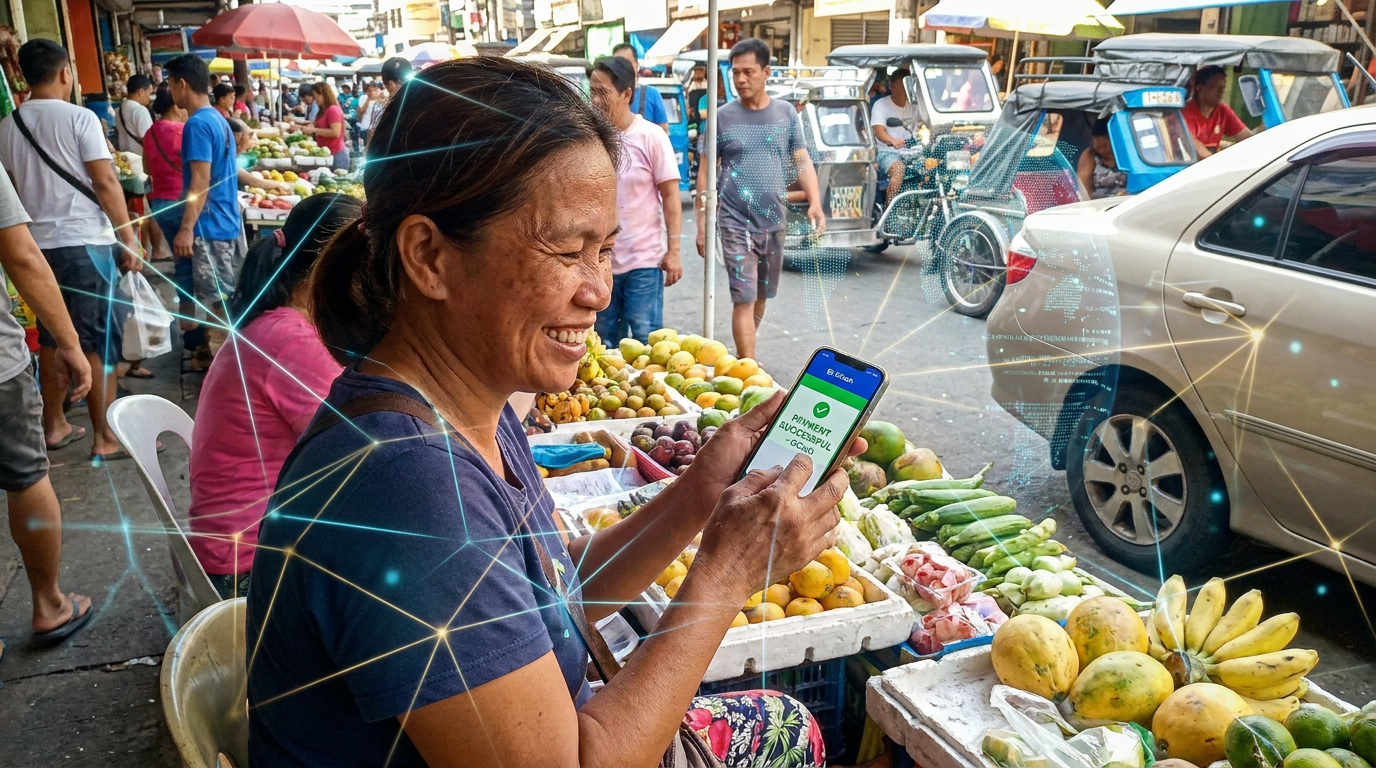
- Payment Network Incumbents
- View stablecoins as a necessary infrastructure upgrade to maintain dominance and reduce backend friction.
- Global Remittance Users
- Value the dramatic reduction in fees and instant settlement times, prioritizing practical utility over crypto ideology.
- Economic & Academic Analysts
- Focus on the structural shift away from correspondent banking and the macroeconomic impact of frictionless capital flow.
What's not represented
- · Local currency exchange operators in emerging markets
- · Retail banking executives managing wire transfer divisions
Why this matters
By replacing slow, expensive correspondent banks with instant blockchain settlement, the world's largest payment networks are slashing the cost of cross-border money transfers. This shift stands to save billions of dollars annually for global workers sending remittances home and small businesses paying international suppliers.
Key points
- Visa, Mastercard, and Stripe are aggressively integrating stablecoins into their core payment settlement infrastructure.
- Visa is already processing $7 billion annually in stablecoin settlements and is expanding its pilots to include tokenized bank deposits.
- Meta has begun paying international creators in USDC via Stripe, bypassing mandatory local currency conversions.
- Stablecoin rails reduce cross-border settlement times from days to seconds and can cut remittance fees by up to 76%.
- Unlike the failed 2019 Libra project, tech giants are now using existing, regulated stablecoins rather than minting their own currencies.
The long-promised cryptocurrency revolution isn't arriving in the form of a volatile speculative asset, but rather as a quiet, invisible backend upgrade to the world's largest payment networks. In June 2026, financial incumbents including Visa, Mastercard, and Stripe have made decisive moves to integrate stablecoins—digital tokens pegged to the value of the U.S. dollar—into their core infrastructure. Rather than trying to replace the traditional financial system, these companies are utilizing blockchain technology to fix its most glaring inefficiency: the slow, expensive process of moving money across international borders.[1][4]
At its annual Payments Forum in San Francisco this week, Visa announced expanded stablecoin settlement pilots, revealing that it is already moving $7 billion annually in stablecoins across its network. The company is actively building technology to allow banks to convert traditional deposits into programmable digital money, positioning stablecoins as a scalable, next-generation foundation for global payments. By extending its settlement window to seven days a week, Visa aims to enable always-on value transfer that operates outside the restricted hours of traditional banking systems.[2][3][5]
The Visa announcements follow closely on reports of a landmark collaboration among traditional payment rivals. Visa, Mastercard, Stripe, and Coinbase are reportedly backing a joint stablecoin settlement platform. If launched, the consortium would knit together separate corporate efforts into a single, unified settlement layer for a stablecoin market that has ballooned to $325 billion in total value. Industry analysts view this potential alliance as a structural turning point, signaling that traditional players are no longer merely experimenting with digital assets, but are actively shaping the future of global money movement.[4][5]

This infrastructure shift is already reaching consumers and independent workers. In recent weeks, Meta quietly began paying creators in Colombia and the Philippines using USDC, a dollar-pegged stablecoin issued by Circle. The payments flow seamlessly through Stripe's infrastructure, settling on public blockchains like Solana and Polygon. This allows international creators to receive funds directly to their digital wallets without being forced into mandatory, high-fee local currency conversions. Meta simply sends the digital dollars, and the creators manage the rest, retaining far more of their earned income.[6]
To understand why these financial incumbents are so aggressively embracing digital assets, one must look at the friction inherent in the traditional cross-border payment system. Sending money internationally via SWIFT or traditional remittance providers typically involves routing instructions through multiple correspondent banks. Each hop in this legacy architecture carries fees and introduces delays, resulting in a global average remittance cost of 6.2% and settlement times that frequently stretch from two to five business days. For small businesses and migrant workers, this represents a massive, unavoidable tax on their capital.[7][8]
Sending money internationally via SWIFT or traditional remittance providers typically involves routing instructions through multiple correspondent banks.
Stablecoins bypass this legacy architecture entirely. By settling on public, permissionless blockchains, transactions clear in seconds, regardless of the geographic distance between the sender and the receiver. The cost of the transfer drops from dollars to fractions of a cent. For a worker sending a standard $500 remittance back home to Latin America, utilizing efficient blockchain networks can reduce fees by up to 76%. Across the global economy, this efficiency stands to save billions of dollars annually for those who rely most heavily on cross-border transfers.[7][8]

Crucially, everyday users do not need to understand blockchain technology to benefit from it. Payment companies increasingly utilize a 'stablecoin sandwich' model to abstract away the technical complexity. A sender pays in their local fiat currency, the provider instantly converts it to a stablecoin, moves the token across borders on-chain, and immediately converts it back to the recipient's local currency. The crypto element acts purely as a high-speed, low-cost transport layer, leaving the user with a familiar interface and a dramatically faster result.[8]
This mainstream adoption is being unlocked by a fundamentally altered regulatory landscape. When Meta—then operating as Facebook—attempted to launch its own global currency, Libra, in 2019, it faced intense, coordinated opposition from global central banks who viewed the project as a direct threat to monetary sovereignty. Regulators concluded that a private company operating a parallel monetary system at a global scale represented an unacceptable risk, forcing Meta to abandon the project entirely. Today, the environment has shifted from hostility to structured accommodation.[6]
Today's approach is architecturally and strategically different. Rather than minting their own proprietary currencies, tech and finance giants are utilizing existing, regulated stablecoins. The passage of comprehensive regulatory frameworks, such as the GENIUS Act in the United States and MiCA in Europe, has provided the legal certainty that traditional financial institutions needed. These laws established clear rules for fully reserved payment stablecoins, allowing companies like Stripe and Visa to treat them as legitimate, compliant payment instruments rather than speculative regulatory hazards.[6][7]

Beyond retail remittances, the technology is transforming massive business-to-business and institutional financial flows. Visa recently announced a partnership with Brale on the Canton Network to test privacy-preserving stablecoin settlements for institutional payments. This specific initiative allows banks to move millions of dollars instantly while maintaining strict control over the visibility of sensitive transaction data—a critical compliance requirement that fully public blockchains previously struggled to meet. It demonstrates that the technology is maturing to handle the complex demands of enterprise finance.[5]
The integration of stablecoins by incumbent payment giants represents a profound maturation of the digital asset space. After years of speculative fervor and high-profile regulatory battles, the underlying technology is finally fading into the background, doing exactly what it was originally designed to do. By replacing legacy correspondent banks with cryptographic settlement, these networks are making the movement of money as fast, cheap, and borderless as the movement of information, fundamentally reshaping the plumbing of the global economy for decades to come.[1][2][7]
How we got here
June 2019
Meta (then Facebook) announces the Libra project, sparking intense global regulatory backlash.
Early 2022
Meta officially winds down the Diem (formerly Libra) project.
October 2024
Stripe acquires stablecoin infrastructure firm Bridge for $1.1 billion to rebuild its crypto payment rails.
2025
The U.S. passes the GENIUS Act, providing a clear federal regulatory framework for payment stablecoins.
June 2026
Visa, Mastercard, and Stripe announce major expansions of stablecoin settlement infrastructure.
Viewpoints in depth
Payment Network Incumbents
Traditional financial giants view stablecoins as a necessary infrastructure upgrade.
Companies like Visa, Mastercard, and Stripe recognize that $325 billion in value is already moving outside traditional card networks. By integrating stablecoin settlement into their own operations, they aim to retain their position as the primary trust and routing layer for global commerce. They argue that while blockchain provides the speed, their networks provide the necessary compliance, fraud protection, and merchant connectivity that raw crypto networks lack.
Global Remittance Users
Migrant workers and international creators prioritize practical utility and cost savings.
For individuals sending money across borders, the shift is purely practical. They prioritize the dramatic reduction in fees and the shift from multi-day waiting periods to instant settlement. For this group, the underlying blockchain technology is largely irrelevant; the value lies entirely in keeping more of their earned money, avoiding predatory exchange rates, and accessing their funds immediately through familiar mobile applications.
Traditional Correspondent Banks
Legacy banking institutions face a structural threat to their cross-border revenue streams.
The 'stablecoin sandwich' model bypasses the need for correspondent banks to hold pre-funded accounts in various currencies. As cross-border volume migrates to blockchain rails, these banks stand to lose a highly lucrative revenue stream derived from foreign exchange spreads and international wire fees. While some are adapting by exploring tokenized deposits, many face the prospect of being entirely disintermediated from retail and B2B remittance flows.
What we don't know
- Whether the reported joint stablecoin platform backed by Visa, Mastercard, and Stripe will face antitrust scrutiny from regulators.
- How quickly traditional correspondent banks will lower their own wire fees to compete with the new blockchain-based rails.
- Which specific stablecoin (USDC, USDT, or a new consortium token) will ultimately capture the majority of institutional B2B settlement volume.
Key terms
- Stablecoin
- A digital currency pegged to a stable asset, like the U.S. dollar, designed to maintain a constant value and avoid the volatility of traditional cryptocurrencies.
- Settlement
- The final step in a financial transaction where funds are officially transferred from the buyer to the seller.
- Correspondent Bank
- A financial institution that provides services on behalf of another, often used as intermediaries in traditional international wire transfers.
- Stablecoin Sandwich
- A payment process where fiat currency is converted to a stablecoin for instant cross-border transfer, then immediately converted back to fiat for the recipient.
Frequently asked
Do I need to buy cryptocurrency to use this?
No. Most platforms use a 'stablecoin sandwich' model where you send and receive regular local currency, while the stablecoin handles the cross-border transfer invisibly in the background.
Why are Visa and Mastercard adopting stablecoins?
Traditional cross-border payments are slow and expensive. By upgrading their backend infrastructure to use stablecoins, these companies can settle transactions instantly and defend their market share against crypto-native competitors.
Is this the same as Meta's old Libra project?
No. Libra attempted to create a new, privately controlled global currency, which alarmed regulators. The current approach simply uses existing, regulated U.S. dollar stablecoins like USDC as a payment rail.
Sources
Source coverage
8 outlets
3 viewpoints surfaced








[1]PYMNTSPayment Network Incumbents
Visa announced new artificial intelligence (AI), stablecoin and token initiatives at the Visa Payments Forum 2026
Read on PYMNTS →[2]BlockheadPayment Network Incumbents
Visa used its annual Payments Forum in San Francisco this week to lay out a clearer picture
Read on Blockhead →[3]TechNode GlobalPayment Network Incumbents
Visa has announced a suite of new artificial intelligence (AI), stablecoin, and token capabilities
Read on TechNode Global →[4]SpendNodePayment Network Incumbents
Stripe, Visa and Mastercard are among the backers of a stablecoin platform that is close to launch
Read on SpendNode →[5]Crowdfund InsiderPayment Network Incumbents
Fintech Stripe, Mastercard, Visa, Coinbase Aim to Introduce New Stablecoin
Read on Crowdfund Insider →[6]VaasblockGlobal Remittance Users
Meta quietly began paying a selected group of creators in USDC
Read on Vaasblock →[7]PayRetailersGlobal Remittance Users
The rising adoption of stablecoins for cross-border remittances
Read on PayRetailers →[8]Harvard Business SchoolEconomic & Academic Analysts
Stablecoins and the Future of Money: Cross-Border Settlement
Read on Harvard Business School →

More in finance
See all 5 stories →


Every angle. Every day.
Get finance stories with full source coverage and perspective breakdowns delivered to your inbox.