
Valve Imports 32 Tons of Steam Frame VR Headsets Ahead of Summer Launch
Import records reveal tens of thousands of Valve's highly anticipated Steam Frame headsets have arrived in the US, signaling an imminent launch for the standalone VR device.
By Factlen Editorial Team
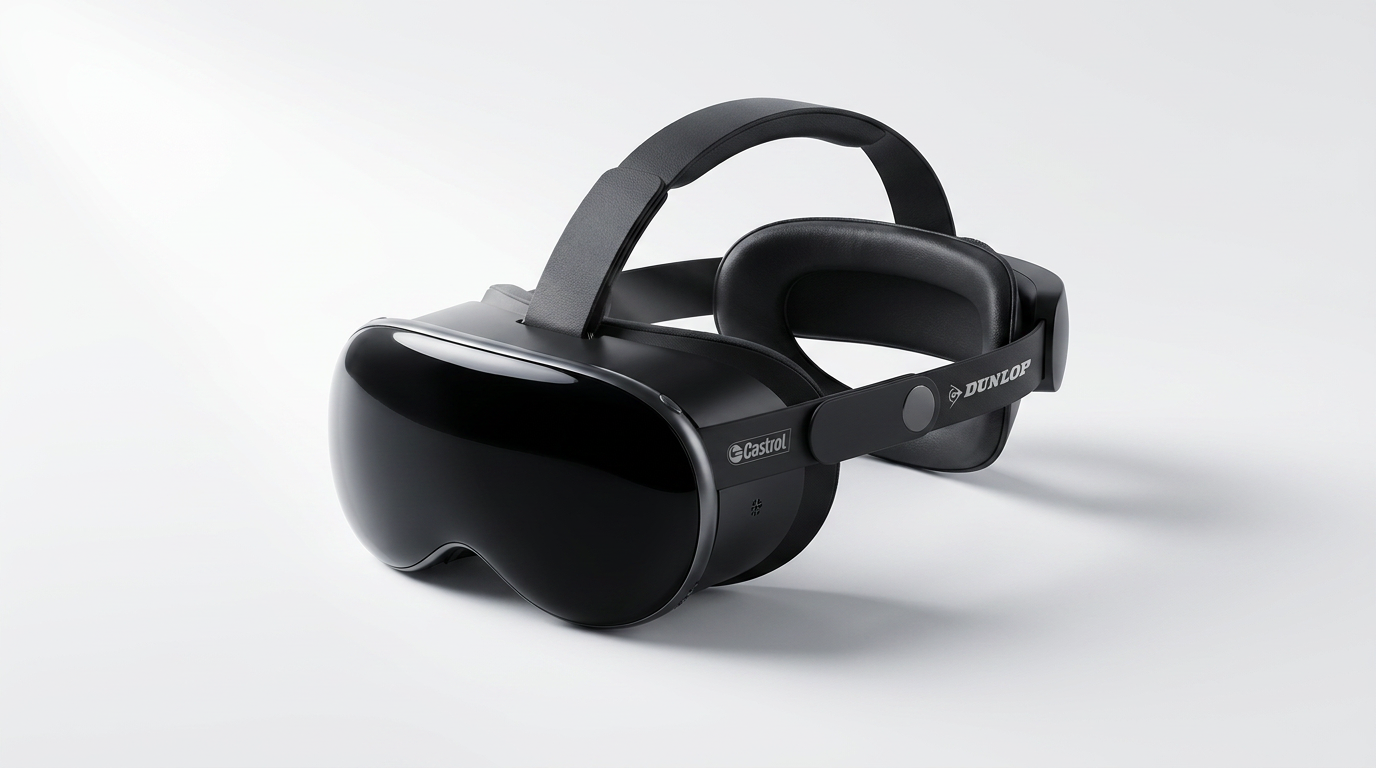
- PC VR Enthusiasts
- Gamers seeking high-fidelity wireless streaming and an open ecosystem alternative to Meta.
- Standalone VR Developers
- Software creators focused on the new performance targets and the ease of porting apps via SteamOS.
- Hardware Analysts
- Market watchers monitoring the supply chain, memory shortages, and how pricing will affect adoption.
What's not represented
- · Meta executives responding to the new hardware competition.
- · Mainstream consumers who may find premium VR hardware cost-prohibitive.
Why this matters
The Steam Frame represents the first major high-end, open-ecosystem competitor to Meta's dominance in standalone virtual reality. By bridging the gap between mobile convenience and PC gaming power, it promises to revitalize the VR app market and give consumers a premium alternative for immersive computing.
Key points
- Valve has imported nearly 32 metric tons of its upcoming Steam Frame VR headsets into the US.
- The standalone device features a Snapdragon 8 Gen 3 processor and 16GB of RAM.
- A new 'Verified' program ensures standalone VR apps hit a strict 72 frames-per-second target.
- The headset utilizes eye-tracking and foveated streaming for high-fidelity wireless PC gaming.
- Valve has confirmed a summer 2026 launch, though final pricing remains unannounced.
The long wait for Valve's next-generation virtual reality hardware appears to be over. Import records and shipping manifests reveal that tens of thousands of units of the highly anticipated "Steam Frame" headset have arrived at distribution warehouses in the United States, signaling an imminent summer launch. The arrival marks a major milestone for the virtual reality ecosystem, which has been eagerly awaiting a high-end, open-platform alternative to Meta's dominant Quest lineup. For developers and consumers alike, the hardware represents a significant leap forward in both standalone computing power and wireless streaming fidelity.[1][2]
According to customs data, Valve's logistics partners offloaded nearly 32 metric tons—roughly 70,000 pounds—of "virtual reality devices" from manufacturer Quanta Computing in recent weeks. Hardware analysts tracking the shipments estimate this initial wave could represent upwards of 40,000 individual headsets ready for immediate distribution. The sheer volume of the delivery suggests that Valve is actively stockpiling inventory to fulfill immediate consumer demand upon release, bypassing the limited-run pre-order models that have often plagued previous consumer electronics launches and ensuring a smooth rollout.[1][3][4]
First announced in November 2025, the Steam Frame represents Valve's ambitious return to the hardware space following the critically acclaimed Valve Index. Unlike its tethered predecessor, the Frame is a fully standalone device designed to operate entirely on its own, while maintaining deep, seamless integration with the broader PC gaming ecosystem. The headset is engineered to bridge the gap between the frictionless convenience of mobile VR and the uncompromising graphical fidelity of desktop-powered experiences, offering users the flexibility to switch between modes without swapping hardware.[3][6]
Under the hood, the headset boasts formidable specifications designed to push the boundaries of mobile computing. It is powered by a Qualcomm Snapdragon 8 Gen 3 processor and paired with 16GB of ultra-fast LPDDR5X RAM—double the memory capacity found in the competing Meta Quest 3. Visually, the device features dual 2160x2160 LCD panels, one for each eye, capable of supporting experimental refresh rates up to 144Hz. Valve achieved this visual density while maintaining a slim, lightweight profile of just under 450 grams by utilizing custom-designed pancake lenses that drastically reduce the optical bulk.[3][6]

For software developers and application enthusiasts, the Steam Frame's operating system is arguably its most disruptive feature. Running a specialized, Arch Linux-based version of SteamOS, the headset can natively execute both traditional flat-screen applications and bespoke standalone VR games. To ensure a massive launch library, Valve has integrated its "Proton" compatibility layer directly into the device, allowing a vast catalog of Windows-based software to run seamlessly on the headset's ARM architecture without requiring developers to rewrite their code from scratch.[5][6]
For software developers and application enthusiasts, the Steam Frame's operating system is arguably its most disruptive feature.
To guide users through this expansive software ecosystem, Valve recently introduced the "Steam Frame Verified" program. Modeled after the highly successful certification system used for the Steam Deck handheld, this initiative guarantees that an app or game runs flawlessly out-of-the-box in standalone mode. To earn the Verified badge, virtual reality titles must maintain a strict, unwavering minimum of 72 frames per second at a resolution of 1728x1728, providing developers with a concrete performance target and assuring consumers of a nausea-free, optimized experience.[2][6]
Beyond its standalone capabilities, the Steam Frame is heavily engineered as a "streaming-first" device for high-end PC VR enthusiasts who demand uncompromised quality. It utilizes a dedicated, plug-and-play 6GHz wireless adapter that connects directly to a user's computer, creating an isolated, high-speed network link. This dual-radio approach dedicates one channel entirely to streaming complex audio and visuals while the other maintains a standard internet connection, effectively eliminating the bandwidth competition and latency spikes that have historically plagued wireless PC VR setups.[5][6]
This unprecedented wireless fidelity is achieved through the integration of built-in eye-tracking cameras and a technique known as "foveated streaming." By tracking exactly where the user's pupils are focused in real-time, the headset dynamically concentrates maximum image quality and bandwidth on the direct center of their vision. The peripheral areas are subsequently compressed, drastically reducing the overall data load without the user ever noticing a drop in perceived visual clarity. This optimization allows the headset to deliver a pristine, uncompressed-feeling image over the air.[5][6]

The physical input devices have also received a comprehensive overhaul to match the headset's premium ambitions. The new Steam Frame controllers feature cutting-edge tunneling magnetoresistance (TMR) thumbsticks, which offer significantly enhanced precision and durability compared to traditional sensors, virtually eliminating the dreaded risk of stick drift over time. Furthermore, the controllers incorporate advanced capacitive finger tracking, allowing for highly nuanced hand gestures and natural interactions within virtual environments, all while maintaining the familiar split-gamepad layout necessary for comfortably playing traditional flat-screen games.[3][5][6]
While the hardware is clearly finalized and sitting in distribution centers, one critical detail remains unconfirmed: the final retail price. Valve originally stated the Steam Frame would cost less than the $1,000 Index kit, but global memory shortages driven by the explosive growth of the artificial intelligence sector forced the company to delay its pricing announcement earlier this year. Industry analysts are closely watching to see how Valve balances the premium components—like the 16GB of high-speed RAM—with the need to price the headset competitively against Meta's subsidized hardware.[2][3]
With Canadian regulatory clearance officially granted in early June and pallets of hardware now safely staged in American warehouses, the industry broadly expects Valve to open orders within a matter of weeks to hit their promised summer window. For a virtual reality market that has been heavily dominated by Meta's closed ecosystem over the past few years, the arrival of an open, PC-integrated alternative promises to inject fresh competition, revitalize developer interest, and push the boundaries of what consumer standalone headsets can achieve in the living room.[2][3][4]
How we got here
Nov 2025
Valve officially announces the Steam Frame as a standalone successor to the Valve Index.
Feb 2026
Valve delays the pricing announcement due to global memory shortages driven by the AI boom.
Mar 2026
The 'Steam Frame Verified' program is unveiled at the Game Developers Conference.
Jun 2026
Import records reveal tens of thousands of headsets arriving at Valve's US warehouses.
Viewpoints in depth
PC VR Enthusiasts
Gamers seeking high-fidelity wireless streaming and an open ecosystem alternative to Meta.
For veteran virtual reality users, the Steam Frame represents a long-awaited upgrade path that doesn't require abandoning their existing Steam libraries or settling for compressed video cables. They view the dedicated 6GHz streaming and foveated rendering as the holy grail for wireless PC VR, allowing them to play visually demanding titles without the latency and artifacting that often plague standard Wi-Fi setups.
Standalone VR Developers
Software creators focused on the new performance targets and the ease of porting apps via SteamOS.
Software creators see the headset as a vital counterweight to Meta's dominance in the standalone market. The clear performance targets of the 'Verified' program give them concrete goals, while the Proton compatibility layer means they can reach a new audience without entirely rewriting their Windows-based codebases. This dramatically lowers the barrier to entry for independent studios looking to launch VR applications.
Hardware Analysts
Market watchers monitoring the supply chain, memory shortages, and how pricing will affect adoption.
Supply chain experts are closely watching the launch as a test of consumer appetite amid rising component costs. They note that while the hardware is highly capable, the global memory shortage that delayed Valve's pricing announcement could push the final retail cost into a premium tier. Analysts warn that if the price strays too far above Meta's subsidized offerings, the Steam Frame may struggle to capture mainstream market share outside of dedicated enthusiasts.
What we don't know
- The exact retail price of the Steam Frame, which was delayed due to global memory shortages.
- The specific day the headset will be available for purchase or pre-order.
- How the battery life will hold up under the strain of heavy standalone gaming versus wireless streaming.
Key terms
- Standalone VR
- A virtual reality headset that contains its own computing hardware and battery, requiring no external PC or console to function.
- Foveated Streaming
- A technique that uses eye-tracking to transmit the exact spot a user is looking at in high resolution, lowering the quality in the peripheral vision to save bandwidth.
- Pancake Lenses
- Ultra-thin optical lenses used in modern VR headsets to reduce the bulk and weight of the device compared to older, thicker lenses.
- SteamOS
- A Linux-based operating system developed by Valve, designed to run PC games and apps on custom hardware using compatibility layers.
Frequently asked
Do I need a gaming PC to use the Steam Frame?
No. While it excels at streaming PC games, the Steam Frame is a standalone headset with its own processor and can run apps natively.
Will my Meta Quest games work on it?
Not directly through the Meta store, but any VR game purchased on Steam can be played either natively or via PC streaming.
When does the headset release?
Valve has confirmed a 'Summer 2026' launch, and recent import records suggest it could be available within weeks.
Sources
Source coverage
6 outlets
3 viewpoints surfaced






[1]The VergeHardware Analysts
Valve just imported 13 tons of VR headsets in one day
Read on The Verge →[2]UploadVRStandalone VR Developers
Steam Frame Shipping 'This Summer', Valve Confirms, As Pallets Arrive In US
Read on UploadVR →[3]Road to VRHardware Analysts
Steam Frame is Poised for Launch as Units Begin Reaching the US
Read on Road to VR →[4]PC GamerPC VR Enthusiasts
The Steam Frame is arriving in the US, suggesting the VR headset's launch isn't far off
Read on PC Gamer →[5]Digital FoundryPC VR Enthusiasts
Valve's Steam Frame VR Headset: Hands-On + Impressions, Specs + Tech Breakdown
Read on Digital Foundry →[6]ValveStandalone VR Developers
Steam Frame
Read on Valve →

Every angle. Every day.
Get technology stories with full source coverage and perspective breakdowns delivered to your inbox.