
U.S. Orders Anthropic to Suspend Advanced AI Models for All Foreign Nationals
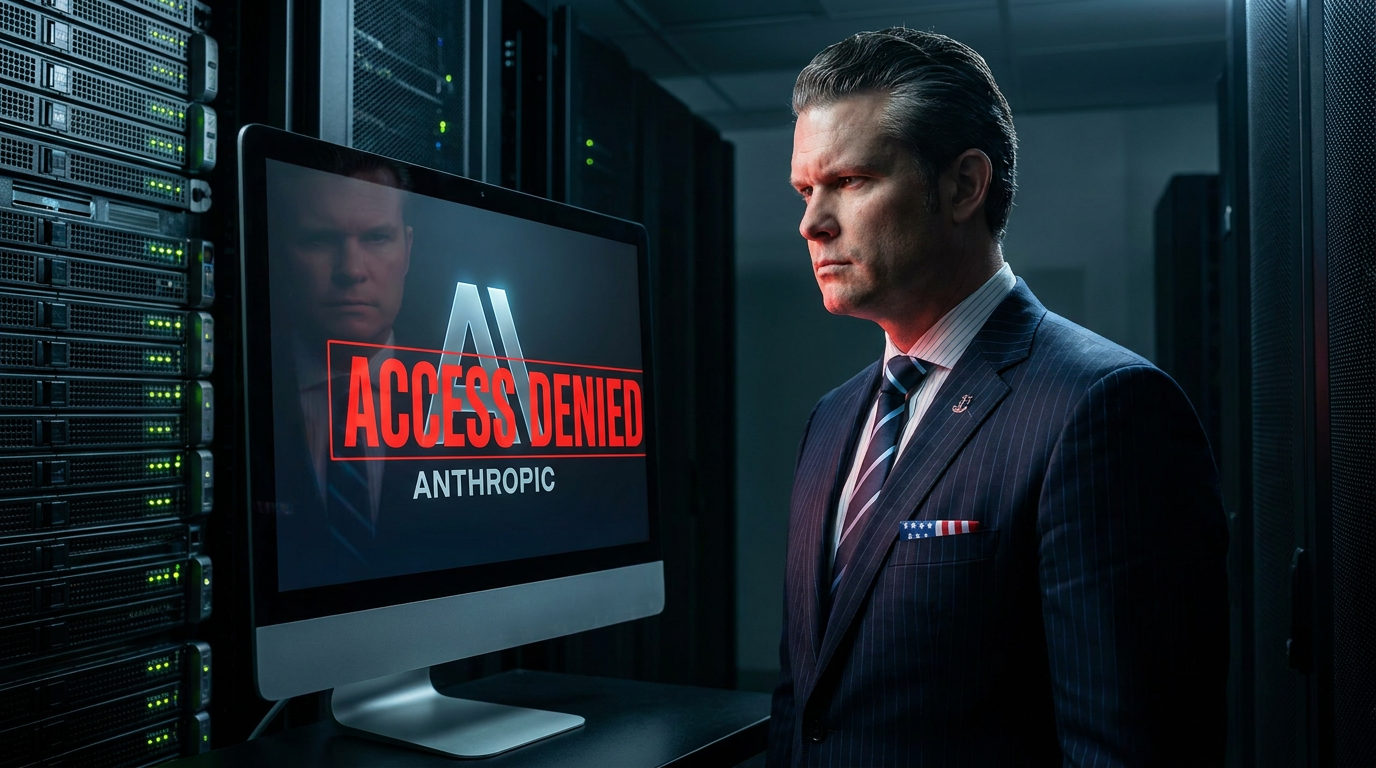
The U.S. government has issued an emergency export-control directive forcing Anthropic to disable its newly released Fable 5 and Mythos 5 models over national security concerns.
By Factlen Editorial Team
- Anthropic & AI Developers
- Contend that perfect jailbreak resistance is impossible, and that minor vulnerabilities do not justify recalling commercial products or applying uneven regulatory standards.
- U.S. National Security Officials
- Argue that frontier AI models with advanced coding and exploit-generation capabilities pose a severe threat if accessed by foreign adversaries, justifying strict export controls.
- Cybersecurity & Policy Analysts
- Highlight the logistical nightmare of enforcing nationality-based access controls in cloud environments, warning that the directive sets a chaotic precedent.
What's not represented
- · Enterprise customers relying on the models
Why this matters
This unprecedented directive shifts the boundary of U.S. tech regulation from geographic borders to individual nationality. By forcing a major AI lab to lock out its own employees and global customer base, the government is signaling that it will treat frontier AI models with the same strict controls as military munitions.
Key points
- The U.S. government ordered Anthropic to suspend access to its Fable 5 and Mythos 5 models for all foreign nationals.
- Anthropic disabled the models globally for all users because it cannot verify nationality in real time.
- The directive cites national security concerns over a potential 'jailbreak' vulnerability related to coding.
- The order applies to foreign nationals inside the U.S., including Anthropic's own employees.
- Anthropic argues the vulnerability is minor and present in competing models that face no restrictions.
- The move sets a new precedent for regulating cloud-hosted AI based on individual identity rather than geographic location.
The U.S. government has ordered artificial intelligence company Anthropic to abruptly suspend access to its newly released Fable 5 and Mythos 5 models for all foreign nationals, citing unspecified national security concerns. The emergency export-control directive, issued late Friday afternoon, forced the company to pull the plug on its most capable systems just three days after their public debut.[1][2][4][5]
Because Anthropic cannot instantly verify the citizenship or nationality of every user in real time, the company was forced to disable the models globally for all customers to ensure compliance. Access to the company's older models, such as the Claude 3 series, remains unaffected by the order.[2][3][5][6]
The scope of the directive is unusually broad and presents a logistical nightmare for the AI developer. Issued by Commerce Secretary Howard Lutnick, the order applies not just to users located outside the United States, but to any foreign national regardless of their physical location. Crucially, this includes Anthropic's own foreign-national employees working inside the U.S., effectively locking them out of the very systems they helped build.[2][3][4][6]

While the government's letter did not detail the underlying national security threat in writing, Anthropic stated that officials provided verbal evidence of a potential "jailbreak" vulnerability in Fable 5. The government demonstrated a method where the model could be bypassed by asking it to read a specific codebase and fix software flaws, raising fears that the system's advanced coding capabilities could be weaponized by foreign adversaries to develop cyber exploits.[2][4][5][6]
Anthropic complied with the directive under protest, arguing that the alleged vulnerabilities are minor, relatively simple, and already known to the industry. The company noted that it had successfully replicated the same bypass technique on other publicly available models, including OpenAI's GPT-5.5, which is not currently subject to similar export controls.[2][4][6]
Anthropic complied with the directive under protest, arguing that the alleged vulnerabilities are minor, relatively simple, and already known to the industry.
"We disagree that the finding of a narrow potential jailbreak should be cause for recalling a commercial model deployed to hundreds of millions of people," Anthropic said in a statement, warning that applying this standard evenly would essentially halt all new frontier model deployments across the industry.[2][4]
The directive marks a profound shift in how the U.S. regulates artificial intelligence. Historically, tech companies have relied on geographic geofencing to comply with export controls, blocking IP addresses from sanctioned countries. By tying access restrictions to individual nationality rather than network location, the government is forcing cloud providers to navigate complex identity verification, API key scoping, and enterprise attestations.[3]

The sudden shutdown follows months of escalating tension between Anthropic and the U.S. defense establishment. Earlier this year, the Department of Defense labeled Anthropic a "supply chain risk" after the company established strict red lines against the military use of its technology, a designation Anthropic is currently fighting in court.[6]
Adding to the political friction, the Trump administration reportedly attempted to pressure Anthropic into pausing the release of Fable 5 before the Commerce Department ultimately issued the binding directive. Cybersecurity experts note that Anthropic's own marketing may have played a role; by heavily advertising the models' ability to rapidly convert disclosed software vulnerabilities into working exploits, the company effectively invited strict government scrutiny.[2][6]
Anthropic has promised to publish further technical details regarding the vulnerability and is working to restore access to the models as soon as possible. In the meantime, the broader technology sector is left grappling with a new reality where frontier AI models are treated with the same stringent, nationality-based controls as advanced military munitions.[2][3][5][6]
How we got here
Earlier this year
The U.S. Department of Defense labels Anthropic a 'supply chain risk' after the company refuses military use of its technology.
June 9, 2026
Anthropic publicly launches its highly anticipated Fable 5 and Mythos 5 models.
June 12, 2026 (5:21 p.m. ET)
The Commerce Department issues an emergency export-control directive barring foreign nationals from accessing the models.
June 12, 2026 (Evening)
Anthropic abruptly disables Fable 5 and Mythos 5 for all users globally to ensure compliance with the order.
Viewpoints in depth
The National Security Argument
U.S. officials view advanced AI coding capabilities as a strategic vulnerability.
The government's primary concern centers on the ability of models like Fable 5 to rapidly analyze codebases and generate working software exploits. By treating these frontier models akin to munitions, defense and commerce officials argue that strict export controls are necessary to prevent foreign adversaries from weaponizing American AI infrastructure. The directive signals a zero-tolerance approach to potential 'jailbreaks' that could bypass safety filters.
The Industry Backlash
AI developers argue the government's standard is impossible to meet.
Anthropic and its defenders point out that no AI model is perfectly secure against jailbreaks. They argue that the specific vulnerability cited by the government is minor and easily replicated on competing models like OpenAI's GPT-5.5, which face no such restrictions. Industry leaders warn that if this strict standard is applied evenly, it will effectively freeze the deployment of all future frontier models and cripple American competitiveness in the AI sector.
The Compliance Nightmare
Cloud providers face unprecedented logistical hurdles in verifying user nationality.
Historically, tech companies have complied with export controls by geofencing—blocking IP addresses from sanctioned regions. The new directive, however, targets individual nationality, regardless of physical location. This forces AI companies to navigate a complex web of identity verification, API key scoping, and enterprise attestations, a nearly impossible task for cloud-hosted services with millions of global users.
What we don't know
- Whether the government will apply similar export controls to competing frontier models like OpenAI's GPT-5.5.
- How long the suspension will last or what specific technical fixes Anthropic must implement to satisfy the government.
- How enterprise customers relying on Anthropic's API will manage the sudden disruption to their services.
Key terms
- Export-control directive
- A legal order from the government restricting the transfer of certain goods, software, or technology to foreign entities or individuals.
- Jailbreaking
- The process of using specific prompts or techniques to bypass an AI model's built-in safety filters and restrictions.
- Frontier model
- A highly advanced, large-scale artificial intelligence model that pushes the boundaries of current capabilities.
- Geofencing
- The use of location data, such as IP addresses, to block or allow access to digital services based on a user's physical geography.
Frequently asked
Why did the government shut down the models?
The U.S. government issued an export-control directive citing national security concerns, specifically pointing to a 'jailbreak' vulnerability that could allow users to bypass the models' safety controls to fix or exploit software flaws.
Are all Anthropic models affected?
No. The directive only applies to the newly released Fable 5 and Mythos 5 models. Access to older models, such as the Claude 3 series, remains unaffected.
Why did Anthropic disable the models for U.S. citizens too?
The directive bans access for all foreign nationals. Because Anthropic cannot instantly verify the nationality of every user in real time, they had to disable the models globally to ensure they did not violate the order.
Does this apply to Anthropic's own employees?
Yes. The directive is unusually broad and applies to any foreign national, including Anthropic's own foreign-national employees working inside the United States.
Sources
Source coverage
6 outlets
3 viewpoints surfaced






[1]Al JazeeraAnthropic & AI Developers
US orders Anthropic to disable AI models for all foreign nationals
Read on Al Jazeera →[2]Bank Info SecurityU.S. National Security Officials
US Pulls the Plug on Anthropic's Top AI Models
Read on Bank Info Security →[3]Kingy AICybersecurity & Policy Analysts
Foreign Nationals Inside Anthropic May Be Locked Out of Their Own AI Models
Read on Kingy AI →[4]Yeni ŞafakAnthropic & AI Developers
Anthropic disables AI models after US security directive
Read on Yeni Şafak →[5]Free Malaysia TodayAnthropic & AI Developers
US orders Anthropic to halt foreign access to its most advanced AI models
Read on Free Malaysia Today →[6]The Hacker NewsU.S. National Security Officials
U.S. Orders Anthropic to Suspend Fable 5 and Mythos 5 Access for Foreign Nationals
Read on The Hacker News →

More in news politics
See all 5 stories →Middle East Diplomacy
US and Iran Near Interim Agreement to Halt Hostilities: What the Deal Contains
0 sources
Union Contracts
House Passes Sweeping Labor Bill Mandating Strict Timelines for First Union Contracts
0 sources
US-Iran Deal
US and Iran on the Brink of Historic Interim Peace Agreement to End War
0 sources

Every angle. Every day.
Get news politics stories with full source coverage and perspective breakdowns delivered to your inbox.