
Trump Signs $70 Billion Immigration Bill, Securing ICE and CBP Funding Through 2029
President Trump has signed the Secure America Act into law, providing nearly $70 billion to federal immigration enforcement agencies and ending a months-long standoff sparked by the deaths of two U.S. citizens in Minneapolis.
By Factlen Editorial Team
- Trump Administration & GOP
- Argues the funding is essential to secure the border, dismantle cartels, and remove violent criminals from American communities.
- Congressional Democrats
- Argues the bill provides a blank check to a violent deportation machine without necessary oversight or accountability guardrails.
- Immigrant Rights Advocates
- Warns that the unprecedented funding will rapidly expand the detention system and subject communities to aggressive, unchecked enforcement tactics.
What's not represented
- · Local municipal leaders facing ICE operations
- · Border-town residents
Why this matters
This legislation guarantees uninterrupted, multi-year funding for the administration's mass deportation agenda, insulating federal immigration agencies from congressional budget battles and allowing them to rapidly expand detention and enforcement operations nationwide.
Key points
- President Trump signed the Secure America Act, providing nearly $70 billion to federal immigration enforcement agencies through 2029.
- The package allocates $38.5 billion to ICE and $26 billion to CBP, insulating the agencies from future congressional budget battles.
- The legislation ends a months-long funding standoff sparked by the deaths of two U.S. citizens during ICE operations in Minneapolis.
- Senate Republicans bypassed the filibuster using budget reconciliation, while the House passed the measure by a razor-thin 214-212 margin.
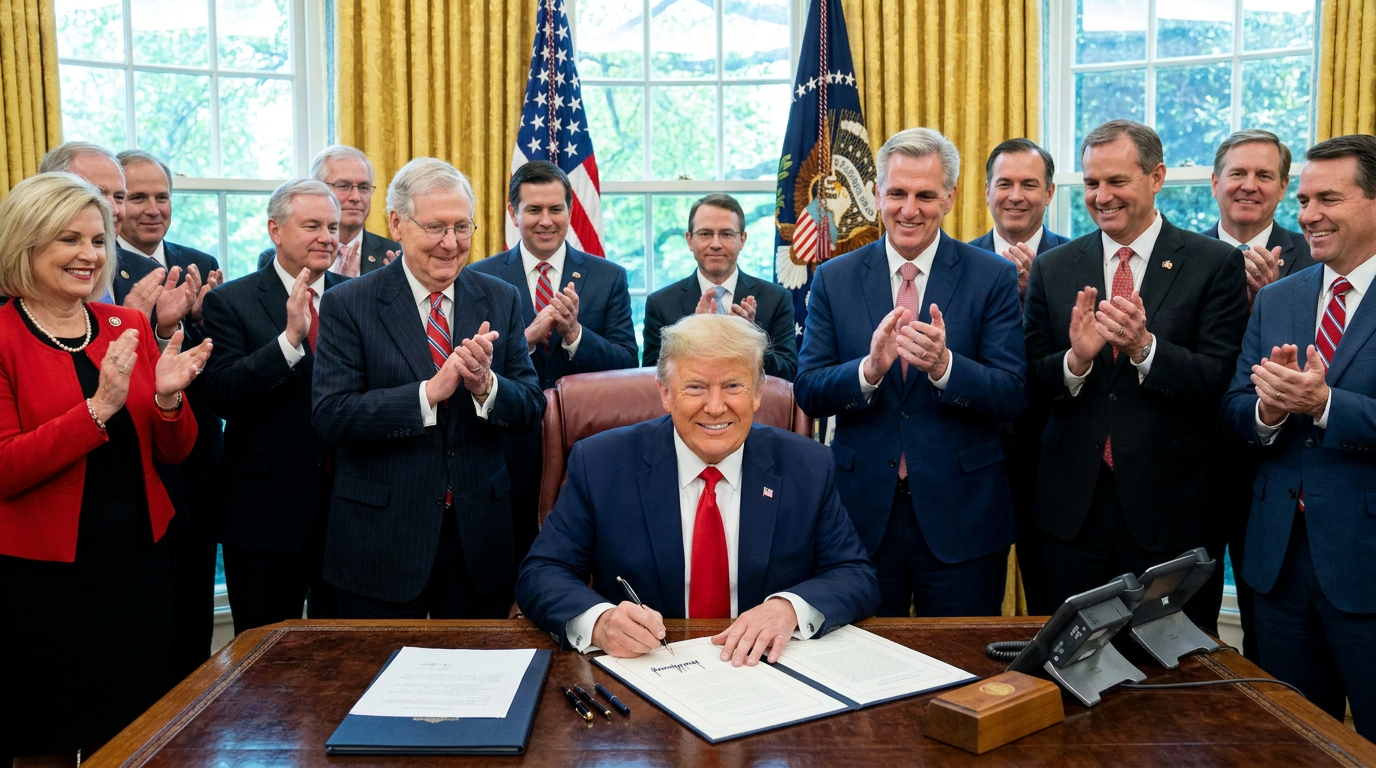
President Donald Trump has signed the Secure America Act into law, unlocking nearly $70 billion in funding for federal immigration enforcement agencies through the end of his term in 2029. The legislation, signed Wednesday in the Oval Office, represents a massive financial injection for the administration's mass deportation agenda, effectively insulating Immigration and Customs Enforcement (ICE) and Customs and Border Protection (CBP) from future congressional budget battles. By guaranteeing a multi-year financial runway, the administration has secured the operational capacity to execute its sweeping interior and border enforcement policies long after the current election cycle concludes.[1][2][3][7]
The funding package is heavily front-loaded and strictly allocated to enforcement operations. The law provides approximately $38.5 billion for ICE, $26 billion for CBP, and an additional $5 billion in discretionary funds for the Secretary of Homeland Security. According to the White House, the capital will be used to hire additional personnel, expand detention capacity, upgrade border security technology, and facilitate the transportation logistics required to meet the administration's stated goal of deporting one million people per year. The legislation does not require the agencies to pace their spending, granting them unprecedented latitude in how quickly they deploy the resources.[3][4][6][7]
The passage of the Secure America Act brings an end to a bitter, months-long funding standoff that triggered the longest partial shutdown of the Department of Homeland Security in United States history. The legislative impasse originally began in January 2026 following the launch of "Operation Metro Surge," an intensive and highly controversial ICE enforcement campaign focused on the Minneapolis–Saint Paul metropolitan area. The operation drew widespread national scrutiny after federal agents fatally shot two U.S. citizens—Renée Good and Alex Pretti—in separate, highly publicized incidents within the city, igniting a firestorm over the agency's tactical conduct.[1][2][3][5]

The killings provoked mass unrest across the country and prompted congressional Democrats to demand strict new guardrails for federal immigration officers before authorizing any further funding. Lawmakers pushed for mandatory body cameras, the use of warrants before entering private homes, an end to plainclothes operations, and the establishment of non-enforcement zones near sensitive locations like schools and hospitals. State officials in Minnesota also clashed heavily with the federal government over jurisdiction, arguing that federal agents could not be trusted to investigate their own conduct following the civilian deaths, leading to a prolonged and bitter political stalemate.[5][7]
When negotiations over those proposed reforms inevitably collapsed, Republican leadership opted to bypass the traditional appropriations process entirely to secure the president's agenda. By utilizing the budget reconciliation process—a complex procedural maneuver designed specifically for spending and revenue legislation—Senate Republicans were able to advance the funding package with a simple majority, completely avoiding the 60-vote filibuster threshold that would have required Democratic support. The Senate successfully cleared the measure last week after an exhausting 18-hour marathon voting session, setting the stage for a dramatic and highly contested showdown in the lower chamber.[2][3][6][7]
The legislative math in the House of Representatives proved even more precarious for the administration's allies. On Tuesday evening, the chamber passed the bill by a razor-thin margin of 214 to 212, leaving absolutely no room for error. Every single Democrat voted against the measure, joined by Representative Kevin Kiley of California, an independent who caucuses with Republicans. Kiley publicly cited the lack of bipartisan reforms and the danger of turning routine appropriations into a strictly party-line exercise as his primary reasons for defecting. The narrow victory underscored the deeply polarized nature of the administration's interior enforcement strategy.[1][6]

The legislative math in the House of Representatives proved even more precarious for the administration's allies.
During the official signing ceremony in the Oval Office, President Trump, flanked by key Republican lawmakers, praised the legislation as a necessary and long-overdue step to restore law and order. He characterized ICE and Border Patrol agents as "heroes" who desperately need robust resources to defend the nation's borders, dismantle transnational criminal cartels, and remove violent offenders from American communities. The administration has consistently maintained that aggressive interior enforcement is essential for national security and public safety, pointing to the removal of career criminals and the deterrence of illegal border crossings as primary objectives of the funding surge.[1][2]
Conversely, Democratic leaders and civil rights advocates have condemned the package as a dangerous capitulation to aggressive executive overreach. House Minority Leader Hakeem Jeffries described the law as a "$70 billion blank check" handed to a "violent mass deportation machine" without any oversight or accountability mechanisms. Critics argue that by eliminating the annual appropriations process for these specific agencies, Congress has effectively surrendered its most powerful tool for checking executive power and investigating alleged abuses by federal law enforcement personnel. Advocacy groups warn that without mandatory body cameras or strict rules of engagement, the potential for further civilian casualties remains alarmingly high.[1][3][4][7]
The immediate practical effect of the Secure America Act is the resumption of full-scale interior enforcement operations, which had been temporarily scaled back during the prolonged funding lapse. With a secure financial runway now guaranteed through 2029, ICE is expected to dramatically expand its physical detention infrastructure and significantly increase the frequency of targeted arrests in major metropolitan areas across the country. Advocacy groups and legal aid organizations are already warning immigrant communities to prepare for a renewed wave of aggressive federal tactics, including high-visibility workplace raids, neighborhood sweeps, and increased surveillance operations.[3][4][5][7]

For immigrant communities and local municipalities, the passage of the law signals a prolonged period of aggressive federal intervention that will likely strain local resources. State and local law enforcement agencies are also expected to see increased political pressure and financial incentives to enter into 287(g) agreements, which allow local police departments to perform immigration enforcement duties on behalf of the federal government. Ultimately, the massive influx of guaranteed funding ensures that the administration's deportation apparatus will operate at maximum capacity, fundamentally altering the landscape of immigration enforcement in the United States for years to come.[3][4][7]
How we got here
Dec 2025
ICE launches Operation Metro Surge, an intensive interior enforcement campaign in the Minneapolis area.
Jan 2026
Federal agents fatally shoot U.S. citizens Renée Good and Alex Pretti in Minneapolis, sparking mass protests.
Feb 2026
Democrats block DHS funding over demands for enforcement guardrails, triggering a 75-day partial shutdown.
Jun 5, 2026
The Senate passes the Secure America Act via the budget reconciliation process.
Jun 10, 2026
President Trump signs the $70 billion funding package into law.
Viewpoints in depth
The Administration's View
Focuses on national security, law enforcement resources, and fulfilling campaign promises.
For the Trump administration and its Republican allies in Congress, the Secure America Act represents a fulfillment of core campaign promises regarding border security and interior enforcement. Proponents argue that ICE and CBP have been chronically underfunded and politically constrained, preventing them from effectively dismantling transnational criminal organizations and removing violent offenders. By securing $70 billion through 2029, the administration argues it is finally providing law enforcement 'heroes' with the uninterrupted financial runway needed to protect American communities without the threat of partisan government shutdowns.
Congressional Democrats' View
Focuses on the lack of accountability, the bypass of normal appropriations, and the 'blank check' nature of the bill.
Democratic lawmakers view the legislation as a dangerous abdication of congressional oversight. Following the deaths of two U.S. citizens during ICE operations in Minneapolis, Democrats demanded that any new funding be tied to strict accountability measures, such as mandatory body cameras and warrant requirements. They argue that by using the budget reconciliation process to bypass these demands, Republicans have handed a '$70 billion blank check' to an agency with a history of aggressive tactics, effectively removing Congress's ability to check executive power through the annual appropriations process.
Immigrant Advocacy Groups' View
Focuses on the human cost, the expansion of the detention system, and the fear instilled in communities.
Immigrant rights organizations and civil liberties advocates warn that the Secure America Act will have devastating consequences for communities across the country. Advocates point out that the law front-loads routine funding, allowing ICE to rapidly expand its physical detention infrastructure and increase the frequency of neighborhood sweeps and workplace raids. Without the guardrails that Democrats sought, these groups fear a return to the heavy-handed tactics seen during 'Operation Metro Surge,' warning that the unprecedented financial resources will inevitably lead to further civil rights violations and community destabilization.
What we don't know
- How quickly ICE and CBP will deploy the newly allocated funds to expand their physical detention infrastructure.
- Whether state and local jurisdictions will push back against increased federal pressure to enter into 287(g) agreements.
- If civil rights organizations will successfully mount legal challenges against the expanded enforcement operations.
Key terms
- Budget Reconciliation
- A legislative process that allows certain spending and revenue bills to pass the Senate with a simple majority, bypassing the 60-vote filibuster rule.
- Operation Metro Surge
- A large-scale interior immigration enforcement campaign launched by ICE in Minnesota in late 2025, which drew intense scrutiny after the deaths of two U.S. citizens.
- 287(g) Agreement
- A program that permits state and local law enforcement agencies to partner with the federal government to perform immigration officer duties.
Frequently asked
Does this bill change who is eligible for deportation?
No. The Secure America Act is strictly a funding bill. It does not alter existing immigration laws or eligibility for asylum, but it provides the resources to dramatically increase the enforcement of current laws.
Why did Democrats oppose the funding?
Democrats opposed the bill because it did not include accountability measures—such as mandatory body cameras or warrant requirements—following the deaths of two U.S. citizens during ICE operations in Minneapolis.
How was the bill passed without Democratic support in the Senate?
Republicans used the budget reconciliation process, a procedural maneuver that allows spending bills to bypass the standard 60-vote filibuster threshold and pass with a simple majority.
Sources
Source coverage
7 outlets
3 viewpoints surfaced







[1]The GuardianCongressional Democrats
Trump signs $70bn immigration act ensuring ICE funding through 2029
Read on The Guardian →[2]CBS NewsTrump Administration & GOP
Trump signs $70 billion immigration bill, capping lengthy fight over ICE funding
Read on CBS News →[3]Washington PostCongressional Democrats
Trump signs bill giving nearly $70B to his immigration enforcement agenda through end of his term
Read on Washington Post →[4]AP NewsTrump Administration & GOP
Trump signs bill giving nearly $70B to his immigration enforcement agenda
Read on AP News →[5]PBSImmigrant Rights Advocates
Senate approves $70B immigration bill, powering Trump's mass deportation agenda
Read on PBS →[6]Ballotpedia
Secure America Act
Read on Ballotpedia →[7]American Immigration CouncilImmigrant Rights Advocates
Congress Passes the Secure America Act
Read on American Immigration Council →

More in news politics
See all 5 stories →Middle East Diplomacy
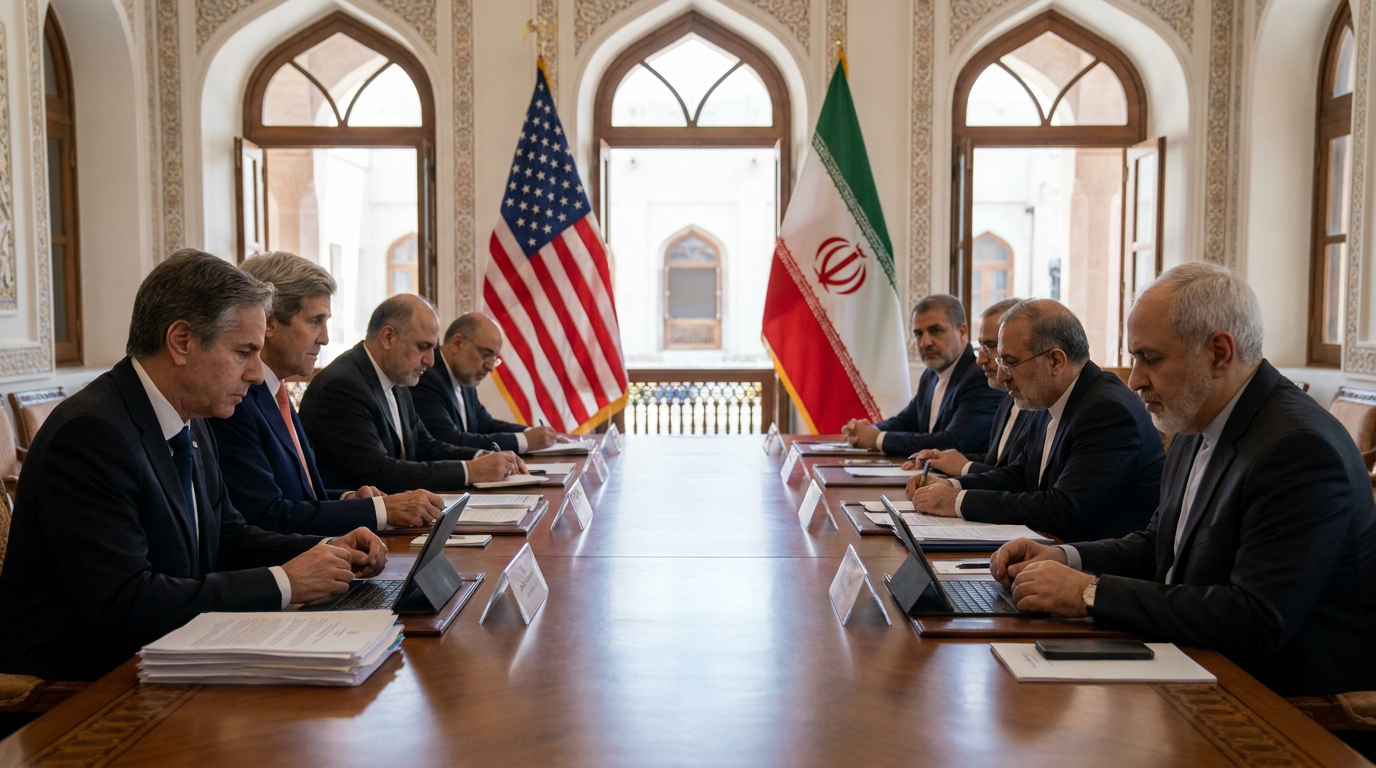
US and Iran Near Interim Agreement to Halt Hostilities: What the Deal Contains
0 sources
Union Contracts
House Passes Sweeping Labor Bill Mandating Strict Timelines for First Union Contracts
0 sources
US-Iran Deal
US and Iran on the Brink of Historic Interim Peace Agreement to End War
0 sources

Every angle. Every day.
Get news politics stories with full source coverage and perspective breakdowns delivered to your inbox.