
The SpaceX Options Boom: How Retail Investors Are Trading the Record-Breaking Debut
Following SpaceX's historic $85 billion public offering, retail and institutional investors are driving record-breaking options and ETF trading. This explainer breaks down the mechanics of the post-IPO surge and what it means for the broader market.
By Factlen Editorial Team

- Retail Trading Advocates
- View the options and ETF boom as a positive democratization of wealth creation, allowing everyday people to participate in generational tech growth.
- Institutional Analysts
- Focus on the unprecedented liquidity the IPO provides and how it establishes a new valuation benchmark for the entire aerospace sector.
- Market Regulators
- Emphasize the structural risks of complex derivatives, warning that leveraged products are unsuitable for long-term buy-and-hold strategies.
What's not represented
- · Legacy aerospace competitors
- · Early private equity backers of SpaceX
Why this matters
Understanding the mechanics of options and leveraged ETFs around a mega-IPO helps everyday investors navigate high-volatility events. It demystifies how Wall Street instruments work, empowering readers to make informed decisions rather than blindly following market hype.
Key points
- SpaceX's recent $85 billion IPO triggered record-breaking volume in the U.S. options market.
- Retail investors are heavily utilizing call options to gain leveraged exposure to the stock's upside.
- A new wave of leveraged ETFs has launched, amplifying daily returns for aerospace assets.
- Regulators warn that leveraged ETFs are designed for short-term trading and carry unique decay risks.
- The massive liquidity event provides SpaceX with crucial capital for its Starship and Mars programs.
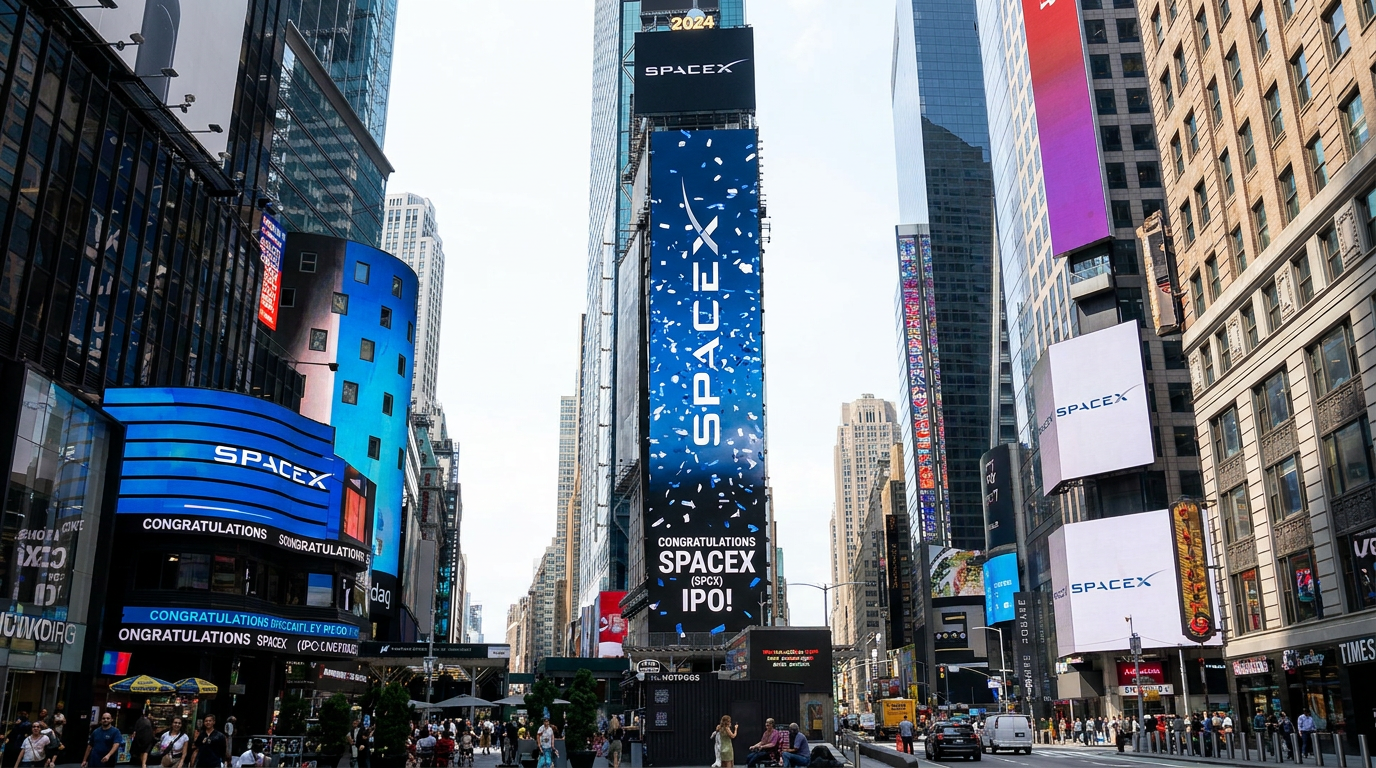
The launch of SpaceX into the public markets wasn't just a milestone for aerospace; it has become a watershed moment for modern market mechanics. On Friday, the company clinched the largest initial public offering in U.S. equity history, raising over $85 billion and cementing its status as a generational tech giant.[1]
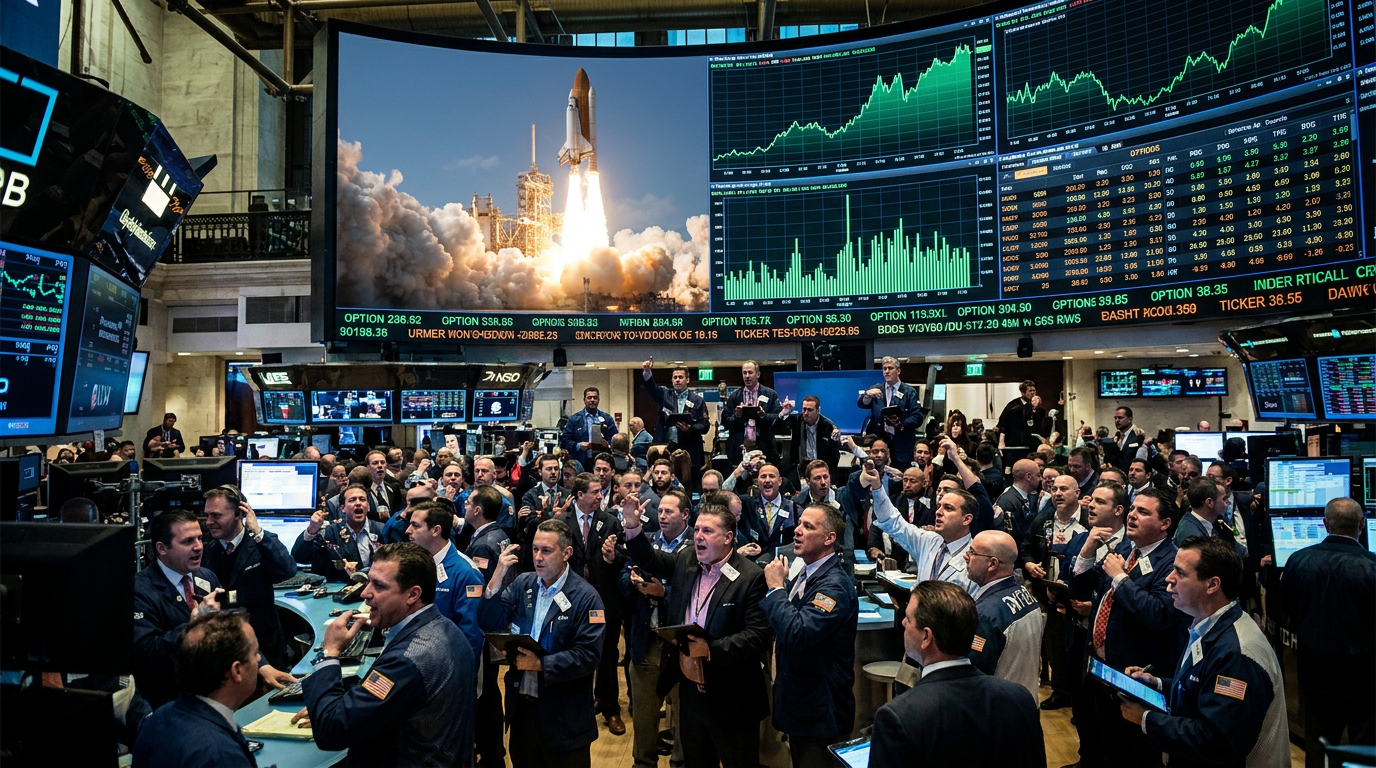
But the real financial story unfolded on Tuesday, when the options market officially opened for the newly minted stock. Trading volumes immediately shattered previous first-day records, driven by a potent mix of institutional hedging and massive retail enthusiasm.[1]
To understand what is driving this unprecedented volume, it is necessary to look under the hood of the derivatives market. An options contract is a financial instrument that gives an investor the right, but not the obligation, to buy or sell a stock at a specific price by a specific expiration date.[4][5]

For a highly anticipated stock like SpaceX, "call options"—which are essentially bets that the underlying share price will rise—have seen astronomical demand. Investors purchase these contracts by paying a premium, which is typically a fraction of what it would cost to buy the actual shares outright.[4]
This creates leverage. If the stock price surges past the agreed-upon "strike price," the percentage return on the options contract can vastly outpace the return on the stock itself. Conversely, if the stock fails to reach that price by the expiration date, the contract expires worthless, and the investor loses their initial premium.[4]
Retail investors, empowered by zero-commission trading platforms, are utilizing these instruments to gain outsized exposure to SpaceX's potential upside. The sheer volume of these trades has forced market makers to buy the underlying stock to hedge their own risk, creating a feedback loop that further drives up trading activity.[1][5]

Alongside direct options trading, a wave of newly launched Exchange-Traded Funds (ETFs) has flooded the market, specifically designed to capture the SpaceX hype. These funds pool investor money to buy a basket of aerospace and defense assets, with SpaceX now serving as the heavily weighted crown jewel.[2]
Alongside direct options trading, a wave of newly launched Exchange-Traded Funds (ETFs) has flooded the market, specifically designed to capture the SpaceX hype.
More specifically, "leveraged ETFs" have seen a massive cash influx. These specialized funds use financial derivatives and debt to amplify the daily returns of the underlying asset—often promising to double or triple the daily movement of a specific index or stock.[2][3]
If a standard aerospace ETF goes up 2% in a day, a 2x leveraged version aims to go up 4%. This amplification makes them highly attractive to day traders looking to capitalize on the intense daily volatility surrounding a fresh IPO.[3][5]
However, this unprecedented access to leverage brings significant structural risks that long-term investors must navigate carefully. Options and leveraged ETFs are complex instruments that can decay in value rapidly if the underlying stock trades sideways or experiences a sudden dip.[3][4]
The Securities and Exchange Commission (SEC) routinely cautions that leveraged ETFs are designed strictly for short-term trading, often just a single day. Because they rebalance daily, their performance over weeks or months can diverge significantly from the underlying asset's actual performance, a phenomenon known as "volatility drag."[3]

Despite these risks, the frenzy highlights a broader, uplifting structural shift in how retail investors interact with mega-cap debuts. In previous decades, institutional investors hoarded the upside of high-growth tech companies before they went public, leaving everyday investors to buy in only after the massive gains were realized.[5]
Now, with SpaceX finally trading publicly and a robust ecosystem of financial products surrounding it, retail traders have unprecedented tools to participate in the "moonshot" narrative. It represents a democratization of access to what is arguably the most ambitious industrial project of the 21st century.[1][5]

Beyond the immediate trading floor frenzy, the successful debut and subsequent liquidity event provide SpaceX with a massive capital war chest. This funding is critical for accelerating capital-intensive projects like the Starship program, satellite internet expansion, and eventual Mars colonization efforts.[5]
For the everyday investor, the SpaceX options boom serves as a fascinating, real-time case study in modern market dynamics. As the initial hype eventually settles into regular trading patterns, the focus will inevitably shift from financial engineering back to orbital engineering—but for now, the markets are enjoying the ride.[5]
How we got here
2002
SpaceX is founded with the goal of reducing space transportation costs.
Late 2025
Market speculation intensifies regarding a potential public offering for SpaceX or its Starlink division.
June 12, 2026
SpaceX completes the largest initial public offering in U.S. history, raising $85 billion.
June 16, 2026
Options trading for the new stock opens, shattering previous first-day volume records.
Viewpoints in depth
Retail Trading Advocates
Viewing the options boom as a democratization of financial access.
For years, the most explosive growth in the tech sector occurred behind the closed doors of private equity and venture capital. Retail advocates argue that the robust options and ETF market surrounding the SpaceX IPO finally allows everyday investors to participate in generational wealth creation. By utilizing zero-commission platforms and accessible educational resources, retail traders can now execute complex strategies that were once the exclusive domain of Wall Street hedge funds.
Institutional Analysts
Focusing on the valuation benchmarks and sector-wide liquidity.
From an institutional perspective, the record-breaking options volume is less about day-trading hype and more about price discovery and hedging. Analysts note that the massive influx of capital provides a definitive valuation benchmark for the entire commercial space sector. Furthermore, the liquidity generated by this event allows large funds to safely enter and exit massive positions, stabilizing the broader aerospace market while providing SpaceX with the capital necessary to fund its most ambitious, capital-intensive projects.
Market Regulators
Warning about the structural risks of complex financial derivatives.
Regulatory bodies like the SEC maintain a cautious stance on the proliferation of leveraged ETFs and options among inexperienced traders. They emphasize that while these tools offer amplified returns, they also carry the risk of total capital loss. Regulators are particularly concerned with 'volatility drag' in leveraged ETFs, warning that these products are designed to be held for a single trading day and can severely underperform the underlying stock if held as long-term investments in a volatile market.
What we don't know
- How the options volume will stabilize once the initial post-IPO hype subsides.
- Whether the SEC will introduce new retail trading restrictions on highly leveraged aerospace ETFs.
- How SpaceX's public valuation will impact the funding rounds of its private competitors.
Key terms
- Call Option
- A financial contract giving the buyer the right to purchase a stock at a specified price within a specific time frame, typically used when an investor believes the stock price will rise.
- Strike Price
- The predetermined price at which an options contract can be exercised to buy or sell the underlying stock.
- Leveraged ETF
- An exchange-traded fund that uses financial derivatives and debt to amplify the daily returns of an underlying asset or index.
- Volatility Drag
- The mathematical decay in value that leveraged ETFs experience over time due to daily rebalancing in fluctuating markets.
- Premium
- The upfront price a buyer pays to the seller to acquire an options contract.
Frequently asked
What is an options contract?
An options contract is a financial derivative that gives you the right, but not the obligation, to buy or sell a stock at a specific price before a certain date.
How do leveraged ETFs work?
Leveraged ETFs use debt and financial derivatives to amplify the daily returns of an underlying index or stock, aiming to double or triple the daily movement.
Why is the SEC warning about leveraged ETFs?
Because they rebalance daily, leveraged ETFs can suffer from 'volatility drag,' meaning their long-term performance can diverge significantly from the actual stock, making them risky for long-term holding.
Why are retail investors using options for SpaceX?
Options allow investors to gain exposure to SpaceX's potential price increases for a fraction of the cost of buying the actual shares, though it comes with higher risk of losing the initial investment.
Sources
Source coverage
5 outlets
3 viewpoints surfaced




[1]MarketWatchRetail Trading Advocates
Investors pile into moonshot SpaceX bets as first-day options trading shatters records
Read on MarketWatch →SpaceX trading hits ‘bonkers’ levels as a wave of new ETFs see a massive cash influx
Read on MarketWatch →[3]SECMarket Regulators
Investor Bulletin: Leveraged and Inverse ETFs
Read on SEC →[4]InvestopediaInstitutional Analysts
Options: What They Are and How They Work
Read on Investopedia →[5]Factlen Editorial TeamInstitutional Analysts
Synthesis by Factlen editorial team
Read on Factlen Editorial Team →
More in finance
See all 5 stories →Space Economy
SpaceX Shatters Global IPO and Options Records in Historic $85.7 Billion Market Debut
7 sources
Wealth Protection
The One-Page Pledge That Forces Your Financial Advisor to Put You First
8 sources

Consumer Protection
The One-Page Pledge That Forces Financial Advisors to Put Clients First
7 sources

Every angle. Every day.
Get finance stories with full source coverage and perspective breakdowns delivered to your inbox.