
How Smart Mouthguards Are Revolutionizing Brain Health in Combat Sports
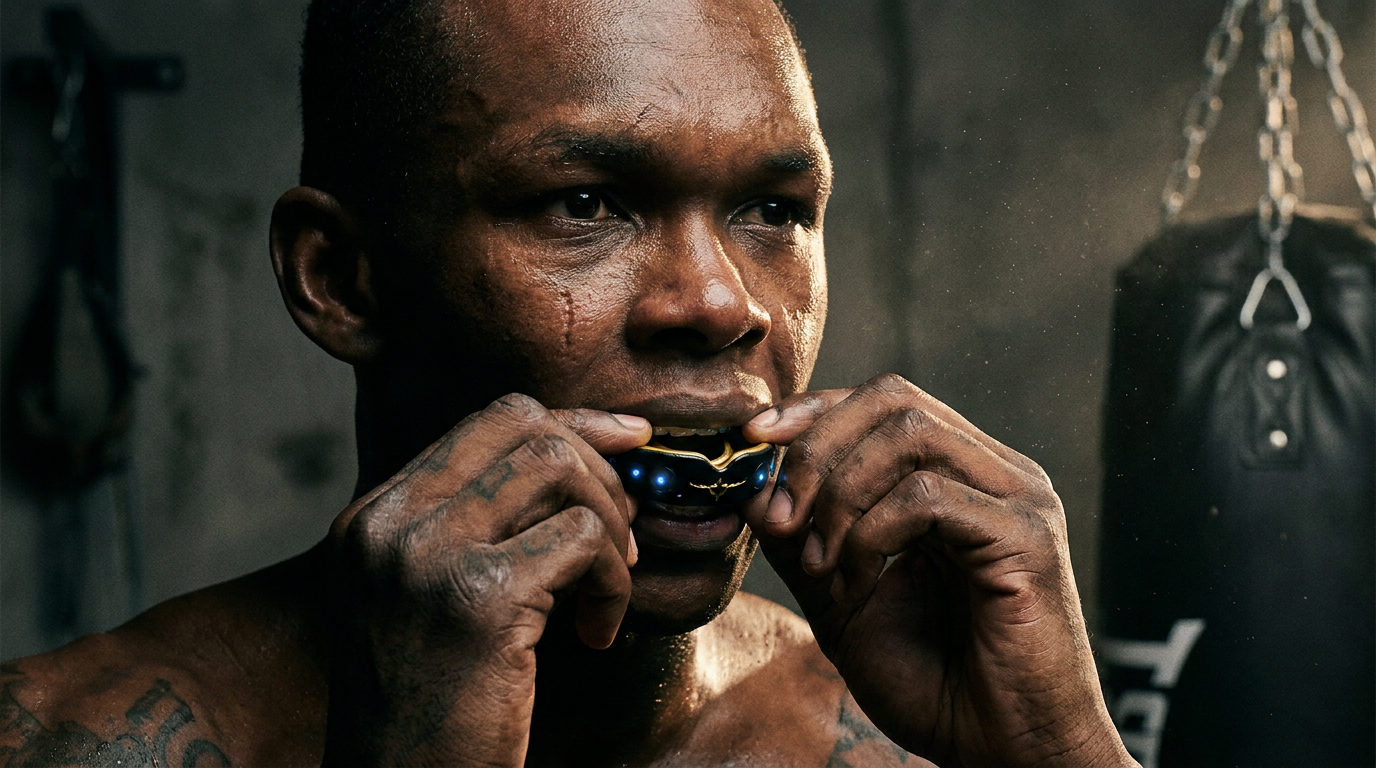
Instrumented mouthguards embedded with micro-sensors are providing real-time data on head impacts, allowing MMA and boxing coaches to manage brain trauma and optimize fighter safety.
By Factlen Editorial Team
- Sports Technologists & Researchers
- Focuses on the accuracy of kinematic data, finite element modeling, and objective measurement of brain trauma.
- Combat Sports Leagues
- Prioritizes fighter longevity, performance optimization, and integrating safety tech into live broadcasts and training.
- Equipment Manufacturers
- Focuses on the engineering, fit, and sensor integration required to make smart mouthguards comfortable and reliable.
What's not represented
- · Veteran fighters who may be resistant to adopting new technology that could potentially shorten their active careers.
- · State athletic commissions tasked with regulating and standardizing the use of biometric data in sanctioned bouts.
Why this matters
For decades, combat sports athletes suffered from unquantifiable brain trauma that shortened careers and degraded their quality of life. This technology shifts fighter safety from subjective guesswork to objective science, potentially saving lives and extending careers.
Key points
- Instrumented mouthguards (iMGs) use embedded accelerometers and gyroscopes to measure the exact force of head impacts in real-time.
- The upper teeth provide a rigid connection to the skull, making mouthguards far more accurate for data collection than sensor-equipped headgear.
- Combat sports leagues like the UFC and M2MMA are piloting the technology to monitor fighter heart rates and impact loads.
- Coaches are using the data to implement 'brain load management,' adjusting sparring intensity based on the cumulative trauma a fighter absorbs.
In the brutal, high-stakes world of combat sports, the brain is the ultimate currency. For decades, the physical toll of mixed martial arts (MMA) and professional boxing was measured almost entirely through subjective observation from the corner or the referee. A wobbly stance, a delayed reaction to a feint, or a fighter's own reluctant admission of a headache were the only metrics available to gauge neurological trauma. The invisible accumulation of subconcussive impacts—the repetitive, lower-force strikes that do not cause an immediate knockout but slowly degrade long-term neurological health—remained largely unquantifiable, leaving athletes vulnerable to chronic injuries that often only manifested years after their retirement.[7]
But a quiet, data-driven revolution is currently reshaping the landscape of the cage and the ring, promising to alter the trajectory of fighter safety forever. The introduction and rapid refinement of the instrumented mouthguard (iMG) is transforming how fighters train, recover, and ultimately compete under the bright lights. By embedding microscopic, highly sensitive sensors into custom-fitted dental protection, sports technologists and medical researchers are finally bringing objective, real-time brain health monitoring to one of the world's most dangerous professions, replacing archaic guesswork with precise kinematic data.[3]
At first glance, an instrumented mouthguard looks and feels identical to a standard piece of protective dental equipment used by amateurs and professionals alike. However, encased within the impact-absorbing polymer layers are sophisticated micro-electromechanical systems (MEMS) that act as a black box for the human skull. These miniature arrays include triaxial accelerometers, which are designed to measure straight-line forces, and highly calibrated gyroscopes, which track rotational velocity. Together, these sensors capture a comprehensive three-dimensional picture of exactly how the head moves the millisecond a strike connects.[6]
The placement of these sensors inside the mouth is not an arbitrary design choice; it is a biomechanical necessity. For years, researchers attempted to measure head impacts using sensors embedded in padded helmets or sparring headgear. However, headgear inevitably shifts and slides upon impact, creating massive amounts of 'noise' in the data that renders the readings clinically useless. The upper dentition, by contrast, offers a rigid, fixed connection directly to the skull, ensuring that the sensors measure the exact, unadulterated movement of the head rather than the shifting of the protective equipment.[3]

When a fighter absorbs a strike, the instrumented mouthguard instantly calculates two critical metrics that define the severity of the blow: linear acceleration and angular acceleration. While linear acceleration—the force of the head snapping straight back—is undoubtedly dangerous, biomechanical researchers have increasingly identified angular acceleration as the primary culprit for severe concussions. Angular acceleration measures the rotational whipping of the head, a motion that causes the brain to twist within the skull, stretching and shearing delicate neural pathways in ways that linear impacts do not.[4]
This complex kinematic data does not just sit on a hard drive for post-fight analysis; it is transmitted via Bluetooth telemetry to a sideline tablet or laptop in real-time. For the first time in the history of combat sports, coaches and ringside medical staff do not have to guess how hard a fighter was hit during a chaotic exchange. They can see the exact G-force and rotational velocity of the strike displayed on a screen the moment it lands, allowing for immediate, data-backed medical interventions.[6]
Major combat sports organizations are rapidly adopting this technology to protect their investments and their athletes. The Ultimate Fighting Championship (UFC) recently launched a high-profile collaboration with Sports & Wellbeing Analytics (SWA) to implement the PROTECHT advanced sensor system. During a groundbreaking pilot program at the Las Vegas Sphere, fighters wore instrumented mouthguards in live competition, allowing the UFC Performance Institute to track both head impacts and live heart rates, broadcasting the biometric data to millions of viewers while gathering invaluable medical insights.[1]
Major combat sports organizations are rapidly adopting this technology to protect their investments and their athletes.
Emerging combat sports leagues are taking the integration of this technology even further, building their entire operational models around athlete safety. M2MMA, an AI-driven combat sports organization, recently announced a strategic partnership with the Neurologic Wellness Institute to create a centralized, cloud-based brain health ecosystem. By combining the raw impact data from instrumented mouthguards with advanced clinical diagnostics like QEEG brain mapping, they aim to build comprehensive, evolving neurological profiles for every athlete on their roster, tracking their brain health from their debut to their retirement.[5]

While the use of smart mouthguards in live, pay-per-view broadcasts is visually compelling and great for marketing, the most profound impact of this technology is happening away from the cameras, in the dark, sweaty confines of the training gym. Historically, the culture of combat sports has glorified grueling, high-intensity sparring sessions, where fighters leave their best performances—and a significant portion of their brain health—on the gym mats long before the actual fight takes place.[7]
Fighters routinely absorb thousands of subconcussive hits during a standard eight-to-ten-week training camp, accumulating silent damage that compounds over a career. Instrumented mouthguards allow coaches to precisely quantify this cumulative trauma, introducing the vital concept of 'brain load management' to combat sports. Just as a modern baseball manager meticulously tracks a pitcher's pitch count to protect their throwing arm from ligament tears, forward-thinking MMA coaches can now track a fighter's daily and weekly impact count to protect their neurological future.[1]
The practical application of this data is revolutionizing how training camps are structured. If the sideline tablet shows that an athlete has absorbed an unusually high volume of high-G impacts during a heavy sparring session on a Tuesday, their coaches can objectively mandate a non-contact, technique-focused workout for Thursday. This data-driven approach removes the immense psychological pressure on the fighter to 'tough it out' through a headache, allowing for scientifically optimized recovery periods that keep the brain fresh for competition.[2]
Beyond simple load management, the technology is pushing the boundaries of predictive medical modeling in sports science. Advanced software platforms can now take the raw kinematic data transmitted from an instrumented mouthguard and run it through a complex finite element head model. This advanced computer simulation predicts exactly how the brain tissue deformed, compressed, and stretched in response to a specific blow, giving doctors a cellular-level view of the trauma without needing an MRI machine.[3]

Despite the rapid advancements and undeniable benefits, the technology is not without its significant engineering challenges. The most pressing hurdle for developers is dealing with signal artifacts—false readings that corrupt the data pool. Because the mouthguard is located in the highly active environment of the jaw, a fighter simply biting down aggressively during a grappling exchange, or taking a direct, glancing punch to the mouthguard itself, can create a massive false spike in the acceleration data.[3]
To combat this issue and ensure clinical accuracy, manufacturers and software engineers are deploying sophisticated machine learning algorithms. These AI models are trained on thousands of hours of verified impact data, learning to distinguish the unique kinematic signature of a true, brain-rattling head-snap from the harmless 'noise' of a fighter gritting their teeth or shouting instructions. As these algorithms become more refined, the data presented to ringside physicians becomes increasingly reliable and actionable.[3]
Furthermore, medical researchers are working tirelessly to establish definitive clinical thresholds for combat sports. While the mouthguards can accurately measure that a specific strike generated 80 Gs of force, the medical community is still working to determine exactly how many 80-G strikes an individual fighter can safely absorb in a single session before requiring a mandatory medical suspension. Because individual brain resilience varies wildly based on genetics, hydration, and prior trauma, establishing a universal baseline remains a complex scientific puzzle.[2]

The ultimate, long-term vision for this technology is the implementation of objective, automated sideline concussion protocols across all sanctioned combat sports. In the near future, if an instrumented mouthguard registers an impact—or a cumulative series of impacts—that exceeds a scientifically established safety threshold, it could trigger an automatic, undeniable alert to the ringside physician. This would take the agonizing decision to stop a fight entirely out of the compromised athlete's hands, protecting them from their own bravery.[6]
By fully embracing biometric tracking and instrumented mouthguards, combat sports are undergoing a necessary and long-overdue evolution. The integration of objective, real-time data is slowly dismantling the archaic culture of silent suffering, replacing it with a modern framework that prioritizes athlete longevity and sustainable performance. For the fighters who put their lives and their neurological futures on the line for entertainment, this technology offers the profound promise of a safer career and a healthier, more lucid life long after the final bell rings.[7]
How we got here
2015
Prevent Biometrics is founded with the goal of miniaturizing impact sensors into wearable dental protection.
2021
The Orthopaedic Journal of Sports Medicine publishes foundational data comparing head impact exposure in MMA and boxing using iMGs.
2023
World Rugby mandates the use of instrumented mouthguards for elite players globally, proving the technology's viability at scale.
June 2025
The UFC announces a collaboration with Sports & Wellbeing Analytics to pilot the PROTECHT mouthguard system.
June 2026
M2MMA partners with the Neurologic Wellness Institute to integrate iMG data into comprehensive athlete brain health profiles.
Viewpoints in depth
The Medical & Research View
Researchers seek to map the exact forces that lead to traumatic brain injury.
Researchers emphasize that combat sports have historically lacked objective data on subconcussive impacts. By utilizing instrumented mouthguards, scientists can finally map the exact linear and angular forces that lead to traumatic brain injury. Their ultimate goal is to translate raw kinematic data into real-time finite element brain models, allowing ringside physicians to make removal decisions based on cellular-level stress rather than subjective symptoms.
The League & Promoter View
Promoters view this technology as a way to extend careers and optimize performance.
For major organizations like the UFC and emerging leagues like M2MMA, smart mouthguards represent both a duty of care and a performance optimization tool. Promoters view this technology as a way to extend the careers of their star athletes by managing their 'impact load' during training camps. Furthermore, integrating live biometric data—such as heart rate and strike force—into broadcasts enhances the viewing experience while demonstrating a commitment to fighter safety.
The Engineering View
Manufacturers focus on miniaturization and eliminating false data readings.
Manufacturers face the unique challenge of miniaturizing complex telemetry systems into a device that must withstand extreme physical trauma. Engineers focus on eliminating 'signal artifacts'—false data spikes caused by a fighter biting down hard or taking a direct strike to the jaw. Through advanced 3D dental scanning and machine learning algorithms, they are refining the hardware to ensure the sensors remain perfectly coupled to the skull without compromising the athlete's breathing or comfort.
What we don't know
- The exact threshold of G-force or rotational velocity that guarantees a concussion, as individual brain resilience varies significantly.
- How quickly major athletic commissions will mandate the use of iMGs in all sanctioned professional bouts.
- The long-term effects of using 'brain load management' on the overall rates of Chronic Traumatic Encephalopathy (CTE) in retired fighters.
Key terms
- Instrumented Mouthguard (iMG)
- A custom-fit dental guard embedded with micro-sensors to measure head kinematics and impact forces in real-time.
- Angular Acceleration
- The rate of change of rotational speed, a key metric in predicting concussions caused by twisting forces on the brain.
- Finite Element Head Model
- A computer simulation that uses impact data to predict how brain tissue deforms and responds to a specific blow.
- Subconcussive Impact
- A blow to the head that does not cause immediate concussion symptoms but may contribute to long-term neurological damage over time.
- Kinematics
- The branch of mechanics that describes the motion of objects—in this case, the exact movement and velocity of a fighter's head during a strike.
Frequently asked
Why put sensors in a mouthguard instead of headgear?
Headgear shifts upon impact, which creates inaccurate data. The upper teeth provide a rigid, direct connection to the skull, ensuring the sensors measure the exact movement of the head.
Can this technology automatically stop a fight?
Not currently. The technology is primarily used for training load management and sideline medical assessments, though future protocols may use the data to inform referee or doctor stoppages.
Are smart mouthguards bulky or uncomfortable?
No. Modern instrumented mouthguards use miniaturized sensors and 3D dental scanning to maintain the exact profile, fit, and comfort of a traditional custom-fit mouthguard.
What is the difference between linear and angular acceleration?
Linear acceleration measures the head snapping straight back, while angular acceleration measures the rotational whipping of the head. Researchers believe angular acceleration is the primary cause of severe concussions.
Sources
Source coverage
7 outlets
3 viewpoints surfaced







[1]UFCCombat Sports Leagues
UFC And Sports & Wellbeing Analytics Announce Collaboration To Enhance Fighter Safety
Read on UFC →[2]British Medical JournalSports Technologists & Researchers
Towards safer and smarter boxing: technology, health and performance
Read on British Medical Journal →[3]SportsmithSports Technologists & Researchers
Smart mouthguards: The future of head injury management?
Read on Sportsmith →[4]Orthopaedic Journal of Sports MedicineSports Technologists & Researchers
Head Impact Exposure in Mixed Martial Arts and Boxing
Read on Orthopaedic Journal of Sports Medicine →[5]M2MMACombat Sports Leagues
M2MMA Announces Strategic Partnership with The Neurologic Wellness Institute
Read on M2MMA →[6]OPROEquipment Manufacturers
The Prevent IMG Made by OPRO
Read on OPRO →[7]Factlen Editorial TeamSports Technologists & Researchers
Synthesis by Factlen editorial team
Read on Factlen Editorial Team →


Every angle. Every day.
Get sports stories with full source coverage and perspective breakdowns delivered to your inbox.