
How AI Tutors Are Rewiring Online Learning and Higher Education
Generative AI tutors are moving beyond basic chatbots to offer adaptive, personalized learning pathways. While adoption has reached 95%, institutions are racing to build the governance frameworks needed to support them.
By Factlen Editorial Team

- Academic Researchers
- Evaluates measurable efficacy, retention rates, and the pedagogical limits of AI compared to human instruction, warning against over-reliance.
- EdTech Platforms
- Focuses on scaling personalized learning, reducing latency, and improving adaptive algorithms to democratize one-on-one tutoring.
- Educational Practitioners
- Emphasizes reducing administrative burden, shifting the teacher's role to mentorship, and the urgent need for institutional governance.
What's not represented
- · Students without reliable internet access
- · Special education professionals
Why this matters
The democratization of one-on-one tutoring through AI is fundamentally changing how students learn and how teachers spend their time. Understanding this shift is crucial for anyone navigating the modern education system, whether as a student, parent, or educator.
Key points
- AI tutors are shifting online learning from scheduled human sessions to continuous, always-on academic support.
- Modern systems use Retrieval-Augmented Generation to ground their answers in approved course materials, reducing hallucinations.
- Educators report that AI reduces grading time by 30%, allowing them to focus on high-value mentorship.
- Despite 95% adoption among students and teachers, only 26% of institutions have formal AI governance policies in place.
The era of the scheduled, hourly human tutor is giving way to something far more pervasive and accessible. By mid-2026, artificial intelligence has fundamentally altered the landscape of online learning and higher education, shifting the paradigm from periodic intervention to "always-on" academic support. Rather than waiting days for a professor's office hours or paying premium rates for private tutoring sessions, students now have access to tireless digital assistants capable of guiding them through complex coursework at any hour of the day. This shift is democratizing academic assistance, ensuring that high-quality, personalized guidance is no longer restricted by geography or socioeconomic status.[7]
This transition is not merely a matter of convenience; it represents the first scalable solution to the "two-sigma problem"—educational psychologist Benjamin Bloom's famous 1984 finding that students receiving one-on-one tutoring perform two standard deviations better than those in traditional group classrooms. For decades, the sheer cost and logistical friction of human tutoring made this level of personalized instruction impossible to democratize at a global scale. Institutions were forced to rely on a one-size-fits-all model that inevitably left some students behind while failing to challenge others.[7]
Today, generative AI tools like Khan Academy's Khanmigo and Coursera's Coach are actively bridging that historical gap. A sweeping 2026 report on higher education revealed the staggering scale of this shift: 95% of students and educators now utilize AI tools in their academic work. These systems have evolved far past the rudimentary, easily confused chatbots of the early 2020s. They have transformed into sophisticated pedagogical agents capable of guiding students through complex problem-solving via Socratic methods, deliberately withholding direct answers to foster genuine comprehension.[2][3]
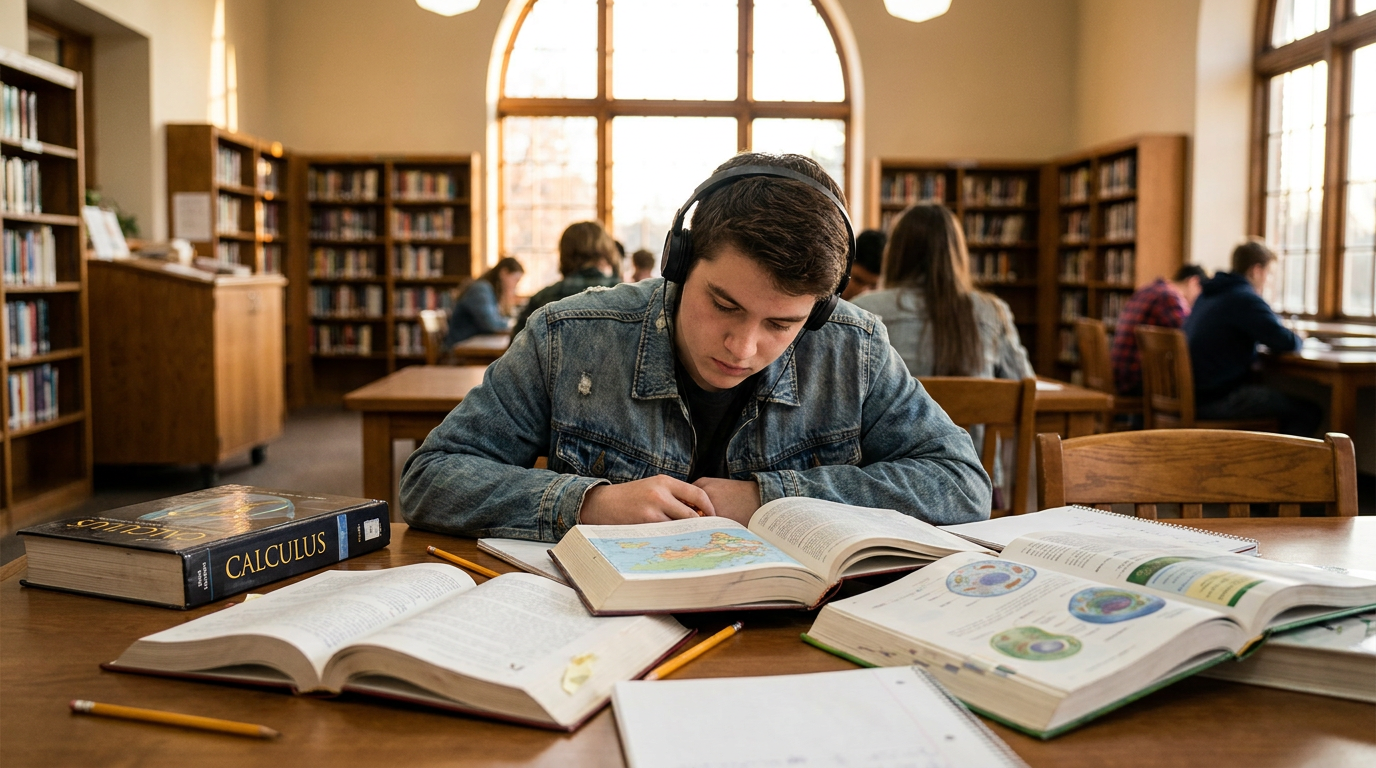
The underlying mechanism driving this educational evolution is a combination of advanced large language models and a technique known as Retrieval-Augmented Generation. When a student asks a highly specific question about a biology syllabus or a calculus theorem, the AI does not simply guess the answer based on its broad, generalized training data. Instead, it instantly retrieves vectorized representations of the specific course material, textbook chapters, and previous student interactions to ground its response in verified facts.[1]

This retrieved context is then passed to the generative model, which synthesizes a response that is strictly bounded by the approved curriculum. By anchoring the artificial intelligence to vetted educational materials, developers have largely mitigated the hallucination issues that plagued early generative systems. This creates a reliable, closed-loop learning environment where students can explore concepts deeply without the risk of being fed confidently incorrect information by the algorithm. The result is a digital tutor that understands not just the subject matter, but the specific pedagogical framework the human professor is trying to impart.[1][6]
But the true breakthrough of modern educational AI lies in its capacity for adaptive personalization. In a traditional lecture hall of thirty to three hundred students, an educator simply cannot dynamically adjust the curriculum to match every individual's real-time comprehension level. AI tutors, however, continuously assess a learner's skill gaps by analyzing their inputs, the types of errors they make, and even their response times. The software builds a dynamic profile of the student's cognitive state, adjusting the learning pathway moment by moment.[1][7]
If a student masters a concept quickly, the system automatically increases the difficulty of the next prompt to maintain engagement and prevent boredom. Conversely, if they struggle, the AI identifies the specific underlying misconception and offers a targeted prerequisite review before moving forward. At Khan Academy, recent optimizations to this adaptive sequencing—specifically, instructing the AI to surface foundational skills before introducing harder problems—resulted in a measurable 2.7% improvement in "next-item correctness" across millions of individual tutoring sessions. Over time, these micro-optimizations compound, leading to significantly deeper mastery of the material.[3]
If a student masters a concept quickly, the system automatically increases the difficulty of the next prompt to maintain engagement and prevent boredom.
The empirical evidence supporting these adaptive systems is becoming increasingly robust across the academic spectrum. A comprehensive 2025 systematic review of anthropomorphic AI in higher education found that the implementation of AI tutors can improve student retention rates by up to 21%. By providing immediate, personalized feedback and a judgment-free zone to ask foundational questions, these tools prevent the frustration and academic isolation that often lead to dropout. This is particularly vital in asynchronous online degree programs, where the lack of immediate peer or instructor support has historically driven high attrition rates.[4]
Furthermore, early data points toward significant gains in overall academic performance across various demographics. Some instructional platforms have reported test score increases of up to 62% among students who actively use AI-powered instruction systems compared to those relying solely on traditional study methods. These dramatic improvements are largely attributed to the technology's ability to identify and remediate micro-knowledge gaps before they compound into larger academic hurdles. By catching misunderstandings early, the AI prevents students from building advanced concepts on a faulty foundation, ensuring they are genuinely prepared for major examinations.[5]

Crucially, this technological shift is not displacing human educators; rather, it is fundamentally redefining their roles for the better. For years, teachers and professors have been bogged down by the crushing administrative weight of grading hundreds of assignments, drafting lesson plans, and answering repetitive logistical questions via email. AI is now absorbing the bulk of this operational friction, acting as a tireless teaching assistant that handles the routine mechanics of course administration. This allows the human element of teaching to return to the forefront of the educational experience.[5][7]
Studies indicate that AI integration can reduce grading and administrative time by more than 30%, representing a massive reclamation of bandwidth for overworked faculty members. According to recent industry surveys, 69% of teachers report that AI tools have actively improved their teaching methods. By offloading the busywork to algorithms, educators are reclaiming hours each week to focus on high-value, uniquely human activities. They now have the time and energy for one-on-one mentorship, providing emotional support to struggling students, designing complex, interactive curricula, and facilitating nuanced classroom debates that machines cannot replicate.[4][5]
Despite these clear benefits, the rapid deployment of AI tutors is not without significant friction and pedagogical uncertainty. Academic researchers consistently caution against the "empathy gap"—the inherent inability of a machine to provide genuine human connection, moral guidance, or emotional intelligence. While an AI tutor can perfectly explain the mechanics of a complex physics equation or the historical context of a novel, it cannot offer the empathetic encouragement a student might need when dealing with imposter syndrome, burnout, or personal hardships that are actively affecting their academic performance.[4]
There is also a growing concern that students may develop an over-reliance on anthropomorphic AI, treating the conversational system as an infallible authority rather than a collaborative tool. When learners overvalue AI-generated guidance and immediately turn to a chatbot at the first sign of friction, they risk atrophying their own critical thinking and independent problem-solving muscles. A recent study in undergraduate physics education found that while students deeply appreciated the step-by-step guidance of AI tutors, their immediate learning outcomes were sometimes only comparable to traditional methods. This emphasizes that AI remains a supplementary tool that requires active cognitive effort from the student, rather than a silver bullet that passively downloads knowledge.[4][6][8]
The most pressing challenge facing the education sector, however, is the glaring lack of institutional governance. While grassroots adoption has skyrocketed to near-universal levels among students and individual teachers, the administrative infrastructure required to manage this technology safely has lagged dangerously behind. Schools and universities are currently operating in a wild west of digital tools, often without clear, standardized guidelines on what constitutes acceptable use versus academic dishonesty. This vacuum leaves both students and faculty guessing about the ethical boundaries of AI assistance.[2][7]

As of mid-2026, only 26% of higher education institutions have implemented formal policies governing the use of artificial intelligence on campus. This massive governance gap leaves schools highly vulnerable to issues of algorithmic bias, data privacy breaches, and systemic academic integrity violations. Without transparent algorithms, strict data silos, and continuous evaluation, institutions risk deploying tools that inadvertently disadvantage certain student populations or expose sensitive learning data to third-party developers. Establishing these frameworks is now the most urgent priority for university administrators worldwide.[2][6]
Moving forward, the most successful educational models will likely be hybrid approaches that pair the tireless, scalable practice of AI with the irreplaceable accountability and empathy of human educators. The question is no longer whether artificial intelligence belongs in the classroom—the students and early-adopter teachers have already answered that definitively. The focus has now shifted entirely to how quickly institutions can build the ethical frameworks, data protections, and pedagogical strategies necessary to harness its full potential responsibly, ensuring that the future of learning remains profoundly human at its core.[2][7]
How we got here
Late 2022
Generative AI models are demonstrated to EdTech leaders, sparking the development of specialized tools like Khanmigo.
2023
Early AI tutors launch in pilot programs for K-12 and higher education, focusing on Socratic guidance.
2024–2025
Academic research confirms AI tutors can improve student retention and significantly reduce educator administrative burden.
Mid-2026
AI adoption reaches 95% among students and educators, prompting urgent calls for institutional governance and data policies.
Viewpoints in depth
EdTech Platforms
Focuses on scaling personalized learning and improving adaptive algorithms to democratize one-on-one tutoring.
Developers at platforms like Khan Academy and Coursera view AI as the ultimate tool to solve the historical 'two-sigma problem' of education. Their primary focus is on optimizing the technology to be faster, more accurate, and deeply integrated into existing curricula. By reducing latency and refining how the AI surfaces prerequisite skills, they argue that these systems can provide a level of personalized, adaptive learning that was previously impossible to scale globally.
Academic Researchers
Evaluates measurable efficacy and the pedagogical limits of AI compared to human instruction.
While acknowledging the benefits of AI in boosting retention and test scores, academic researchers emphasize the technology's limitations. They warn against the 'empathy gap,' noting that machines cannot replicate the emotional intelligence and moral guidance of a human mentor. Furthermore, researchers caution that an over-reliance on anthropomorphic AI could lead students to atrophy their critical thinking skills if they begin treating the software as an infallible authority rather than a collaborative tool.
Educational Practitioners
Emphasizes reducing administrative burden and the urgent need for institutional governance.
For teachers and university administrators, the conversation centers on practical implementation and risk management. Educators celebrate AI's ability to absorb the crushing weight of administrative tasks, which reclaims hours for actual teaching and mentorship. However, administrators are sounding the alarm over a massive governance gap. With near-universal adoption outpacing formal policy, they argue that establishing clear guidelines on academic integrity, algorithmic bias, and data privacy is the most urgent priority for the sector.
What we don't know
- How long-term reliance on AI tutors will affect students' independent critical thinking skills over a multi-year degree program.
- Whether the cost of running advanced generative models at scale will eventually be passed down to students, creating new equity gaps.
- How quickly the remaining 74% of higher education institutions will be able to implement robust AI governance policies.
Key terms
- Retrieval-Augmented Generation (RAG)
- A technique where an AI searches a specific, approved database of information before answering, preventing it from making up facts.
- Adaptive Learning
- An educational method where software adjusts the difficulty and sequence of questions in real-time based on a student's performance.
- Two-Sigma Problem
- A famous 1984 educational finding that students who receive one-on-one tutoring perform vastly better than those in standard classrooms.
- Anthropomorphic AI
- Artificial intelligence designed to interact using human-like conversational styles and feedback.
Frequently asked
Will AI tutors replace human teachers?
No. Evidence shows AI absorbs administrative tasks and repetitive grading, freeing human teachers to focus on one-on-one mentorship, emotional support, and complex curriculum design.
Do AI tutors just give students the answers?
Modern educational AI is designed to act as a Socratic tutor, guiding students to find the answer themselves through targeted questions and hints rather than doing the work for them.
Is student data safe with these AI platforms?
Data privacy remains a central challenge. While major platforms have strict privacy guardrails, only a fraction of universities have implemented formal governance policies to protect student data.
Sources
Source coverage
8 outlets
3 viewpoints surfaced







[1]Journal of Artificial Intelligence & Cloud ComputingAcademic Researchers
AI Tutors in E-Learning: Analyzing Personalized Learning Pathways
Read on Journal of Artificial Intelligence & Cloud Computing →[2]CourseraEdTech Platforms
AI in Higher Education Report 2026
Read on Coursera →[3]Khan AcademyEdTech Platforms
Improving Khanmigo: How we study what works
Read on Khan Academy →[4]Issues in Information SystemsAcademic Researchers
Anthropomorphic AI in Higher Education: A Systematic Review
Read on Issues in Information Systems →[5]Faculty FocusEducational Practitioners
Looking forward to the classrooms of 2026
Read on Faculty Focus →[6]Business and Technology UniversityAcademic Researchers
AI-Enhanced Personalized Learning in Higher Education
Read on Business and Technology University →[7]Factlen Editorial TeamEducational Practitioners
Synthesis by Factlen editorial team
Read on Factlen Editorial Team →[8]Journal of Teaching and LearningAcademic Researchers
Leveraging 'Khanmigo' Generative AI-Powered Tool for Personalized Tutoring
Read on Journal of Teaching and Learning →
Every angle. Every day.
Get education stories with full source coverage and perspective breakdowns delivered to your inbox.