
The Great Conversion: How Empty Offices Are Becoming the Future of Global Housing
Faced with record office vacancies and severe housing shortages, cities worldwide are accelerating 'adaptive reuse' projects to transform commercial buildings into residential hubs.
By Factlen Editorial Team
- Commercial Developers
- Focus on the financial mechanics of repositioning stranded assets, navigating high construction costs, and leveraging new tax incentives to maintain portfolio value.
- Urban Planners & Environmentalists
- View adaptive reuse as a critical tool for reducing the built environment's carbon footprint and creating vibrant, 24/7 mixed-use neighborhoods.
- Housing Advocates
- Emphasize the need for zoning reforms and public subsidies to ensure that a significant portion of newly converted units are affordable to middle- and low-income residents.
What's not represented
- · Existing commercial tenants facing displacement from buildings slated for conversion
- · Construction labor unions negotiating contracts for complex retrofit projects
Why this matters
Adaptive reuse offers a rare double-win for modern cities: it creates thousands of new homes to ease the housing affordability crisis while slashing the massive carbon footprint associated with ground-up construction.
Key points
- In 2025, U.S. office space slated for conversion or demolition exceeded new office construction for the first time.
- Over 70,700 housing units generated from converted offices were scheduled for delivery in 2025, doubling the previous year.
- Adaptive reuse reduces carbon emissions by 50% to 75% by preserving the embodied carbon of existing structures.
- Cities like New York and Washington D.C. are passing zoning reforms and tax incentives to accelerate conversion projects.
- Only about 30% of older office buildings are physically suited for residential conversion due to deep floor plates and plumbing constraints.
For decades, the rhythm of the global city was dictated by a simple binary: people lived in residential neighborhoods and commuted to commercial downtowns. But the enduring legacy of the remote work revolution has fractured that model, leaving millions of square feet of prime office space sitting empty. Simultaneously, a historic housing shortage has driven urban living costs to breaking points. Now, a profound shift in real estate strategy is merging these two crises into a single, elegant solution.[2][5]
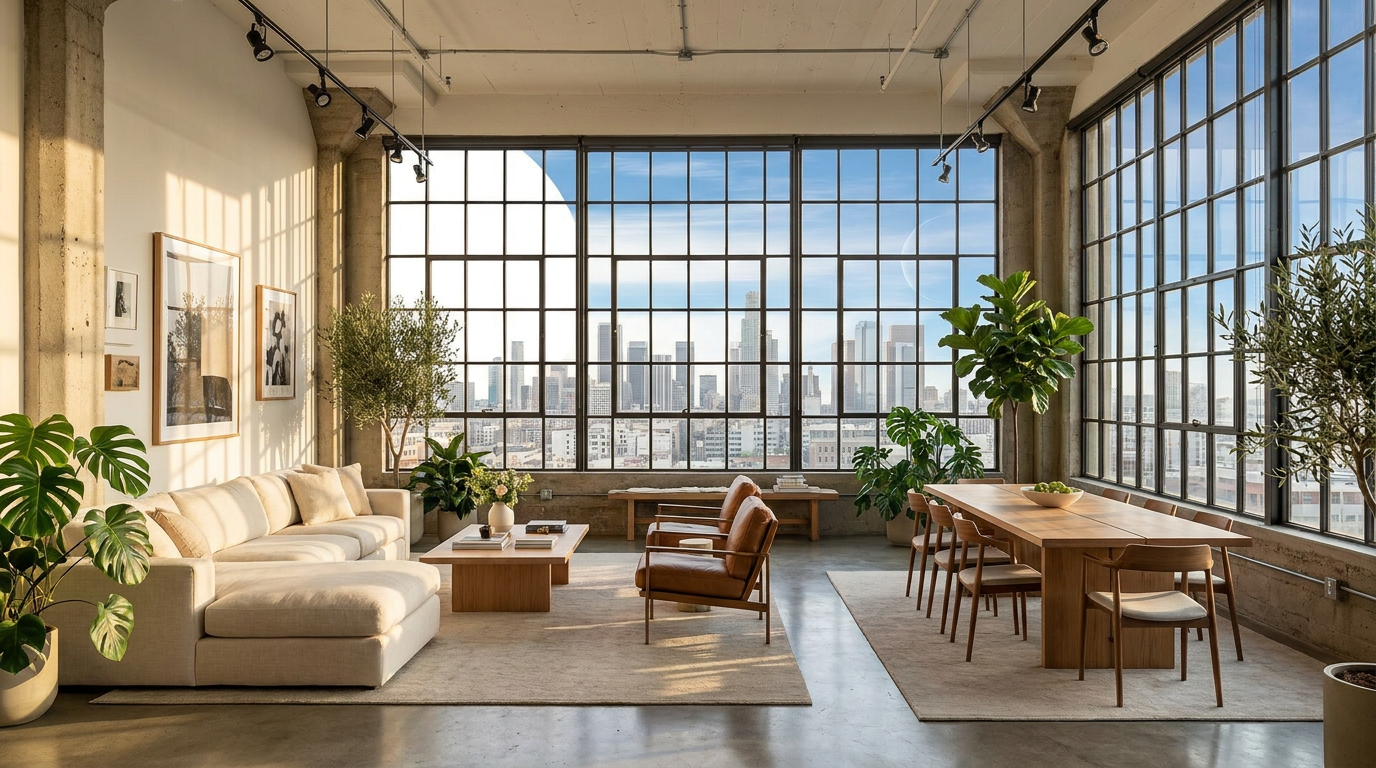
The real estate industry is undergoing a fundamental transition from a "build new" mentality to a philosophy of "rework, repurpose, reimagine." Known as adaptive reuse, the practice of converting obsolete commercial buildings into vibrant residential hubs has moved from a niche architectural challenge to a central pillar of global urban development.[2][3]
The data reveals a striking tipping point. In 2025, for the first time in modern real estate history, the amount of U.S. office space slated for conversion or demolition—23.3 million square feet—exceeded the 12.7 million square feet of new office construction coming online. This crossing of the lines marks the end of an era of unchecked commercial expansion and the beginning of a massive recalibration.[1]

The sheer volume of new housing being carved out of old cubicle farms is accelerating rapidly. More than 70,700 housing units generated from converted offices were slated for delivery in 2025 alone, doubling the previous year's total. In the New York metropolitan area, over 8,300 units are currently in the conversion pipeline, followed closely by Washington, D.C., and Los Angeles.[1][4]
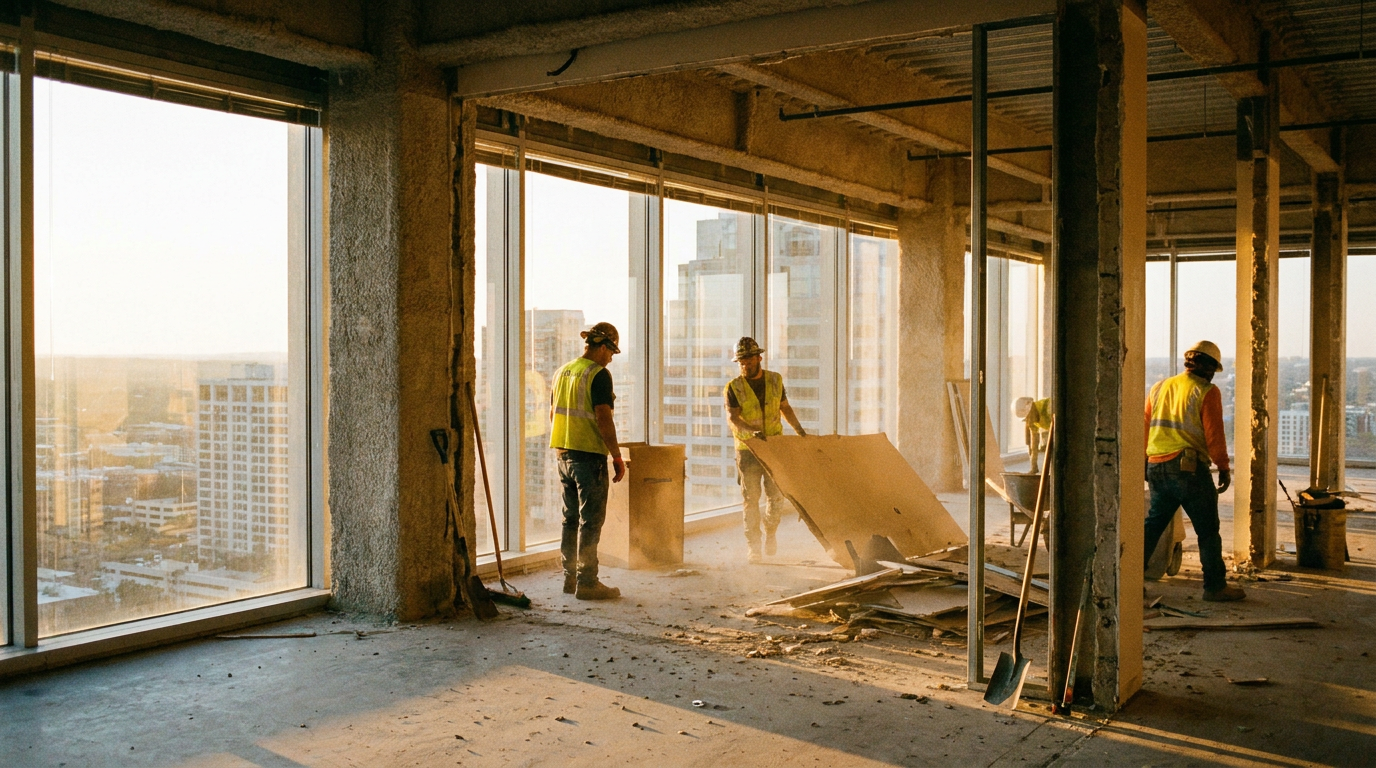
But transforming a mid-century corporate tower into a livable residential community is a complex feat of engineering. Office buildings were designed for high-density, daytime use, with vast, deep floor plates that maximize interior square footage. Apartments, however, require natural light and operable windows for every bedroom, making the cavernous centers of office buildings a distinct liability.[5]
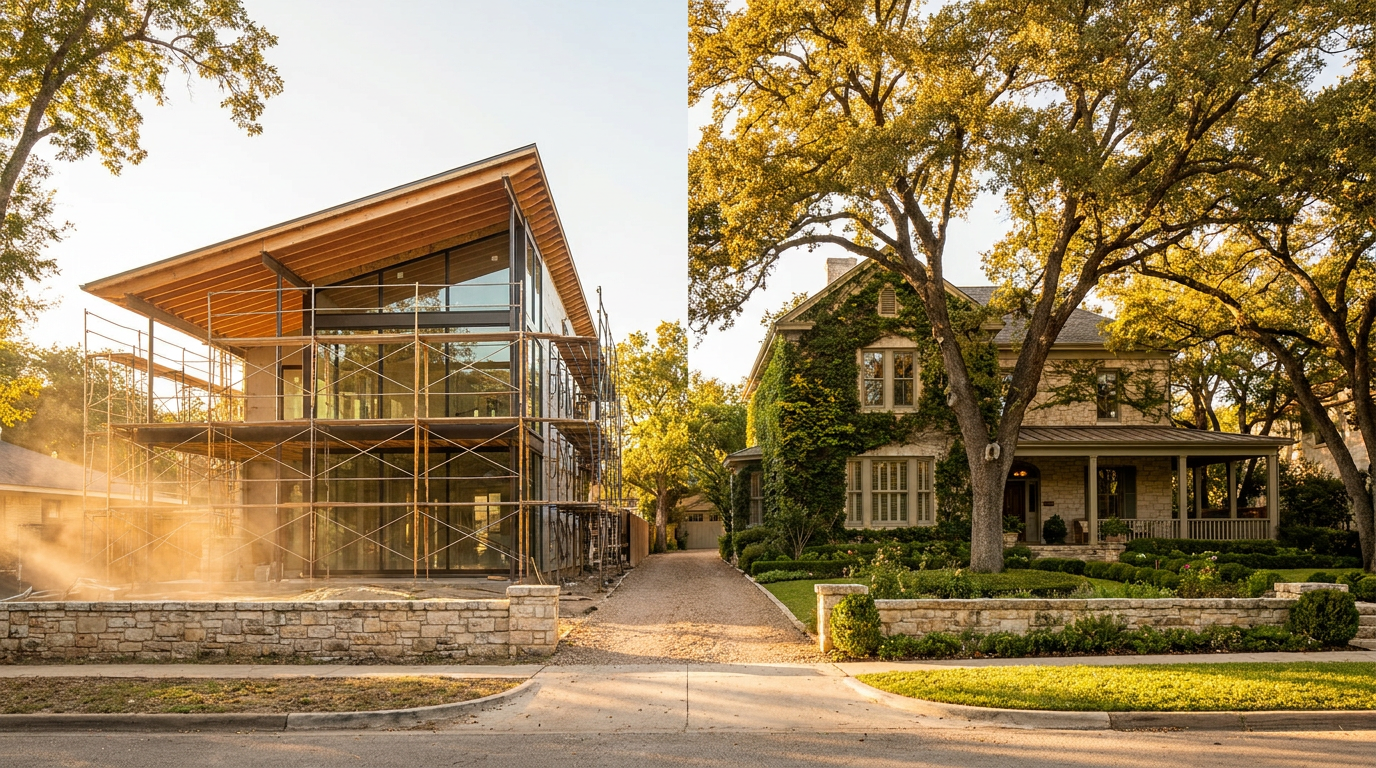
To solve this, architects are employing radical structural interventions. In buildings with excessively deep floor plates, developers are literally coring out the center of the structure from the roof to the ground floor. This creates an open-air central courtyard or light well, allowing windows to be installed on the interior-facing walls and turning unlivable dark space into premium, light-filled real estate.[5]
The mechanical challenges are equally daunting. A typical office floor features a single centralized core containing the elevators, a men's restroom, and a women's restroom. Converting that same floor into a dozen apartments requires distributed plumbing, HVAC, and electrical systems to support individual kitchens, bathrooms, and climate control for every unit. Navigating these upgrades within an existing concrete shell requires meticulous planning and significant capital.[3][5]

A typical office floor features a single centralized core containing the elevators, a men's restroom, and a women's restroom.
Despite these high construction costs, the environmental math makes adaptive reuse an undeniable climate imperative. The built environment is responsible for roughly 40% of global carbon emissions. By preserving the "embodied carbon" of an existing structure—the massive emissions already spent to manufacture and transport its steel and concrete—adaptive reuse reduces the carbon footprint of a project by 50% to 75% compared to demolition and new construction.[2]
With analysts projecting that 80% of the buildings that will exist in 2050 are already standing today, retrofitting is no longer optional for cities trying to meet aggressive climate targets. The era of disposable architecture is giving way to a mandate for resilience and longevity.[2][5]
Governments worldwide are recognizing this reality and adjusting policy to grease the wheels. In Europe, London has adopted a strict "retrofit-first" policy to reduce embodied carbon, while Paris has implemented stringent regulations limiting new construction within its historic urban core, forcing developers to look inward at existing assets.[2]
In the United States, municipalities are stripping away the red tape that historically made conversions financially unviable. New York City's "City of Yes for Housing Opportunity" initiative and Washington D.C.'s "Office to Anything" program are rewriting zoning codes to fast-track approvals for developers willing to tackle stranded commercial assets.[1][5]

Financial incentives are also bridging the gap. Chicago recently approved $260 million in tax increment financing for five downtown office-to-residential projects. Crucially, these public funds come with stipulations: 30% of the newly created units must be designated as affordable housing, ensuring that the revitalization of downtowns does not exclusively cater to luxury renters.[5]
Industry experts caution that adaptive reuse is not a silver bullet for the housing crisis. Analysts estimate that only about 30% of older office stock is physically and financially suited for residential conversion. Buildings constructed in the 1980s and 1990s with massive, block-sized footprints often remain too difficult to adapt without prohibitive costs.[4][5]
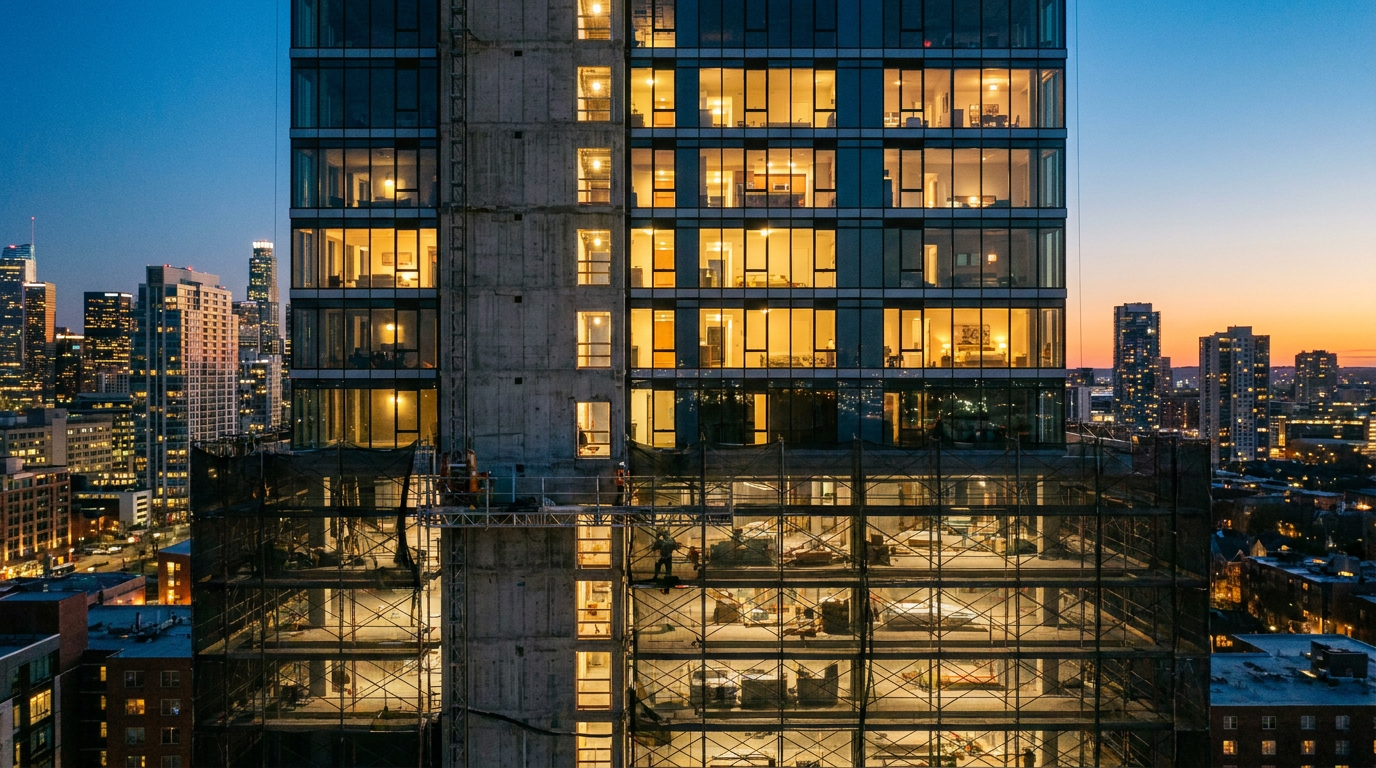
Yet, for the buildings that do fit the profile, the transformation is profound. What were once sterile, 9-to-5 corporate monocultures that emptied out at sunset are being reborn as vibrant, 24/7 mixed-use neighborhoods. Ground-floor lobbies are becoming cafes and grocery stores, while upper floors house a new generation of urban residents.[1][5]
As the global real estate market stabilizes into a new normal, the surge in adaptive reuse stands as a testament to urban resilience. By turning the liability of empty offices into the asset of sustainable housing, cities are proving that their greatest resource for the future is the infrastructure they have already built.[2][5]

How we got here
Pre-2020
Office construction heavily outpaces conversions, with downtowns dominated by 9-to-5 corporate tenants.
2020–2023
The remote work revolution empties urban cores, causing commercial property values to plummet and vacancies to spike.
2024
Major cities begin rolling out aggressive tax incentives and zoning reforms to encourage developers to repurpose stranded assets.
2025
For the first time, the square footage of U.S. offices slated for conversion or demolition exceeds new office construction.
Viewpoints in depth
Urban Planners & Environmentalists
Advocates for sustainable urbanism view conversions as a dual solution to climate change and dead downtowns.
For environmentalists and urban planners, the adaptive reuse trend is a generational opportunity to correct the mistakes of 20th-century zoning. By preserving the 'embodied carbon' of massive concrete and steel structures, cities can drastically reduce the emissions associated with urban growth. Furthermore, planners argue that converting single-use commercial districts into 24/7 mixed-use neighborhoods creates more resilient, walkable, and transit-friendly communities that don't shut down at 5:00 PM.
Commercial Developers
Real estate investors are focused on the complex financial mechanics of saving stranded assets.
Developers view adaptive reuse through a lens of risk and yield. With traditional office leasing remaining sluggish and interest rates impacting borrowing, owners of older 'Class B' and 'Class C' office buildings are sitting on stranded assets. While conversions offer a lifeline, developers stress that the physical limitations of deep floor plates and the exorbitant costs of retrofitting plumbing and HVAC systems mean these projects only pencil out when municipalities offer substantial tax abatements and streamlined zoning approvals.
Housing Advocates
Housing groups push to ensure that the conversion boom benefits middle- and low-income renters, not just the wealthy.
While housing advocates broadly support the creation of new units to ease supply shortages, they are highly critical of conversions that exclusively yield luxury apartments. These groups lobby city councils to attach strict affordability mandates to any public subsidies or tax breaks granted to developers. Their goal is to ensure that the revitalization of downtown cores includes teachers, service workers, and families, preventing the creation of exclusive enclaves accessible only to high earners.
What we don't know
- Whether the pace of conversions will be enough to meaningfully lower housing costs in the most expensive metropolitan areas.
- How the eventual stabilization of hybrid work policies might impact the long-term pipeline of available office buildings.
- If secondary and tertiary cities have the market demand to support the high costs of complex adaptive reuse projects.
Key terms
- Adaptive Reuse
- The process of repurposing an existing building for a use other than what it was originally designed for, such as turning an office into apartments.
- Embodied Carbon
- The total greenhouse gas emissions generated during the manufacturing, transportation, and assembly of building materials like steel and concrete.
- Floor Plate
- The total rentable area on a single floor of a commercial building, which dictates how easily the space can be divided into apartments with window access.
- Stranded Asset
- A property that has suffered from unanticipated devaluation or obsolescence, often because it no longer meets current market demands.
Frequently asked
Can any vacant office building be converted into apartments?
No. Buildings with very deep floor plates struggle to provide enough natural light for residential units. Analysts estimate only about 30% of older office stock is physically suited for conversion.
Does converting a building save money compared to building new?
Not always. While it saves on structural framing, the costs of adding distributed plumbing, HVAC, and seismic upgrades can make conversions nearly as expensive as ground-up construction.
How do office conversions help the environment?
Adaptive reuse preserves the 'embodied carbon' of the existing structure—the emissions already spent to create its concrete and steel—reducing the carbon footprint of the project by up to 75%.
Sources
Source coverage
5 outlets
3 viewpoints surfaced





[1]CBRECommercial Developers
Office Conversions and Demolitions Will Exceed New Construction in 2025 For the First Time
Read on CBRE →[2]JLLUrban Planners & Environmentalists
Global Real Estate Outlook 2026: Repositioning and Retrofit Strategies
Read on JLL →[3]ColliersCommercial Developers
2026 Global Investor Outlook: Value-add strategies and adaptive reuse
Read on Colliers →[4]RentCafeHousing Advocates
Adaptive Reuse Report: Office-to-Apartment Conversions Reach All-Time High
Read on RentCafe →[5]Factlen Editorial TeamUrban Planners & Environmentalists
Synthesis by Factlen editorial team
Read on Factlen Editorial Team →
Every angle. Every day.
Get real estate stories with full source coverage and perspective breakdowns delivered to your inbox.